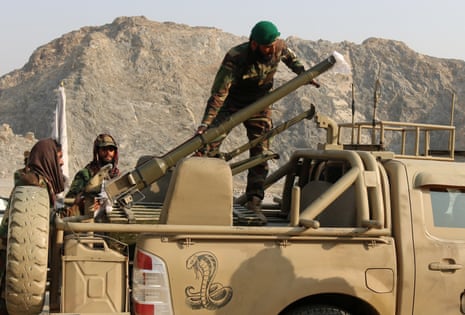
Pakistan has officially declared an "open war" against neighboring Afghanistan following a night of intensive cross-border skirmishes and tit-for-tat military strikes that have left scores dead on both sides. The declaration, issued by the Pakistani Ministry of Defense, marks a historic and dangerous escalation in the long-strained relationship between the two South Asian nations, with Islamabad launching a large-scale military offensive dubbed Operation Ghazab lil-Haq, or "Righteous Fury."
The conflict reached a boiling point late Thursday when Pakistani forces launched a series of coordinated airstrikes targeting military installations in the Afghan capital of Kabul, as well as the provinces of Kandahar and Paktia. These strikes were described by Islamabad as a necessary response to "unprovoked firing" and persistent militant incursions originating from Afghan soil. Pakistani Defense Minister Khawaja Mohammad Asif confirmed the shift in policy via a public statement, asserting that the period of diplomatic restraint has ended.
"Our patience has now run out," Asif stated. "Now it is open war between us." The rhetoric signals a definitive departure from previous efforts to manage border tensions through mid-level military coordination or third-party mediation. The escalation has sent shockwaves through the region, as explosions were reported in several major Afghan urban centers, marking the first time in years that the Pakistani Air Force has targeted the Afghan capital directly.
Operation Ghazab lil-Haq: Pakistan’s Military Response
Operation Ghazab lil-Haq was initiated in the early hours of Friday morning, involving a combination of aerial bombardment, long-range artillery, and drone strikes. According to military sources in Islamabad, the operation specifically targeted the command-and-control centers of the Afghan Taliban and affiliated militant groups. Pakistan has long accused the Taliban government in Kabul of providing a safe haven for the Tehrik-i-Taliban Pakistan (TTP), an insurgent group that has conducted numerous high-profile attacks within Pakistani borders.
In Kabul, residents reported the sound of low-flying jets followed by massive explosions near military compounds. Similar reports emerged from Kandahar, the spiritual heartland of the Taliban, and Paktia, a province that has seen frequent border friction. The Pakistani military maintains that its strikes were "precision-guided" and intended to neutralize threats before they could cross the 1,600-mile-long border known as the Durand Line.
The Afghan government, led by the Taliban, responded almost immediately with its own offensive maneuvers. Zabihullah Mujahid, the primary spokesperson for the Taliban government, characterized the Pakistani strikes as a violation of national sovereignty and a "rebellion" against regional peace. He claimed that Afghan forces launched retaliatory "large-scale offensive operations" against Pakistani military bases and installations situated along the border.
Escalation Along the Durand Line and the Torkham Crossing
The Durand Line, a colonial-era boundary that Afghanistan has historically refused to recognize, has become the primary theater of the current conflict. Reports from the eastern Nangarhar province indicate that heavy fighting is ongoing at the Torkham border crossing, one of the most vital trade and transit points between the two countries. The area has been transformed into a combat zone, with small arms fire and mortar shells exchanged between border guards and regular army units.
Eyewitnesses at the border described a scene of chaos as commercial trucks and civilians attempting to cross were caught in the crossfire. The Torkham crossing, which serves as a lifeline for landlocked Afghanistan’s trade with the outside world, has been indefinitely closed. This closure is expected to have immediate and devastating effects on the supply of food, medicine, and fuel into Afghanistan, further exacerbating an already dire humanitarian situation.
Military analysts suggest that the current "open war" is the culmination of years of failed negotiations regarding border security. Since the Taliban returned to power in August 2021, Islamabad has seen a marked increase in domestic terrorism, which it blames on the lack of enforcement on the Afghan side of the frontier. Despite numerous high-level meetings, the two sides have remained deadlocked over the construction of border fences and the movement of armed groups.
Conflicting Reports of Human Cost and Casualties
As is common in the early stages of a full-scale conflict, the reported casualty figures from both capitals vary significantly. The Taliban government has made bold claims regarding Pakistani losses, asserting that Afghan forces killed 55 Pakistani soldiers and captured several others alive during the initial hours of the counter-offensive. Kabul admitted to the loss of only eight of its own fighters, though independent verification of these numbers remains impossible due to the restricted access to the front lines.
Conversely, the Pakistani military issued a statement claiming that 133 Afghan fighters were "neutralized" during the opening salvos of Operation Ghazab lil-Haq. Islamabad reported only two casualties among its own ranks and categorically denied that any Pakistani soldiers had been captured. The discrepancy in these figures highlights the intense information war accompanying the physical combat, as both nations seek to maintain domestic morale and project strength to the international community.
Medical facilities in the border regions of both countries are reportedly struggling to cope with the influx of wounded. In the Pakistani city of Peshawar, hospitals have been placed on high alert, and emergency wards are being cleared to accommodate potential military and civilian casualties from the tribal districts. In Afghanistan, the lack of advanced medical infrastructure means that many of those injured in the airstrikes may face critical shortages of life-saving care.

Regional Powers Call for Restraint Amid Fears of Wider Conflict
The international community has reacted with alarm to the news that Pakistan declares "open war" against Afghanistan. Major regional powers, including China, Russia, and Saudi Arabia, have all issued statements calling for an immediate cessation of hostilities and a return to the negotiating table. The stakes are particularly high for these nations, as a destabilized Afghanistan-Pakistan border threatens regional infrastructure projects and security.
China’s foreign ministry expressed deep concern, noting that Beijing has been attempting to mediate between the two neighbors through quiet diplomacy for several months. Pakistan is a cornerstone of China’s Belt and Road Initiative, specifically through the China-Pakistan Economic Corridor (CPEC). Any prolonged war would jeopardize billions of dollars in investment and the safety of Chinese personnel working in the region.
Russia, which remains the only nation to have formally recognized the Taliban government, urged both sides to resolve their differences through "political and diplomatic means." Maria Zakharova, the spokesperson for the Russian foreign ministry, warned that a "dangerous confrontation" would only benefit extremist elements seeking to exploit the vacuum of power. Meanwhile, Saudi Arabian officials have been in contact with Pakistani leadership, though it remains unclear if Riyadh is prepared to offer the financial or diplomatic leverage required to broker a ceasefire.
The Collapse of the Qatar-Turkey Peace Process
The current hostilities represent a total collapse of the peace process mediated by Qatar and Turkey in late 2025. Following a series of deadly border clashes in October, Doha and Ankara had successfully brokered a fragile ceasefire that many hoped would lead to a long-term security pact. Negotiators had held several rounds of talks aimed at addressing Pakistan’s concerns over the TTP and Afghanistan’s grievances regarding border fencing.
However, those negotiations appear to have been undermined by hardliners on both sides. Sources close to the talks suggest that the Taliban were unwilling to take kinetic action against TTP leadership, viewing them as ideological allies. Simultaneously, the Pakistani military leadership faced growing public anger over a series of suicide bombings in its major cities, leading to the decision that only a "decisive military solution" could ensure national security.
The failure of the October ceasefire underscores the limitations of external mediation when the core security interests of the involved parties are diametrically opposed. With the formal declaration of war, the mechanisms established by Qatar and Turkey have been effectively dismantled, leaving no clear diplomatic path forward to halt the current bloodshed.
Economic and Humanitarian Consequences of Border Warfare
The declaration of "open war" carries profound implications for the civilian populations of both countries. Afghanistan, already grappling with one of the world’s worst humanitarian crises, faces the prospect of total economic isolation if its borders with Pakistan remain closed. The reliance on Pakistani ports for the transit of essential goods means that even a short-term conflict could lead to a spike in commodity prices and widespread food insecurity.
For Pakistan, the cost of a sustained military campaign will place further strain on an economy that has been struggling with inflation and debt. Operation Ghazab lil-Haq requires a massive mobilization of resources, diverting funds from development to the defense budget. Furthermore, the threat of retaliatory terror attacks in Pakistani urban centers has forced the government to increase security measures nationwide, impacting daily life and commerce in cities like Islamabad, Lahore, and Karachi.
The conflict is also expected to trigger a new wave of internal displacement. Thousands of families living in the border districts are already fleeing their homes to escape the artillery fire and airstrikes. This displacement creates a secondary crisis as local governments scramble to provide shelter and resources for the influx of refugees, many of whom have already been displaced by decades of prior conflict in the region.
A Precarious Path Forward
As the sun sets on the first day of the declared war, the situation remains highly volatile. The Pakistani government has indicated that Operation Ghazab lil-Haq will continue until its "strategic objectives" are met, while the Taliban have vowed to defend their territory at any cost. The rhetoric from both Islamabad and Kabul suggests that neither side is currently looking for an exit ramp.
The coming days will be critical in determining whether this conflict remains a series of localized, albeit intense, border battles or if it expands into a full-scale invasion or a protracted war of attrition. With both nations possessing significant military capabilities and the Taliban utilizing unconventional warfare tactics, the potential for a long and bloody stalemate is high.
International observers are closely watching for any signs of a shift in the military balance, particularly whether third-party actors will provide material support to either side. For now, the people of Afghanistan and Pakistan are left to navigate the terrifying reality of a neighbor-on-neighbor war that few expected to escalate so rapidly, and even fewer know how to end.