Geneva, Switzerland – As the world approaches the fourth anniversary of Russia’s full-scale invasion of Ukraine, a crucial round of United States-led peace talks in Geneva concluded earlier than anticipated Wednesday, underscoring the persistent challenges in brokering an end to the devastating conflict. Mediated by Steve Witkoff, the U.S. Special Envoy, and Jared Kushner, a senior advisor, these discussions represent the latest in a protracted series of diplomatic endeavors, none of which have yet yielded a decisive breakthrough in the deadliest European conflict since World War II. The ongoing war, which has claimed over a million lives, continues to strain international relations and humanitarian resources.
The initial promise made by then-candidate Donald Trump during his 2024 presidential campaign to secure a ceasefire within 24 hours has remained unfulfilled, highlighting the immense complexities of the geopolitical landscape and the deep-seated nature of the dispute. This comprehensive overview examines the history of mediation efforts, from the earliest diplomatic overtures to the most recent high-level engagements, charting the trajectory of a conflict that has profoundly reshaped global security and alliances.
Early Diplomatic Overtures and Initial Stalemates
February 28, 2022: The First Ceasefire Talks
Just four days after Russia launched its full-scale invasion in February 2022, the first direct negotiations between Moscow and Kyiv took place. These initial talks, held in Belarus, were characterized by high-level participation but were ultimately marked by diametrically opposed objectives. The discussions, lasting approximately five hours, failed to produce any tangible agreements.
This was followed by three subsequent rounds of direct talks also held in Belarus, concluding on March 7, 2022. Despite extensive discussions, these sessions also ended without a resolution, signaling the formidable hurdles to de-escalation in the early stages of the conflict.

March-April 2022: Regional Diplomacy in Antalya and Istanbul
A significant diplomatic engagement occurred on March 10, 2022, when Ukrainian Foreign Minister Dmytro Kuleba met his Russian counterpart Sergey Lavrov on the sidelines of the Antalya Diplomacy Forum in Turkey. This marked the first high-level meeting between the two nations’ top diplomats since the war began.
A subsequent meeting between senior leaders in Istanbul later that month also failed to achieve a ceasefire. The fragile hope for diplomatic progress was further complicated by the withdrawal of Russian forces from parts of northern Ukraine in early April. This withdrawal revealed widespread evidence of atrocities committed against Ukrainian civilians in Bucha and Irpin, near the capital Kyiv.
Ukrainian President Volodymyr Zelenskyy acknowledged that these revelations would make negotiations significantly more difficult, yet he stressed the continued necessity of dialogue. In response, Russian President Vladimir Putin declared that negotiations had reached a "dead end," citing Ukraine’s allegations of war crimes as a primary reason.
Key Diplomatic Milestones and Persistent Challenges
July 2022: The Black Sea Grain Initiative
A critical diplomatic success was achieved in July 2022 with the signing of the Black Sea Grain Initiative in Istanbul. This agreement, brokered by Turkey and the United Nations, involved both Ukraine and Russia. It was hailed as the most significant diplomatic breakthrough in the first year of the war.

The initiative’s primary objective was to avert a global food crisis. It established a safe maritime humanitarian corridor through the Black Sea, facilitating the export of millions of tons of grain that had been held up in Ukrainian ports. The successful implementation of this corridor provided a much-needed economic lifeline for Ukraine and contributed to stabilizing global food markets.
November 2022: Ukraine’s Ten-Point Peace Plan
During the Group of 20 (G20) summit in Indonesia, President Zelenskyy unveiled a comprehensive ten-point peace proposal. This plan called for the complete withdrawal of Russian forces from all Ukrainian territories and outlined measures to ensure nuclear and radiation safety, food security, and the protection of Ukraine’s grain exports.
Furthermore, Zelenskyy demanded energy security and the immediate release of all Ukrainian prisoners of war and deportees, including children who had been forcibly taken to Russia. Russia, however, rejected the peace proposal outright, reiterating its stance that it would not relinquish any territory occupied by force, which by then constituted approximately one-fifth of Ukraine.
February 2023: China’s Peace Proposal
In February 2023, China put forward its own twelve-point peace plan. Beijing’s proposal called for an immediate ceasefire and the cessation of "unilateral sanctions" imposed by Western nations on Russia. China urged both parties to resume negotiations, emphasizing the principle that "the sovereignty, independence and territorial integrity of all countries must be effectively upheld."

However, the proposal drew criticism from Kyiv’s Western allies, who noted its failure to explicitly condemn "Russia’s violation of Ukrainian sovereignty." This critique highlighted the divergent perspectives on the root causes and responsibilities for the ongoing conflict.
June 2023: The African Peace Initiative
A high-level delegation of African leaders, spearheaded by South African President Cyril Ramaphosa and including the presidents of Senegal and Zambia, embarked on a diplomatic mission to both Kyiv and St. Petersburg in June 2023. They presented a ten-point plan focused on de-escalation and ensuring grain exports.
Analysts suggested that this initiative was largely motivated by the war’s profound impact on food security and fertilizer prices across the African continent. Nevertheless, President Zelenskyy rejected the call for "de-escalation," arguing that a ceasefire without a Russian withdrawal would merely "freeze" the conflict, leaving territorial gains intact. The following month, Russia withdrew from the Black Sea Grain Initiative, further complicating efforts to address global food security.
August 2023: The Jeddah Summit
Saudi Arabia played host to representatives from 40 nations in August 2023 for discussions centered on Zelenskyy’s "Peace Formula." Despite the broad international participation, the summit concluded without a final agreement or a joint statement.

In a notable development, China dispatched its special envoy, Li Hui, to the talks. However, Russia was notably absent from the proceedings, and the Kremlin declared that such efforts would ultimately prove futile without its inclusion.
Shifting Global Dynamics and Persistent Stalemate
June 2024: Switzerland Peace Summit
The Summit on Peace in Ukraine, held in June 2024 at Switzerland’s Burgenstock resort, convened over 90 nations to deliberate on a framework for resolving the conflict. The summit’s agenda prioritized nuclear safety, food security, and prisoner exchanges. Notably, Russia was not invited to participate in the discussions.
Several key nations, including India and Saudi Arabia, opted not to sign the final joint communique, reflecting ongoing divisions and varying national interests concerning the conflict. The absence of Russia and the cautious approach of some major global players underscored the limitations of a peace process that does not involve all primary belligerents.
February 2025: Trump-Putin Engagement and Shifting U.S. Stance
A month into his second term as U.S. President, Donald Trump announced on his Truth Social platform that he had engaged in an extensive phone call with Russian President Vladimir Putin. This outreach was framed as an effort to rekindle direct negotiations aimed at ending the war.

Following this, on February 18, delegations from Washington and Moscow convened in Saudi Arabia. Key figures included U.S. Secretary of State Marco Rubio and Russian Foreign Minister Lavrov. While these meetings reportedly laid the groundwork for future negotiations, they also generated significant concern in Kyiv and Brussels, as both Ukraine and the European Union found themselves excluded from the discussions. This perceived sidelining of Ukraine raised questions about the future direction of international diplomacy concerning the conflict.
February 2025: Tense White House Meeting
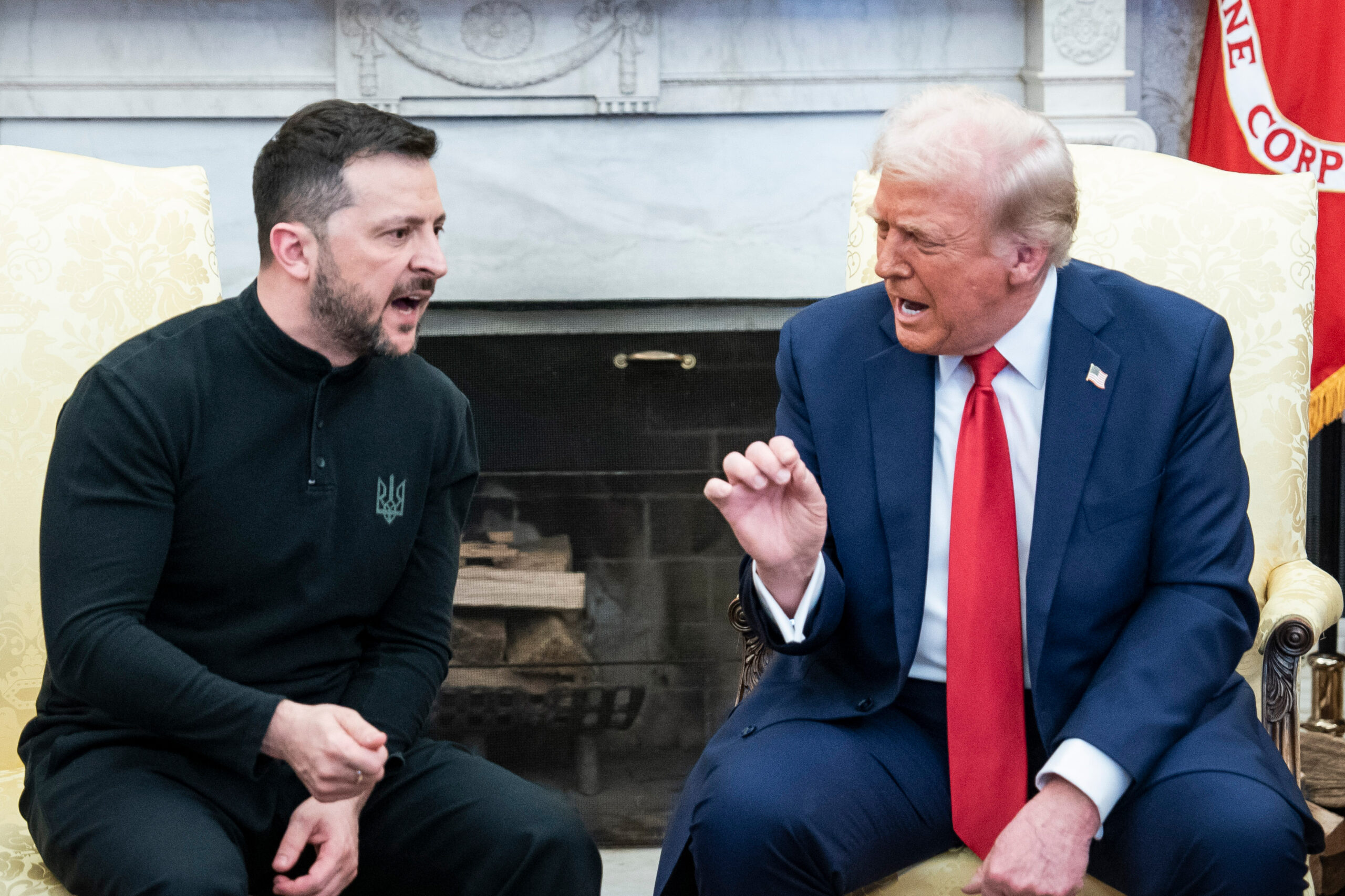
Ten days later, on February 28, 2025, a highly charged encounter took place at the White House. In what was described as one of the most confrontational diplomatic moments in recent history, President Trump and Vice President JD Vance reportedly engaged in a televised meeting with Ukrainian President Zelenskyy in the Oval Office.
Reports indicated that Zelenskyy was criticized for his attire and for not expressing sufficient gratitude towards the United States. The atmosphere was described as tense, with Zelenskyy finding himself in a seemingly cornered position during the exchange. This event underscored the complex and often contentious nature of U.S.-Ukraine relations under the Trump administration.
August 2025: Witkoff’s Moscow Visit and Alaska Summit
Trump envoy Steve Witkoff traveled to Moscow on August 6, 2025, for his third visit to meet with President Putin. This trip occurred amid escalating Western threats of sanctions on Russian oil exports and U.S. pronouncements of implementing "secondary" trade tariffs. Following the meeting, Trump characterized it as "highly productive" and stated that "everyone agrees this war must come to a close." However, no concrete outcomes were publicly announced.

Further intensifying diplomatic efforts, Trump met Putin in person on August 15, 2025, at Joint Base Elmendorf-Richardson in Alaska. This high-stakes summit, aimed at finding a resolution to the ongoing conflict, ultimately concluded without a formal agreement. The lack of a breakthrough at this direct presidential level highlighted the deep divisions that persisted between the two leaders and their respective nations.
August 2025: Washington Deliberations and Continued Impasse
On August 18, 2025, President Trump hosted Ukrainian President Zelenskyy and other European leaders in Washington. During these discussions, Trump indicated his intention to propose a trilateral summit with President Putin. However, this initiative also failed to yield any tangible progress or agreements.
November 2025: The Leaked Geneva Peace Plan and Western Divisions
The Geneva talks in November 2025 became a focal point for Western unity, particularly after the controversial 28-point peace plan attributed to the Trump administration was leaked to the press. The leaked proposal reportedly included provisions for capping Ukraine’s military capabilities and freezing its NATO membership aspirations. Most controversially, it suggested that Ukraine cede territory to Russia.
The draft, reportedly co-authored by U.S. envoy Witkoff and Russian envoy Kirill Dmitriev, sparked accusations that the U.S. was advocating for a "capitulation" on behalf of Ukraine. Despite subsequent revisions to the draft proposal, no agreement was ultimately reached during these critical discussions.

December 2025: Berlin and Miami Talks Yield No Breakthrough
On December 14 and 15, 2025, President Zelenskyy traveled to Berlin to meet with U.S. envoys Witkoff and Kushner. He was joined by a significant group of European leaders, including German Chancellor Friedrich Merz, British Prime Minister Keir Starmer, and French President Emmanuel Macron. Following these discussions, U.S. negotiators expressed optimism, claiming that 90 percent of the issues between the warring parties had been resolved.
However, this optimism proved short-lived. Later in December, Witkoff and Kushner hosted another round of talks in Miami, Florida. Despite the earlier claims of progress, the fundamental issues surrounding Ukraine’s sovereignty over the Donbas region and the precise demarcation lines remained insurmountable obstacles. The Miami talks concluded without a deal.
January 2026: First Trilateral Talks in Abu Dhabi
On January 23, 2026, high-level delegations from the United States, Ukraine, and Russia convened for trilateral talks, marking the first such direct engagement since the 2022 invasion. Hosted at the Al Shati Palace in Abu Dhabi, these discussions were mediated by the United Arab Emirates, a nation that has maintained diplomatic ties with both warring parties.
A subsequent round of talks on February 4, also in Abu Dhabi, resulted in an agreement for a significant prisoner exchange. The deal involved the exchange of 314 prisoners of war, with 157 individuals from each side being returned. This marked the first such exchange in five months. However, critical political and security issues remained unresolved, underscoring the ongoing complexities of achieving a comprehensive peace settlement.

February 17-18, 2026: Ongoing Geneva Negotiations
As of February 17-18, 2026, negotiations are underway in Geneva. This represents the second three-way effort involving senior military figures from both Ukraine and Russia, alongside the United States, to broker an end to the war. These discussions have largely stalled, primarily due to Russia’s unwavering insistence on retaining the territories it has seized from Ukraine. The territorial integrity of Ukraine remains a central point of contention, a persistent obstacle that has thwarted numerous mediation attempts and continues to define the challenging path toward lasting peace.