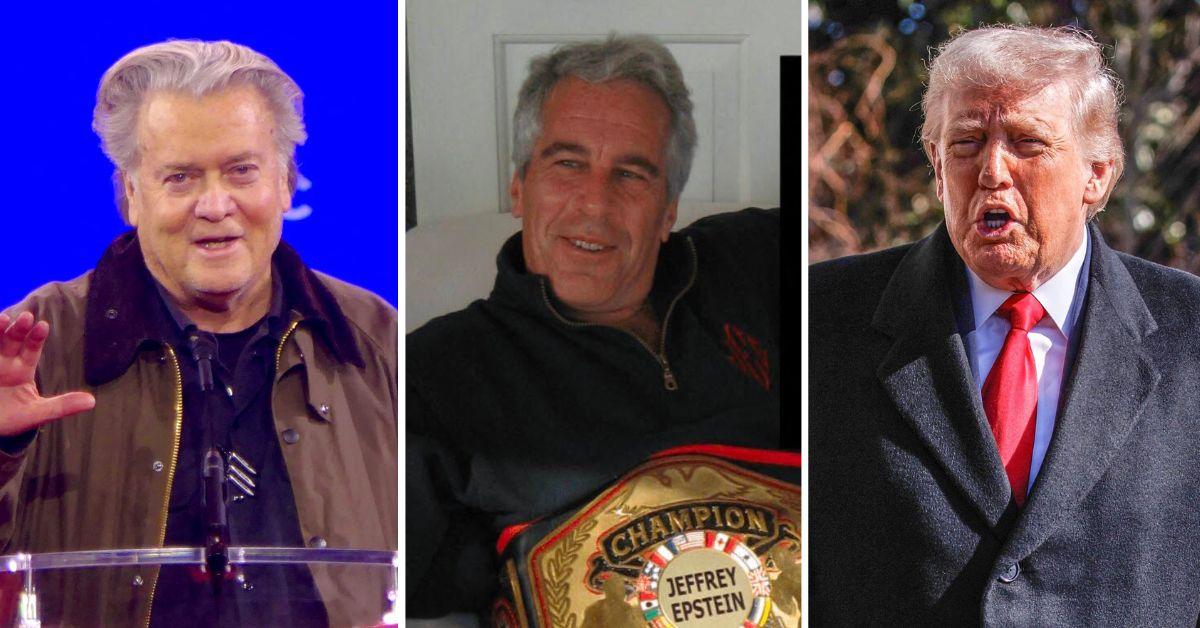
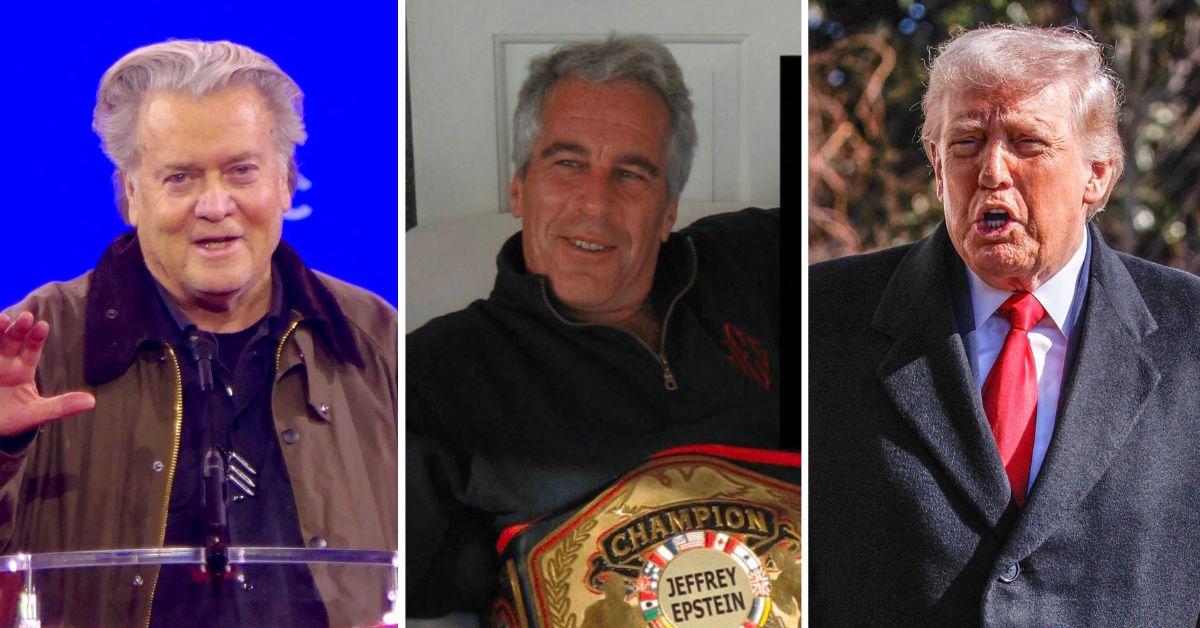
Newly unveiled private communications from Jeffrey Epstein’s extensive files have brought to light a startling exchange between former White House Chief Strategist Steve Bannon and Epstein, where they explicitly discussed the possibility of removing then-President Donald Trump from office in late 2018. The conversation, which unfolded on New Year’s Eve, occurred shortly after the Democratic Party had secured control of the House of Representatives in the midterm elections, setting a tumultuous backdrop for the private anxieties expressed by two high-profile figures.
The revelations underscore deep-seated concerns among some of Trump’s closest former advisors and associates regarding his leadership and mental acuity during a critical period of his presidency. These exchanges offer an unprecedented glimpse into the private thoughts of individuals who, despite their public affiliations or notoriety, harbored significant doubts about the President’s capacity to govern. The disclosure adds another complex layer to the ongoing public scrutiny surrounding the former president’s tenure and the networks of influence that operated around him.
The New Year’s Eve Exchange and Calls for Intervention
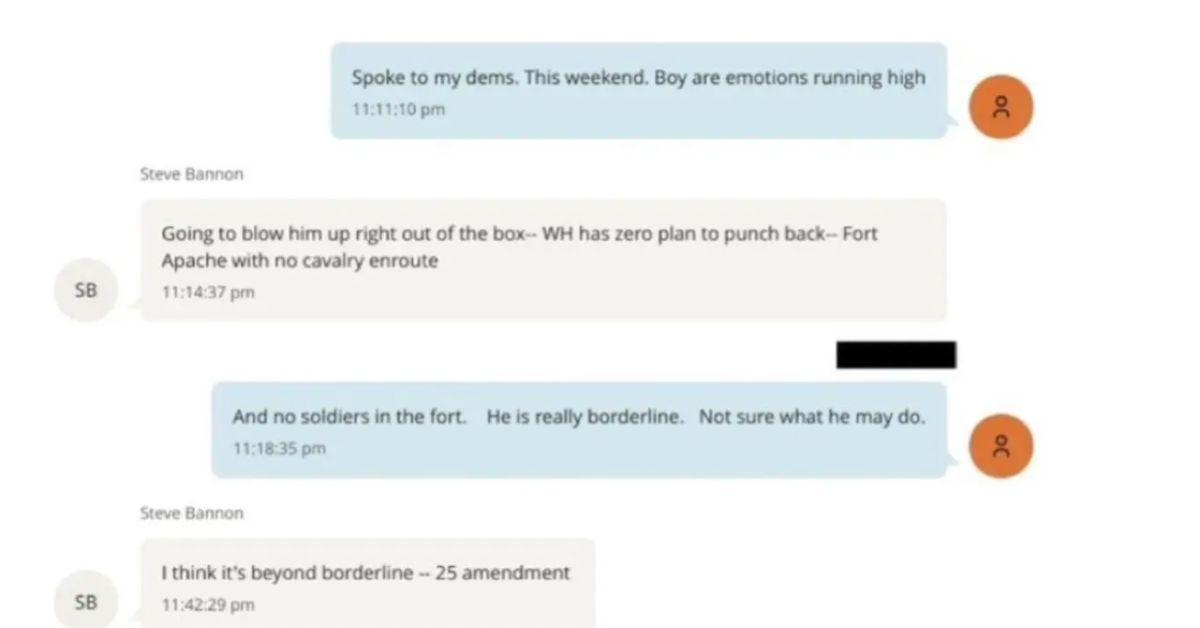
The critical exchange occurred on December 31, 2018, as the political landscape shifted dramatically following the midterm elections. Steve Bannon, a key architect of Trump’s 2016 campaign and a former senior White House official, initiated the discussion by expressing profound frustration with the President’s perceived inaction. "WH has zero plan to punch back," Bannon reportedly texted, indicating a dissatisfaction with the administration’s strategic response to the newly empowered Democratic opposition. This sentiment pointed to a growing chasm between Bannon’s aggressive political philosophy and the White House’s perceived passivity.
Jeffrey Epstein, a financier whose own reputation would later be irrevocably tarnished by charges of sex trafficking, mirrored Bannon’s apprehension. Epstein’s reply escalated the severity of the concerns, stating, "He is really borderline. Not sure what he may do." This comment suggested a significant level of instability or unpredictability in Trump’s behavior, raising questions about the President’s judgment and temperament at the time. The implication was that Trump’s state of mind might lead to unforeseen or detrimental actions, further unsettling those observing from within his orbit.
Bannon quickly amplified Epstein’s concerns, pushing the conversation into more drastic territory by invoking the 25th Amendment. "I think it’s beyond borderline — 25(th) amendment," Bannon wrote, suggesting that Trump’s condition warranted a constitutional mechanism for presidential removal or transfer of power. He followed this with an urgent call for action: "We really need an intervention." This reference to the 25th Amendment, often discussed in whispers within political circles but rarely openly by figures so close to a sitting president, signaled an extraordinary level of alarm regarding Trump’s fitness for office.
Understanding the 25th Amendment and Its Political Context
The 25th Amendment to the U.S. Constitution, ratified in 1967, primarily addresses presidential succession and disability. Its Section 4, which Bannon referenced, outlines a process for removing a president who is "unable to discharge the powers and duties of his office." This can be initiated by the Vice President and a majority of the Cabinet, or by Congress if the Vice President and Cabinet disagree. It is a highly sensitive and rarely considered constitutional provision, designed for extreme circumstances where a president’s physical or mental incapacitation renders them unfit to lead.
The fact that Bannon, a former White House chief strategist with intimate knowledge of the executive branch’s inner workings, would privately suggest invoking such an amendment is highly significant. It implies that the concerns about Trump’s mental state were not merely speculative but were serious enough to prompt consideration of constitutional measures for his removal. During Trump’s presidency, particularly after the publication of Michael Wolff’s book "Fire and Fury," public discussions and media speculation about the 25th Amendment’s applicability were frequent, often fueled by reports of internal White House dissent and observations of Trump’s behavior. These newly revealed texts now provide direct evidence that such drastic measures were discussed privately by individuals within Trump’s broader network.
Broader Concerns About Presidential Mental Fitness
The private dialogue between Bannon and Epstein was not an isolated incident of concern regarding Donald Trump’s mental health. Epstein himself reportedly relayed similar anxieties to Michael Wolff, who was then researching his controversial book on the Trump administration. According to Epstein, some individuals who had dined with Trump expressed worries about his mental state, specifically citing "dementia." Epstein quoted attendees observing "Tons of makeup" and that Trump "Did not recognize old friends." These observations painted a picture of a president exhibiting signs of cognitive decline and physical changes, raising further questions about his overall well-being.

These private comments align with various public and expert observations made during and after Trump’s presidency. Physical therapist Adam James, for instance, publicly speculated that Trump might be experiencing "cognitive decline." James suggested that "His frontal lobe is shrinking inside his skull, and the MRIs will show this," implying a physical basis for potential mental incapacitation. James further hypothesized that the administration was actively trying to "conceal" Trump’s health issues, particularly because "The main danger they have is he can’t shut his mouth," referring to Trump’s often unscripted and controversial public statements.
Beyond expert analysis, social media users and commentators frequently pointed to visible signs of potential decline in Trump, including "swelling" and other physical characteristics that fueled public speculation about his health. These collective observations, now contextualized by the private texts from Bannon and Epstein, suggest a consistent thread of concern about Trump’s mental and physical fitness that permeated various circles during his time in office.
The Nature of the Bannon-Epstein Relationship
The revelation of these texts also sheds light on the nature of the relationship between Steve Bannon and Jeffrey Epstein, two figures from vastly different worlds who nevertheless found common ground in discussing high-stakes political matters. Bannon, a former investment banker turned media executive and populist political strategist, was a driving force behind Trump’s nationalist agenda. Epstein, on the other hand, was a disgraced financier whose sprawling network of contacts spanned finance, science, politics, and entertainment, even as he faced ongoing legal troubles related to sex crimes.
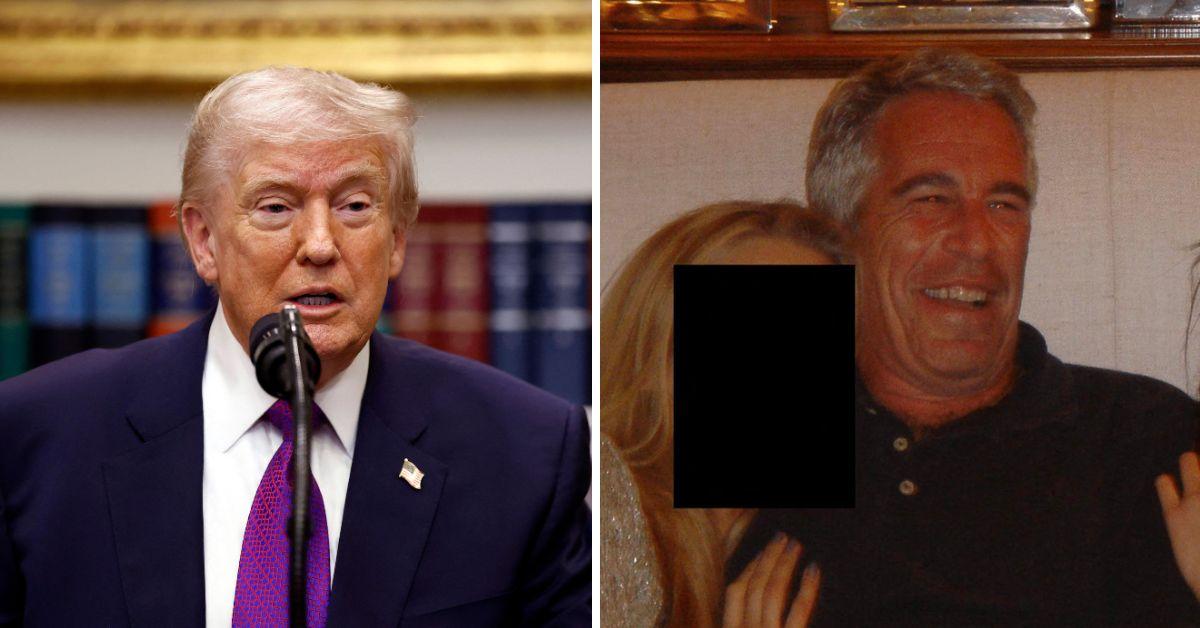
Their private correspondence underscores Epstein’s pervasive reach and his apparent ability to engage with influential political figures on sensitive topics. It also highlights Bannon’s willingness to confide in Epstein about his frustrations with the Trump White House and his concerns about the President’s stability. While the full extent of their relationship and the frequency of their discussions remain subject to further inquiry, these texts confirm a level of intimacy and trust that allowed for frank and highly sensitive political conversations. The involvement of Epstein, given his criminal history and the dark cloud surrounding his connections, adds a particularly unsettling dimension to the discussion of presidential removal.
Political Fallout and Enduring Questions
These newly unearthed texts carry significant implications for the political landscape, particularly as Donald Trump remains a dominant figure in American politics. For Steve Bannon, the texts reveal a stark contrast between his private anxieties about Trump’s fitness and his public, often vociferous, loyalty. Despite his earlier concerns about Trump’s mental state and the need for a "25th amendment" intervention, Bannon has since become one of Trump’s most ardent public defenders and promoters. He has even publicly stated that Trump should run for an unprecedented "third term," a position that seems directly at odds with his private doubts from 2018. This apparent contradiction raises questions about Bannon’s motivations and the sincerity of his public pronouncements versus his private beliefs.
For Donald Trump, the revelations add to the narrative of internal dissent and concern that plagued his administration. While his supporters will likely dismiss the texts as politically motivated or the musings of disgruntled former associates, they provide concrete evidence that serious doubts about his capacity were held by those closest to him. The discussion of Trump’s removal via the 25th Amendment, even if only a private exchange, is a powerful indicator of the turmoil and apprehension that characterized his presidency for some key players.
The public reaction to these texts will likely be varied. For critics of Trump, they will serve as further validation of long-held concerns about his leadership and stability. For his supporters, they may be viewed as another attempt to undermine his legitimacy through selective leaks and character assassination. Regardless of the immediate political spin, the texts undeniably contribute to the ongoing historical record of a presidency marked by unprecedented challenges and internal strife.
As the political sphere continues to grapple with the legacy of Donald Trump and the influence of figures like Steve Bannon, these texts offer a rare and unsettling glimpse into the clandestine discussions that shaped perceptions and actions at the highest levels of power. They prompt a re-examination of the critical period following the 2018 midterms and the underlying anxieties that percolated beneath the surface of the Trump administration, leaving an enduring set of questions about leadership, loyalty, and the ultimate fitness to govern.