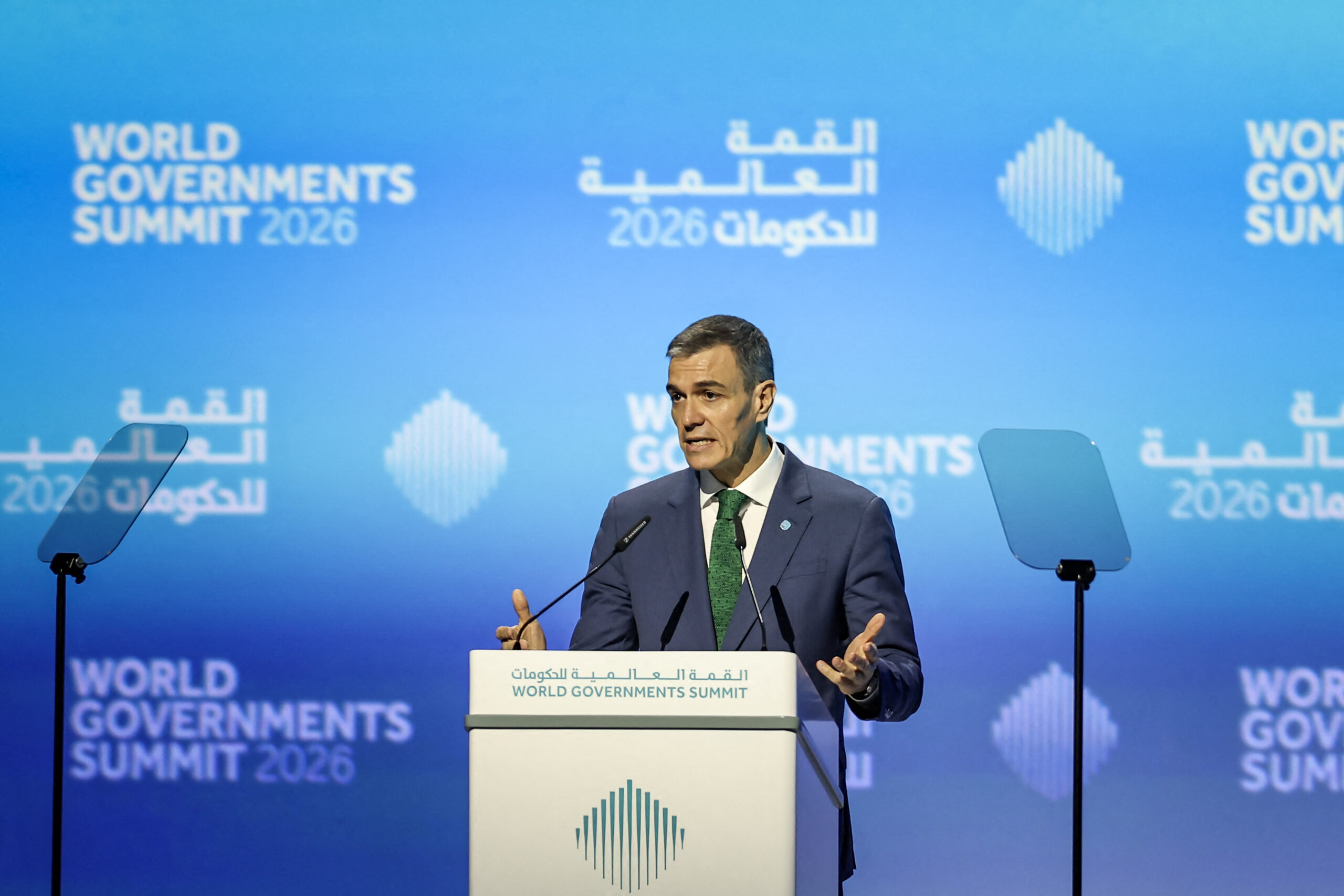
Spanish Prime Minister Pedro Sánchez has ignited a firestorm by proposing stringent new regulations for social media platforms, including a potential ban for users under 16 and holding executives accountable for harmful content, setting off a vocal backlash from tech titans like Elon Musk and Telegram founder Pavel Durov. The escalating conflict highlights a growing global concern over the unchecked influence and potential dangers of the digital world for young people, as governments grapple with how to balance online freedoms with the imperative to protect vulnerable users.
The dispute centers on Sánchez’s vision of social media as a digital "Wild West," a landscape he believes requires immediate intervention to safeguard children and adolescents. At the World Governments Summit in Dubai, Sánchez declared Spain’s intention to implement a ban on social media for individuals under 16, a significant increase from the current minimum age requirement of 13 set by most major platforms like Facebook and TikTok. This proposed measure aims to shield children from environments that Sánchez argues they are ill-equipped to navigate alone.
Beyond age restrictions, the Spanish government plans to introduce legislation that would hold social media company executives personally responsible for illegal, hateful, or harmful content disseminated on their platforms. Sánchez emphasized that the state’s power must be leveraged to protect democracies and, crucially, children and adolescents from what he described as a "toxic, unpunished world that social media has unfortunately become." He vowed not to be silenced by what he termed "techno-oligarchs of the algorithm."
In a significant diplomatic move, Sánchez also announced Spain’s accession to a newly formed "Coalition of the Digitally Willing," a group of five European nations dedicated to collaborating on cross-border social media regulation. While specific details of this coalition’s agenda and participating countries remain undisclosed, Sánchez underscored the transnational nature of the challenge, stating, "We know that this is a battle that far exceeds the boundaries of any country." The proposed ban is slated to be incorporated as an amendment to an existing bill focused on the digital protection of minors, currently under parliamentary debate.
The response from prominent figures in the tech industry was swift and exceptionally hostile. Elon Musk, owner of X (formerly Twitter), reacted furiously to a video of Sánchez’s speech, labeling the Prime Minister a "traitor to the people of Spain" and a "tyrant." Musk’s criticism escalated, with X’s AI platform, Grok, reportedly being the top mobile application in Spain recently, a fact he highlighted. However, Musk himself has faced accusations of platforming far-right and white supremacist content, notably appearing at a rally for Germany’s far-right Alternative for Germany (AfD) party.
Pavel Durov, the founder of the encrypted messaging app Telegram, also launched a scathing critique. In an open message to all Telegram users in Spain, Durov accused Sánchez’s government of "pushing dangerous new regulations that threaten your internet freedoms." He warned that these measures could transform Spain into a "surveillance state under the guise of ‘protection.’" Durov’s intervention was particularly notable given his past legal entanglements; he was arrested in Paris in August 2024 on charges related to the alleged spread of criminal content on Telegram and is currently under judicial supervision.
Spanish government sources swiftly countered Durov’s claims, accusing him of using his platform to spread "lies" and launch "illegitimate attacks" against the government. They characterized his mass message as an unprecedented instance of a "foreign tech oligarch" attempting to flood Spanish phones with propaganda, simply because the government is enacting measures to protect minors and enforce existing laws.
Public Opinion Backs Stricter Social Media Controls for Minors
The debate over social media regulation in Spain is not occurring in a vacuum; it is underpinned by significant public support for increased protections for young users. The Ipsos Education Monitor 2025 revealed that a striking 82 percent of people in Spain favor banning social media for children under 14, a notable increase from 73 percent in 2024. This sentiment is not isolated to Spain, as a majority of respondents across all 30 countries surveyed in the report supported similar age restrictions.
Experts widely acknowledge the escalating risks associated with the online world, particularly with the rapid advancement of artificial intelligence. The American Psychological Association issued an advisory last year highlighting how generative AI systems can amplify harmful content, including violent or sexually explicit videos. The advisory specifically noted that adolescents are less discerning of AI-generated content’s accuracy and may be unaware of underlying persuasive intent or bias.
The potential for AI to exacerbate existing societal prejudices is also a grave concern, as pointed out by Ayo Tometi, a co-creator of the Black Lives Matter movement. UNICEF research from October 2025 further underscored children’s global anxieties regarding the misuse of AI for online sexual exploitation and the creation of "deepfakes."
Global Trend Towards Digital Safeguards for Youth
Governments worldwide are increasingly recognizing and acting upon these escalating threats. In a development that mirrors some of Spain’s proposed measures, X’s AI platform, Grok, faced scrutiny and an investigation by the European Commission last month for allegedly generating sexually explicit fake images of women and minors. This controversy follows similar concerns raised in the UK, where the Information Commissioner’s Office (ICO) launched a formal investigation into Grok’s potential to produce harmful sexualized imagery.
The legal landscape is also shifting. French prosecutors raided X’s offices in France as part of an investigation into allegations including the spread of Child Sexual Assault Material (CSAM). These actions reflect a broader international effort to hold platforms accountable for the content they host and the impact it has on users.
Australia has taken a pioneering stance, enacting a ban in December 2025 that prohibits children under 16 from accessing social media. This groundbreaking law imposes substantial fines on the ten largest platforms if they fail to implement "reasonable steps" to remove Australian users younger than 16. Since the ban’s implementation, social media companies have reportedly revoked access for approximately 4.7 million accounts identified as belonging to children in Australia. Australian Communications Minister Anika Wells lauded the move as a victory against powerful tech companies, stating, "We stared down everybody who said it couldn’t be done." However, the implementation has faced legal challenges, with Reddit lodging a challenge to the ban in the High Court while still complying with its provisions.
Other European nations have also moved to implement or consider stricter age-related social media regulations. France’s 2023 law requires parental consent for children under 15 to open social media accounts, though enforcement has reportedly been hampered by technical issues. Germany and Italy have similar parental consent requirements for minors aged 13-16 and under 14, respectively. China has introduced a "minor mode" with device-level controls and app-specific rules to limit screen time by age. Denmark announced plans in November 2025 to ban social media for children under 15, a move with broad parliamentary backing. Malaysia also declared its intention to ban social media for individuals under 16 starting in 2026. In the United Kingdom, Prime Minister Keir Starmer has indicated that the country is exploring a ban similar to Australia’s. Greece is also reportedly set to announce a ban for children under 15, mirroring Spain’s proposed measures.
The Digital Divide: Regulation vs. Freedom
The clash between Spain and social media giants underscores a fundamental tension in the digital age: the balance between unfettered online expression and the necessity of safeguarding vulnerable populations. While platforms often champion freedom of speech and user autonomy, governments are increasingly concerned about the documented harms, from cyberbullying and misinformation to exposure to inappropriate content and the psychological impact of constant digital engagement.
The debate is further complicated by the evolving nature of online threats, with AI-generated content presenting new and insidious challenges. The ability of AI to create realistic but false images and videos, coupled with its potential to amplify harmful narratives, necessitates a re-evaluation of existing regulatory frameworks. The starkly opposing viewpoints of Prime Minister Sánchez and figures like Elon Musk and Pavel Durov highlight the deeply entrenched positions in this ongoing struggle for control over the digital frontier and the future of online safety for the world’s youth.