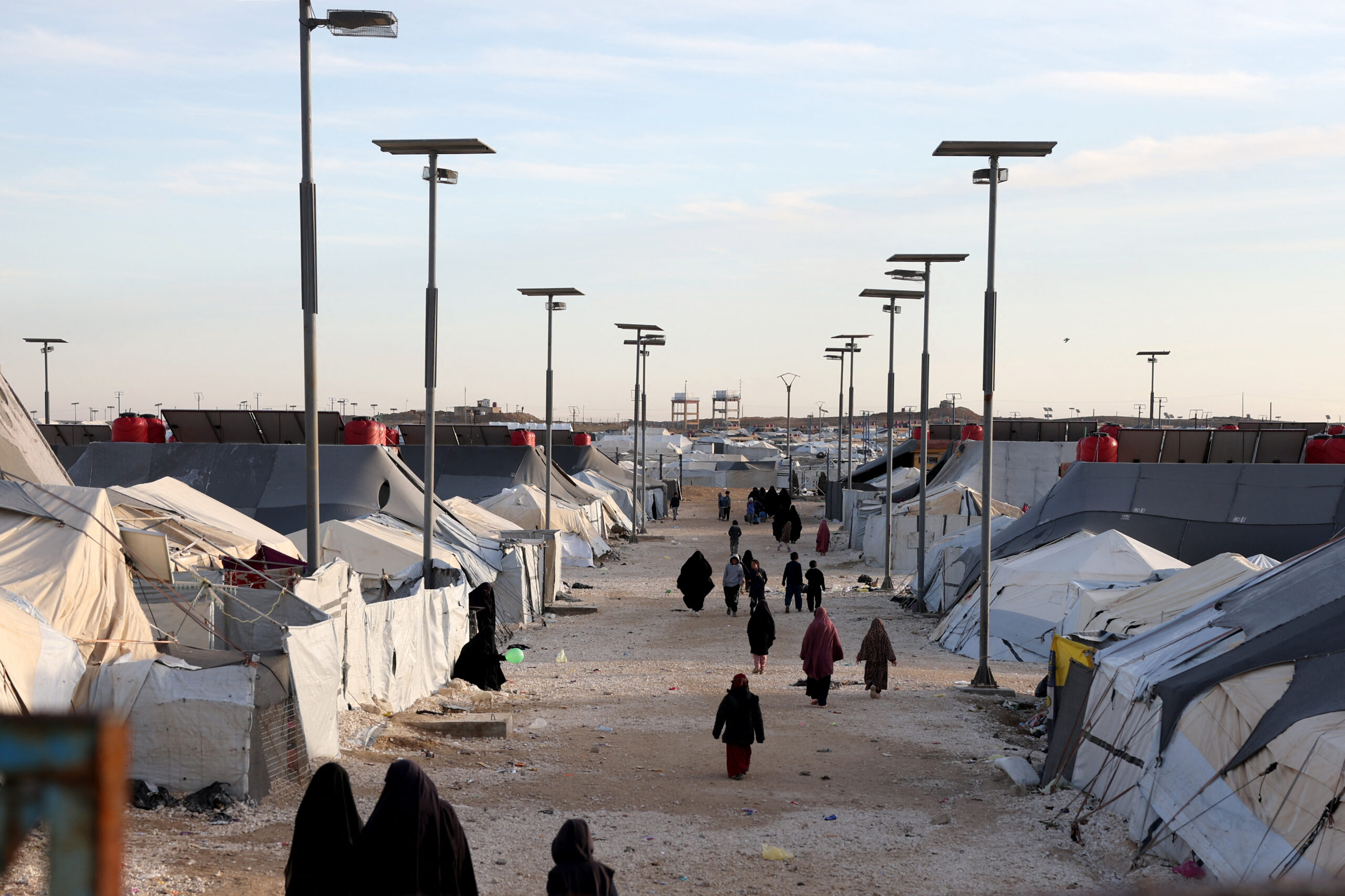
Syrian authorities have announced the full evacuation and closure of the Al-Hol camp, a sprawling desert facility in northeastern Syria that for years housed thousands of relatives of alleged Islamic State (ISIL) members, marking a significant shift in the management of displaced populations linked to the extremist group. The final convoy of residents departed the camp on Sunday morning, signaling the end of an era for a site that became a potent symbol of the lingering human consequences of the fight against ISIL.
Al-Hol Camp: A Legacy of Displacement and Security Concerns
Al-Hol, located in the Hasakah province, was once a critical holding area for individuals, predominantly women and children, associated with ISIL fighters. At its zenith in 2019, the camp accommodated an estimated 73,000 people, a staggering number that underscored the scale of displacement following the territorial defeat of ISIL. The population has since dwindled, with approximately 24,000 residents remaining prior to the recent evacuation. This population comprised a significant number of Syrians, alongside Iraqis and over 6,000 foreigners hailing from around 40 different nationalities.
While the residents were not formally classified as prisoners and most had not been individually accused of specific crimes, their confinement within the heavily guarded facility represented a de facto detention for an extended period. This situation created immense challenges for humanitarian organizations and raised complex questions about long-term solutions for these displaced families, particularly the foreign nationals whose home countries often proved reluctant to accept their return.
Shifting Control and the Exodus of Families
The recent closure of Al-Hol follows a significant geopolitical development: the Syrian government’s assumption of control over the camp from the Kurdish-led Syrian Democratic Forces (SDF) last month. This transfer of authority is part of Damascus’s broader strategy to reassert its influence across northeastern Syria, a region that had largely been governed by the SDF and its allies after years of conflict against ISIL.
Since the Syrian government took charge, a process of relocating the camp’s inhabitants has been underway. Thousands of families, including those with ties to ISIL members, have been dispersed to various destinations. Some have been sent to the Akhtarin camp in Aleppo province, while others have been repatriated to Iraq, signaling a multi-pronged approach to managing the camp’s remaining population.
Unorganized Departures and Lingering Uncertainties
The Syrian Observatory for Human Rights, a UK-based monitoring group, has reported that some residents opted to leave the camp individually, bypassing the organized relocation convoys. Sources on the ground indicate that many Syrian nationals have returned to their hometowns, seeking to reintegrate into their communities. The fate of the foreign nationals, however, remains a more complex issue. Reports suggest that many have traveled westwards, towards government-controlled areas in the Idlib or Aleppo governorates, though their ultimate destinations and support structures in these new locations are not always clear.
Syrian government official Fadi al-Qassem, who has been overseeing the camp’s operations, stated that all Syrian and non-Syrian families have been relocated. He emphasized that the departing residents, primarily women and children, will "need support for their reintegration," highlighting the immense humanitarian challenge ahead. The long-term process of rehabilitation, psychological support, and economic integration for these individuals, especially children who have grown up in the camp environment, will require substantial and sustained efforts.

The Shadow of Roj Camp and International Stances
The future of the smaller Roj camp, also situated in northeastern Syria and housing relatives of alleged ISIL members, remains uncertain. This camp continues to be under the control of the SDF. Its inhabitants are predominantly foreigners whose home countries have largely been unwilling to repatriate them, presenting a persistent international dilemma.
A recent incident involving Australian women and children illustrates the complexities of foreign national repatriation. On February 16, buses carrying 34 Australian women and children who had departed Roj camp, heading towards Damascus with the intent of traveling to Australia, were reportedly turned back. Australian authorities subsequently reiterated their stance against repatriating these families. Prime Minister Anthony Albanese articulated the government’s position, stating, "We have no sympathy, frankly, for people who travelled overseas in order to participate in what was an attempt to establish a caliphate to undermine and destroy our way of life." He acknowledged the unfortunate impact on children but maintained that Australia would not provide support for their return. This firm stance by some Western nations underscores the deep-seated security concerns and ethical debates surrounding the return of foreign fighters’ families.
Broader Implications for Counter-Terrorism and Humanitarian Aid
The closure of Al-Hol camp represents a significant milestone in Syria’s efforts to manage the aftermath of the ISIL conflict. However, it also brings into sharp focus the ongoing challenges associated with individuals and families displaced or detained due to their alleged links to extremist groups. The international community faces a dual imperative: ensuring that individuals are not held indefinitely without due process, while simultaneously addressing legitimate security concerns to prevent the resurgence of extremist ideologies and networks.
The relocation of thousands of individuals from Al-Hol, while a step towards closure for the camp itself, creates new responsibilities for the Syrian government and potentially for the host communities. The success of reintegration efforts will depend on a variety of factors, including the provision of adequate social services, educational opportunities, and vocational training, as well as robust security measures to monitor potential radicalization.
Furthermore, the situation highlights the persistent problem of statelessness and the difficulty of repatriating foreign nationals with alleged extremist ties. Many countries have been hesitant to accept their citizens back, fearing security risks and the potential for radicalization upon return. This has led to a protracted situation for many, particularly women and children, who are caught between the legal frameworks of their home countries and the realities of displacement in conflict zones.
The Long Road to Reintegration and Security
The closure of Al-Hol is not an end to the challenges, but rather a transition to a new phase of managing the human consequences of the war against ISIL. The focus now shifts to the arduous task of reintegrating former camp residents into society, a process that is fraught with difficulties and requires careful planning and extensive resources. The Syrian government’s commitment to providing support for reintegration will be crucial, as will the international community’s willingness to assist with humanitarian aid and rehabilitation programs.
The long-term security implications of the camp’s closure also remain a subject of scrutiny. While the Syrian government has assumed control, the dispersal of residents raises questions about monitoring and preventing any potential re-engagement with extremist groups. The effectiveness of rehabilitation programs and the intelligence gathering capabilities within Syria will be critical in mitigating these risks.
Ultimately, the story of Al-Hol camp is a stark reminder of the enduring human cost of conflict and the complex, often intractable, problems that arise in its aftermath. The evacuation marks a symbolic end, but the journey toward lasting peace, security, and justice for all involved is far from over. The international community will continue to observe closely how Syria and other nations navigate the delicate balance between humanitarian concerns and national security in the years to come.