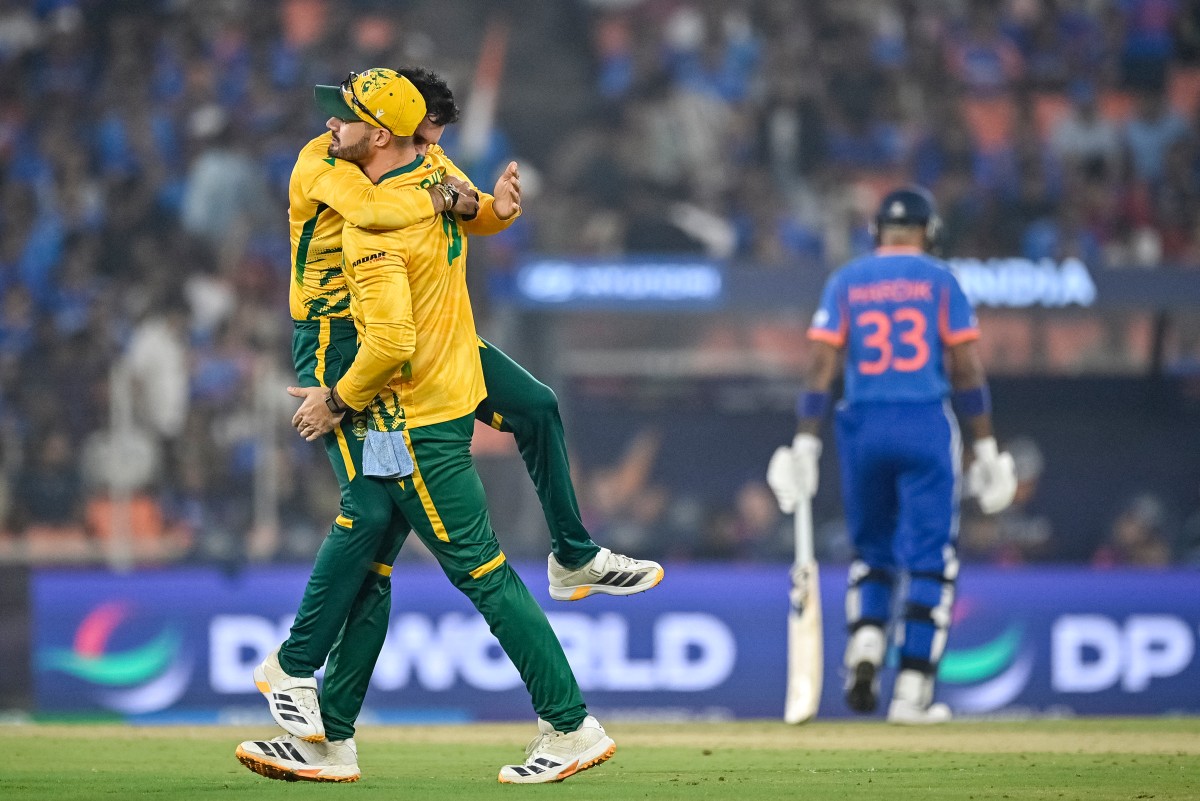
South Africa delivered a commanding performance to defeat India by 76 runs in their opening Super Eight fixture of the T20 World Cup, leaving the pre-tournament favorites facing an uphill battle to reach the semifinals. India was bowled out for 111 while chasing a steep target of 188, marking their first loss of the competition and snapping a significant winning streak.
Proteas Assert Dominance in Ahmedabad Clash
The atmosphere at the Narendra Modi Stadium in Ahmedabad was electric as India, co-hosts of the tournament, took to the field against a formidable South African side. The match, held on Sunday, was a crucial encounter in the Super Eight stage, with both teams vying for a coveted spot in the knockout rounds. South Africa’s bowlers showcased exceptional discipline and skill, stifling the potent Indian batting lineup and executing near-flawless fielding to secure a comprehensive victory.
This defeat not only ended India’s impressive 12-match winning streak in T20 World Cups, a streak that carried over from their triumphant 2024 campaign, but also placed them at the bottom of Group 1 with a concerning net run rate of -3.80. The path to the semifinals now demands consecutive victories for the Indian squad.
South Africa’s Resilient Batting Sets the Tone
The foundation of South Africa’s victory was laid by a crucial batting performance that saw them post a challenging total. Winning the toss, South African captain Aiden Markram elected to bat first, a decision that initially seemed precarious. The Proteas found themselves in early trouble, reduced to 20-3 within the opening four overs.
However, a remarkable recovery was orchestrated by David Miller, who was later named player of the match. Miller’s aggressive and pivotal innings of 63 runs off just 35 balls provided much-needed stability. He forged a vital 97-run partnership with Dewald Brevis, who contributed a brisk 45 off 29 deliveries. This partnership resurrected the Proteas’ innings from a perilous position.
Even after Miller’s dismissal in the 16th over, the momentum continued. Tristan Stubbs provided a fiery cameo, remaining unbeaten on 44 off 24 balls, ensuring South Africa reached a formidable 187-7 by the end of their allotted 20 overs. This score proved to be more than adequate against the Indian batting order.
Indian Batting Collapses Under Pressure
Chasing 188 for victory, India’s innings began on a shaky note. The early loss of Ishan Kishan in the fourth ball of the innings proved to be a significant blow. Kishan, an in-form opener, was dismissed by off-spin bowler Aiden Markram while attempting an ambitious shot against the turn.
The pressure mounted with the subsequent dismissal of Tilak Varma, who fell victim to Marco Jansen on the very first ball he faced. Captain Suryakumar Yadav and the struggling Abhishek Sharma attempted to stabilize the innings, but Sharma’s brief stay at the crease, scoring 15 runs from 12 balls, ended in the fifth over.
Further wickets fell as Washington Sundar and Yadav were dismissed, preventing India from building any substantial partnerships. The large home crowd, anticipating a strong chase, watched on as their team faltered under the disciplined bowling attack.
Pandya and Dube Offer Glimmer of Hope
A brief resurgence in the Indian chase came from the all-round pairing of Hardik Pandya and Shivam Dube. They managed a 35-run partnership, injecting some hope into the dugout and the stands. However, South Africa’s bowlers remained relentless, and their near-flawless fielding continued to put India under immense pressure.
The crucial turning point came with the dismissal of Shivam Dube, who was the highest scorer for India with 42 runs off 37 balls. His departure effectively sealed India’s fate, as the required run rate continued to climb with few recognized batters remaining.
Proteas Bowlers Steal the Show
The South African bowling unit deserves significant credit for their clinical execution. Marco Jansen was the standout performer, claiming an impressive four wickets for just 22 runs in 3.5 overs. His spell dismantled the Indian top and middle order.
Left-arm spinner Keshav Maharaj provided excellent support, picking up three wickets for 24 runs in his full quota of four overs. The entire South African bowling attack maintained a tight grip on the scoring, with Lungi Ngidi being particularly economical, conceding only 15 runs in his four wicketless overs. This collective bowling effort ensured that India never threatened the target.
On the Indian side, pace spearhead Jasprit Bumrah was the most effective bowler, picking up 3 wickets for 15 runs in his four overs. However, his efforts were not enough to overcome the deficit created by the batting collapse.
Implications for the T20 World Cup Super Eight Stage
The victory propels South Africa to the summit of Group 1 in the Super Eight phase, positioning them strongly for a semifinal berth. For India, the loss injects significant pressure into their campaign. They now must win their remaining two Super Eight matches against Zimbabwe and the West Indies to have any realistic chance of advancing.
The other teams in Group 1 are the West Indies and Zimbabwe, who are scheduled to face each other on Monday. The outcome of that match will further shape the group standings. South Africa is slated to play the West Indies on Thursday, while India faces Zimbabwe on Friday. These upcoming fixtures are now critical for India’s tournament aspirations.
Broader Impact and Tournament Landscape
The T20 World Cup, a global spectacle that captivates millions of cricket fans, has once again demonstrated its capacity for thrilling upsets and intense competition. This result underscores the growing strength and depth of international cricket, with teams like South Africa showcasing their potential to challenge established powerhouses.
For fans of Indian cricket, the defeat is a bitter pill to swallow, especially given the high expectations surrounding the team. The performance raises questions about batting resilience under pressure and the ability to adapt to challenging bowling attacks. Conversely, South Africa’s victory serves as a testament to their meticulous planning and execution, highlighting their credentials as serious contenders for the T20 World Cup title. The coming matches will be keenly watched as the tournament heads towards its decisive stages.