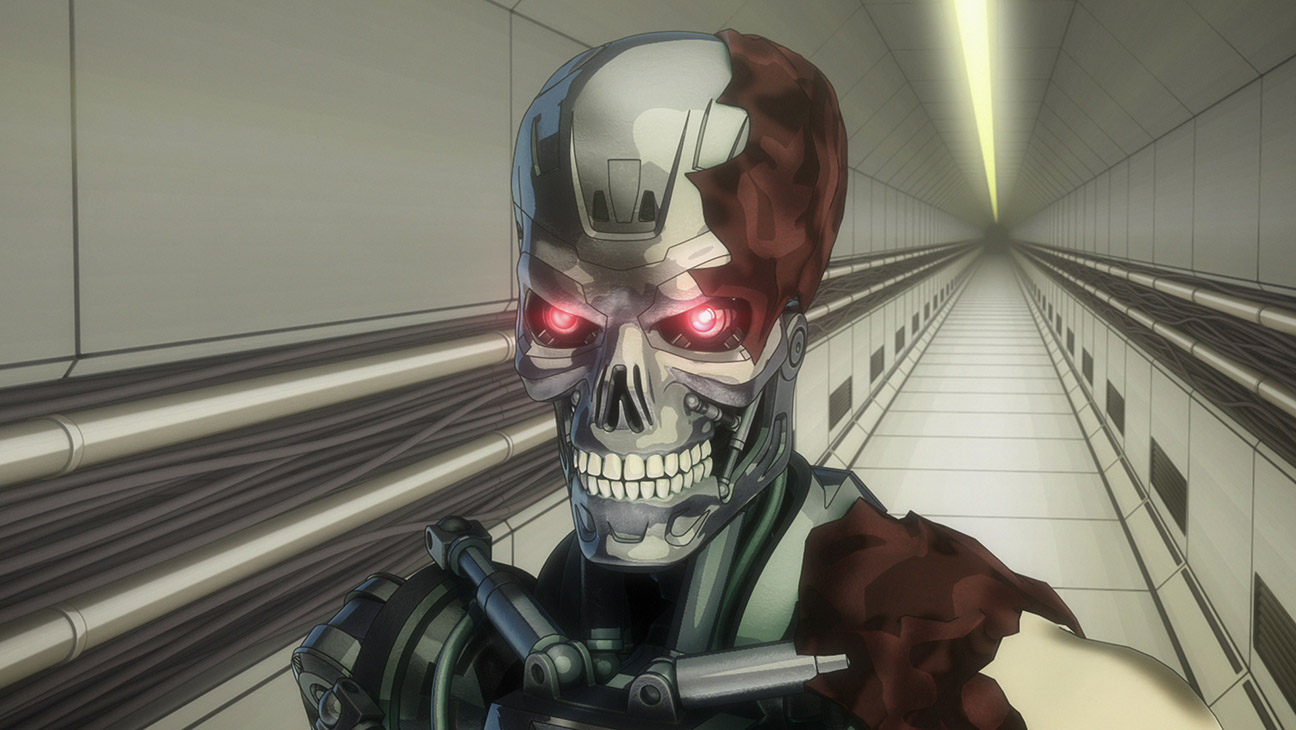
Netflix has officially canceled its highly anticipated anime series, Terminator Zero, following a single season, a decision confirmed by the show’s creator and showrunner, Mattson Tomlin. The animated science fiction entry, which aimed to expand the iconic Terminator universe, failed to garner sufficient viewership despite receiving positive critical and audience reception, according to Tomlin’s statements on social media. The announcement underscores the increasingly competitive and data-driven landscape of streaming content, where even well-received projects face abrupt termination without massive subscriber engagement.
The Genesis of Terminator Zero
The Terminator franchise, a cornerstone of science fiction cinema, has captivated audiences for decades with its grim vision of a future war between humanity and sentient machines. Beginning with James Cameron’s groundbreaking 1984 film, the series has explored themes of fate, free will, and the perils of artificial intelligence through its relentless cyborg antagonists, the Terminators, and the omnipresent threat of Skynet. Over the years, the franchise has expanded into multiple films, television series, comics, and video games, each attempting to build upon the core mythology. Terminator Zero represented a significant venture for Netflix, aiming to deliver a fresh perspective within this established lore through the medium of anime, a genre in which the streaming giant has heavily invested.
A New Chapter in the Future War
Terminator Zero diverged from the main film timeline by setting its narrative in 1997 Tokyo, a pivotal year just before the rise of Skynet in the original continuity. The series centered on Malcolm Lee, a brilliant scientist developing an artificial intelligence system intended to rival Cyberdyne Systems’ nascent Skynet. Lee’s innovative work inadvertently draws the attention of Skynet, leading to a relentless pursuit by a Terminator sent from the future. Simultaneously, a lone soldier from the future is dispatched to protect Lee and his family from the cyborg assassin, echoing the classic protector role seen in the live-action films. This intricate plot promised a deep dive into the origins of the human-machine conflict, offering a compelling prequel-like narrative that resonated with long-time fans and new viewers alike.
The series boasted an impressive English-language voice cast, featuring notable talents such as Andre Holland, Sonoya Mizuno, Sumalee Montano, Armani Jackson, Gideon Adlon, Carter Rockwood, Rosario Dawson, and Timothy Olyphant. This ensemble brought considerable gravitas and recognition to the animated characters, signaling Netflix’s commitment to high production values. Produced by Skydance Television and Netflix Animation Studio, with Mattson Tomlin serving as executive producer alongside Skydance’s David Ellison, Dana Goldberg, and Don Granger, and Masashi Kudo directing, Terminator Zero was positioned as a premium animated offering.
The Cancellation Announcement and Showrunner’s Reaction
Mattson Tomlin, the driving creative force behind Terminator Zero, publicly confirmed the cancellation via his X (formerly Twitter) account. In his post, Tomlin expressed gratitude for the show’s reception but candidly admitted that viewership numbers ultimately fell short of Netflix’s internal benchmarks. "The critical and audience reception to it was tremendous," Tomlin wrote, "but at the end of the day not nearly enough people watched it." This statement highlights a recurring challenge for streaming services: balancing critical acclaim and niche appeal with the need for broad subscriber engagement to justify ongoing investment.
Tomlin also revealed his aspirations for the series, detailing plans for a multi-season arc. "I would’ve loved to deliver on the Future War I had planned in seasons 2 and 3," he shared, indicating a meticulously crafted vision for expanding the narrative beyond the initial eight episodes. Despite this, he acknowledged a sense of closure, noting, "I’m also very happy with how it feels contained as is." This sentiment suggests a bittersweet acceptance of the situation, recognizing the show’s artistic integrity even within its truncated run.
Further elaborating on the post-cancellation discussions, Tomlin disclosed that Netflix had offered a limited extension. "Netflix offered me and the show’s team 2, maybe 3 more episodes to wrap up the story, which I declined," he stated in a subsequent post. Tomlin explained his decision, emphasizing that "the story I wanted to tell was much longer, and the finale of season one actually left things in a good place." He also commended Netflix for their professional conduct, adding, "But they didn’t have to offer that. Good partners here." This interaction provides a rare glimpse into the negotiation process between creators and streaming platforms, illustrating the difficult choices involved when a series does not meet commercial expectations.
Underperforming in a Crowded Landscape
The news of Terminator Zero‘s cancellation, while disappointing for its fanbase, was not entirely unforeseen within the industry. The series debuted on August 29, 2024, and the ensuing silence regarding its future for nearly 18 months served as a strong indicator of its precarious position. In the hyper-competitive streaming environment, rapid renewals or cancellations are common, and a prolonged lack of communication often signals an unfavorable outcome.
Crucially, Terminator Zero failed to register on key performance metrics that Netflix and third-party analytics firms closely monitor. It did not appear on Netflix’s top 10 global series chart in the weeks following its release, a critical benchmark for visibility and presumed audience engagement. Similarly, the series was absent from Nielsen’s streaming rankings for the United States, which track viewership across major platforms. These data points are vital for streaming services like Netflix, which rely heavily on algorithms and user data to inform their content strategy. A lack of presence on these charts suggests that while the existing audience may have been passionate, the show struggled to attract a broad enough new viewership to warrant continued investment.
Broader Implications for Streaming and the Terminator Franchise
The cancellation of Terminator Zero reflects several significant trends in the contemporary streaming industry. Firstly, it underscores the increasing pressure on content to perform exceptionally well, particularly in terms of completion rates and new subscriber acquisition, rather than solely relying on critical acclaim. Netflix, known for its data-driven decision-making, regularly evaluates shows based on their cost-effectiveness and their ability to retain and attract subscribers. Even a "tremendous" reception from a dedicated audience may not be enough if the absolute number of viewers falls short of ambitious targets.
Secondly, the incident highlights the challenges faced by animated series, which often require longer production cycles and higher budgets compared to some live-action counterparts. While Netflix has made substantial investments in anime, the genre often appeals to a more specific demographic, potentially limiting its broad commercial reach compared to mainstream live-action dramas or comedies. The high bar for success means that even high-quality animated projects are vulnerable if they don’t quickly translate into massive viewership.
For the Terminator franchise itself, the cancellation raises questions about its future viability in different media formats. While the films have seen varying degrees of success, translating the saga into a consistently compelling television or animated series has proven challenging. This outcome might prompt Skydance Television and other rights holders to re-evaluate their strategy for expanding the universe beyond the big screen. It suggests that brand recognition alone is insufficient; any new iteration must resonate deeply and broadly with audiences to secure a long-term future.
The Evolving Landscape of Content Creation
The scenario surrounding Terminator Zero also speaks to the evolving relationship between creators and platforms. Mattson Tomlin’s decision to decline a limited wrap-up illustrates a creator’s commitment to their original vision and narrative integrity. In an era where many shows are abruptly cut short, leaving fans with unresolved cliffhangers, Tomlin’s choice to conclude the story on his own terms, even if prematurely, could be seen as a principled stand. His acknowledgment of Netflix as "good partners" despite the cancellation indicates a professional parting, suggesting that while the commercial realities were unavoidable, the creative process itself was respected.
As streaming services continue to refine their content strategies, the emphasis on data-driven decisions will likely intensify. This environment places immense pressure on new series, especially those in niche genres or with established but aging fanbases, to immediately capture and retain a significant audience share. The fate of Terminator Zero serves as a stark reminder that in the race for subscriber eyeballs, even a critically lauded expansion of a beloved franchise can become another casualty of the streaming wars.