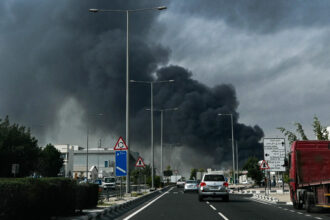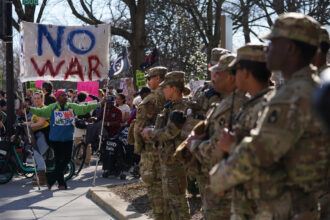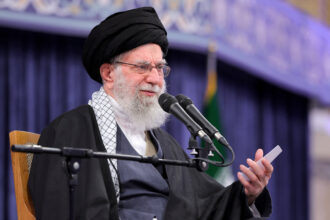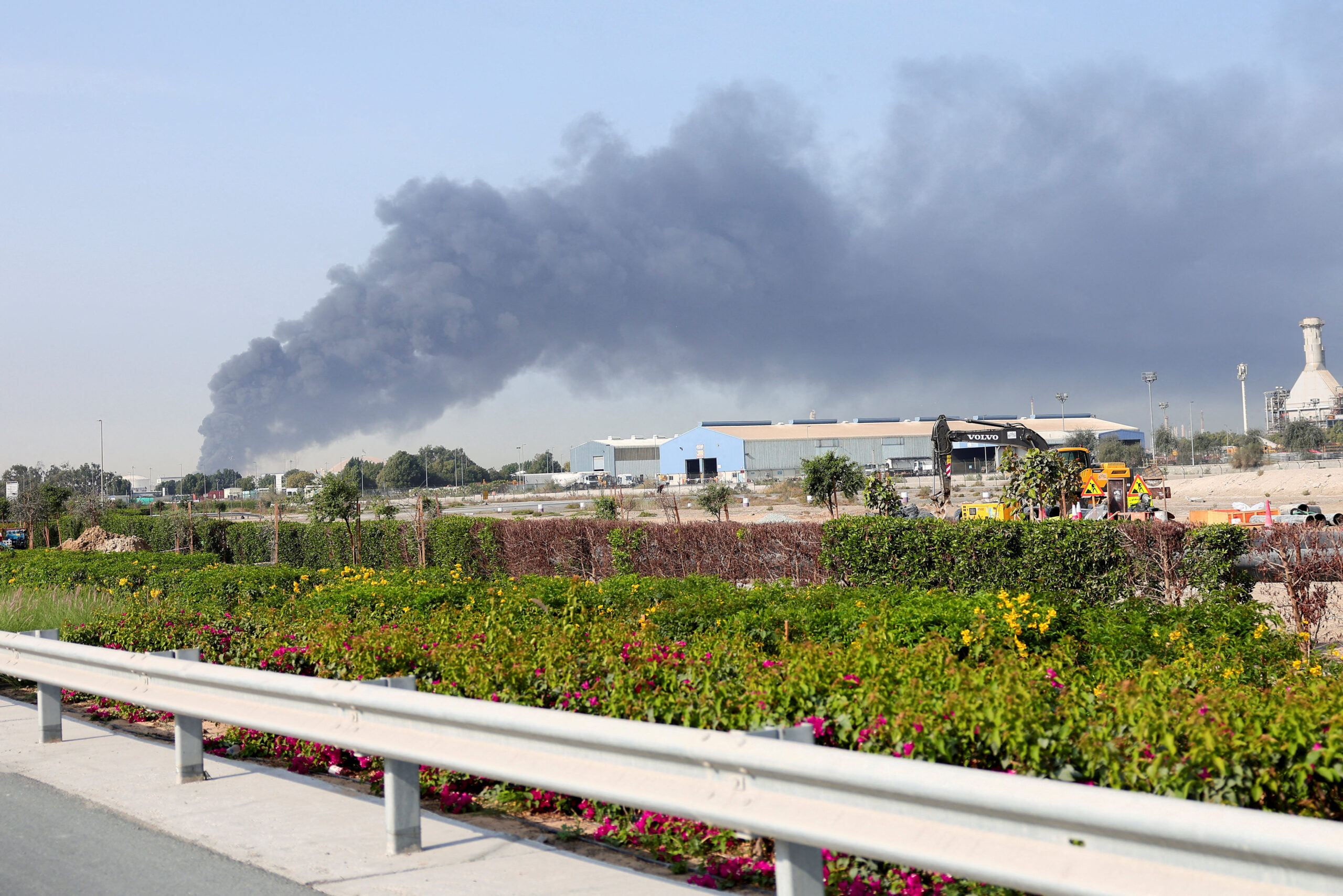
The dawn of a new conflict, initiated by a joint US-Israeli military operation against Iran, has sent immediate and seismic shockwaves across the Middle East, fundamentally altering the security calculus in the Persian Gulf region. Within its first day, the offensive resulted in the deaths of several high-ranking Iranian officials, including Supreme Leader Ali Khamenei, prompting a swift and retaliatory response from Tehran. Iran’s retaliatory strikes extended beyond Israel, directly targeting multiple nations within the Gulf Cooperation Council (GCC) and beyond.
Iranian Retaliation Escalates Regional Tensions
Saudi Arabia, Qatar, the United Arab Emirates, Bahrain, Kuwait, and Oman all found themselves on the receiving end of Iranian missile and drone attacks. These strikes occurred despite none of the targeted Gulf states having launched offensive actions against Iran from their respective territories. The assaults, which hit a variety of strategic and civilian locations including U.S. military installations, airports, ports, and commercial centers, underscore the immediate and widespread consequences of the escalating conflict.
If this volatile situation persists, it portends a genuine turning point for the Gulf, forcing a radical re-evaluation of security paradigms, alliance structures, and the very trajectory of long-term economic development. For years, the prevailing assumptions underpinning Gulf stability were clear: the United States served as the preeminent security guarantor, the simmering rivalry with Iran was managed and contained below the threshold of direct confrontation, and the GCC, despite internal divergences, provided sufficient coordination to prevent regional unraveling. A sustained conflict involving these major powers would strain all these pillars simultaneously, compelling Gulf capitals to revisit not only their defense planning but also the foundational logic of their regional strategies.
Shifting Diplomatic Landscape Under Duress
In recent years, Gulf diplomacy had already been undergoing a subtle but significant shift. A strong preference for hedging rather than explicit alignment characterized these moves. China’s brokering of the Saudi-Iran détente in 2023, the UAE’s pragmatic engagement with Tehran, and Oman’s consistent role as a mediator all pointed towards a shared understanding: dialogue, even amidst deep-seated mistrust, was essential for stability. Qatar, too, maintained open channels, prioritizing diplomacy and de-escalation as primary risk-reduction strategies.
However, a protracted war would render this delicate balancing act exceedingly difficult to sustain. Pressure from Washington for clearer alignment would intensify, while domestic populations would demand definitive answers regarding national interests. Regional polarization would inevitably deepen, transforming strategic ambiguity from a flexible maneuver into a perceived vulnerability as nations are pressured to choose sides.
Economic Vulnerabilities Exposed by Conflict
The economic repercussions of such a conflict are poised to be equally significant. Any prolonged confrontation involving Iran immediately thrusts critical maritime chokepoints back into the global spotlight, with the Strait of Hormuz, a vital artery of the world economy, facing particular scrutiny. Even minor disruptions to shipping through this narrow waterway could trigger sharp increases in energy prices, escalating insurance and shipping costs, and reigniting widespread investor anxiety.
While higher oil prices might offer short-term revenue boosts, sustained volatility carries a steeper cost. It could deter long-term capital investment, complicate the financing of ambitious megaprojects, and increase borrowing expenses precisely when many Gulf states are striving to accelerate economic diversification away from hydrocarbons. A more profound long-term strategic risk also looms: major energy consumers, particularly in Asia, may increasingly view recurrent instability as sufficient justification to expedite their own diversification away from Gulf energy resources. Over time, this could diminish the region’s global leverage, even as it remains a crucial energy supplier.
The GCC at a Crossroads: Unity or Division?
Within the GCC itself, the war presents a stark choice: it could either foster greater internal cohesion or expose existing fault lines. The bloc has historically oscillated between periods of unity and underlying rivalry, and a crisis does not automatically guarantee solidarity. Member states possess divergent threat perceptions and varying tolerances for risk. Oman and Qatar have traditionally emphasized mediation and maintaining communication with Tehran, while Saudi Arabia and the UAE have leaned more towards deterrence, despite recent efforts at de-escalation. Kuwait, for its part, typically adopts a careful balancing act, avoiding firm commitments.
If the conflict escalates unpredictably, these differences could resurface and strain coordinated action. Conversely, the crisis could catalyze enhanced cooperation in critical areas such as missile defense, intelligence sharing, and maritime security. The GCC’s trajectory will hinge less on external pressure and more on whether its member states perceive this as an opportunity for renewed solidarity or a moment for intensified competition.
Geopolitical Realignment and Shifting Alliances
On a broader geopolitical scale, a prolonged war would undoubtedly accelerate significant realignments. Major global powers such as China and Russia would not remain passive observers. Beijing, with its substantial investments in Gulf energy flows and regional connectivity initiatives, may expand its diplomatic engagement, positioning itself as a potential intermediary for de-escalation. Moscow, meanwhile, could exploit the ensuing turmoil to bolster its arms sales and leverage existing regional divisions to its advantage.
Concurrently, if U.S. military involvement deepens while Washington’s political bandwidth narrows, Gulf states could find themselves in a complex predicament. They might become more reliant on American security support yet simultaneously more wary of depending on a single patron. This dynamic could foster a new model of engagement, perhaps characterized by "conditional alignment," wherein Gulf capitals collaborate militarily with the U.S. but diversify their economic and diplomatic partnerships to mitigate over-reliance.
Cultural and Societal Impacts of Enduring Conflict
Perhaps the most profound and enduring changes may not be military or economic, but cultural and strategic. For decades, Gulf states have prioritized stability, modernization, and meticulous geopolitical maneuvering. A sustained regional war could fundamentally disrupt this established model, forcing difficult trade-offs between urgent security imperatives and long-term development ambitions, between diplomatic flexibility and the demands of alliance discipline, and between the desire to avoid escalation and the stark reality of coexisting with it.
This confluence of factors places the Gulf at a critical juncture. The region faces the prospect of becoming the frontline in a protracted, great power-influenced confrontation. Alternatively, it could leverage the diplomatic capital it has diligently accumulated to champion de-escalation while simultaneously fortifying its defensive resilience. Regardless of the path taken, the outcome will not solely shape Gulf security thinking; it has the potential to fundamentally reconfigure the region’s entire political architecture for years, and possibly decades, to come.