German writer-director Kai Stänicke is set to unveil his highly anticipated feature film debut, Trial of Hein (original Der Heimatlose), at the prestigious Berlin Film Festival, presenting a haunting parable about identity, memory, and the often-restrictive nature of communal belonging. The film, which premieres as the opening selection of the Berlinale’s "Perspectives" section on February 13, centers on a man named Hein who returns to his remote island home after a 14-year absence, only to find himself a stranger to the very community that shaped him. This profound disconnect ignites a psychological drama exploring the tension between personal recollection and collective perception.
The Enigmatic Return to a Forgotten Home
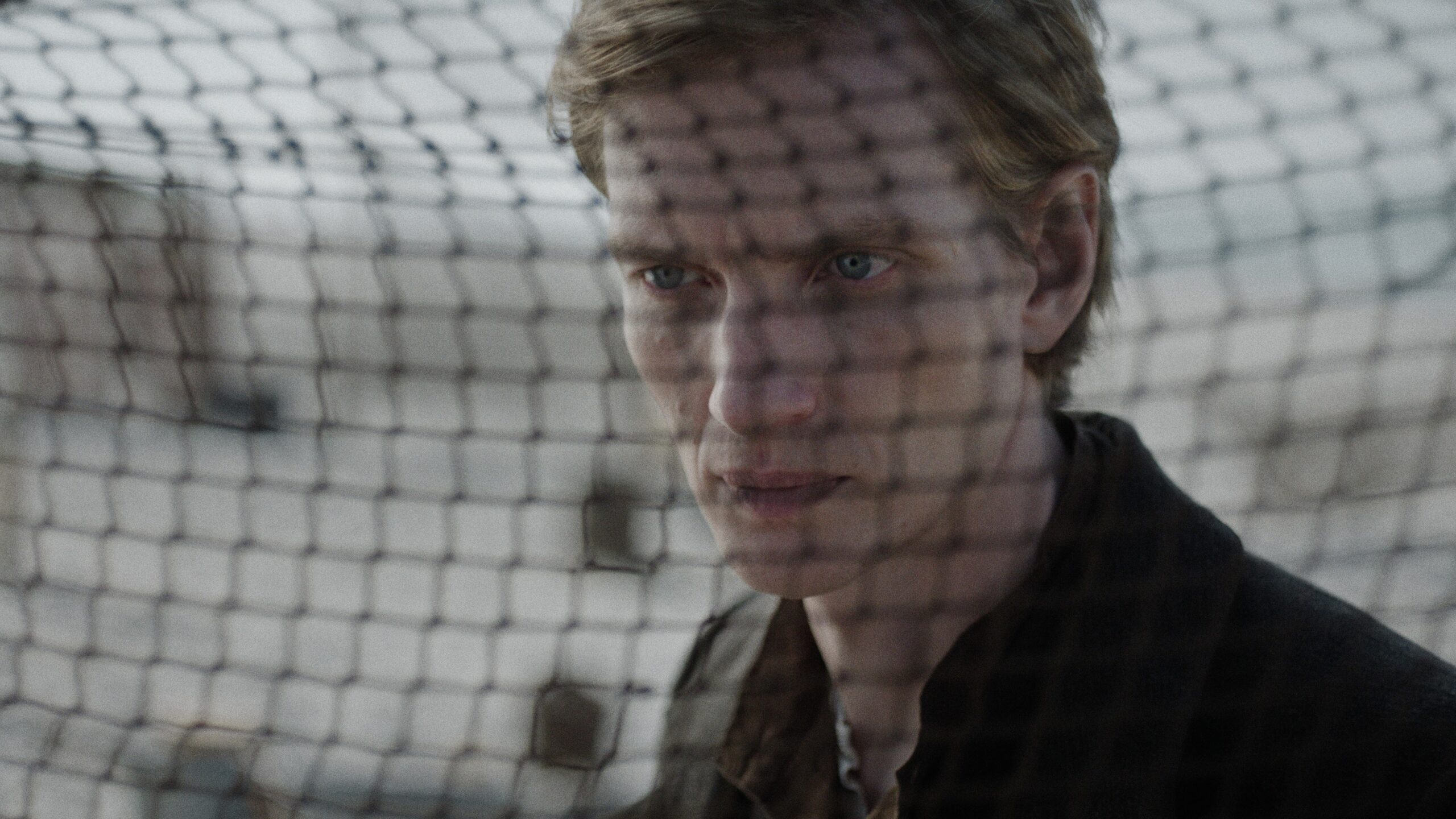
The narrative of Trial of Hein delves into the disquieting experience of returning to a place once called home, only to discover that both the individual and the environment have undergone unrecognizable transformations. Hein’s journey takes him back to the sole village on a secluded North Sea island, a place he left behind over a decade ago. His expectation of a warm homecoming is shattered by the close-knit community’s baffling refusal to recognize him. Even Friedemann, a childhood friend with whom Hein once shared an unbreakable bond, distances himself, adding to Hein’s isolation and confusion.

The community’s suspicion escalates to the point where a village court is convened to scrutinize Hein’s claims of identity. During these hearings, Hein’s vivid memories of his youth starkly clash with the testimonies provided by the islanders. This divergence in narratives fuels the villagers’ growing conviction that Hein is an impostor, transforming their initial wariness into overt hostility. The film masterfully builds a sense of simmering tension, drawing viewers into a deeply personal and psychologically charged exploration of what it means to belong, to be remembered, and to truly know oneself.
A Universal Parable of Self-Discovery
At its core, Trial of Hein is described by its director as a universal parable, intentionally crafted to resonate beyond its specific setting. Stänicke aimed to create a story with a timeless, fairy-tale quality, deliberately avoiding precise historical or geographical markers for the island. This artistic choice allows the film’s central themes of identity, self-deception, and self-acceptance to transcend cultural and temporal boundaries, making it relatable to a broad audience. The director shared that the core idea for the film stemmed from his deeply personal experiences, growing up queer in a small rural German town in the 1990s where he felt unable to fully express himself. His subsequent move to larger cities allowed him to embrace parts of his identity he had previously suppressed.
Returning to his hometown after these formative years brought a flood of emotions, realizing that the life he lived there felt almost like another existence, one he could never truly reclaim. This profound sense of disconnection and the "other life" experience forms the emotional bedrock of Hein’s struggle. The isolation imposed by the COVID-19 pandemic, during which Stänicke drafted the script while staying with his parents in a small farming village, further informed the narrative, reinforcing the universality of ambivalent feelings about "home" and the challenges of reintegration.

Creative Vision and Production Details
The film makes its world premiere at the 74th Berlin Film Festival, a significant platform for emerging cinematic voices. Trial of Hein opens the festival’s "Perspectives" section, dedicated to showcasing innovative works. The ensemble cast features Paul Boche in the demanding lead role of Hein, supported by notable German actors including Philip Günsch, Philip Froissant, Emilia Schüle, Jeanette Hain, Sebastian Blomberg, and Stephanie Amarell.
Behind the camera, Florian Mag is credited with the cinematography, capturing the island’s stark beauty and the characters’ internal turmoil, while Susanne Ocklitz handled the editing. The film was produced by Tamtam Film, in co-production with Lupa Film, with international sales managed by Heretic. Stänicke’s journey to this debut feature was bolstered by earlier recognition: the script for Trial of Hein secured him a place in the Berlinale Talents Script Station and earned him a Wolfgang Kohlhaase scholarship, validating the early potential of his narrative. Prior to this feature, Stänicke directed several live-action and animated shorts, including Gay Goth Scene, Circle, and Pace.
The Island as a Character: Setting and Theatricality

The choice of an island as the primary setting for Trial of Hein was a deliberate and natural one for Stänicke. He envisioned the island as a place at "the end of the world," somewhat otherworldly and inherently isolated, perfectly suited for a reclusive, close-knit community that would resist outsiders or those who challenge its established order. Although the film depicts a singular, remote island, principal photography took place on two actual German islands, Sylt and Norderney, with visual effects employed to create the desired isolated aesthetic for wide shots.
A striking aspect of the film’s artistic design is its theatricality, notably the use of historic or old-sounding language and sets with "missing walls" for houses. This unconventional design choice, partly born out of budgetary constraints, was ingeniously integrated into the film’s thematic fabric. Stänicke cited Lars von Trier’s Dogville as a key inspiration, merging this stage-like aesthetic with the island setting. The open sets reinforce the idea of characters constantly "performing" roles, questioning where authentic self-expression begins and ends. To counter any potential distance created by this theatricality, cinematographer Florian Mag employed a handheld, documentary-style camera, staying intimately close to Hein, ensuring the audience remains immersed in his emotional journey.
The Weight of Memory and Exclusion
A central tenet of Trial of Hein revolves around the theme of conflicting memories and the subjective nature of truth. Stänicke drew directly from his personal experience of growing up queer, where his internal struggles and experiences often surprised family and friends who had only observed his external demeanor. This led him to question the "value of a memory if it’s only based on external observation." The tension between Hein’s deeply personal recollections and the community’s collective, often superficial, memory forms the crux of the village court scenes, forcing Hein to confront which parts of his past are genuinely his and which were merely performances for others.

This exploration of individual versus collective memory resonates deeply with broader societal issues concerning inclusion and exclusion. The film’s themes of a community ostracizing someone perceived as different, or who challenges its established narrative, feel remarkably timely. Stänicke noted the surprising resurgence of these themes in contemporary global discourse, reflecting a societal inclination towards tribalism and suspicion of the "other," even a decade after he first conceived the film’s premise.
A Filmmaker’s Dream Realized
The Berlinale premiere marks a significant milestone for Kai Stänicke, fulfilling a lifelong dream that began at age 12, when he would create homemade versions of his favorite films with classmates. He expressed immense gratitude and excitement, tinged with a touch of nervousness, to finally share Trial of Hein with a global audience. The director hopes this debut will pave the way for future feature films, continuing his passion for storytelling through the cinematic medium. For Stänicke, the opportunity to present his deeply personal and universally resonant parable at such a prestigious festival represents a full-circle moment, celebrating not just the completion of a film, but the realization of a childhood ambition.