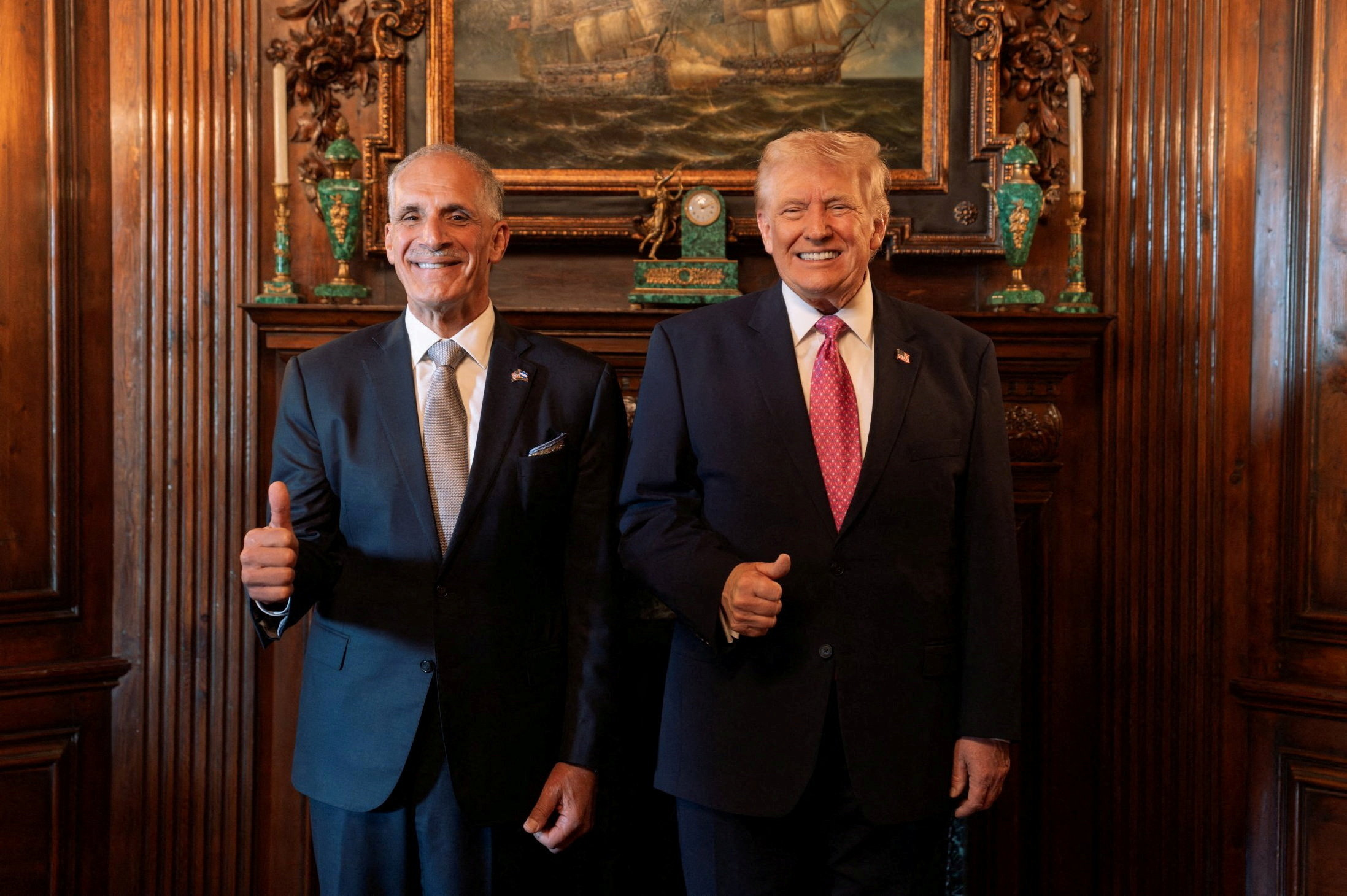
Donald Trump welcomed Honduran President Nasry Asfura to his Mar-a-Lago estate in Florida on Saturday, emphasizing a strengthened alliance focused on combating illicit drug trafficking and irregular migration, key pillars of the former president’s foreign policy agenda. The meeting underscored a significant alignment between the two conservative leaders, with Trump explicitly endorsing Asfura’s recent electoral victory and highlighting shared "America First Values."
The encounter, taking place just days after Asfura’s inauguration, signaled a potentially renewed chapter in U.S.-Honduras relations under a Trump administration, should he win a future election. Trump, who had vocally supported Asfura during his campaign and even threatened to curtail U.S. aid to Honduras if his favored candidate did not prevail, declared on his social media platform, Truth Social, that his endorsement was instrumental in Asfura’s win. This assertion underscores the potent, and at times controversial, influence Trump wields in international politics.
A New Era of U.S.-Honduras Security Cooperation
Following their private discussions at the opulent Mar-a-Lago resort, Trump articulated a vision of robust security cooperation. The United States and Honduras, he stated, would intensify efforts to "counter dangerous Cartels and Drug Traffickers, and deporting Illegal Migrants and Gang Members out of the United States." This commitment reflects a shared strategic objective to enhance border security and disrupt transnational criminal organizations that operate between the two nations.
The president of Honduras is expected to provide a comprehensive briefing to Honduran media on Sunday, detailing the specifics of his discussions with Trump. According to reports from El Heraldo, a prominent Honduran newspaper, Asfura’s briefing will encompass the range of topics addressed, the overall tenor of their conversation, and the potential ramifications of their dialogue for bilateral relations. This transparency is crucial for informing the Honduran public about the outcomes of such high-level diplomatic engagement.
Strategic Alignment in a Shifting Latin American Landscape
Asfura’s ascension to the presidency of Honduras offers Trump another conservative ally in Latin America, a region experiencing significant political realignments. This development occurs against a backdrop of recent electoral shifts in several South American nations, where leftist administrations have been replaced by more conservative governments in countries such as Chile, Bolivia, Peru, and Argentina. The emergence of a like-minded leader in Honduras strengthens a growing bloc of conservative influence that aligns with Trump’s foreign policy objectives.
The timing of Asfura’s meeting with Trump is particularly noteworthy, occurring less than a month after a January 12 engagement with U.S. Secretary of State Marco Rubio. That earlier meeting culminated in the announcement of plans for a free trade agreement between the United States and Honduras, signaling a broader economic agenda alongside security concerns. The pursuit of such trade deals often serves as a tool for fostering economic stability and strengthening diplomatic ties.
The Shadow of Past Controversies: A Pardoned President
The recent political landscape in Honduras has been further complicated by a controversial action taken by Trump just prior to the Honduran election: the pardon of former Honduran President Juan Orlando Hernandez. Hernandez, a member of Asfura’s National Party, was serving a 45-year prison sentence in the United States for drug trafficking. This pardon was widely interpreted as a significant gesture of solidarity with Asfura’s political party and a demonstration of Trump’s willingness to intervene in matters with deep implications for international justice.
Phil Lavelle, reporting for Al Jazeera from Palm Beach, Florida, characterized the pardon as "a gesture of solidarity with the new president’s [Asfura’s] party." This act, however, drew substantial criticism, especially given the Trump administration’s consistent emphasis on combating drug trafficking as a justification for assertive foreign policy actions. Critics pointed to the apparent contradiction of pardoning a convicted drug trafficker while simultaneously advocating for aggressive measures against cartels.
The Trump administration’s approach to combating drug trafficking had previously included forceful actions, such as a series of bombings targeting alleged drug boats in the Caribbean. Furthermore, the U.S. orchestrated the abduction of Venezuela’s President Nicolás Maduro, who now faces charges in the U.S. related to drug trafficking. These precedents cast a complex light on the recent interactions with Honduran leadership and raise questions about the consistency and ethical implications of U.S. anti-drug policy.
Implications for Regional Stability and U.S. Policy
The strengthening of ties between the United States and Honduras under the leadership of Asfura and Trump carries significant implications for regional stability. Both leaders share a hardline stance on immigration and a commitment to robust border control, suggesting a coordinated approach to managing migration flows from Central America. This could translate into increased pressure on Honduras and other Central American nations to implement stricter immigration policies and enhance their own border security measures.
The focus on combating drug trafficking also points to a potential intensification of joint operations and intelligence sharing between U.S. and Honduran law enforcement agencies. Such collaboration is crucial for disrupting the complex networks of transnational criminal organizations. However, it also raises concerns about human rights and the potential for overreach by security forces, particularly in a region with a history of political instability and human rights abuses.
The embrace of Asfura by Trump, despite the controversies surrounding the pardon of Hernandez, highlights the pragmatic nature of Trump’s foreign policy. For Trump, cultivating alliances with leaders who share his political ideology and policy priorities, particularly on issues like immigration and national security, appears to be a paramount objective. This approach may prioritize ideological alignment over concerns about democratic governance or human rights records in partner nations.
Economic Ties and Future Prospects
Beyond security, the renewed focus on a free trade agreement between the U.S. and Honduras signals a desire to foster economic interdependence. Such agreements can offer opportunities for economic growth and development, but their benefits are often unevenly distributed and can sometimes exacerbate existing inequalities. The specific terms of the proposed trade deal, and how it is implemented, will be critical in determining its ultimate impact on the Honduran economy and its citizens.
The meeting between Trump and Asfura serves as a clear indicator of the potential direction of U.S. foreign policy towards Central America should Trump return to the presidency. His emphasis on border security, national sovereignty, and a transactional approach to international relations suggests a continuation of policies that prioritize national interests above multilateral cooperation or broader human rights considerations.
As President Asfura prepares to brief his nation, the world watches to see how this high-profile engagement will shape the future of U.S.-Honduras relations. The convergence of security, economic, and political interests between these two leaders suggests a period of intensified bilateral cooperation, with potentially far-reaching consequences for Central America and the broader international community. The commitment to shared values, as articulated by Trump, points to a partnership built on a foundation of conservative ideology and a mutual desire to address pressing security challenges.