President Donald Trump’s final determination on whether to authorize military action against the Islamic Republic of Iran will depend heavily on the assessments provided by special envoys Jared Kushner and Steve Witkoff. As the White House navigates a high-stakes diplomatic impasse over Tehran’s nuclear capabilities, the president has signaled that his willingness to order airstrikes is contingent upon whether these two trusted advisers believe the Iranian government is negotiating in good faith or merely stalling to preserve its path toward a nuclear weapon.
The administration is currently preparing for a pivotal round of negotiations scheduled for Thursday in Geneva, which officials have characterized as a "last-ditch" effort to secure a diplomatic resolution. Ahead of these talks, the Iranian government is expected to submit a new proposal this week, the details of which will be scrutinized by Kushner and Witkoff. Their evaluation of this proposal will serve as the primary catalyst for the president’s next move, marking a significant moment in U.S.-Middle East relations.
If the Geneva talks fail to produce a definitive agreement for Iran to relinquish its nuclear enrichment capacity, the president has informed senior aides that he is prepared to escalate military pressure. The current contingency plans include a tiered approach, starting with limited, surgical strikes designed to coerce Tehran back to the negotiating table. Should those measures fail, the administration has developed plans for a much broader military campaign aimed at forcing a total change in the Iranian regime.
The Influence of Jared Kushner and Steve Witkoff’s Advice
The central roles of Jared Kushner and Steve Witkoff in this decision-making process underscore the president’s preference for a tight circle of loyalists to manage sensitive foreign policy portfolios. Witkoff, a real estate executive and longtime confidant of the president, has been integrated into all high-level meetings regarding Iran, according to administration officials. His presence in the Situation Room alongside Kushner suggests that the president is prioritizing the judgment of those who have successfully navigated complex international deals in the past.
Kushner, who was a primary architect of the Abraham Accords during the first Trump administration, brings a specific set of regional relationships to the table. His assessment, alongside Witkoff’s, will determine if the Iranian leadership is truly prepared to dismantle its enrichment infrastructure or if they are attempting to exploit diplomatic channels to gain time. This reliance on the two envoys has created a unique dynamic within the West Wing, where traditional diplomatic and military channels are being filtered through the president’s most trusted personal representatives.
White House sources indicate that the president has been receiving exhaustive briefings on a variety of military options. These briefings, the most recent of which occurred in the Situation Room last Wednesday, have included a diverse array of perspectives from across the administration. However, the final "calculus," as one official described it, remains tethered to the feedback Kushner and Witkoff provide following their direct engagement with international counterparts and the Iranian delegation in Geneva.
Geneva Negotiations: A Final Diplomatic Threshold
The upcoming Thursday meeting in Geneva is viewed by many in Washington as the final threshold before a potential kinetic conflict. The Trump administration has maintained a public posture of "maximum pressure," but the upcoming talks offer a narrow window for a diplomatic off-ramp. Witkoff and Kushner will lead the U.S. delegation, tasked with extracting a commitment from Iran that includes a total cessation of uranium enrichment.
The stakes for these negotiations were highlighted on Sunday when Witkoff appeared on national television to reiterate the president’s directive. He stated that the administration’s goal is to ensure Iran retains "zero nuclear enrichment capability." This hardline stance was immediately met with resistance from Tehran. Iranian Foreign Minister Abbas Araghchi responded by stating that the Islamic Republic is not prepared to give up its enrichment program, which it maintains is for peaceful, civilian purposes.
This public posturing suggests a hardening of positions on both sides as the Geneva deadline approaches. Within the administration, some officials have begun exploring potential compromises to avoid a full-scale war. One such "off-ramp" involves allowing Iran to maintain a strictly limited enrichment capability, exclusively for medical research, cancer treatments, or civilian energy production, under the most rigorous international inspection regime ever devised. Whether such a compromise would be acceptable to the president remains an open question.
Strategic Dissent and Military Readiness Concerns
Despite the push toward military readiness, the administration is not without internal debate. Vice President JD Vance has reportedly emerged as a voice of caution, presenting the president with a detailed analysis of the risks associated with airstrikes. While Vance has not explicitly opposed the military option, he has pressed military leaders on the likelihood of success and the potential for a prolonged regional conflict.
Vance has specifically questioned General Dan Caine, the Chairman of the Joint Chiefs of Staff, regarding the sustainability of an air campaign. Sources familiar with the discussions note that Vance has expressed less confidence in the Iran operation than he did in previous successful missions, such as the operation to capture Venezuelan leader Nicolás Maduro. This skepticism is rooted in concerns about Iran’s ability to retaliate against U.S. assets and allies in the region.
General Caine’s own concerns center on the U.S. stockpile of anti-missile systems. During a previous engagement last year, when the U.S. targeted Iranian nuclear sites, the military expended 30 Patriot missiles to intercept retaliatory strikes. This was the largest single use of the Patriot system in American history. Given the current global demand for these systems, military planners are worried that a larger, more sustained conflict with Iran could deplete these critical defenses, leaving U.S. bases and allies vulnerable to a saturated missile attack.

The Looming Shadow of Regime Change
The administration’s planning goes beyond simple deterrence. If the initial limited strikes do not yield a diplomatic breakthrough, the president has authorized the drafting of plans for a comprehensive campaign aimed at the ouster of Supreme Leader Ayatollah Ali Khamenei and his inner circle of religious leaders. This "regime change" scenario represents the most extreme option on the table and has triggered intense debate within the national security apparatus.
The intelligence community, led by CIA Director John Ratcliffe and Director of National Intelligence Tulsi Gabbard, has been tasked with evaluating the internal stability of the Iranian government. There is significant uncertainty within the administration as to whether airstrikes would weaken the regime or, conversely, cause the Iranian population to rally around their leaders in a wave of nationalism. The potential for a power vacuum in Tehran is a variable that the administration is still struggling to account for in its long-term strategy.
Adding to the tension is the rhetoric coming from Tehran. Ayatollah Khamenei recently warned that Iran has the capability to sink a U.S. warship, a threat that has been taken seriously by the Pentagon. The Iranian military has vowed to retaliate "as hard as possible" to any American aggression, raising the specter of a multi-front conflict that could involve Iranian proxies in Lebanon, Iraq, and Yemen.
Regional Power Dynamics and the Israeli Connection
As the U.S. prepares for the possibility of strikes, it is coordinating closely with its primary regional ally, Israel. Secretary of State Marco Rubio is scheduled to travel to Israel on February 28 to meet with Prime Minister Benjamin Netanyahu. This meeting is intended to brief the Israeli government on the outcome of the Geneva negotiations and to align strategic objectives should military action become necessary.
Israel has long viewed a nuclear-armed Iran as an existential threat and has historically advocated for a "red line" regarding enrichment. The coordination between Rubio and Netanyahu suggests that any U.S. military action would likely be supported, or perhaps even joined, by Israeli forces. This partnership is a cornerstone of the administration’s strategy to contain Iranian influence and ensure that any military campaign is decisive.
Other regional actors are also watching the situation with apprehension. Gulf states, including Saudi Arabia and the United Arab Emirates, are concerned about the potential for Iranian retaliation against their oil infrastructure. The administration has reportedly been in contact with these partners to provide assurances and to coordinate defensive postures as the carrier strike groups move into position.
Naval Escalation: The Arrival of the USS Gerald Ford
The physical manifestation of the president’s resolve is currently moving through the Mediterranean. The USS Gerald Ford, the most technologically advanced aircraft carrier in the U.S. Navy, is expected to arrive off the coast of Israel within days. This deployment will bring a second carrier strike group into the region, providing the U.S. with an unprecedented level of air power.
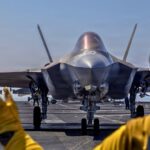
The arrival of the Gerald Ford adds to a formidable assembly of military hardware already in the Middle East. This includes dozens of F-35 and F-22 stealth fighters, long-range bombers, and a massive fleet of refueling aircraft. Military analysts note that this is the largest concentration of U.S. air power in the region since the 2003 invasion of Iraq.
This buildup gives the president the capability to conduct a sustained, high-intensity air campaign. Unlike the limited B-2 bomber strikes carried out last summer against enrichment sites at Fordow, Isfahan, and Natanz, the current force posture is designed for a total degradation of Iran’s military and industrial infrastructure. The presence of two carrier groups allows for 24-hour flight operations, ensuring that the U.S. can maintain constant pressure on Iranian defenses.
Economic and Geopolitical Consequences of Conflict
The prospect of a major conflict with Iran has already begun to ripple through global markets. Energy analysts warn that any disruption to the Strait of Hormuz, through which a significant portion of the world’s oil passes, could lead to a dramatic spike in crude prices. This economic risk is one of the factors being weighed by the White House Chief of Staff, Susie Wiles, as she manages the domestic political fallout of a potential war.
Furthermore, the geopolitical consequences of a regime change campaign in Iran would be profound. Such a move would likely draw condemnation from adversaries like Russia and China, both of whom have strengthened their ties with Tehran in recent years. The administration must balance the immediate goal of nuclear non-proliferation with the long-term risk of a broader global realignment.
As the Thursday deadline in Geneva approaches, the focus remains on the two men at the center of the diplomatic effort. Jared Kushner and Steve Witkoff hold the keys to the next phase of this crisis. Their report to the president will determine whether the United States pursues a historic diplomatic breakthrough or embarks on a military campaign that could reshape the Middle East for a generation. For now, the world waits as the final assessments are prepared and the carrier strike groups close in on their targets.