Viv Li’s feature directorial debut, Two Mountains Weighing Down My Chest, is set to premiere globally at the prestigious Berlin International Film Festival, offering an intimate and genre-bending exploration of cultural identity, self-discovery, and the nuanced search for belonging in an increasingly globalized world. The film, a deeply personal narrative, chronicles Li’s experiences as a Chinese artist navigating the vibrant, often chaotic, alternative cultural scene of Berlin after finding herself unexpectedly rooted there during the COVID-19 pandemic. Its premiere in the Panorama Dokumente section on February 13 highlights its significance as a poignant, contemporary work addressing universal themes of migration and identity.
The film’s evocative title, Two Mountains Weighing Down My Chest, directly reflects Li’s internal struggle, symbolizing the profound pressure and internal conflict she has felt since immersing herself in Berlin’s dynamic environment. A self-described "Chinese artist wannabe," Li’s journey began with a desire to experience life beyond her traditional upbringing in Beijing. This aspiration led her through studies in the U.K., extensive travel across South America and Southeast Asia, and ultimately, to Berlin, where the pandemic necessitated a prolonged stay. It was during this period of unexpected residence that the profound shifts within her began to crystallize, compelling her to document the evolving landscape of her identity.
The Genesis of a Cross-Cultural Odyssey
Li’s initial departure from Beijing was driven by a common human desire for new experiences, a "grass is greener" impulse to deeply understand how others live. This nomadic existence, however, began to leave an indelible mark. "Oh, holy shit, something is changing in me," Li recounted, reflecting on the cumulative effect of prolonged exposure to diverse cultures. Her experiences abroad, she realized, were not merely transient encounters but indelible imprints on her memory and psyche, constantly reshaping her perception of herself and the world. This profound realization became the catalyst for Two Mountains Weighing Down My Chest, a film designed to portray the persistent and shifting effects of memory on identity.
The core tension of the narrative stems from the stark contrast between Li’s traditional Chinese upbringing, which emphasized a "standard" family life and conventional expectations, and the bohemian freedom she encountered in Berlin. Her family in China, perplexed by her unconventional path, frequently questioned her choices, inadvertently intensifying her sense of being an "oddball." As a synopsis of the film highlights, Li is depicted "drifting between new environments and traditional expectations, constantly adapting to shifting opinions about herself, the world, and, of course, China, only to feel more lost than ever." This dynamic forms the emotional backbone of the film, resonating with anyone who has navigated the complexities of cultural adaptation.
Blending Genres: A Playful Quest for Belonging

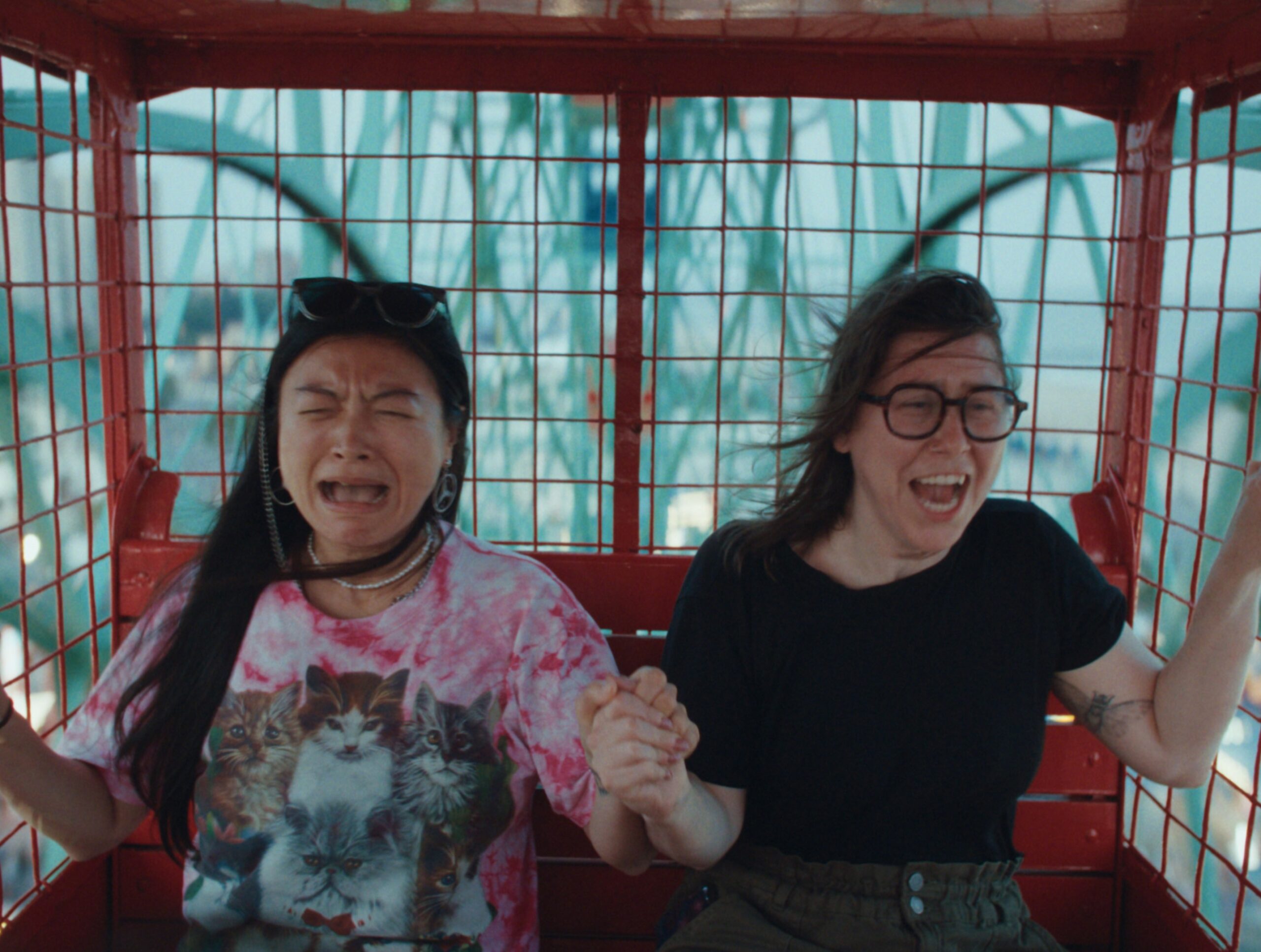
Described as a "genre-bending" movie, Two Mountains Weighing Down My Chest transcends traditional documentary filmmaking by intertwining elements of personal essay, observational cinema, and even surrealist encounters. A logline for the film succinctly captures its spirit: "A Chinese misfit ricochets between Berlin’s alternative frenzy and Beijing’s family order, transforming cultural whiplash into an offbeat search for identity and a playful quest for belonging." The film presents Li’s journey as a kaleidoscope of experiences, from serious philosophical inquiries to humorous and, at times, unexpectedly surreal moments, such as nude swimming, as hinted in the exclusive trailer. This blend of the profound and the playful underscores the multifaceted nature of self-discovery.
Li’s own statement on the film provides further insight into her motivations. She described slowly adopting the "hat" of a Berliner, recognizing that years of striving to "be the other" and gain acceptance had exacted a heavy toll, subtly mirroring her upbringing. Yet, returning to Beijing presented a new challenge: "it became difficult to take off all the ‘hats’ and to see my own face again." This powerful metaphor speaks to the deep psychological impact of cultural assimilation and the challenge of reintegrating into one’s original cultural context after profound personal transformation.
Philosophical Underpinnings and Societal Resonance
The film delves deeply into the philosophical implications of identity in a globalized era. Li shared that her recent immersion in Buddhist philosophy influenced her perspective, particularly the teaching that "there’s actually no self at the end of the day." This realization, she explained, reframes the search for self not as a quest for a fixed destination, but as the search itself, an ongoing process in a world where constant change is the only constant. For Li, accepting the impermanence of self is not a source of fear but of liberation, akin to accepting mortality. "If you accept that there is no stable, static way of your being, you can feel quite comfortable with moving around," she affirmed, offering a profound perspective relevant to the transient nature of modern existence.
Beyond personal introspection, the film touches on broader societal issues. One particularly timely scene features a discussion about the world’s perceived impending doom amidst persistent human conflict. Li noted that this scene, initially optional, proved vital to the film’s message of "non-judgment and non-definition." It underscores that opinions are fluid and diverse, and no single perspective holds ultimate authority. This echoes her observation about Berlin, where despite its perceived freedom, she encountered a pressure to conform to specific definitions, be it non-binary or other labels. Li advocates for embracing ambiguity, recognizing that "sometimes there is no definition."
The Filmmaker’s Vulnerability and Authenticity
Taking on the dual roles of director and subject, Li made the deliberate choice to step in front of the camera, a decision informed by her previous short film, I Don’t Feel at Home Anywhere Anymore. She found that her vulnerability empowered her subjects, making them feel more at ease. "You already hold power as a director, you relax people. They will feel, ‘Okay, Viv is with me in front of the camera. She’s as vulnerable as me,’" Li explained. She views the film as a "tiny part of my life," comfortable sharing this intimate facet to encourage audience identification and reflection on their own narratives.

The film’s authenticity is further bolstered by Li’s preference for real moments over scripted ones. During editing, she observed that "all reenacted scenes were not as good as the original moment," recognizing the inherent power and "vibe" of genuine, spontaneous occurrences. Two Mountains Weighing Down My Chest skillfully weaves together real-life encounters with fictionalized elements, blurring the lines between documentary and narrative storytelling. This hybrid approach, Li believes, harnesses the strength of documentary realism while allowing for creative narrative construction, a trend she appreciates in contemporary filmmaking.
Production and Festival Spotlight
The production of Two Mountains Weighing Down My Chest involved a collaborative team. Viv Li not only wrote and directed the screenplay but also shared cinematography duties with Janis Mazuch. Christoph Bargfrede served as editor, with Marcel Walvisch handling sound design. The film was produced by Corso Films in co-production with 100% Film and ZDF – Das Kleine Fernsehspiel, with Daniela Dietrich, Erik Winker, Martin Roelly, and Ümit Uludağ as producers. Olivia Sophie Van Leeuwen and Ruby Deelen were co-producers, and Mediawan Rights is managing world sales, indicating significant industry backing for this debut feature.
Its inclusion in the Berlin International Film Festival’s Panorama Dokumente section is a testament to the film’s artistic merit and its capacity to engage with pressing social and cultural issues. The Berlinale is one of the world’s most prestigious film festivals, renowned for its commitment to showcasing diverse voices and groundbreaking cinema. A premiere at such a high-profile event provides a global platform for Li’s work, ensuring it reaches a wide international audience eager for films that challenge conventional narratives and explore the complexities of modern identity.
Looking Ahead: From Personal Documentaries to Collaborative Fiction
While Two Mountains Weighing Down My Chest marks a significant milestone in Li’s career, she is already embarking on new creative endeavors. Her next project is a fiction script, inspired by a road trip she took nearly a decade ago. This shift from autobiographical documentary to narrative fiction reflects a desire for a different filmmaking experience. Having also worked on short fiction films in recent years, Li has found a greater sense of community in collaborative fiction projects, a stark contrast to the often solitary nature of documentary filmmaking. "Doing a documentary sometimes is really lonely," she acknowledged, expressing an eagerness for the collective spirit that fiction production offers.
Two Mountains Weighing Down My Chest promises an emotional and intellectually stimulating experience, inviting audiences to reflect on their own understanding of self, culture, and belonging. With its blend of humor, seriousness, and philosophical depth, the film is poised to resonate deeply with a global audience grappling with the fluid nature of identity in an interconnected world. The film is an urgent and timely reflection on what it means to be truly "at home" in an era of constant change and cultural flux, offering not definitive answers but the liberating insight that the search itself is the ultimate destination.