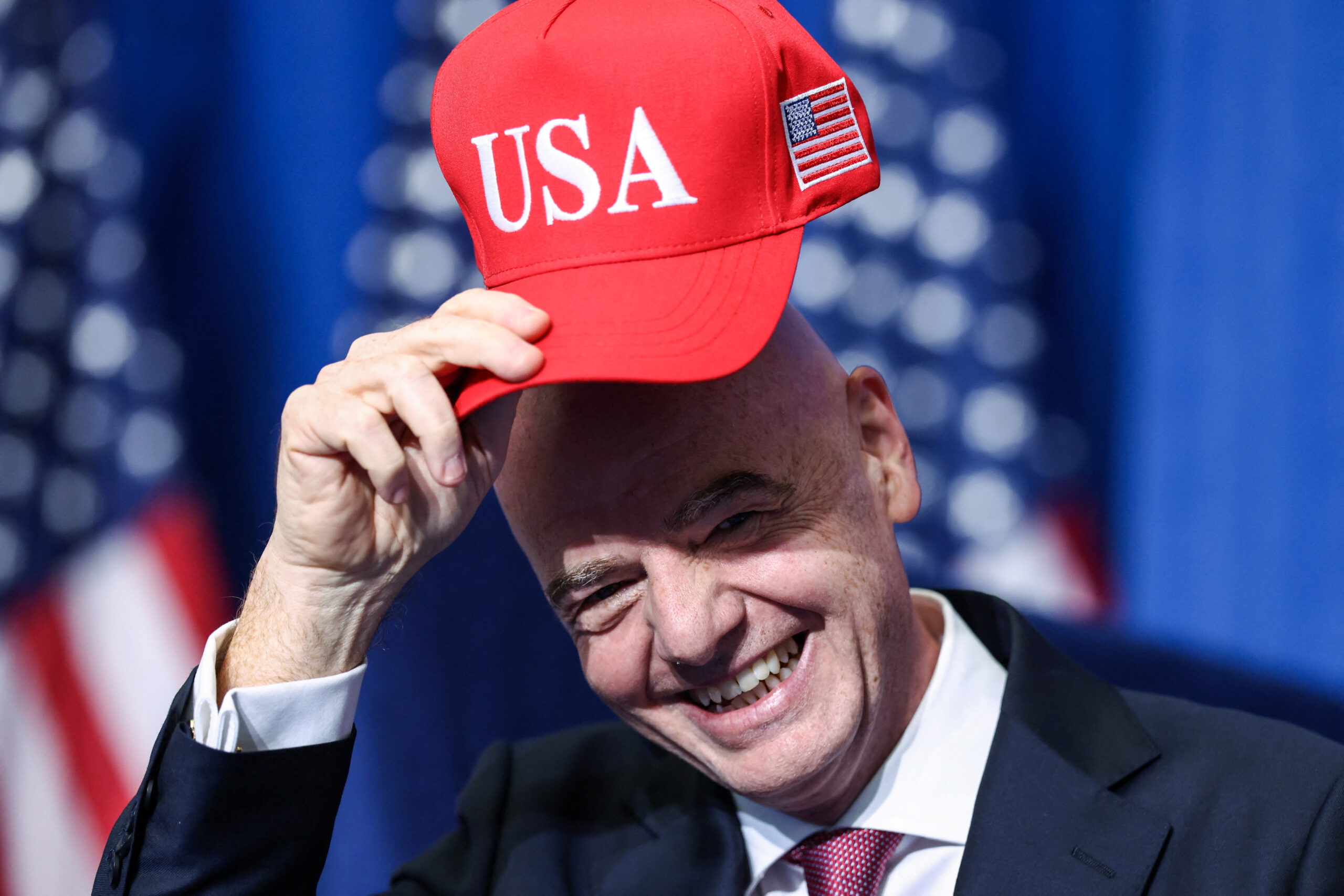
A significant legal challenge has been mounted against the leadership of global football’s governing bodies, FIFA, and its European counterpart, UEFA, with a formal referral to the International Criminal Court (ICC) accusing top officials of complicity in alleged war crimes and crimes against humanity. The complaint, lodged by a coalition of Palestinian footballers, clubs, and advocacy organizations, specifically targets FIFA President Gianni Infantino and UEFA President Aleksander Čeferin. This unprecedented legal action asserts that the duo have "aided and abetted" severe international offenses by permitting the Israel Football Association (IFA) to operate clubs based in Israeli settlements on occupied Palestinian territory.
Historic Complaint Targets Top Football Executives
The 120-page filing, submitted on February 16, marks a landmark moment, representing the first time sports administrators of Infantino’s and Čeferin’s stature have been accused of such grave international crimes. The plaintiffs contend that the continued sanctioning of Israeli clubs situated in the West Bank, which they argue are established on "stolen settlement land," constitutes a direct violation of international law. This legal maneuver aims to dismantle the perceived impunity surrounding Israeli policies in the occupied territories and challenge what is described as "Israeli apartheid, occupation and genocide."
The stakes are exceptionally high, given football’s unparalleled global reach and cultural significance. With an estimated five billion fans worldwide, the sport serves as a potent platform for both entertainment and, potentially, for the enforcement of international justice. The outcome of this case could establish a critical legal precedent, sending a clear message to leaders of all major corporate and sporting entities about their accountability under international law.
The Allegations: Aiding and Abetting International Crimes
The core of the complaint rests on the argument that FIFA and UEFA, by their inaction and continued recognition of the IFA and its settlement-based clubs, are effectively enabling and normalizing illegal Israeli settlements. This practice, the filing asserts, directly contravenes the Rome Statute, the foundational treaty of the ICC. Specifically, the complaint alleges that the transfer of civilian populations into occupied territories, a war crime under Article 8(2)(b)(viii) of the Rome Statute, is facilitated by the integration of these clubs into official league structures.
Furthermore, the prohibition of Palestinian participation in matches, or their exclusion from playing for or managing these settlement-based teams, is cited as evidence of aiding and abetting apartheid, a crime against humanity under Article 7(1)(j) of the Rome Statute. The filing contends that Infantino and Čeferin have acted with full awareness of these violations, having deliberately ignored numerous reports and appeals urging intervention.
"Athleticidie" and the Destruction of Palestinian Sports Infrastructure
The complaint also highlights the devastating impact of Israeli military actions on Palestinian sports. In the course of its operations, particularly in Gaza, Israel has reportedly killed 1,007 Palestinian sportspeople and destroyed or damaged hundreds of sports facilities. While this widespread destruction, termed "athleticide" by the plaintiffs, cannot be directly attributed to the IFA, the broader context of occupation and conflict underscores the urgency of the legal challenge.
The IFA’s alleged complicity, the referral argues, stems from its activities linked to clubs from illegal Israeli settlements. These clubs’ participation in both domestic and international tournaments is seen as a direct endorsement and furtherance of Israeli occupation and apartheid policies. Despite repeated demands for the suspension of these clubs or the IFA itself, UEFA and FIFA leadership have remained unresponsive.
FIFA and UEFA Leadership’s Stance on Sanctions
FIFA President Gianni Infantino has publicly expressed his opposition to banning Israeli teams from international football competitions. In a recent interview, he characterized such a ban as a "defeat" and advocated for enshrining in FIFA statutes that no country should be expelled from football participation solely due to the actions of its political leaders. This position, however, draws sharp criticism given FIFA’s own precedent.
In 2022, FIFA, under Infantino’s leadership, suspended Russia from international competitions and banned Crimean clubs from playing in the Russian league following Russia’s annexation of the Ukrainian peninsula in 2014. This inconsistency highlights what critics describe as a selective application of principles, particularly when it comes to addressing Israeli actions.
The Legal Framework: FIFA Statutes and International Law
The complaint leverages specific provisions within FIFA’s own statutes to bolster its case. Article 64(2) of the FIFA Statutes explicitly prohibits member associations and their clubs from playing on the territory of another member association without the latter’s approval. The filing asserts that by allowing the IFA to oversee clubs operating on occupied land, Infantino and Čeferin are in violation of this rule, as well as broader international legal pronouncements.
These include a 2024 ruling by the International Court of Justice (ICJ) and a United Nations General Assembly resolution, both of which declared Israeli settlements in occupied territory to be unlawful and demanded an immediate cessation of settlement activities and the evacuation of settlers. The presence of sanctioned Israeli clubs in the West Bank settlements is therefore argued to normalize colonization, a direct contravention of international humanitarian law.
The ICC Process: From Complaint to Investigation
The referral to the ICC initiates a preliminary examination by the Office of the Prosecutor. This stage will assess whether the elements of jurisdiction, admissibility, and the interests of justice are met. Following this review, the Prosecutor will decide whether to decline opening an investigation or to proceed with a formal inquiry into the allegations.
Should an investigation be launched, evidence-gathering will commence, potentially leading to the issuance of arrest warrants or summonses for the accused individuals. Such an outcome would have profound implications, not only for Infantino and Čeferin but also for the broader landscape of international sports governance and its relationship with human rights and international law.
Precedent and the Challenge to Impunity
The potential for arrest warrants against Infantino and Čeferin presents a stark contrast to the situation of some political leaders. While Israeli Prime Minister Benjamin Netanyahu has reportedly sought to avoid an ICC arrest warrant by avoiding travel to states that are signatories to the Rome Statute, Infantino and Čeferin, in their official capacities, would find it significantly more challenging to evade such measures if they were enforced.
The immense financial and cultural power wielded by FIFA and UEFA positions them as de facto regulatory monopolies, whose rules and regulations carry the weight of national legislation. The substantial economic interests at play, estimated to be in the hundreds of millions of dollars, underscore the significant leverage these organizations possess. This leverage, critics argue, has been used to maintain a stance of "political neutrality" that ultimately benefits the status quo of the Israeli occupation.
Sportswashing and the Politics of Football
Michael Lynk, former UN Special Rapporteur on the occupied Palestinian territory, has strongly criticized FIFA and UEFA’s actions, accusing them of "sportswashing" the illegal Israeli occupation. He argues that by permitting clubs based in illegal settlements to participate in their leagues, these organizations are failing to uphold international law and the principles of fairness and equity.
The notion of "political neutrality" in sports, particularly at the highest levels, is increasingly being challenged. The argument is that in an industry so deeply intertwined with global politics and economic interests, such a stance often serves to mask the political implications of decisions and inaction. The current legal challenge seeks to expose this reality and demand accountability for those who preside over this powerful global industry.
The Path Forward: Accountability and International Law
The complaint filed against Infantino and Čeferin represents a critical juncture in the long-standing campaign for justice for Palestine. It moves beyond diplomatic appeals and seeks to hold the leadership of one of the world’s most influential sporting bodies directly accountable under international criminal law. The ICC’s preliminary examination will be closely watched, as it will determine whether this historic legal challenge will proceed to a full investigation, potentially setting a new standard for the intersection of sports, politics, and international justice. The principle that no entity, no matter how powerful or culturally significant, stands above international law is now being put to the test.