London – The United Kingdom’s High Court has delivered a significant ruling, declaring the government’s designation of the pro-Palestinian campaign group Palestine Action as a "terror group" to be unlawful. This landmark decision stems from a legal challenge brought forth by Huda Ammori, a co-founder of the organization. The court’s judgment invalidates the ban, which had severely curtailed the group’s activities and public presence.
The High Court’s finding represents a major victory for Palestine Action and its supporters, who have consistently argued that the ban was an overreach of governmental power and a suppression of legitimate protest. The ruling opens the door for the group to resume its advocacy efforts without the legal constraints imposed by the terror designation. Legal experts suggest this outcome could have far-reaching implications for the government’s approach to protest movements and the definition of what constitutes a terrorist organization.
Background to the Palestine Action Ban
Palestine Action emerged in recent years as a prominent voice in the UK’s ongoing debate surrounding the Israeli-Palestinian conflict. The group gained notoriety for its direct-action tactics, often targeting companies and institutions it accused of complicity in actions against Palestinians. These actions included protests at the offices of arms manufacturers and firms with business ties to Israel.
The government’s decision to proscribe Palestine Action under terrorism legislation was met with widespread criticism from civil liberties groups and human rights organizations. Critics argued that the move disproportionately targeted peaceful dissent and conflated activism with extremism. The legal challenge mounted by Huda Ammori aimed to dismantle this designation, asserting that the group’s activities did not meet the legal threshold for being classified as a terrorist organization.
The Legal Challenge and Court Proceedings
The case proceeded through the UK’s judicial system, culminating in the High Court’s detailed examination of the evidence and legal arguments. Lawyers representing Huda Ammori presented a robust case, contending that the government had failed to provide sufficient grounds for the ban. They emphasized that Palestine Action’s core mission was to campaign for Palestinian rights and that its methods, while sometimes disruptive, did not constitute terrorism.
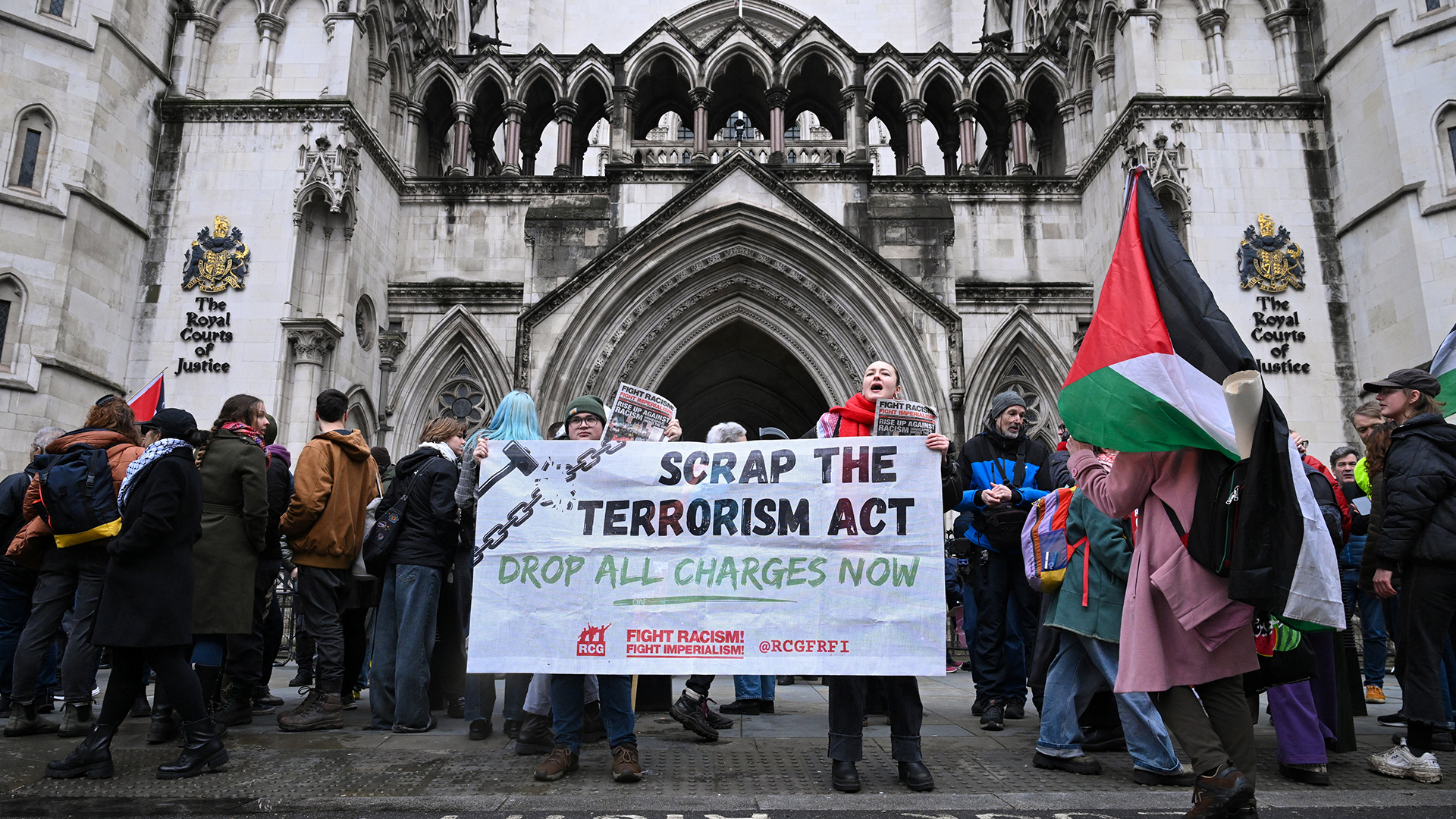
The court’s deliberation focused on whether the Home Secretary had acted within the bounds of the law when designating Palestine Action. The ruling indicates that the process or the justification for the ban was found to be legally flawed. This suggests a meticulous review of the evidence and the legal framework governing such designations. Rory Challands, reporting from outside the court in London, highlighted the significance of the day’s proceedings for free speech advocates.
Unlawful Designation: The Court’s Reasoning
While the full published judgment will offer granular detail, initial reports indicate the High Court found the government’s application of the law to be unlawful. This could relate to procedural irregularities, insufficient evidence, or an incorrect interpretation of the legal criteria for proscription. The core of the ruling appears to be that Palestine Action, as a group, did not meet the legal definition of a terrorist organization as defined by UK law.
The court’s decision underscores the importance of due process and the need for robust evidence when the state seeks to curtail the activities of any organization. The unlawful designation means that the government’s previous actions against Palestine Action lacked proper legal foundation. This has significant implications for the group’s ability to operate and for the broader landscape of protest rights in the UK.
Impact on Pro-Palestinian Activism
The High Court’s ruling is expected to have a profound impact on pro-Palestinian activism in the United Kingdom. The ban had cast a shadow over the movement, potentially deterring individuals from participating in or supporting groups deemed to be at risk of proscription. With the designation overturned, Palestine Action can now more freely engage in its campaigning activities, potentially invigorating the broader movement.
This legal victory may also embolden other activist groups facing similar pressures. It serves as a reminder that governmental powers, even those enacted under the guise of national security, are subject to judicial review. The ability of grassroots organizations to challenge state decisions through the legal system is a crucial element of democratic accountability.
Broader Implications for Civil Liberties and Protest Rights
The judgment extends beyond the specific case of Palestine Action, touching upon fundamental issues of civil liberties and the right to protest in the UK. Critics of the government’s approach to activism have often pointed to an increasing trend of restrictions on public demonstrations and the use of broad legislation to stifle dissent. This court ruling offers a counterpoint, reinforcing the principle that legitimate protest should not be equated with terrorism.
The ruling could lead to a reassessment of how the government classifies and deals with protest movements. It highlights the need for clear distinctions between peaceful advocacy, even if disruptive, and genuine threats to national security. Civil liberties organizations are likely to view this as a positive development, reinforcing the importance of protecting freedom of expression and assembly.
Reactions and Future Steps
The immediate reaction from Palestine Action and its supporters has been one of jubilation and vindication. Huda Ammori and other group members have expressed their determination to continue their advocacy with renewed vigor. They are expected to seek to rebuild their organizational capacity and to ramp up their campaigning efforts.
Conversely, the government may consider its options, including whether to appeal the High Court’s decision. If the government chooses not to appeal, or if an appeal is unsuccessful, the ruling will stand, effectively clearing Palestine Action of the "terror group" designation. The long-term consequences will depend on how the government responds and how the group utilizes its newfound legal standing.
The High Court’s decision on the UK ban of Palestine Action as a "terror group" marks a significant moment in the ongoing dialogue surrounding protest, activism, and state power. The unlawful designation being overturned by the court signifies a crucial affirmation of legal principles and civil liberties. The ruling is poised to reshape the landscape of political activism in the United Kingdom, particularly concerning groups advocating for Palestinian rights.
The Significance of the High Court’s Ruling
The High Court’s pronouncement that the UK ban on Palestine Action was unlawful carries substantial weight. It underscores the critical role of the judiciary in safeguarding fundamental rights against potential governmental overreach. The ruling serves as a powerful affirmation that even in matters of national security and public order, adherence to due process and the rule of law is paramount.
The decision directly challenges the government’s prerogative to label and proscribe organizations without meeting stringent legal thresholds. This emphasis on legal justification is vital for maintaining public trust and ensuring that such powers are not wielded arbitrarily. The judgment reinforces the idea that freedom of expression and the right to protest are cornerstones of a democratic society, requiring clear and justifiable limitations.
International Context and the Israeli-Palestinian Conflict
The case of Palestine Action unfolds against the backdrop of the protracted and deeply complex Israeli-Palestinian conflict. Activist groups in the UK and globally have long campaigned against what they perceive as injustices and human rights violations in the Palestinian territories. The UK government’s stance on this conflict, and its approach to domestic activism related to it, often draws international attention.
The High Court’s ruling on the proscription of Palestine Action could influence how other nations perceive the UK’s commitment to freedom of speech and assembly, particularly when these rights intersect with highly charged international political issues. It highlights the global interconnectedness of advocacy efforts and the legal frameworks that govern them.
Future of Activism and Legal Precedent
The aftermath of this ruling will likely see increased scrutiny of the legal criteria used for proscribing organizations in the UK. Activist groups, emboldened by this victory, may be more inclined to challenge similar designations in the future. This could lead to a series of legal battles that further define the boundaries of protest rights and governmental authority.
Furthermore, the ruling may serve as a significant legal precedent, influencing how future cases involving the proscription of activist groups are handled. The court’s clear articulation of the unlawcial nature of the ban on Palestine Action provides a benchmark for assessing the legality of such measures. This could foster a more cautious and evidence-based approach by the government when considering restrictions on public assembly and advocacy.
Concluding Thoughts on the Legal Landscape
The High Court’s definitive statement on the unlawful nature of the ban on Palestine Action represents a pivotal moment. It reaffirms the importance of judicial oversight in balancing security concerns with fundamental civil liberties. The ruling is a clear message that the government’s powers to restrict activist groups are not absolute and are subject to rigorous legal challenge. This development is likely to have lasting repercussions for the dynamics of protest, advocacy, and state power within the United Kingdom.