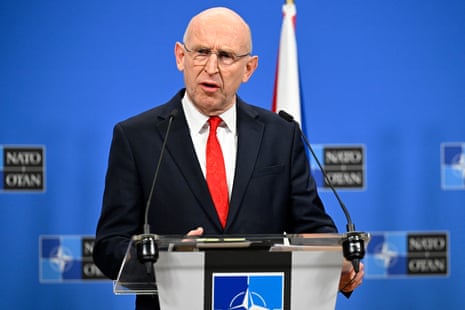
British Defence Secretary John Healey confirmed in a high-profile editorial this weekend that he intends to oversee the deployment of British armed forces to Ukraine, framing the move as a definitive signal that the protracted conflict with Russia has reached a diplomatic conclusion. Writing for the Sunday Telegraph just days before the fourth anniversary of the full-scale Russian invasion, Healey argued that the presence of British personnel on Ukrainian soil would represent the realization of a negotiated peace and the establishment of a secure, sovereign state in Eastern Europe.

The Defence Secretary’s remarks come at a pivotal moment in the conflict, as the international community weighs the long-term security architecture required to prevent future Russian aggression. Healey’s statement suggests a shift in the British government’s strategic posture, moving from the provision of long-range weaponry and intelligence to the potential for a physical presence as part of a post-conflict stabilization effort. He noted that while committing forces to overseas operations is the heaviest burden a government can carry, he aims to be the official who executes this deployment because it would signify that the "terrible war" has finally ended.
Defence Secretary Says He Hopes to Deploy British Troops to Ukraine as Part of Post-War Security
The proposed deployment is closely linked to ongoing discussions among European allies regarding a "coalition of the willing." This multinational force, first proposed in late 2025, is designed to support a peace agreement that has remained elusive due to the Kremlin’s insistence on maximalist territorial demands. Under the current framework, British troops would join forces from France, Germany, and at least eight other European nations to assist in the "regeneration" of Ukraine’s military capabilities and the protection of its territorial integrity.
According to government officials, the mission would likely focus on several key pillars: securing Ukrainian airspace, ensuring the safety of maritime trade routes in the Black Sea, and providing on-the-ground training to rebuild Kyiv’s depleted domestic forces. This plan is contingent on a formal peace deal being reached between Moscow and Kyiv, with the multinational force serving as a deterrent against any future violations of Ukrainian sovereignty by the Russian Federation.
The Kremlin has responded to these proposals with characteristic hostility. Russian Foreign Minister Sergei Lavrov stated through the state news agency Tass that any European military contingents entering Ukraine would be viewed as "legitimate targets" for Russian strikes. Lavrov accused European leaders of being "blinded by ambition" and suggested that the deployment of foreign troops would only escalate the risk of a direct confrontation between Russia and NATO-aligned powers.

Geopolitical Tensions and the Global "Coalition of the Willing"
The UK government is currently navigating a complex diplomatic landscape to finalize the details of this coalition. The objective is to provide Ukraine with "security guarantees" that do not necessarily involve full NATO membership in the immediate future but offer a comparable level of protection through the physical presence of Western military personnel. This strategy is viewed by some analysts as a necessary compromise to satisfy US demands for a sustainable peace plan that shifts more of the security burden onto European nations.
However, the timing of Healey’s announcement is also seen as a morale booster for Ukrainian forces currently facing intense pressure on the front lines. By signaling a long-term commitment to Ukrainian security, London is attempting to demonstrate that Western support will not evaporate even if the conflict transitions into a frozen state or a negotiated settlement. The "coalition of the willing" is intended to function as a tripwire, ensuring that any future Russian incursions would immediately involve multiple European powers.
Transatlantic Trade Friction Amidst Defence Secretary Says He Hopes to Deploy British Troops to Ukraine
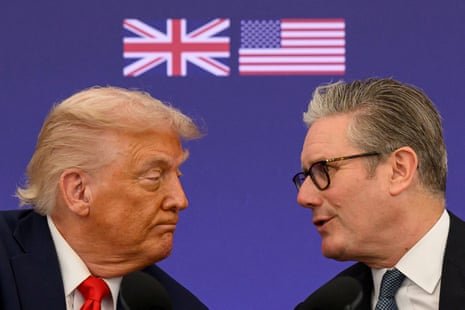
While the UK coordinates military strategy with its European neighbors, it is simultaneously engaged in damage control regarding its economic relationship with the United States. High-level talks are currently underway between London and the Trump administration following the US President’s announcement of a 15% global tariff on all foreign imports. This move followed a US Supreme Court ruling that declared previous "reciprocal" tariffs illegal, prompting the White House to pivot to a different legal framework under the 1974 Trade Act.
The new tariff regime poses a significant threat to the Economic Prosperity Deal (EPD) signed by Prime Minister Keir Starmer and Donald Trump in May 2025. For British exporters, the 15% global tariff could represent a net 5% increase over existing costs, potentially stifling trade in key sectors such as automotive manufacturing, aerospace, and luxury goods. Business leaders in the UK have urged the government to "double down" on the EPD rather than retreating, arguing that a preferential trade arrangement with the US remains vital for national economic growth.

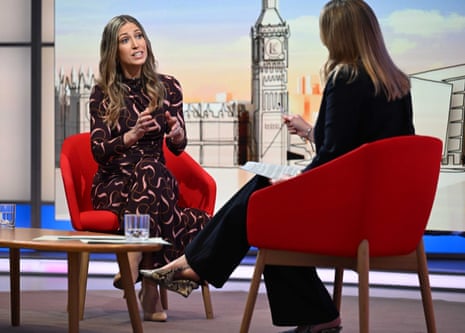
Education Secretary Bridget Phillipson admitted on Sunday that British firms are facing a period of "acute uncertainty." Despite the looming tariff wall, Phillipson insisted during a Sky News interview that the government expects its "preferential" status to be maintained. The intersection of these trade tensions and military commitments highlights the delicate balancing act the Starmer administration must perform to maintain its special relationship with Washington while asserting leadership within Europe.
Domestic Policy Challenges: The Schools White Paper and SEND Overhaul
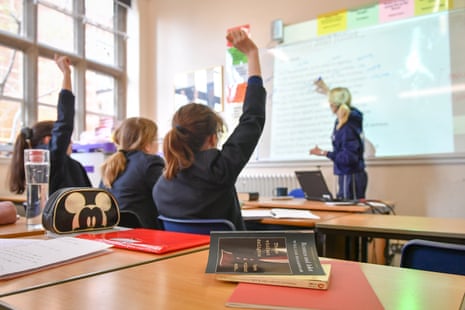
Domestically, the British government is preparing to launch one of its most ambitious and contentious policy initiatives to date. A new schools white paper, scheduled for release on Monday, aims to halve the "attainment gap" between the country’s poorest students and their wealthier peers. This initiative, spearheaded by Bridget Phillipson, seeks to decouple a child’s background from their eventual academic and professional success, with a specific focus on underperforming regions in the North East and coastal communities.
A central—and controversial—pillar of this reform is a total overhaul of the Special Educational Needs and Disabilities (SEND) system. The government plans to raise the eligibility bar for Education, Health, and Care Plans (EHCPs), which currently provide legal entitlements to support for nearly 500,000 pupils. Under the new proposals, EHCPs will be reserved for children with the most "severe and complex" needs, while those with less acute challenges will be moved to lower tiers of support.
The Shadow Education Secretary, Laura Trott, has already signaled fierce Conservative opposition to the plan, describing the prospect of reassessing vulnerable children as "genuinely frightening" for parents. Critics argue that the reforms are a thinly veiled attempt to reduce spending as local authorities struggle with a massive backlog of applications. Phillipson, however, countered that the current system is "adversarial" and "broken," promising that the new framework will deliver support determinations in "weeks, not months or years."
Political Pressure Mounts Over Student Loan "Debt Traps"
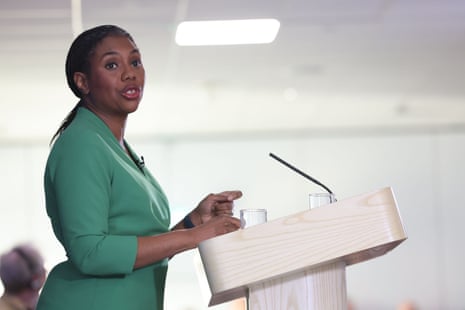
The government is also facing a backlash over the rising costs of higher education. Conservative Leader Kemi Badenoch has called for the elimination of high interest rates on student loans, labeling the current "Plan 2" system an "unfair debt trap." Under current rules, graduates repay 9% of their earnings over a specific threshold, but high interest rates—often RPI inflation plus 3%—mean that many borrowers see their balances increase even as they make regular payments.
Badenoch’s proposal to cap interest rates at the Retail Price Index (RPI) has put the Treasury under significant pressure ahead of the upcoming Spring Statement. Meanwhile, the Conservative frontbench has suggested more radical measures, including the closure of up to 100,000 university places in "dead-end" courses that do not lead to high-earning careers. Shadow Education Secretary Laura Trott specifically pointed to creative arts courses, claiming that 75% of the associated loans are never repaid, suggesting that the funding would be better utilized for vocational apprenticeships.
Royal Scandal and the Misconduct Investigation of Prince Andrew
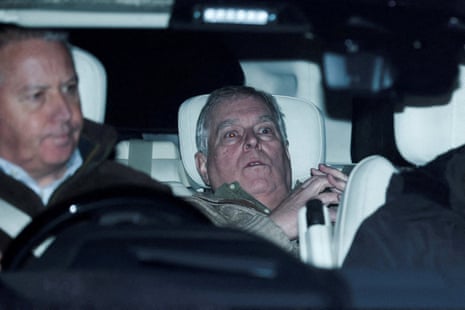
The political and social climate in the UK has been further destabilized by the unprecedented legal crisis surrounding Andrew Mountbatten-Windsor. Following his arrest on suspicion of misconduct in public office, calls for a full judicial inquiry into his ties to convicted sex offender Jeffrey Epstein have reached a fever pitch. Former Prime Minister Gordon Brown has reportedly written to six different police forces, urging them to investigate whether the former prince used taxpayer-funded RAF jets and military bases to facilitate meetings with Epstein during his tenure as a UK trade envoy.
The investigation focuses on the period between 2001 and 2011, during which Andrew had privileged access to government resources. There are allegations that confidential information may have been leaked during these trips and that official resources were misappropriated for personal engagements. While the former prince has denied all wrongdoing, the government is now "not ruling anything out" regarding his future status, including the potential for an act of parliament to remove him from the royal line of succession.
Robert Jenrick, the Reform UK economy spokesperson, stated that his party would support legislation to exclude Andrew from the succession, noting that the former prince has "disgraced the royal family and the country." King Charles III has issued a statement supporting the legal process, emphasizing that "no one is above the law." The prospect of a member of the royal family facing prosecution for misconduct in public office has created a constitutional headache for the government, further complicating an already crowded legislative agenda.
Strategic Outlook and the Road Ahead for the UK Government
The convergence of these international and domestic crises presents a significant challenge to the stability of the current administration. As the Defence Secretary says he hopes to deploy British troops to Ukraine to cement a future peace, he must do so against a backdrop of economic threats from the US and a deeply divided public at home. The success of the "coalition of the willing" depends not only on the situation in Kyiv but also on the UK’s ability to maintain its influence on the global stage while managing domestic unrest over education and the monarchy.
The upcoming weeks will be critical for the Starmer government as it unveils its schools white paper and navigates the fallout from the Prince Andrew investigation. Whether the administration can successfully implement its domestic reforms while leading a multinational military coalition remains to be seen. The promise of a post-war deployment to Ukraine stands as a bold statement of intent, but the path to that peace is fraught with geopolitical risks and economic hurdles that will test the resilience of British diplomacy in the years to come.