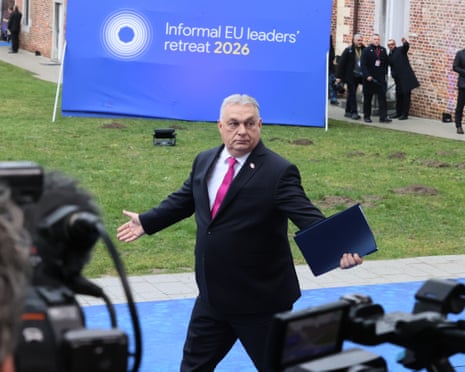
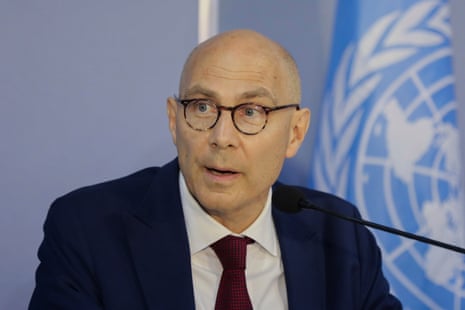
The United Nations High Commissioner for Human Rights issued a formal demand on Thursday as the UN calls on Russia to stop attacks on Ukraine energy sites following a wave of missile and drone strikes that has paralyzed the nation’s power grid during a period of record-breaking sub-zero temperatures. United Nations rights chief Volker Türk described the ongoing campaign against civilian infrastructure as a violation of international humanitarian law, noting that the strikes have left hundreds of thousands of people without heat, water, or electricity in what is now the fourth year of the conflict. The escalation in Moscow’s aerial campaign comes at a critical juncture as European leaders and NATO ministers gather to discuss the future of Western security and the long-term economic stability of the region.

The Humanitarian Toll of Energy Infrastructure Strikes
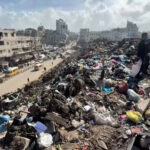
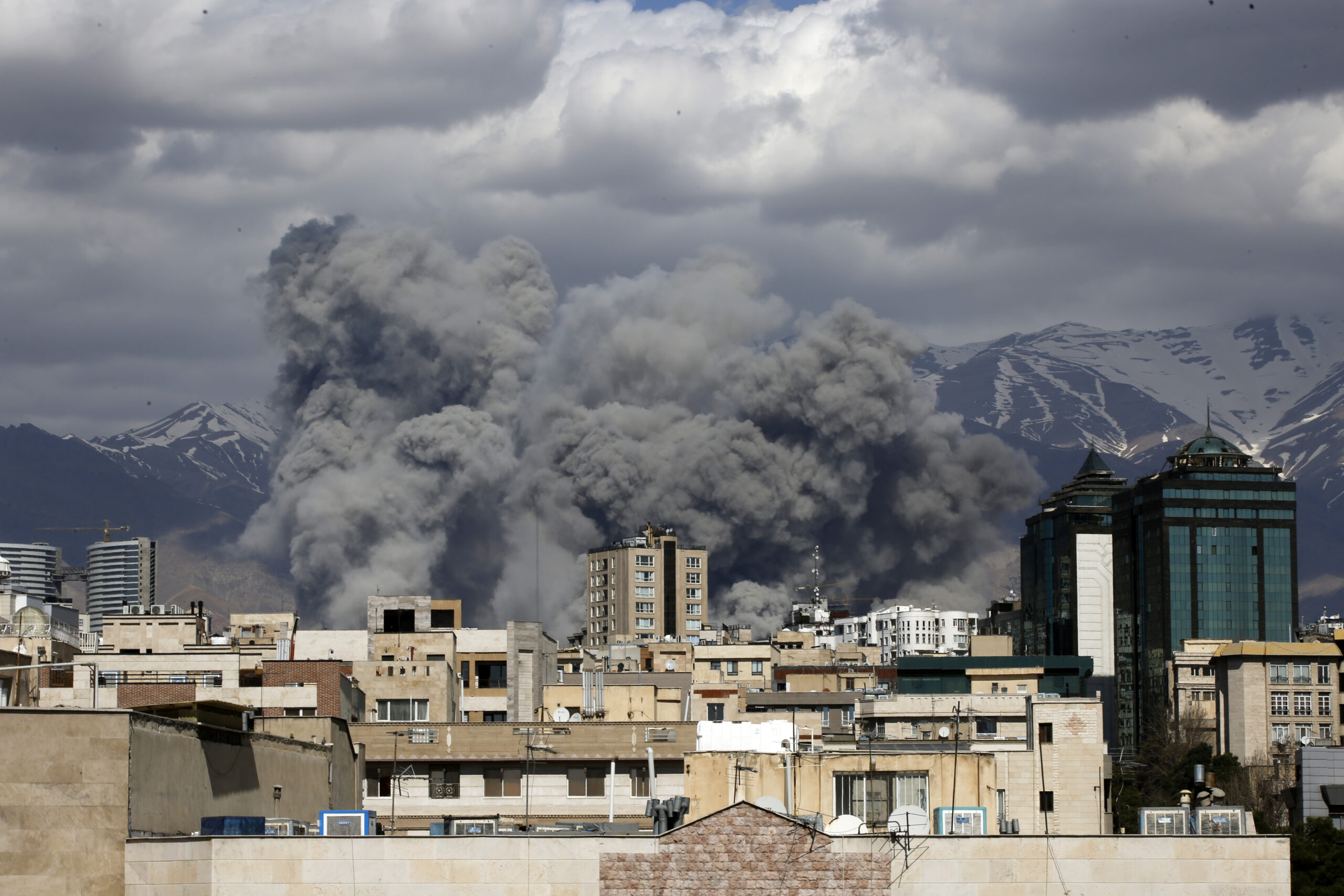
The latest barrage of Russian missiles and drones targeted facilities across the country overnight, resulting in at least two confirmed fatalities and widespread destruction. According to reports from the ground, the southern port city of Odesa has been particularly hard-hit, with nearly 300,000 residents losing access to water and power. Oleksiy Kuleba, Ukraine’s deputy prime minister, confirmed that approximately 200 buildings in the city are currently without any form of heating, a situation that is becoming increasingly life-threatening as temperatures across the region plummet to as low as minus 20 degrees Celsius.
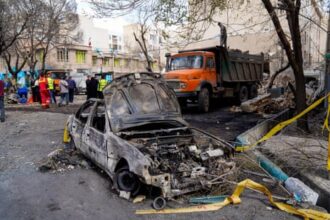
In the capital city of Kyiv, Mayor Vitali Klitschko reported that the most recent attacks knocked out power supplies to approximately 2,600 high-rise buildings. This has left an estimated 3,500 structures without heating, compounding the misery of a civilian population already struggling with the cumulative effects of previous strikes. In the southeastern city of Dnipro, local officials reported that four people were injured, including a baby and a four-year-old child, when a drone strike impacted a residential neighborhood.
Ukrainian energy firm DTEK confirmed that one of its thermal power plants suffered "extensive damage" during the overnight raid. This incident marks the eleventh large-scale attack on the company’s thermal facilities since October 2025. The systematic targeting of the energy sector appears designed to degrade the national will and force a humanitarian crisis that could lead to further mass displacement.
UN Calls on Russia to Stop Attacks on Ukraine Energy Sites Amid Legal Violations
Volker Türk’s statement was a stark reminder of the legal obligations of combatants under the Geneva Conventions. "The relentless attacks by the Russian Federation on energy infrastructure across Ukraine are depriving an already long-suffering civilian population of adequate warmth, water, and electricity in an unbearably bitter and dark winter," Türk said. He emphasized that the targeting of civilian infrastructure is strictly prohibited under international humanitarian law and urged an immediate cessation of the hostilities directed at non-military targets.

Ukrainian Foreign Minister Andrii Sybiha echoed these sentiments, suggesting that the timing of the strikes is intended to undermine ongoing diplomatic efforts led by the United States to find a path toward ending the war. Sybiha argued that Russia must be "forced to take diplomacy seriously" through a combination of international unity and increased economic and military pressure on Moscow. The Ukrainian government maintains that any peace negotiations conducted while civilian centers are being bombed lack the necessary foundation of good faith.
NATO Unity and the Shift in Transatlantic Relations
As the UN calls on Russia to stop attacks on Ukraine energy sites, defense ministers from the NATO alliance convened in Brussels to address the shifting security landscape. Elbridge Colby, the U.S. Undersecretary for War, arrived at NATO headquarters with a message of reconciliation and partnership. Colby, a high-ranking military adviser to the U.S. president, suggested it was time for the United States and Europe to "march out together" in defense of the alliance’s interests.
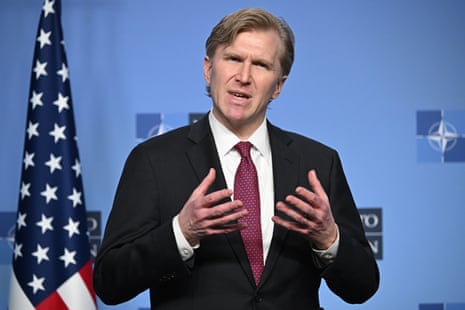
Colby’s remarks were seen as an attempt to soothe tensions that have flared since the start of 2026. The geopolitical relationship between Washington and its European allies has been tested by a series of unconventional demands, including the U.S. president’s repeated public interest in acquiring Greenland from Denmark. Despite these diplomatic hurdles, Colby emphasized that the alliance is moving toward a model of "partnership rather than dependency."
A key component of this new framework is the agreement reached at the NATO summit in The Hague last summer, where European members pledged to match U.S. defense spending levels at 3.5% of their respective GDPs. Colby credited this "reframing" to the leadership of both the U.S. president and the NATO Secretary General, stating that a Europe capable of leading its own conventional defense is essential for the future of the alliance.
Economic Brainstorming at Alden Biesen Castle
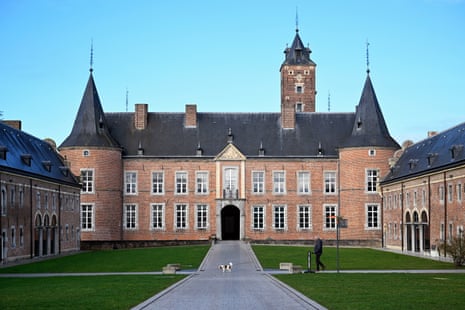
While NATO ministers focused on military strategy, the heads of the 27 European Union member states gathered at Alden Biesen Castle in the Belgian countryside. This informal summit was designed as a "brainstorming session" to address the economic challenges posed by global tariff threats and fierce competition from China. European Council President António Costa described the meeting as a "retreat" intended to foster deep discussion on how to transform the bloc into a more resilient economic powerhouse.
The discussions at the 13th-century castle centered on strengthening the single market and reducing Europe’s reliance on foreign powers for critical resources and technology. This meeting follows the 2025 defense summit in Brussels, which resulted in the €800 billion "ReArm Europe" plan. However, the atmosphere of unity was challenged by the presence of Hungarian Prime Minister Viktor Orbán, who continues to advocate for a cessation of financial support to Kyiv.
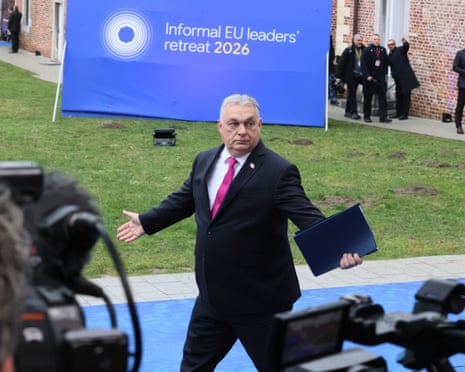
Orbán, often characterized as the Kremlin’s closest ally within the EU, told reporters that Europe should stop sending money to Ukraine if it is serious about boosting its own competitiveness. "Don’t send your money to somebody else if you need it for your competitiveness," Orbán stated as he entered the castle. His comments come as Hungary prepares for parliamentary elections in April, where his government faces a significant challenge from the opposition Tisza party. Orbán’s campaign has focused heavily on blocking Ukraine’s accession to the EU, a stance that remains a point of significant friction among the 27 member states.
Political Transition in Bulgaria and Regional Stability
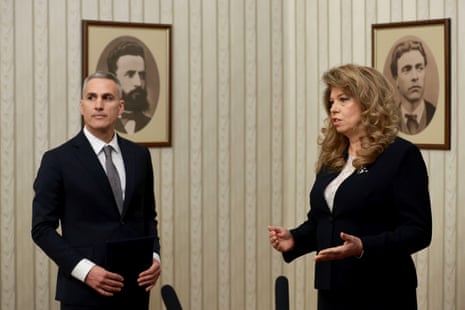
In a separate but related development in Eastern Europe, Bulgarian President Iliana Yotova has moved to stabilize her country’s volatile political environment. She appointed Andrey Gyurov, the deputy governor of the Bulgarian National Bank, as the interim prime minister to lead a caretaker government until national elections in April. This will be Bulgaria’s eighth election in just five years, a period of instability that has significantly eroded public trust in democratic institutions.
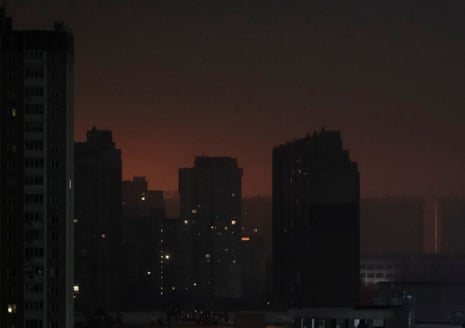
The political vacuum in Sofia has raised concerns among EU and NATO officials regarding Russian hybrid influence. President Yotova noted that the primary task of the Gyurov administration is to ensure a free and fair vote, which she has tentatively scheduled for April 19. The appointment of a central bank official is seen as an attempt to provide a technocratic and neutral hand at the helm during a time of extreme polarization.
The Intersection of War and International Sports
The conflict’s reach has extended into the cultural and sporting arenas as well. The International Olympic Committee (IOC) recently announced the disqualification of Ukrainian skeleton racer Vladyslav Heraskevych from the Winter Olympics. The ban was triggered by Heraskevych’s use of a helmet featuring the faces of Ukrainian athletes and coaches who have been killed during the war.
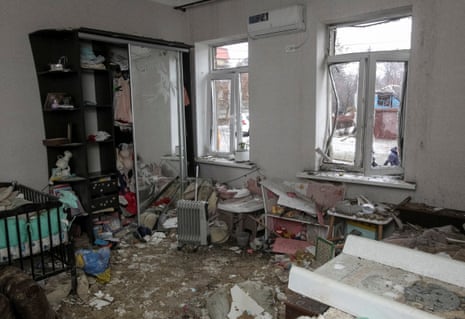
The IOC defended its decision by citing a longstanding rule against making political statements at Olympic venues. While the committee suggested that the 26-year-old athlete wear a black armband as a tribute instead, Heraskevych refused the compromise, arguing that a simple armband did not sufficiently honor the magnitude of the loss. The disqualification has sparked a broader debate about the role of political expression in international sports during times of active conflict.
Environmental Crises and Political Fallout in Portugal
While the UN calls on Russia to stop attacks on Ukraine energy sites, Western Europe is dealing with its own domestic crises. In Portugal, a series of deadly winter storms has caused catastrophic flooding and widespread devastation. The government’s response to the weather disasters has been met with fierce public criticism, leading to the resignation of Interior Minister Maria Lúcia Amaral.

The storms have highlighted the vulnerabilities of European infrastructure to extreme weather events, adding another layer of complexity to the economic discussions taking place at the EU summit in Belgium. Leaders are now forced to balance the immediate needs of disaster recovery and climate adaptation with the long-term requirements of military defense and industrial competitiveness.
The Path Forward for Ukraine and the West
The convergence of humanitarian, military, and economic crises across Europe underscores the high stakes of the current geopolitical moment. The UN’s call for a halt to the targeting of Ukraine’s energy infrastructure is not merely a legal or moral plea; it is an attempt to prevent a total collapse of civilian life in a major European nation. Without a functional power grid, the ability of the Ukrainian state to provide basic services—and by extension, its ability to sustain a defense—is severely compromised.
As the international community watches the developments in Kyiv, Odesa, and Brussels, the pressure on Moscow to adhere to international norms continues to mount. However, the internal divisions within the EU, exemplified by Viktor Orbán’s rhetoric, and the political instability in nations like Bulgaria, suggest that the road to a unified and peaceful Europe remains fraught with obstacles. The coming weeks, marked by critical elections and the conclusion of the winter season, will likely determine whether the continent can move toward the "partnership" Colby described or if it will remain reactive to the ongoing aggression on its eastern flank.