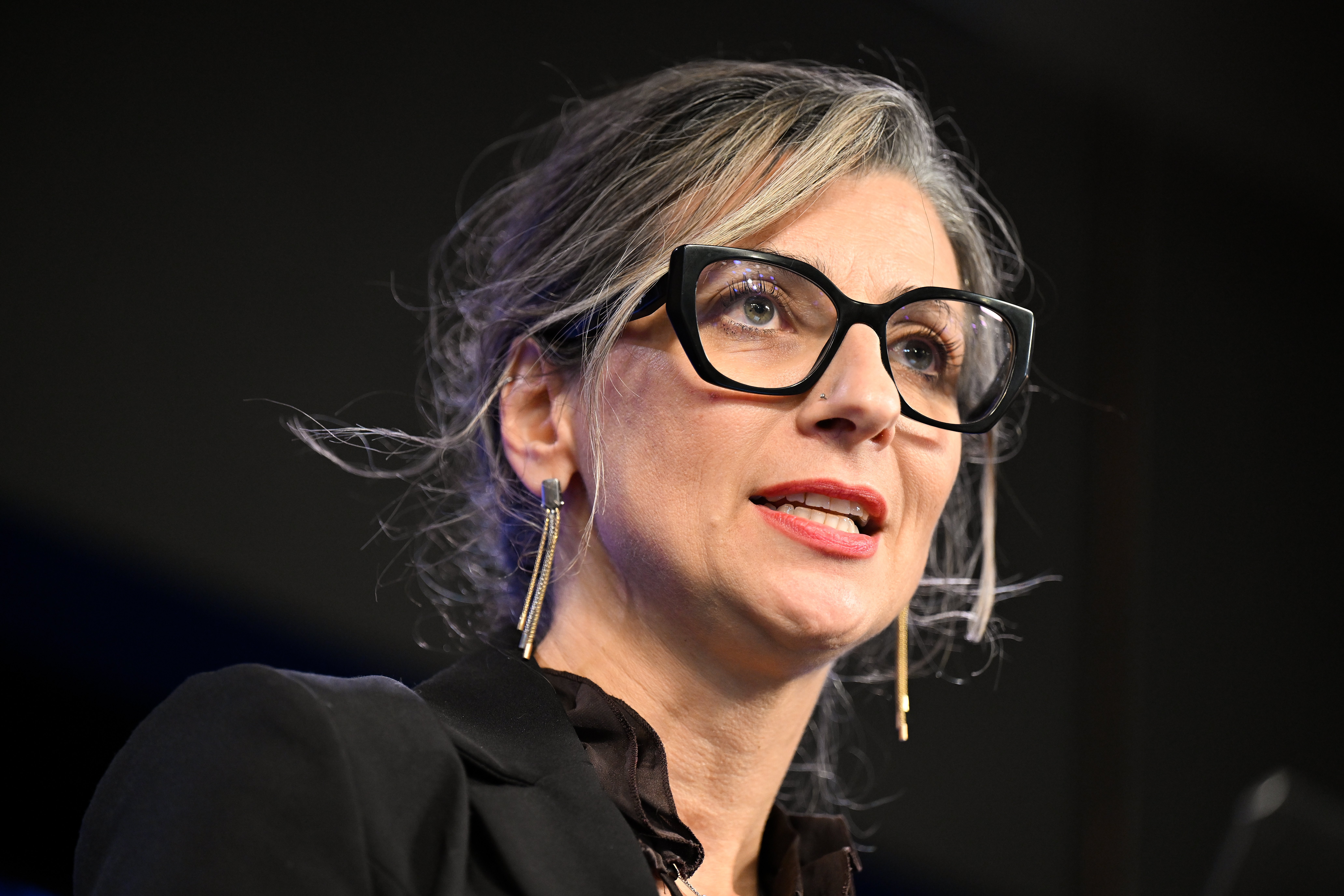
Current and former United Nations staffers have voiced strong support for Francesca Albanese, the UN special rapporteur on the occupied Palestinian territories, following a wave of criticism from a pro-Israeli advocacy group and several European government officials. The coordinated attacks, largely fueled by a selectively edited video, have ignited a debate within the UN system about disinformation and the integrity of human rights reporting mechanisms.
Albanese, an Italian human rights lawyer and expert appointed to her role in May 2022, has become a prominent voice calling out Israel’s actions in Gaza and advocating for Palestinian rights. Her critical stance has drawn sustained fire from pro-Israeli entities and governments, with UN Watch, a pro-Israel non-governmental organization, emerging as one of her most vocal critics.
The Genesis of the Controversy: Edited Video Fuels Accusations
The recent controversy began when UN Watch circulated an edited clip of Albanese speaking at the Doha Forum earlier this month. The organization misrepresented her remarks, falsely claiming she had labeled Israel as "the common enemy of humanity." This edited version was designed to provoke outrage and cast Albanese in a negative light, sparking a swift reaction from European political figures.
In reality, Albanese’s full statement articulated a broader concern about humanity facing common challenges to fundamental freedoms. "We now see that we as a humanity have a common enemy and the respect of fundamental freedoms is the last peaceful avenue, the last peaceful toolbox that we have to regain our freedom," she stated. The intentional distortion of her words served as the catalyst for the subsequent attacks.
European Officials Demand Resignation Amid Disinformation Campaign
The edited clip quickly captured the attention of officials from several European nations, including Austria, the Czech Republic, France, Germany, and Italy. These governments, seemingly influenced by the misrepresentation, began to publicly condemn Albanese and question her suitability for her role.
French Foreign Minister Jean-Noël Barrot took a particularly strong stance, declaring his intention to demand Albanese’s resignation at the upcoming session of the UN Human Rights Council on February 23. This demand followed a letter sent to Barrot by a group of French parliamentarians on February 9, who denounced Albanese’s remarks as "anti-Semitic." Barrot’s call for resignation, made just two days later, underscored the escalating pressure.
UN Staffers Unite in Defense of Francesca Albanese
In response to the escalating attacks, a significant group of current and former UN staffers, organized under the banner of "United Staff for Gaza," issued a strong statement denouncing the actions of the European governments. The group, formed in July of the previous year to defend Palestinian rights, has grown to nearly 2,500 members from diverse UN departments and agencies.
"United Staff for Gaza regrets the dis-/misinformation that has circulated in recent days concerning Special Rapporteur Albanese, which has been taken up by the French, German and other Foreign Ministers in their levelling of unwarranted, vitriolic accusations against the Special Rapporteur," the statement read. The group appealed for a correction of these errors and an immediate cessation of "personal attacks, threats, intimidation, and disinformation targeting UN agencies, mandate-holders, and personnel."
Dali ten Hove, a former UN staffer and active member of United Staff for Gaza, emphasized the broader implications of the campaign against Albanese. "Our statement is not just to support her, but to stand against all untruthful smear campaigns that target the UN and advocates for the human rights of Palestinians worldwide, including UNRWA," ten Hove told Al Jazeera, referring to the UN Relief and Works Agency for Palestine Refugees.
Broader Implications: Undermining Human Rights Mechanisms
The concerted effort to discredit Francesca Albanese highlights a growing concern about coordinated campaigns aimed at silencing independent human rights reporting. UNRWA, the UN agency responsible for assisting Palestinian refugees, also issued a statement supporting Albanese, asserting that the attacks "aim at silencing her voice and undermining the few remaining independent human rights reporting mechanisms."

UNRWA warned of "coordinated campaigns seek[ing] to discredit and silence those who speak out about human rights impacts and violations of international humanitarian law." This sentiment was echoed by Chris Gunness, former communications director for UNRWA, who pointed to pro-Israel politicians in donor countries as being primarily responsible for the attacks.
Gunness criticized what he described as the undue influence of "purveyors of industrial-scale fake news, doctored soundbites, anti-Palestinian hate speech and genocide denial" in shaping discourse. He added, "The credibility of Israel’s proxies is hanging in rags. The condemnable attack on Francesca Albanese exposes their deliberate deceit for the house of cards it always was."
Support Beyond the UN: Artists and Rights Organizations Speak Out
The backing for Albanese extends beyond UN personnel. Over 100 artists have also publicly supported her amidst the growing calls for her resignation from pro-Israeli governments and groups. This widespread support underscores the perceived injustice of the attacks and the importance of Albanese’s mandate.
Human rights organizations have also been vocal in their criticism of the European officials. Amnesty International’s Secretary-General Agnes Callamard issued a strong statement condemning the ministers’ actions. "It is reprehensible that ministers in Austria, Czechia, France, Germany and Italy have attacked the UN Special Rapporteur on the Occupied Palestinian Territory, Francesca Albanese, based on a deliberately truncated video to misrepresent and gravely misconstrue her messages – as is clear from watching her original address in its entirety," Callamard stated.
Callamard accused some ministers of spreading disinformation and demanded their apologies. She further criticized their lack of forceful condemnation of alleged Israeli actions, stating, "If only these ministers had been as loud and forceful in confronting a state committing genocide, unlawful occupation and apartheid as they have in attacking a UN expert. Their cowardice and refusal to hold Israel accountable stand in stark contrast to the Special Rapporteur’s unwavering commitment to speaking truth to power."
UN Spokesperson’s Statement Sparks Debate
Amidst the rising tide of support for Albanese, a comment from Stephane Dujarric, spokesperson for UN Secretary-General António Guterres, generated some discussion among UN staffers. Dujarric acknowledged the importance of the special rapporteur institution but noted that the UN does not always agree with their statements, including those of Ms. Albanese.
However, ten Hove argued that Dujarric could have gone further by acknowledging the falsity of the quotes attributed to Albanese and by upholding the integrity of the UN human rights system, as other UN bodies like UNRWA and the spokesperson for the UN Human Rights Office had done.
French Position Under Scrutiny
The stance taken by France, particularly Foreign Minister Barrot’s insistence on Albanese’s resignation, has drawn significant criticism. Dali ten Hove expressed disappointment, noting France’s previously constructive role in the UN General Assembly’s declaration on Palestine.
Schams El Ghoneimi, a former MENA adviser to French President Emmanuel Macron’s party in the European Parliament, also voiced strong disapproval. "It is unimaginable to me to see France side with the Israeli authorities’ propaganda against the UN special rapporteur," El Ghoneimi stated. He questioned France’s commitment to international law and its willingness to denounce alleged Israeli violations, asking, "Does our government want to stand firm by international law, and therefore denounce the Israeli government’s unprecedented and ongoing violations in Gaza and the West Bank? Does it want to side with the grotesque propaganda of Israeli authorities? France’s credibility is at stake here."
Despite the widespread criticism and the defense mounted by UN staffers and human rights advocates, French Foreign Minister Barrot has not yet retracted his call for Albanese’s resignation. The controversy highlights the ongoing challenges in navigating complex geopolitical issues within international organizations and the critical importance of accurate reporting in human rights discourse. The events underscore a broader struggle against disinformation and the pressure faced by independent human rights mechanisms.