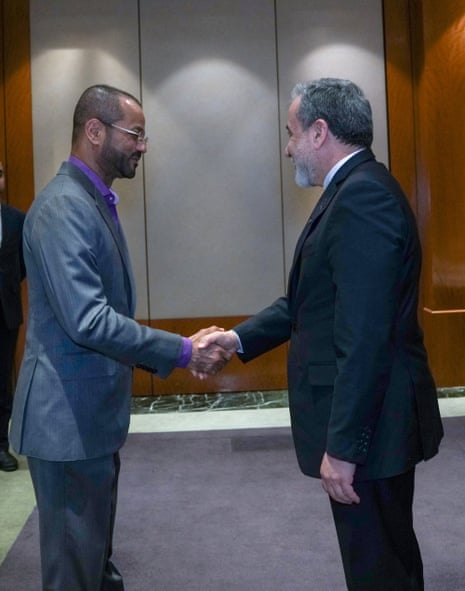
American and Iranian diplomats are convening in Geneva, Switzerland, on Thursday for a third round of indirect negotiations aimed at de-escalating nuclear tensions and preventing a wider regional conflagration. The high-stakes discussions, mediated by the Sultanate of Oman, arrive at a precarious moment for global security, as the United States maintains a massive buildup of warships and combat aircraft across the Middle East to exert "maximum pressure" on the Islamic Republic. These talks represent the most significant diplomatic effort since a devastating 12-day war between Israel and Iran in June 2025, an event that fundamentally reshaped the geopolitical landscape of the region.
The American delegation is led by Special Envoy Steve Witkoff and includes Jared Kushner, a key figure in the Trump administration’s previous Middle East initiatives. Their arrival in Switzerland signals a renewed, albeit unconventional, push by the White House to secure a restrictive nuclear framework. While the two sides are not meeting face-to-face, Omani intermediaries are shuttling between the delegations to bridge the divide on enrichment limits and the future of international inspections.
At the heart of the current proposal is a demand from the U.S. that Iran immediately cap its uranium enrichment at 5% purity. This threshold is roughly the level Iran adhered to under the 2015 Joint Comprehensive Plan of Action (JCPOA) and is significantly below the 90% purity required for weapons-grade material. Sources familiar with the negotiations indicate that the Iranian team was initially surprised by the specific terms presented by Witkoff and Kushner, which focus heavily on technical limitations rather than a total dismantling of the program.
However, the U.S. proposal notably lacks any provision for immediate sanctions relief. Instead, the American strategy appears to be a "compliance-for-dialogue" model, where Iran must first accept strict enrichment caps before any discussion regarding the unfreezing of assets or the lifting of oil embargoes begins. This has led some analysts to describe the current Iranian economic state as being in "economic handcuffs," with the path to relief remaining conditional on long-term verification.

The Role of the International Atomic Energy Agency
Rafael Grossi, the Director General of the International Atomic Energy Agency (IAEA), is expected to participate in the Geneva sessions. His presence is viewed as essential for any deal to gain international legitimacy. The UN nuclear watchdog has faced significant hurdles in Iran since the June 2025 conflict, with Tehran suspending much of its cooperation with inspectors in the wake of Israeli airstrikes on various facilities.
Grossi recently met with Iranian Foreign Minister Abbas Araghchi in an effort to restore the IAEA’s monitoring capabilities. The agency has reported that it has been unable to verify the status of Iran’s near-weapons-grade uranium stockpile for months. While Tehran has allowed limited access to sites that remained undamaged during the 2025 war, several critical locations remain off-limits to international observers, fueling suspicions in Washington and Tel Aviv.
The restoration of "continuity of knowledge" is a primary goal for the IAEA. Without it, diplomats argue that any agreement on 5% enrichment would be impossible to verify. The Iranian Foreign Ministry has signaled a willingness to discuss increased transparency, provided that the IAEA remains a technical body and does not become a tool for "political pressure" by Western powers.
Regional Instability and Military Posturing
The "crunch nuclear talks" are taking place against a backdrop of unprecedented military mobilization. The Pentagon has deployed multiple carrier strike groups and advanced stealth fighter wings to the Persian Gulf and Eastern Mediterranean. U.S. officials have stated that this presence is intended to deter Iran from retaliating against Israel or targeting American interests during the negotiation period.
The legacy of the June 2025 war continues to loom over the diplomatic process. That conflict, characterized by heavy tit-for-tat airstrikes and drone swarms, brought the Middle East to the brink of a total regional war. While a fragile ceasefire has held, the underlying causes of the friction—Iran’s nuclear progress and its support for regional proxies—remain unresolved.

Iranian Foreign Minister Abbas Araghchi, speaking to international media before his departure for Geneva, warned that the alternative to a diplomatic breakthrough is catastrophic. "There would be no victory for anybody—it would be a devastating war," Araghchi told reporters, emphasizing that Tehran is prepared for both peace and conflict. This dual-track approach of "diplomacy backed by the threat of retaliation" has become a hallmark of Iranian foreign policy in the post-2025 era.
Political Pressure in Washington and Tehran
In the United States, President Donald Trump has maintained a complex rhetorical stance. During his State of the Union address earlier this week, Trump accused the Iranian leadership of attempting to rebuild its nuclear weapons program in the shadows of the recent war. Despite this, he expressed a preference for a diplomatic resolution, provided it results in a "tougher and more durable" deal than those of his predecessors.
The involvement of Jared Kushner has drawn both praise and criticism in Washington. Supporters argue his previous experience with the Abraham Accords provides a unique perspective on regional security, while critics suggest that bypassing traditional State Department channels could lead to a lack of institutional oversight. Regardless, the presence of the president’s inner circle in Geneva underscores the priority the administration has placed on settling the Iranian nuclear file.
In Tehran, President Masoud Pezeshkian has attempted to project a more moderate image, citing a long-standing fatwa issued by Supreme Leader Ali Khamenei that bans the development and use of weapons of mass destruction. Pezeshkian argued that this religious edict is a "guarantee" that Iran does not seek a nuclear bomb. However, Western intelligence agencies remain skeptical, pointing to the rapid advancement of Iran’s enrichment technology and its hardening of nuclear sites against potential bunker-busting munitions.
Economic Implications and Public Impact
The Iranian economy remains in a state of deep distress. Years of "maximum pressure" sanctions, compounded by the costs of the 2025 war, have led to record-high inflation and a plummeting currency. For the Iranian public, the Geneva talks are not just about nuclear physics; they are about the price of basic goods and the possibility of rejoining the global financial system.
If the talks fail, the likelihood of a return to military kinetic action increases. This would almost certainly disrupt global oil markets, potentially sending prices to record highs and destabilizing the global recovery. Markets have remained volatile this week as traders await any sign of a breakthrough or a breakdown in the indirect communications.
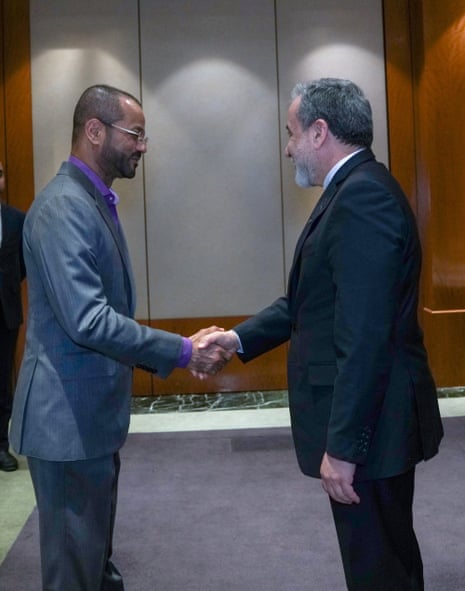
Oman’s role as a mediator is also being tested. The Sultanate has long served as a bridge between Tehran and Washington, facilitating prisoner swaps and secret backchannel communications for decades. Omani Foreign Minister Badr Albusaidi met with Araghchi on Wednesday night and is scheduled to hold extensive sessions with the American team on Thursday morning. Muscat’s ability to find a "middle path" on the issue of sanctions sequencing will be the decisive factor in whether these talks move beyond the introductory phase.
The Path Forward: Verification or Escalation?
The immediate goal for the negotiators in Geneva is to establish a "roadmap" for the coming months. If Iran agrees to the 5% enrichment cap and restores IAEA access, the U.S. may consider limited humanitarian waivers or the release of specific frozen funds as a gesture of good faith. However, the American side has made it clear that any "grand bargain" involving the total lifting of sanctions is still a long way off.
The "crunch nuclear talks" are expected to continue through the weekend. Observers note that the technical nature of the U.S. proposal—focusing on purity levels rather than the total number of centrifuges—suggests a desire for a quick, "narrow" win that could freeze the program in place. Whether the Iranian leadership is willing to accept "economic handcuffs" in exchange for a temporary reprieve from military threats remains the central question.
As the delegations move into their respective rooms at the Palais des Nations, the world remains on edge. The shadow of the 2025 war and the presence of massive naval armadas in the Gulf serve as a stark reminder that the window for diplomacy is narrowing. The outcome of these discussions will determine whether the Middle East moves toward a managed stability or descends into a conflict that could reshape the global order for decades to come.