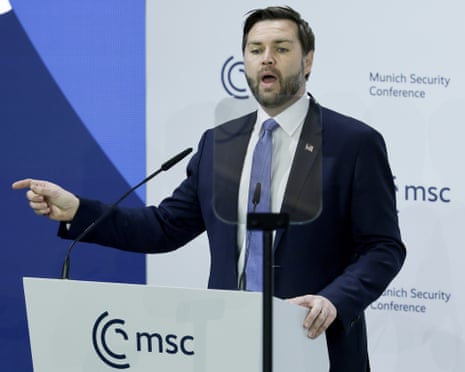
U.S. Ambassador to NATO Matthew Whitaker on Monday issued a forceful rebuttal to a high-level security report that accused the current administration in Washington of eroding the foundations of the transatlantic alliance. Speaking ahead of the annual Munich Security Conference, Whitaker rejected the notion that the United States is seeking to withdraw from its traditional leadership role, insisting instead that the administration’s goal is to modernize the alliance for a new era of global competition.

The diplomatic friction follows the release of the Munich Security Conference (MSC) report, which suggested that the greatest threat to the liberal international order is now "coming from within." The report’s editors argued that a dramatic shift in U.S. strategic thinking has left European allies feeling vulnerable and uncertain about the future of collective defense. Whitaker, however, told reporters that he "completely rejects" the findings, characterizing the administration’s pressure on Europe as a necessary catalyst for strength.
The ambassador’s comments set the stage for a tense gathering of global leaders later this week in Germany. With roughly 70 heads of state and 140 government ministers expected to attend, the summit will likely be dominated by questions regarding U.S. reliability, the ongoing war in Ukraine, and the rise of hybrid threats across the European continent.

U.S. Not Trying to Dismantle NATO or Undermine World Order Despite European Anxiety
Whitaker emphasized that the administration’s primary objective is to "balance" the defense burden among the 32 members of the alliance. He argued that the U.S. is not attempting to dismantle NATO or undermine the world order, but is rather pushing European partners to fulfill their financial and military promises. According to Whitaker, a stronger Europe is the only way to guarantee a lasting peace in the face of revisionist powers like Russia and China.
"We’re trying to make NATO stronger, not to withdraw or reject NATO," Whitaker stated, clarifying that the administration wants the alliance to function as it was originally intended: a coalition of capable, self-sufficient states. He expressed frustration with what he described as a culture of "discussion without action" in European capitals, noting that while spending has increased, many allies have yet to meet the new, more aggressive readiness targets.
The ambassador also linked security concerns to economic policy, reiterating the administration’s stance that current trade arrangements with Europe are "unfair." He pointed to the significant trade surplus maintained by the European Union as a point of contention that must be addressed to ensure a sustainable long-term partnership.
The Greenland Controversy and the Defense of the Arctic
The debate over the U.S. role in Europe has been further complicated by the administration’s continued interest in Greenland. Whitaker defended the U.S. position, asserting that the focus remains strictly on security. He claimed that the U.S. must ensure the territory is capable of defending itself against encroachments from Beijing and Moscow, regardless of whether it remains under Danish sovereignty or pursues independence.

"The Chinese have taken at least two runs at Greenland, trying to invest in ports and airports," Whitaker claimed. While Danish officials have repeatedly downplayed the severity of these specific incidents, the U.S. maintains that the underlying security analysis is sound. Whitaker did attempt to distance himself from some of the more aggressive rhetoric seen on social media, noting that responding to every post from the White House would be a "full-time job," but he insisted the strategic necessity of the Arctic remains a top priority.
Wolfgang Ischinger, the long-time chairman of the Munich Security Conference, described the U.S. approach to Greenland as a "public relations disaster." He noted that the rhetoric has significantly damaged the respect the U.S. enjoys in Europe. Recent polling data from YouGov supports this assessment, showing a sharp rise in unfavorable opinions of the U.S. across Denmark, France, Germany, Italy, Spain, and Great Britain.
Russia and the Threat of a Prolonged Era of Confrontation
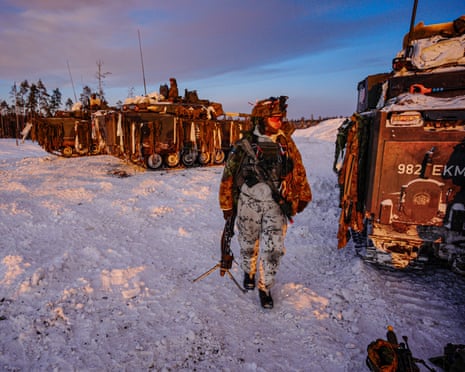
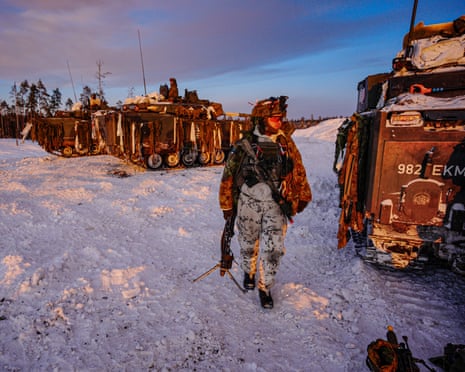
While the U.S. and Europe bicker over burden sharing, the MSC report warns that the continent is entering a "prolonged era of confrontation." The study highlights Russia’s full-scale war in Ukraine and its expanding campaign of hybrid warfare as the primary drivers behind the collapse of the post-Cold War security order. Intelligence agencies cited in the report estimate that Russia could reconstitute its military forces for a regional war in the Baltic Sea area within just two years of a potential ceasefire in Ukraine.
The report also warns that a "local" war against a single neighbor could be launched in as little as six months. Signs of this widening battlefield are already appearing, with a surge in suspected Russian-backed incidents of sabotage, cyber-attacks, and arson across Western Europe. Analysts believe these operations are designed to probe European defenses, sow internal division, and intimidate the public into withdrawing support for Ukraine.
In Germany, federal prosecutors recently charged a Ukrainian national, identified as Yevhen B., for allegedly working with Russian intelligence to coordinate a parcel bomb plot. The scheme reportedly involved sending GPS-enabled tracking devices and incendiary packages through commercial shipping routes to gather data on logistics before attempting to detonate packages in transit. Prosecutors say the goal was to undermine the public’s sense of security and disrupt aid routes to Ukraine.
Ukraine at the Top of the Agenda Amid June Peace Deadline
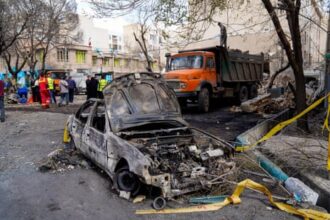
The war in Ukraine remains the most urgent issue for the upcoming Munich summit. Lviv Mayor Andriy Sadovyi warned on Monday that the country is currently facing its most challenging electricity crisis in four years. Overnight Russian strikes on Odesa and Kharkiv have killed several civilians and further crippled the energy grid as the conflict approaches its four-year anniversary.
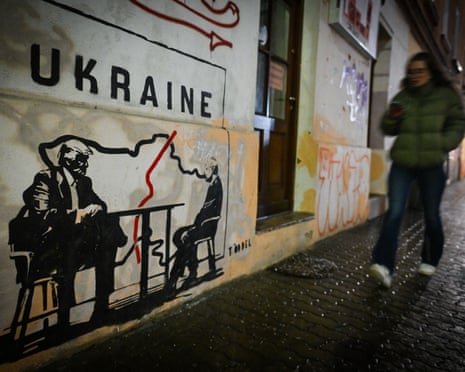
The diplomatic path forward is equally fraught. Ukrainian President Volodymyr Zelenskyy recently revealed that the U.S. administration has proposed a June deadline for a peace settlement. While Ukrainian Foreign Minister Andrii Sybiha expressed gratitude for U.S. leadership and stated that Kyiv is "ready to speed up peace efforts," he cautioned that Russia has shown no genuine willingness to negotiate.
European leaders are increasingly concerned that the U.S. may push for a deal that requires Ukraine to make significant territorial concessions. The MSC report notes that Europe’s reliance on the U.S. as a primary security guarantor has left the continent in a "gray zone" between competing spheres of influence. To counter this, the report recommends the formation of "courageous leadership coalitions," such as a "Weimar Plus" group including France, Germany, Poland, and the UK, to drive defense industrial consolidation.

Political Shifts and Institutional Scandals in Europe
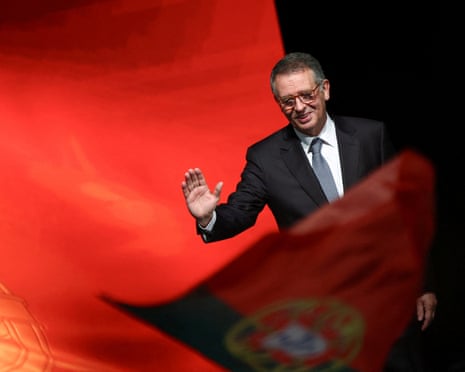
The internal politics of European nations are also in flux as they navigate this new reality. In Portugal, moderate socialist António José Seguro secured a resounding victory in the presidential runoff on Sunday, winning 66.8% of the vote. His victory was seen as a win for "European humanism" and democratic resilience, following a cross-party effort to block far-right candidate André Ventura. However, Ventura’s Chega party still captured a record 33.2% of the vote, signaling that populist sentiment remains a potent force.
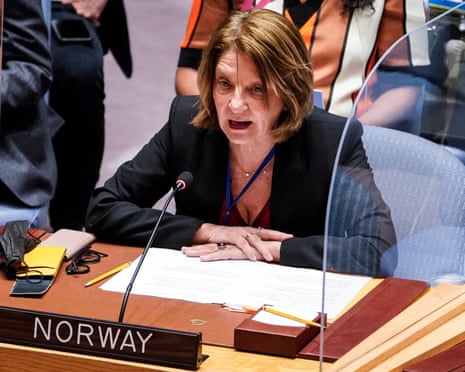
Meanwhile, a major scandal has rocked the Norwegian diplomatic corps. Mona Juul, a veteran ambassador known for her role in the 1990s Oslo Accords, resigned on Sunday following revelations concerning her family’s links to Jeffrey Epstein. Reports indicate that Epstein left $10 million to Juul’s children in a will drafted shortly before his death. Norway’s Foreign Minister, Espen Barth Eide, called the resignation "correct and necessary," citing a "serious lapse in judgment" that made it impossible to maintain public trust.
In Hong Kong, the sentencing of pro-democracy figure Jimmy Lai to 20 years in prison has sparked international outrage. The European Union and various media watchdogs have called for his "immediate and unconditional" release, citing his advanced age and deteriorating health. Lai’s son, Sebastien, warned that the sentence is effectively a "life sentence," and urged Western democracies to stop prioritizing the normalization of relations with China over the protection of human rights.
Conclusion: A Turning Point for the Transatlantic Relationship
The upcoming Munich Security Conference represents a critical juncture for the West. While Ambassador Whitaker insists the U.S. is not trying to dismantle NATO or undermine the world order, the lack of consensus on trade, defense spending, and the future of Ukraine suggests a deepening rift. European leaders are now faced with the "painful realization" that they must become more militarily independent and assertive.
As the summit begins on Friday, the world will be watching to see if the transatlantic alliance can move beyond rhetoric and develop a coherent strategy to address the dual challenges of Russian aggression and internal political fragmentation. The ability of these 32 allies to find common ground will likely determine the stability of the international order for decades to come.