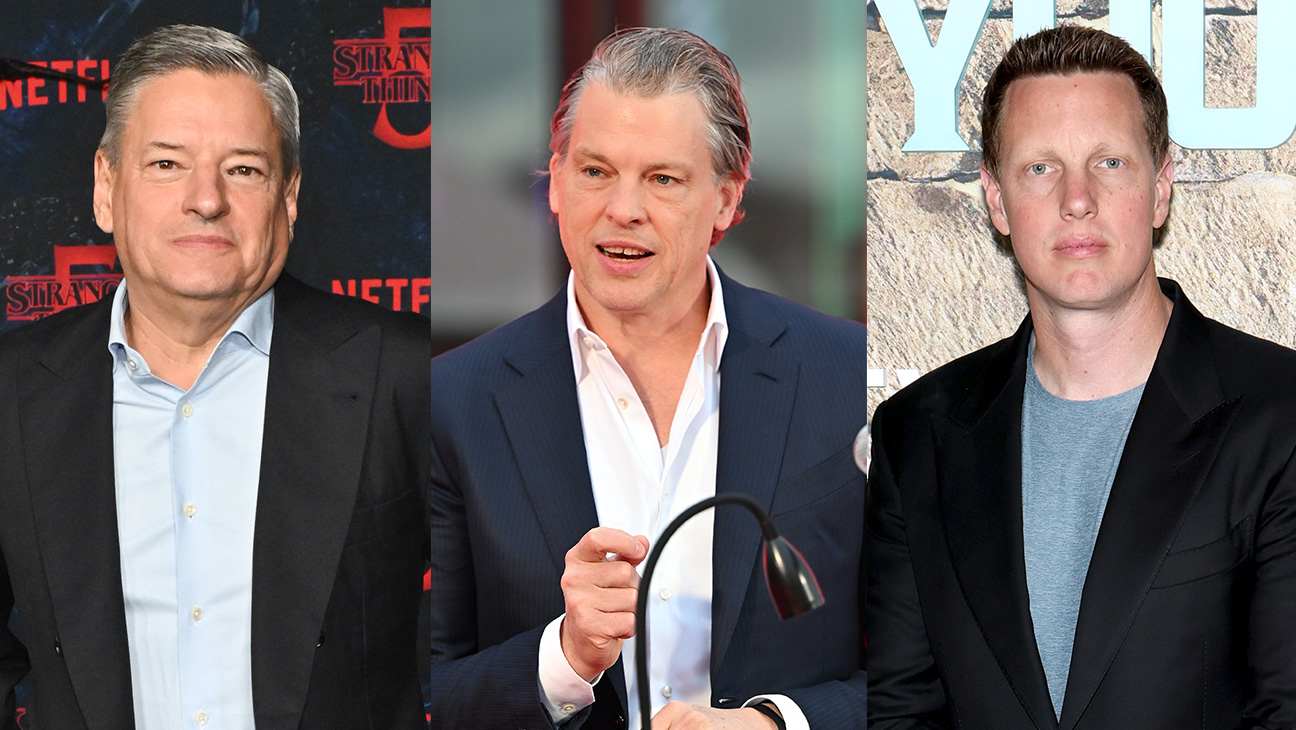
Warner Bros. Discovery (WBD) has scheduled a pivotal March 20 shareholder vote on its proposed acquisition by Netflix, while simultaneously initiating renewed discussions with David Ellison’s Paramount Skydance in a bid to secure an improved, "best and final" offer. This strategic maneuver underscores the intense competition for WBD, a media conglomerate grappling with significant debt and navigating a rapidly evolving entertainment landscape. The decision to re-engage with Paramount Skydance comes despite WBD’s board having previously recommended the Netflix deal, signaling a potential shift in strategy driven by shareholder pressure and an apparent higher valuation indicated by Paramount.
The Intensifying Bidding War for WBD
The current situation highlights the high stakes involved in the battle for Warner Bros. Discovery, a company rich in iconic intellectual property, including HBO, Warner Bros. film studio, and CNN. Its strategic importance lies in its vast content library, production capabilities, and global distribution networks, making it a highly desirable asset in the ongoing consolidation of the media industry. For WBD, a successful transaction is crucial for addressing its substantial debt, estimated to be around $43.5 billion at the end of 2023, a legacy of the merger between WarnerMedia and Discovery. Both Netflix and Paramount Skydance are vying for control, each presenting a distinct vision for WBD’s future and offering different strategic advantages.
The initial agreement saw Netflix emerge as the preferred bidder, with an all-cash offer that evolved from an earlier proposal. This deal was perceived by many as a relatively straightforward path for WBD, allowing it to offload its assets and provide shareholders with liquidity. However, the emergence of a persistent and increasingly aggressive counter-bid from Paramount Skydance, led by David Ellison, has complicated the narrative and introduced a new layer of uncertainty and opportunity for WBD shareholders.
Paramount’s Persistent Pursuit and Netflix’s Right to Match
Paramount Skydance has not shied away from a hostile approach, directly appealing to WBD shareholders and consistently sweetening its offer. This proactive engagement culminated in WBD’s board granting a seven-day waiver to Netflix, allowing WBD to re-enter negotiations with Paramount Skydance. This window is designed to enable WBD to resolve outstanding issues with PSKY’s bid and solicit a definitive, "best and final" proposal. A representative for Ellison’s company had previously indicated a willingness to pay $31 per share for WBD, stating that even this figure was not their ultimate offer, suggesting further room for improvement.
The March 20 date for the Netflix deal vote sets a tight deadline for all parties, potentially ushering in a "spring to the finish" if Paramount Skydance decides to pursue a proxy fight. Such a battle would involve PSKY directly lobbying WBD shareholders to reject the Netflix offer in favor of its own. A critical element in this intricate dance is Netflix’s contractual right to match any superior offer presented by Paramount Skydance. This clause provides Netflix with a powerful defensive mechanism, allowing it to retain its position as the favored suitor by simply matching any improved terms, effectively setting a floor for the bidding.
Timeline of Key Developments in the Netflix Deal Vote Saga
The saga surrounding WBD’s future began to crystallize in December when the initial Netflix deal was first unveiled. This agreement, initially structured differently, was later amended in late January to an all-cash bid, simplifying the transaction for WBD shareholders and addressing potential market volatility concerns associated with a stock-based component. This move by Netflix was seen as an effort to firm up its position and make its offer more attractive.
However, the narrative shifted significantly on February 10 when Paramount Skydance, under the leadership of David Ellison, publicly enhanced its bid for all of WBD. These sweeteners were substantial and strategically designed to overcome WBD’s concerns and sway shareholder sentiment. Paramount’s revised offer included a promise to cover the substantial $2.8 billion termination fee WBD would owe Netflix if the existing deal were to be abandoned. Furthermore, PSKY committed to backstopping a refinancing effort projected to cut costs by $1.5 billion, a significant financial relief for WBD. To underscore its commitment and provide additional incentive, Paramount also introduced a "ticking fee" of $650 million in cash per quarter if the deal were not completed by the end of 2026, signaling confidence in its long-term vision and a willingness to compensate for any delays. Ellison articulated his confidence, stating, "We are making meaningful enhancements – backing this offer with billions of dollars, providing shareholders with certainty in value, a clear regulatory path, and protection against market volatility."
Despite these aggressive overtures, WBD initially maintained its recommendation for shareholders to approve the Netflix deal, stating it would review Paramount’s amended offer without immediately modifying its stance. However, reports over the weekend preceding the recent announcement indicated internal discussions among WBD board members about re-engaging with Paramount, driven in part by pressure from smaller shareholders advocating for a thorough evaluation of all options to maximize shareholder value. On Tuesday, WBD’s board confirmed that while it still "unanimously recommended" the Netflix deal, the door was now open for Paramount.
Unresolved Issues and Regulatory Hurdles
In a letter sent to Paramount Skydance’s board, WBD outlined several key unresolved issues that require clarification and resolution before a definitive agreement could be reached. These concerns primarily revolve around financial and operational commitments. WBD highlighted issues concerning debt refinancing, seeking assurances that Paramount could adequately manage the significant debt load. Another crucial point was Paramount’s assumption of the same terms that Netflix agreed to regarding "material adverse effects" as "interim operating covenants," aiming to ensure consistent protection and operational flexibility during the transition period. Finally, WBD demanded "absolute clarity" on Paramount’s equity funding, including receiving notice on any equity syndication, seeking transparency and certainty regarding the financing structure of PSKY’s bid. WBD is expected to provide PSKY with an executable term sheet, aiming to eliminate any ambiguity surrounding the feasibility and commitment of the proposed acquisition.
A significant point of contention and a key argument from Paramount has been the regulatory approval process. Paramount asserts that the Netflix deal faces serious antitrust hurdles in both the U.S. and Europe, suggesting that its own proposal would offer a clearer and faster path to passage. This argument leans on the distinction between a vertical merger (Netflix acquiring WBD, primarily a content licensor/producer acquiring content) and a horizontal merger (Paramount acquiring WBD, two studios/streamers combining). Paramount recently bolstered its regulatory expertise by hiring Rene Augustine, a former lawyer for U.S. President Donald Trump and former deputy assistant attorney general in the antitrust division of the U.S. Department of Justice, as senior vp of global public policy. Her experience in antitrust enforcement is intended to lend credibility to Paramount’s claims regarding regulatory feasibility.
Netflix, however, strongly refutes Paramount’s regulatory claims. In its own statement, Netflix expressed confidence that its transaction, characterized as a "largely vertical merger of complementary assets," possesses a "clear path to timely regulatory approval." Netflix stated, "Netflix and WBD are driving the regulatory process forward – collaboratively and constructively and focused on a clear path to closing." The company further criticized PSKY for "repeatedly mischaracterizing the regulatory review process by suggesting its proposal will sail through, misleading WBD stockholders about the real risk of their regulatory challenges around the world." Netflix concluded by cautioning WBD stockholders not to be "misled into thinking that PSKY has an easier or faster path to regulatory approval – it does not."
Broader Implications and Market Impact
The ongoing bidding war and the uncertainty surrounding the Netflix deal vote have had tangible effects on the financial markets. Analysts have noted that the protracted transaction process has acted as a drag on Netflix’s stock performance. Guggenheim Securities analyst Michael Morris observed, "We expect the path to conclusion on the WBD bid will remain a primary sentiment driver and likely share appreciation limiter over the next three months." Similarly, MoffettNathanson analyst Robert Fishman remarked, "Netflix’s stock price should have a harder time rebounding as long as the ongoing WBD potential bidding war continues." This sentiment reflects investor apprehension regarding the potential for an escalated bidding war, the financial commitments involved, and the regulatory complexities.
For the wider media industry, this high-profile acquisition battle underscores the intense pressure on traditional media companies to scale up, consolidate assets, and secure stable revenue streams in the fiercely competitive streaming landscape. The outcome of the WBD sale will have significant implications for content creators, distributors, and ultimately, consumers, influencing everything from subscription prices to the availability of premium content across platforms. A merger with Netflix would further solidify the streamer’s position as a content powerhouse, while a deal with Paramount Skydance could lead to a new, formidable integrated entertainment entity.
The Road Ahead for the Netflix Deal Vote
The coming weeks will be critical as Warner Bros. Discovery navigates these complex negotiations. With the March 20 Netflix deal vote looming, WBD’s board must weigh the certainty and established terms of the Netflix offer against the potentially higher, albeit less certain, valuation hinted at by Paramount Skydance. The ability of Paramount to swiftly address WBD’s detailed concerns regarding debt, covenants, and equity funding will be paramount. Should Paramount Skydance successfully present a truly "best and final" offer that satisfies WBD’s criteria and exceeds Netflix’s current bid, the streaming giant will then face the decision of whether to exercise its right to match, potentially escalating the financial commitments even further. The resolution of these intricate financial and regulatory issues will ultimately determine the future ownership of one of Hollywood’s most storied empires.