After weeks of intense speculation and what insiders described as a deliberate corporate courtship dance, Netflix abruptly withdrew its bid for Warner Bros. Discovery late Thursday, clearing the path for a massive new corporate marriage between WBD and Paramount/Skydance. The decision by the streaming giant marked a pivotal moment in the ongoing consolidation of the entertainment industry, leaving a trail of winners, losers, and significant questions about the future landscape of media. This week’s developments sent shockwaves through Hollywood, impacting everything from major studio assets to the careers of high-profile personalities.
The Corporate Courtship and Its Resolution
For months, Warner Bros. Discovery had seemingly engaged in a strategic "bread-crumbing" exercise, entertaining overtures from multiple wealthy suitors in a high-stakes game of corporate leverage. This intricate dance, likened by some to a "flirty situationship," saw WBD bosses weighing various proposals while stakeholders, including employees, watched anxiously. The potential acquisition of WBD, with its vast array of iconic assets like Warner Bros. Pictures, HBO, and CNN, represented a transformative opportunity for any prospective buyer, promising expanded market share and unparalleled content libraries. The sudden end to Netflix’s pursuit, however, signaled a decisive turn, immediately elevating Paramount/Skydance to the forefront as the likely victor.
Paramount/Skydance Emerges Victorious Amidst Scrutiny
Pending final regulatory approvals, Paramount, in partnership with Skydance Media, has successfully navigated a grueling, months-long acquisition battle to take control of Warner Bros. Discovery. This strategic triumph will place a formidable media empire under the purview of David Ellison, CEO of Skydance and a known supporter of former President Donald Trump. The acquisition means that valuable properties, including critically acclaimed HBO content, the expansive Warner Bros. film catalog, and the influential CNN news network, will now operate under new leadership. This shift has ignited debates among industry observers and the public regarding potential ideological influences on future content, particularly concerning sensitive topics within established franchises like Harry Potter or the editorial independence of news outlets like CNN.
Financially, the deal is monumental, bringing approximately $60 billion in debt under Paramount’s umbrella. While such a colossal debt might seem daunting, for companies of this scale, it represents a strategic investment in growth and market dominance, a form of winning accessible only to the supremely wealthy. Paramount’s victory over Netflix is largely seen by some as a more favorable outcome for the traditional film industry. Paramount has historically invested heavily in major event films and theatrical releases, a business model that many believe Netflix has actively sought to disrupt over the past two decades. However, the potential for Ellison’s political leanings to influence news and entertainment brands remains a significant concern for those advocating for diverse and unbiased media landscapes.
David Zaslav’s Strategic Masterclass
In the high-stakes world of corporate mergers, David Zaslav, the chief executive of Warner Bros. Discovery, is widely lauded for his masterful negotiation tactics this week. His strategic play undeniably yielded a lucrative outcome for WBD and, significantly, for himself. Paramount’s initial offer stood at $19 per share, but through careful maneuvering and sustained pressure, Zaslav secured a winning offer of $31 per share, bolstered by billions in additional incentives. This financial acumen is projected to net Zaslav personally more than $600 million, a staggering sum even by Hollywood standards.
However, the celebratory atmosphere surrounding Zaslav’s personal windfall is starkly contrasted by the grim reality facing many WBD employees. Reports indicate that Paramount plans to implement approximately $6 billion in cost-cutting measures, a move almost certainly leading to widespread layoffs across the newly merged entity. This dichotomy — immense personal gain for leadership juxtaposed with significant job losses for the workforce — has sparked public outcry and raised ethical questions about corporate responsibility during such transitions. While Zaslav has secured a historic win, the specter of widespread job insecurity casts a long shadow over his achievement.
Netflix’s Strategic Retreat and Financial Gains
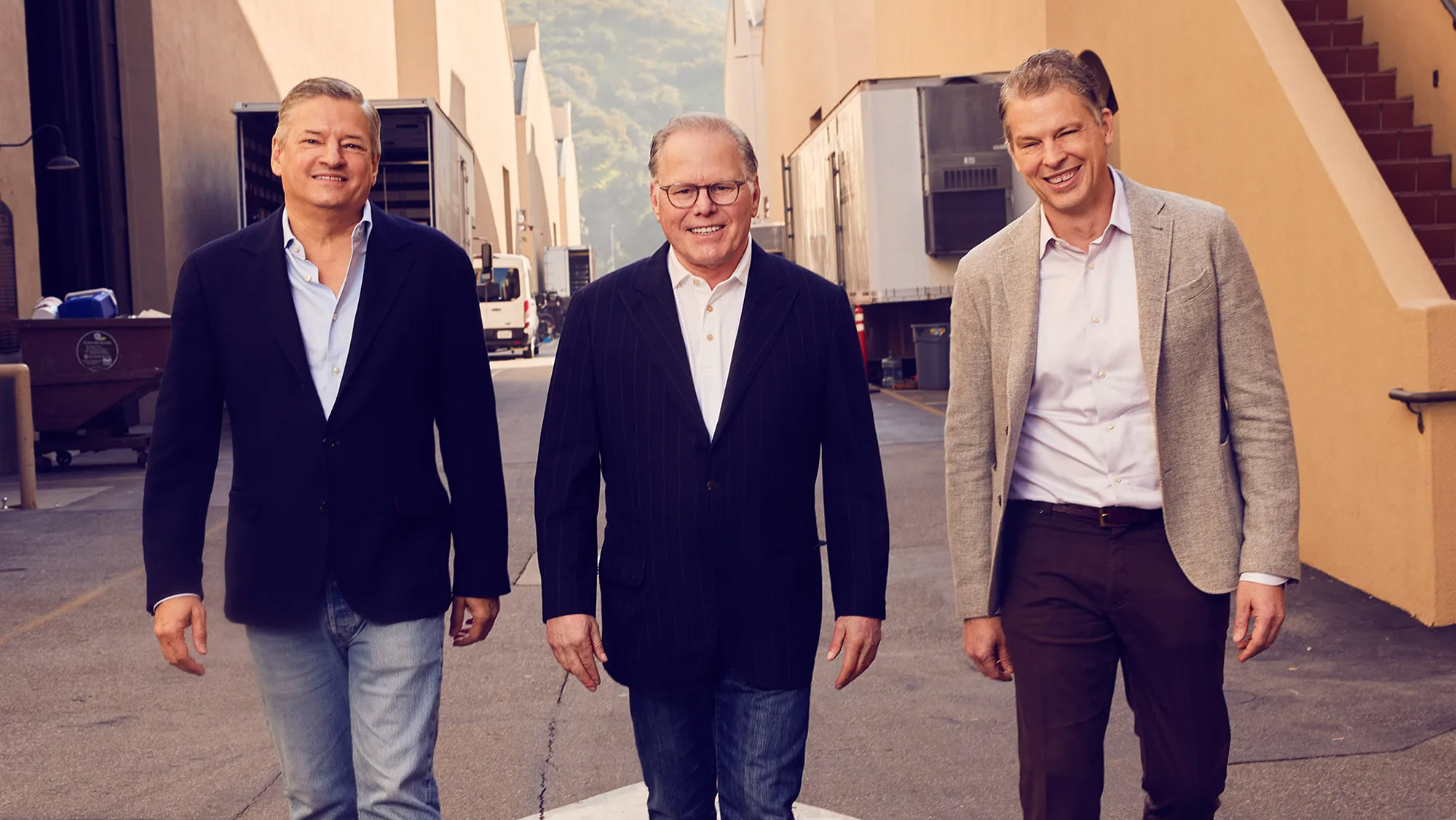
Netflix’s withdrawal from the Warner Bros. Discovery bidding war, while initially appearing as a defeat, has been analyzed by some as a shrewd strategic move. The streaming giant, known for its deep pockets and dominant position in the global entertainment market, had reportedly exuded an air of confidence, with CEO Ted Sarandos even participating in a premature victory photo-op that has since become a subject of industry amusement. This perceived arrogance, stemming from years of unparalleled success and rarely encountering significant setbacks, made their withdrawal all the more striking.
Yet, this "pull-out" was not without its silver lining for Netflix. The company’s stock price saw a boost following the announcement, reflecting investor relief over avoiding a massive debt acquisition. Furthermore, Netflix is reportedly set to receive a substantial $2.8 billion break-up fee, a remarkable sum for an unsuccessful bid. This outcome underscores a peculiar facet of modern corporate finance, where even a rejected offer can result in billions in revenue. While some may find satisfaction in Netflix not getting "everything they want all the time," the company demonstrated its ability to pivot strategically, leveraging its financial might even in retreat.
James Cameron: A Champion for Theatrical Experience
Amidst the corporate machinations, acclaimed filmmaker James Cameron emerged as a vocal advocate for the traditional cinematic experience, taking a firm stance against Netflix’s bid for WBD. Cameron did not merely issue a press statement; he took the extraordinary step of sending a direct letter to Senator Mike Lee, who chairs a key Senate antitrust subcommittee, expressing his concerns about the potential impact of Netflix acquiring WBD on Hollywood jobs and the future of moviegoing.
Cameron’s intervention sparked a mini-controversy of its own, drawing criticism from actor Mark Ruffalo, who suggested Cameron was endorsing studio mergers. However, Cameron clarified his position, stating he was not inherently pro-merger but rather advocating for what he perceived as the "lesser of two evils" in an inevitable consolidation, prioritizing the preservation of cinemas and related employment. Netflix CEO Ted Sarandos publicly retorted, accusing Cameron of participating in a "disinformation campaign" orchestrated by Paramount. Despite the pushback, Cameron’s influence is undeniable; Sarandos himself would undoubtedly covet a single new Cameron film over a multitude of Netflix’s self-produced blockbusters, reinforcing the industry adage: "Never bet against James Cameron."
The Game of Thrones-Verse: A Growing Empire
The expansive world of George R.R. Martin’s Game of Thrones continues its remarkable trajectory, solidifying its status as a cornerstone franchise for HBO. This week brought a fresh wave of success, particularly for the prequel series A Knight of the Seven Kingdoms, which concluded its debut season with series-high ratings. The spin-off proved that HBO could produce a more modestly budgeted GoT extension and still garner significant fan adoration, further diversifying the franchise’s appeal.
While House of the Dragon has faced some criticism for its second season’s pacing, the release of an action-packed trailer for its third season hints at a return to the epic scale and dramatic tension fans expect. Simultaneously, George R.R. Martin, whose creative vision is increasingly recognized as a multi-billion-dollar asset by HBO, announced a new theatrical play, Game of Thrones: The Mad King, set to premiere at the prestigious Royal Shakespeare Theater. Fifteen years after the original Game of Thrones first captivated audiences, the franchise is no longer just a hit show but a sprawling, multi-platform universe, with Martin’s influence finally being fully embraced.
BAFTAs and BBC Face Public Outcry
The British Academy Film Awards (BAFTAs) and the BBC found themselves embroiled in a significant public relations crisis this week following a series of highly controversial incidents during their telecast. What was intended as an inclusive celebration descended into a widely criticized spectacle of misjudgment and delayed apologies. The controversy centered on offensive remarks made during the show, which producers initially addressed with a weak "if you are offended" non-apology delivered by host Alan Cumming.
The situation escalated dramatically when no immediate apology was offered to presenters Michael B. Jordan and Delroy Lindo, who were impacted by the offensive content. It took a massive public uproar the following day for BAFTA to issue a belated, "groveling statement" that many deemed insufficient. The most damaging revelation, however, concerned the BBC’s decision not to edit out repeatedly shouted racial slurs from the two-hour delayed broadcast, despite reports that Warner Bros. had urged them to do so. This trainwreck, deemed predictable by many, highlighted a severe lack of preparedness and judgment on the part of BAFTA and the BBC, leading to widespread condemnation and calls for accountability.
Tyra Banks’ Legacy Under Scrutiny
Tyra Banks, the iconic supermodel and creator of America’s Next Top Model, found her professional legacy under intense scrutiny this week, largely due to Netflix’s new Reality Check documentary. The program delved into the behind-the-scenes realities of ANTM, raising questions about whether the popular reality competition show, in its pursuit of entertainment, crossed lines into what some now describe as "cultural war crimes." The documentary has sparked a renewed public conversation about the ethics of early 2000s reality television and the psychological impact on contestants.
Banks’s experience serves as a cautionary tale for public figures engaging in documentaries designed to "reexamine" their past endeavors. The critical re-evaluation has left Banks in a particularly isolated position, with even her most prominent defender, former ANTM winner Adrianne Curry, offering a backhanded defense. Curry’s comments, which included calling Banks an "asshole" and a "dickhead" while ultimately telling her to "f*ck off," underscored the difficulty Banks faces in rehabilitating her public image amidst these allegations.
Shia LaBeouf’s Continued Struggles
Actor Shia LaBeouf once again made headlines this week for personal struggles, raising renewed concerns about his ongoing battle with addiction. While it is crucial to approach discussions about addiction with empathy, the public perception often grapples with the paradox of individuals possessing immense resources and support yet continuing a cycle of self-destructive behavior. LaBeouf, known for his roles in blockbusters like Transformers, was reportedly involved in a bar altercation, leading to a high-profile arrest.
Eyewitness accounts described the actor, sporting his distinctive tattoos and pirate beard, as behaving disruptively, spoiling the experience for others. Compounding the concern, LaBeouf was reportedly seen continuing to party the day after his arrest. A judge, in a significant understatement, remarked, "Clearly you don’t take your alcohol problems seriously." The incident reignites questions about LaBeouf’s career trajectory and public image. In journalistic tradition, actors are often identified by their most famous roles; for LaBeouf, that remains "the Transformers actor." The ongoing hope among many is that he can overcome his personal challenges and deliver a performance that allows a new, more positive descriptor to precede his name in future headlines.
The week concluded with seismic shifts across the entertainment industry, from the remapping of corporate empires to the critical re-evaluation of celebrity legacies and the public struggles of prominent figures. The "Great Netflix Pull-Out Edition" not only solidified a new corporate behemoth but also highlighted the complex interplay of finance, power, and public perception that defines modern Hollywood. The implications of these events are far-reaching, promising continued transformation in how content is created, distributed, and consumed globally.