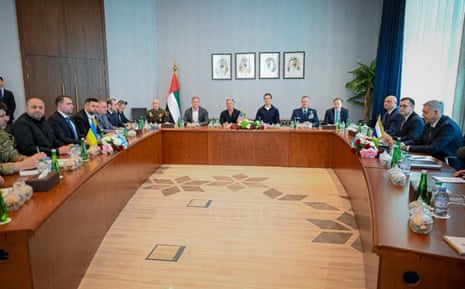
The announcement came following two days of intensive, US-led trilateral negotiations in Abu Dhabi, where high-level delegations from Kyiv and Moscow engaged in their most substantive diplomatic interaction in several months. While both sides acknowledged that a definitive peace remains distant, the agreement to conduct a reciprocal exchange of 314 prisoners of war provided a rare and tangible sign of progress in a conflict that has devastated the region for nearly four years.
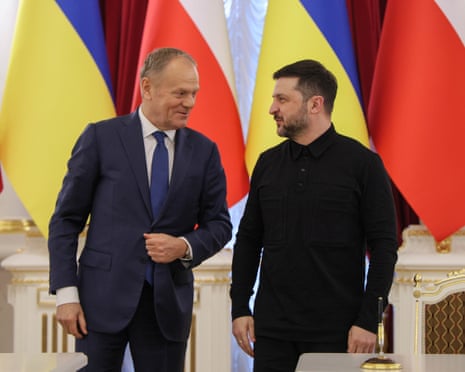
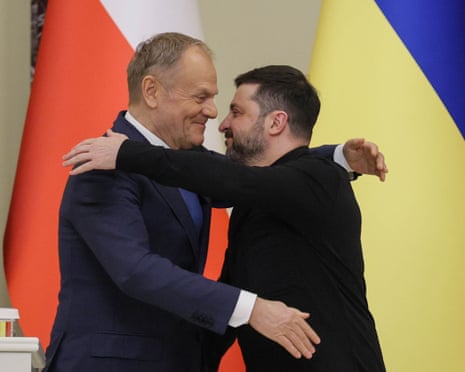
Ukrainian President Volodymyr Zelenskyy, speaking alongside Polish Prime Minister Donald Tusk in Kyiv shortly after the conclusion of the talks, emphasized that the path to a resolution remains fraught with obstacles. Despite the friction inherent in negotiating with an invading force, the Ukrainian leader maintained that his administration would continue to engage in the process to secure a fair and lasting end to the aggression.
The Abu Dhabi discussions were mediated by the United States and the United Arab Emirates, marking a significant shift in the diplomatic landscape. Steve Witkoff, the special envoy representing the Trump administration, characterized the sessions as "detailed and productive," though he cautioned that significant work remains before a comprehensive ceasefire or peace treaty can be realized.
Zelenskyy Says Ukraine-Russia Talks ‘Not Easy’ but ‘Constructive’ in Abu Dhabi
The negotiations in the United Arab Emirates took place over several sessions, including a five-and-a-half-hour meeting on Wednesday followed by a three-hour session on Thursday. These talks represent a tentative revival of diplomacy at a time when the battlefield situation remains largely stagnant and the human cost continues to climb.
Zelenskyy’s assessment that the discussions were "not easy" reflects the deep-seated territorial and security disputes that have stymied previous attempts at mediation. Moscow continues to demand that Ukraine cede vast swaths of its eastern territory, including the Donbas region, while Kyiv insists on the restoration of its sovereign borders and firm security guarantees from Western allies.
Despite these gaps, the tone from both delegations was notably more professional than in previous encounters. Kirill Dmitriev, representing the Russian federation, noted "forward movement" in the discussions, a sentiment echoed by Kyrylo Budanov, the head of the Ukrainian presidential office, who thanked the international mediators for facilitating a "genuinely constructive" environment.
A Major Breakthrough: The First Prisoner Swap in Five Months
The primary achievement of the Abu Dhabi summit was the agreement to exchange 157 prisoners from each side, totaling 314 individuals. This marks the first major exchange of personnel in five months, ending a long and painful pause for the families of those held in captivity.
Zelenskyy confirmed the details of the swap via a post on X, formerly Twitter, stating that Ukraine is finally "bringing our people home." The group of returning Ukrainians includes members of the Armed Forces, the National Guard, and the State Border Guard Service, ranging from enlisted soldiers to high-ranking officers. Notably, a significant number of those being released had been in Russian custody since the early stages of the invasion in 2022.

The return of civilians was also a critical component of the deal. The Ukrainian government has repeatedly stressed that the return of all captives—both military and civilian—is a non-negotiable priority for any ongoing peace process. This exchange is seen as a confidence-building measure that could pave the way for more difficult discussions regarding territorial integrity and long-term security.
Tusk in Kyiv: Strengthening the Poland-Ukraine Alliance
While the talks were concluding in the UAE, Polish Prime Minister Donald Tusk arrived in Kyiv to demonstrate unwavering European solidarity. Tusk’s visit was underscored by the announcement of a new €47 million aid package from Poland, focused primarily on providing armored equipment to the Ukrainian military.
During a joint press conference at the Mariinskyi Palace, Tusk delivered a forceful message to the international community. He stated that he chose to be in Kyiv because it is the place on the global map where the distinction between "good and evil" is most visible. Tusk asserted that supporting Ukraine is a moral imperative for "decent people" everywhere, as the country continues its "heroic resistance against senseless Russian aggression."
The leaders also discussed a strategic military swap: Kyiv expressed readiness to trade its domestically produced drones for air defense missiles and Polish MiG-29 fighter jets. This proposal highlights Ukraine’s growing industrial capacity in drone technology and its urgent need for sophisticated aerial platforms to defend its airspace. Additionally, the two countries explored expanding power grid connectivity to stabilize Ukraine’s energy supply, which has been severely compromised by Russian strikes.
Economic Pressures and the Impact of Western Sanctions
The diplomatic developments coincide with a renewed focus on the economic state of the conflict. David O’Sullivan, the European Union’s special envoy for sanctions, recently stated that Western economic measures are having a "significant impact" on the Russian economy.
O’Sullivan admitted that sanctions are not a "silver bullet" and face constant challenges from circumvention, but he remained "fairly bullish" about their long-term effectiveness. He suggested that by 2026, the Russian economy might reach a breaking point as the immense costs of a war-focused industry become unsustainable. "Defying the laws of economic gravity can only go on for so long," O’Sullivan noted, pointing out the distortion caused by prioritizing military production over the civilian economy.

This economic pressure is a vital component of the Western strategy to force a settlement. As Russia pours resources into the front line, the underlying stability of its financial system is being tested, potentially creating more leverage for negotiators in trilateral formats like the one seen in Abu Dhabi.
Regional Security and the EU’s Financial Lifeline
The security of Europe as a whole remains tied to the outcome of the war. Zelenskyy reiterated that security guarantees provided to Ukraine are not just for Kyiv’s benefit but would strengthen the entire eastern flank of the continent. He insisted that there should be "no reward" for Russian aggression, a stance Polish Prime Minister Tusk supported by pledging to block any international pressure on Kyiv to accept a "bad deal."
Financial support for Ukraine’s survival is also evolving. It recently emerged that the United Kingdom could see increased procurement opportunities for its defense firms if it agrees to help cover the borrowing costs of a massive €90 billion EU loan for Ukraine. This loan is intended to fill a critical funding gap for 2026 and 2027, ensuring that Kyiv can continue to pay its soldiers, public servants, and pensioners while maintaining its defense.

The loan is a crucial lifeline as Ukraine endures a brutal winter. With temperatures in the capital plunging to -20C, the destruction of energy and heating infrastructure by Russian missiles has left millions in the dark. The EU loan, funded by borrowing on capital markets, represents a long-term commitment to Ukrainian stability regardless of immediate battlefield shifts.
Diplomatic Friction and the "Trump Factor"
The role of the United States remains the most significant variable in the peace process. The involvement of Steve Witkoff in Abu Dhabi signals the Trump administration’s desire to fulfill campaign promises of ending the war quickly. However, this American involvement has also created friction among traditional allies.
In Poland, a diplomatic row erupted after US Ambassador Tom Rose blacklisted Włodzimierz Czarzasty, the speaker of the Polish Sejm, from all future dealings with the US administration. The move came after Czarzasty refused to sign a letter supporting Donald Trump for the Nobel Peace Prize. Czarzasty criticized the US president’s "transactional politics" and his initiatives like the Board of Peace, which he claimed destabilized international organizations. Ambassador Rose responded by calling the speaker’s comments "outrageous and unprovoked insults," leading to a sudden cooling of relations with a key member of Tusk’s coalition government.

Tactical Developments: Starlink and Battlefield Reality
On the ground, technology continues to play a decisive role. Ukrainian Defense Minister Mykhailo Fedorov announced that Starlink terminals used by Russian forces have been deactivated. Kyiv has been working closely with SpaceX to "white list" authorized devices, a process that Fedorov claims has had a "disastrous" impact on Russian command and control.
Reports from the front line suggest that the loss of reliable satellite communication has caused command structures to collapse in certain sectors, forcing a halt to some Russian assault operations. While SpaceX CEO Elon Musk had previously denied selling terminals to Russia, Ukrainian intelligence believes the Russian military obtained the hardware through third-party countries. The deactivation of these units represents a significant tactical win for Ukraine as it seeks to disrupt the logistics of the occupying forces.
The Human Cost and the Path Forward
The scale of the conflict was further highlighted by Zelenskyy’s recent admission to French media that approximately 55,000 Ukrainian soldiers have been killed in action. While this figure is lower than some international estimates, which place the number of dead and wounded well over 100,000, it underscores the staggering loss of life. Zelenskyy warned that if Ukraine loses its independence, neighboring European countries would be the next victims of the Kremlin’s "expansionist policy."

As the delegations return from Abu Dhabi, the international community looks toward Gdańsk, Poland, which is set to host the next Ukraine reconstruction conference in June. The prisoner swap and the "constructive" nature of the recent talks provide a sliver of hope, but the underlying issues of territory and sovereignty remain unresolved.
The "Nothing about Ukraine without Ukraine" principle remains the bedrock of Kyiv’s diplomatic strategy. While the involvement of the US, UAE, and EU is essential for a settlement, the final terms of any peace deal will ultimately depend on whether the two warring nations can bridge a divide that currently seems as wide as the battlefield itself.