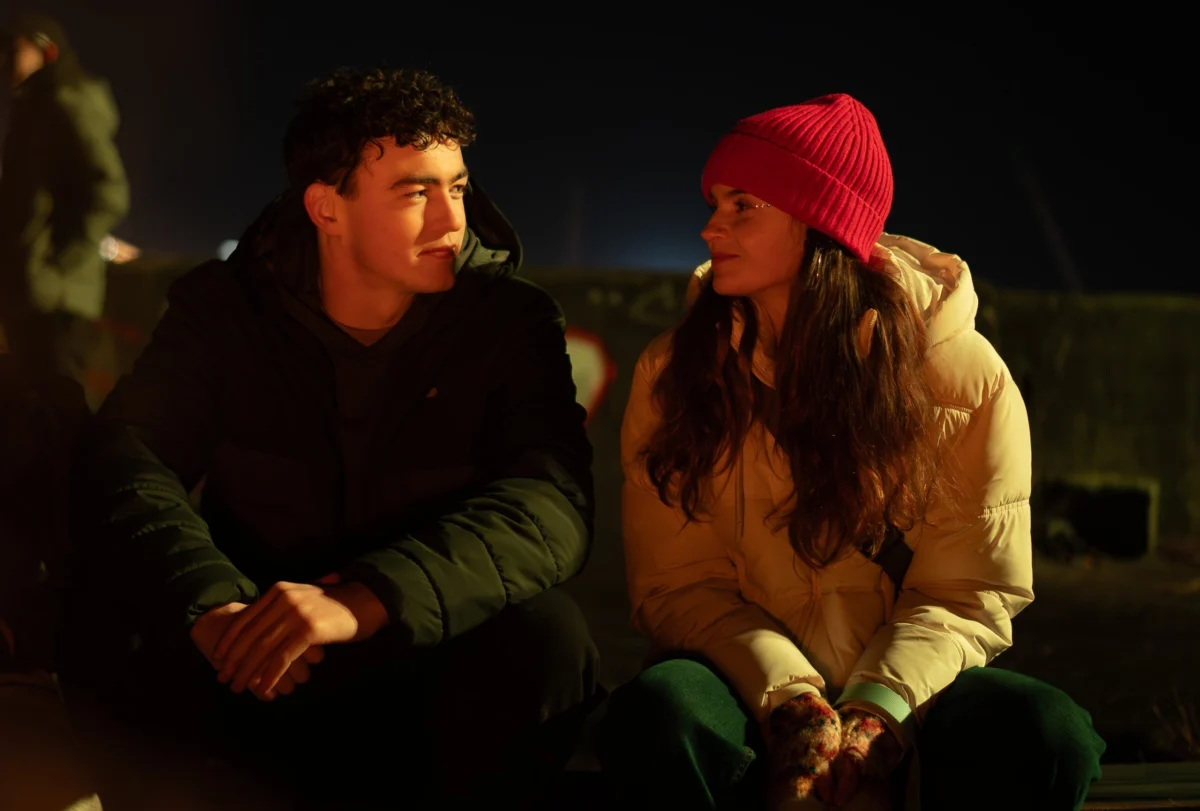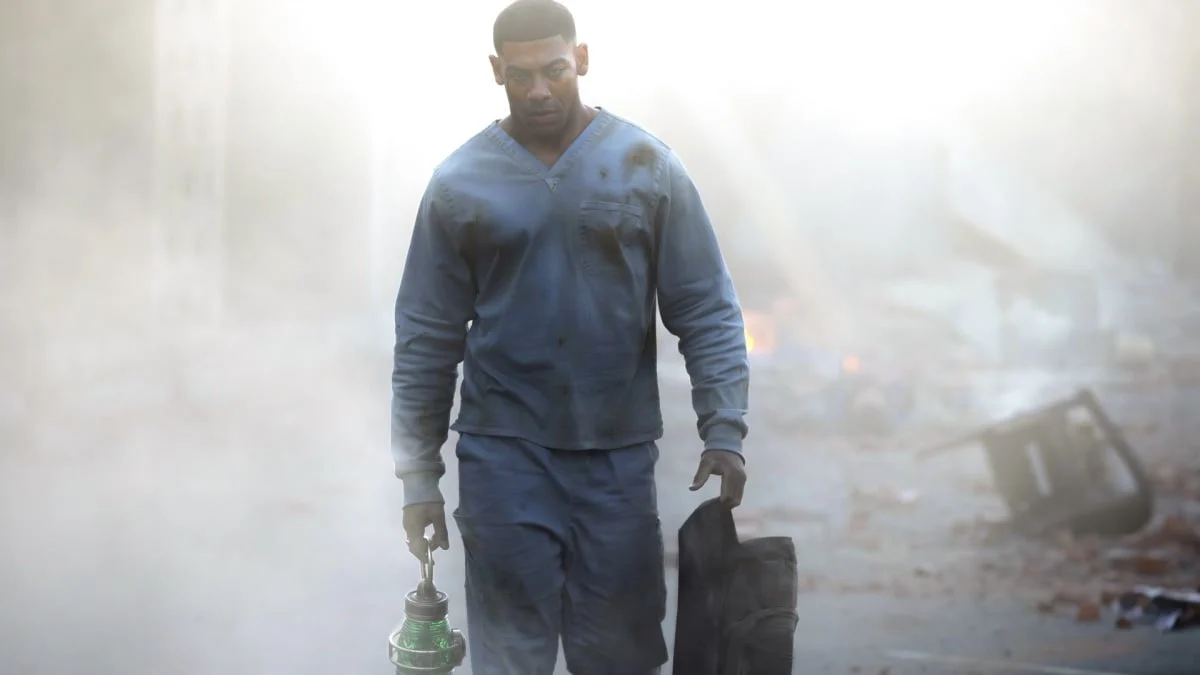
HBO’s Lanterns episode 5 has redefined the stakes of the high-budget DC Universe series, pivoting from a grounded noir investigation into a full-scale extraterrestrial conflict that leaves the town of Rushville in ruins. The installment effectively concluded the immediate Manhunter threat while raising harrowing new questions about the ultimate fate of Hal Jordan and the future of the Green Lantern Corps on Earth. By the end of the hour, the series shifted its focus toward the overarching mystery established in the series premiere, setting the stage for a final act that promises to bridge the gap between two disparate timelines.
The narrative climax of Lanterns episode 5 centered on the exposure and subsequent defeat of Zoe Macon, played by Poorna Jagannathan. After weeks of suspicion surrounding the Macon family and their influence over the rural American landscape, the truth of Zoe’s identity as a Manhunter—a member of the robotic precursors to the Green Lanterns—was laid bare. The revelation transformed the episode from a psychological thriller into a high-octane battle for survival, as Zoe utilized advanced technology and social manipulation to turn the citizens of Rushville against the two protagonists.
The conflict began with a calculated tactical move by Zoe, who utilized her position of power to heal John Stewart from injuries sustained in a vehicle collision caused by Hal Jordan. This act of apparent benevolence was a facade, designed to isolate Jordan and frame him as the primary aggressor. By issuing a town-wide kill order on Jordan, Zoe effectively weaponized the local population, turning a small-town militia into a defensive shield for an extraterrestrial operative. The tension escalated further as Zoe deployed the laser satellite technology introduced in the previous episode, systematically obliterating structures within Rushville to demonstrate her absolute control over the sector.
The Decimation of Rushville in Lanterns Episode 5
The tactical maneuvers executed by Hal Jordan during the siege of Rushville highlighted the character’s increasingly desperate and erratic behavior. In an attempt to secure Zoe for the Guardians of the Universe, Jordan engaged in a complex ruse involving Antaan, the alien mercenary portrayed by Paul Ben-Victor. Jordan redirected Antaan’s vengeful crew toward the compound of William Macon, claiming the patriarch was the true Manhunter. This deception resulted in a tragic and violent outcome, as William Macon, played by Garret Dillahunt, was unable to maintain the ruse despite Zoe’s coaching.
The death of William Macon served as a turning point in Lanterns episode 5, removing one of the series’ most enigmatic figures and stripping away the human layer of the Macon conspiracy. The violence continued as Antaan discovered the deception, leading to a confrontation that resulted in his own demise. Jordan’s intervention to protect Zoe from Antaan—not out of loyalty, but for the purpose of extraction—led to the mercenary’s aerial explosion. This moment effectively debunked long-standing fan theories suggesting Antaan would eventually be revealed as the iconic DC villain Atrocitus, the leader of the Red Lantern Corps.
The destruction of the local motel served as the physical epicenter of the episode’s chaos. As the structure was reduced to rubble by Zoe’s satellite strikes, the internal conflict between Hal Jordan and John Stewart reached its boiling point. The two Green Lanterns engaged in a brutal physical altercation over the possession of the power ring, reflecting months of simmering resentment and ideological differences. Despite the violence, a flicker of their partnership remained, as Jordan used his power to create a protective bubble for Stewart during the explosion, ensuring both survived the Manhunter’s assault.
Resolving the Manhunter Threat and the Rejection of the Ring
The final confrontation between the Lanterns and Zoe Macon in Lanterns episode 5 concluded with a stark display of tactical precision. Utilizing Jordan’s unconscious body as bait, John Stewart managed to lure the Manhunter into a vulnerable position before neutralizing her with a long-range sniper shot. This act ended the immediate threat to the town and the Corps, but it left the protagonists in a state of profound disillusionment. The removal of the Manhunter threat did not bring a sense of victory, but rather a vacuum of authority and purpose.
Following the battle, the power dynamic between the two leads shifted permanently. Stewart took possession of both the power ring and the lantern, but in a move that subverted traditional superhero tropes, he refused to recite the Green Lantern Oath. When confronted by Guardian Lianna, portrayed by Laura Linney, Stewart expressed a total rejection of the Corps’ mission. After a lifetime of discipline and the trauma of his upbringing, Stewart found that the weight of the ring offered no satisfaction or redemption. This decision left the sector "Lantern-less," creating a narrative bridge to the future timeline where the consequences of this choice become clearer.
The rejection of the ring in Lanterns episode 5 emphasizes the show’s focus on character-driven drama over spectacle. John Stewart’s refusal to become the hero the Guardians demanded is a critique of the rigid structures of the Green Lantern Corps itself. It positions Stewart as a man seeking agency outside of cosmic mandates, even as the universe grows increasingly dangerous. This development also complicates the legacy of Hal Jordan, whose obsession with the mission has left him isolated and, as the series’ opening suggested, eventually deceased.
Looking Toward the 2026 Timeline and the Fate of Hal Jordan
As the series moves past the events of Lanterns episode 5, the focus shifts heavily toward the year 2026. The pilot episode established a grim future where John Stewart and Sheriff Kerry Kane, played by Kelly Macdonald, discover Hal Jordan’s lifeless body on a football field in Rushville. With the Manhunter mystery seemingly resolved in the past, the final three episodes are expected to examine the decade-long gap between the battle of Rushville and Jordan’s eventual murder. This temporal shift allows the show to explore the long-term psychological effects of the events witnessed in the mid-season climax.
The 2026 timeline also opens the door for the introduction of other major players in the James Gunn-led DC Universe. It has been confirmed that Guy Gardner, the brash and often abrasive Green Lantern played by Nathan Fillion, exists in this era, having debuted in the Superman feature film. The question remains whether Gardner will serve as a mere cameo or a primary investigator into the death of his predecessor. Gardner’s presence suggests that while John Stewart may have initially rejected the ring, the Corps eventually found a replacement for Sector 2814, though perhaps not the one the world expected.
The investigation into Hal Jordan’s murder will likely revisit the relationships he built—or destroyed—in the wake of Lanterns episode 5. Key questions involve his continued presence in Rushville and his relationship with Kerry Kane, who remained a central figure in his life despite her marriage. Furthermore, the cosmic elements of the series, such as the potential involvement of Sinestro or the fear-based entity Parallax, remain looming threats. While the Manhunters were the primary antagonists of the first half of the season, the true architect of Hal Jordan’s downfall may be a far more familiar foe from the Green Lantern mythos.
Broader Impact on the DC Universe Narrative
The events of Lanterns episode 5 have significant implications for the broader architecture of the new DC Universe. By grounding the Green Lantern mythos in a gritty, Earth-based detective story, executive producers have successfully differentiated the series from previous iterations of the characters. The show’s willingness to kill off established supporting characters and challenge the heroism of its leads suggests a more mature, consequence-driven approach to storytelling. This tonal shift is expected to influence future DCU projects that deal with cosmic entities and the intersection of alien politics with human life.
The public impact of the show’s narrative choices has been marked by intense discussion regarding the portrayal of Hal Jordan. Unlike the traditional "Silver Age" depiction of an infallible test pilot, the Jordan of this series is a flawed, aging operative struggling with the limitations of his own will. Lanterns episode 5 solidified this interpretation, showing a man so desperate to fulfill his duty that he would sacrifice his own partner’s trust and the lives of civilians. This deconstruction of the character provides a fresh perspective for audiences who may have grown accustomed to more conventional superhero archetypes.
As the production moves into its final act, the resolution of the "Who killed Hal Jordan?" mystery will serve as the ultimate test of the series’ narrative structure. The transition from the high-stakes action of Lanterns episode 5 to the investigative procedural format of the final episodes represents a bold stylistic choice. By resolving the Manhunter arc early, the creators have cleared the board for a more intimate exploration of legacy, failure, and the cost of wearing the ring. The remaining three episodes are poised to determine not just the fate of Hal Jordan, but the identity of the Green Lantern Corps in a universe that is rapidly evolving.