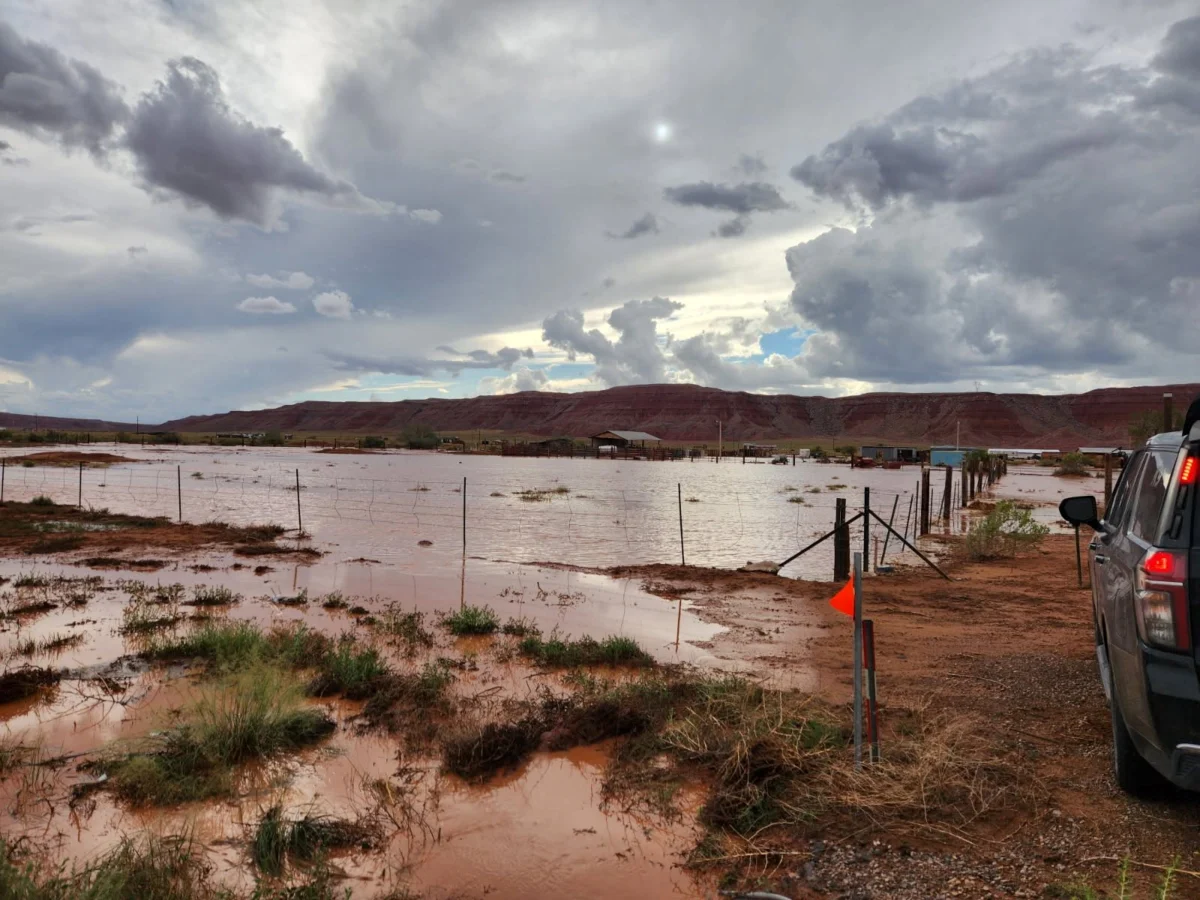
Navajo Nation officials confirmed the tragic deaths of two adults and a child who were swept away by powerful floodwaters early Wednesday morning in northwestern New Mexico, a region grappling with severe weather that has also rendered numerous roadways impassable. The incident occurred near the community of Newcomb, prompting a swift response from local law enforcement and emergency services.
Devastating Floodwaters Engulf Navajo Nation Communities
The devastating loss of life underscores the perilous conditions residents are facing as relentless rainfall continues to saturate the landscape across the Four Corners region. Navajo Nation President Buu Nygren issued a somber statement expressing his profound grief and offering deepest condolences to the affected families. "There are no words that can ease the pain of losing a loved one so suddenly, and our hearts are especially heavy knowing that three lives were lost," President Nygren stated.
He urged all Navajo Nation residents to exercise extreme caution, especially in areas experiencing heavy rainfall and potential flash flooding. The president’s message highlighted the importance of community support during this difficult time, praying for strength and comfort for those in mourning. The incident serves as a stark reminder of the unpredictable and destructive nature of severe weather events in arid and semi-arid environments.
Widespread Storms Fueling Flood Threats
The National Weather Service (NWS) in Albuquerque had issued multiple warnings in the days leading up to the tragedy, forecasting the likelihood of widespread thunderstorms. On Tuesday, the NWS warned of the possibility of significant rainfall, and by Wednesday, they reiterated these concerns, noting that moisture levels were projected to be at record highs for mid-September. This heightened atmospheric moisture content significantly increases the risk of intense and localized downpours.
A Flash Flood Watch was in effect for the western third of New Mexico and the South Central Mountains on Wednesday, with forecasters emphasizing that flash flooding could occur anywhere across central and northern New Mexico. These alerts are crucial for residents to take necessary precautions, such as avoiding low-lying areas, securing property, and monitoring weather updates. The persistent threat of flash flooding highlights the vulnerability of communities, particularly those with limited infrastructure to manage rapid water accumulation.
Regional Impact of Persistent Rainfall
The heavy rainfall is not confined to New Mexico; it is predicted to impact significant portions of Arizona, Colorado, and Utah through Thursday. This broad regional impact means that millions of residents across the Southwest are under similar weather advisories. Flash flood warnings were specifically issued for parts of northwestern New Mexico, while broader flash flood watches covered large areas of central and northern Arizona.
These watches and warnings are critical tools for public safety, allowing individuals and emergency managers to prepare for potential hazards. The cumulative effect of prolonged rainfall can lead to saturated ground, making it more susceptible to landslides and mudflows in addition to flash floods. The infrastructure in many rural and tribal areas, including the Navajo Nation, can be particularly vulnerable to such events due to their remoteness and the often unpaved nature of roadways.
Historical Context of Flash Flooding in the Region
This tragic incident occurs just weeks after a similar event at the Grand Canyon, a popular tourist destination in Arizona, where three hikers were swept away and dozens of others were rescued due to flash flooding. That incident served as a grim precursor to the current dangers posed by severe weather in the Southwest. The Grand Canyon’s unique topography, with its steep canyons and narrow ravines, makes it particularly prone to rapid and dangerous flash floods when heavy rain occurs.
The Southwest, characterized by its arid climate, can experience extreme weather events. Monsoonal moisture, which typically peaks in late summer, can bring intense thunderstorms that produce torrential rainfall in a short period. This phenomenon, known as flash flooding, is a significant hazard because dry soil cannot absorb water quickly enough, leading to rapid runoff and dangerous water surges. The Navajo Nation, with its vast, often undeveloped terrain and numerous washes and arroyos, is especially susceptible to these sudden and powerful inundations.
Navajo Nation’s Resilience and Vulnerability
The Navajo Nation, the largest federally recognized Indian reservation in the United States, spans portions of Arizona, New Mexico, and Utah. Its geography includes a diverse range of landscapes, from high desert plains to mountainous areas, all of which can be affected by severe weather. The Nation’s infrastructure, including roads, bridges, and communication networks, can be severely compromised by flooding, isolating communities and hindering emergency response efforts.
President Nygren’s call for caution is a vital part of the Nation’s emergency preparedness strategy. The Navajo Nation government often works in coordination with federal agencies like FEMA and the National Weather Service to disseminate warnings and coordinate relief efforts. However, the sheer scale of the reservation and the often remote locations of its communities present unique challenges for timely and effective response.
Broader Implications for Southwest Communities
The recurring pattern of severe flooding in the Southwest raises broader questions about climate resilience and infrastructure adaptation. As weather patterns become more extreme, communities must invest in infrastructure that can withstand increased rainfall and flooding events. This includes improving drainage systems, reinforcing bridges, and developing early warning systems that can reach even the most remote residents.
For tribal nations like the Navajo Nation, these challenges are often compounded by historical underinvestment in infrastructure and limited resources. The economic impact of such events can be substantial, disrupting livelihoods, damaging property, and requiring significant expenditure on recovery and rebuilding efforts. The social impact is also profound, as these events can displace families and disrupt the fabric of community life.
Public Safety and Preparedness Measures
The NWS’s detailed advisories are critical for informing the public. Residents are advised to never drive or walk through floodwaters, as even shallow, fast-moving water can sweep away vehicles and people. It is also important to be aware of the surroundings and to seek higher ground if flash flooding is imminent. Turning around, not drowning, is a mantra that emergency services promote to emphasize the life-saving importance of avoiding flooded roadways.
Emergency management agencies within the Navajo Nation and surrounding counties are actively monitoring the situation. They are working to assess damage, provide assistance to affected residents, and clear roadways as quickly and safely as possible. The cooperation between tribal, state, and federal agencies is paramount in effectively managing the consequences of such natural disasters.
A Community in Mourning and a Call for Vigilance
The loss of three lives in Newcomb is a profound tragedy for the Navajo Nation. The community is left to mourn and heal while simultaneously facing the ongoing threat of severe weather. President Nygren’s message of solidarity and prayer reflects the deep sense of community that defines Navajo culture.
As the region continues to experience heavy rainfall, the importance of heeding weather advisories and prioritizing safety cannot be overstated. The events of Wednesday serve as a somber reminder of nature’s power and the ongoing need for vigilance and preparedness across the Southwest. The resilience of the Navajo people will be tested, but their strength and communal bonds will undoubtedly provide support during this period of immense grief and challenge. The focus now shifts to recovery, support for the grieving families, and reinforcing preparedness measures for future weather events.