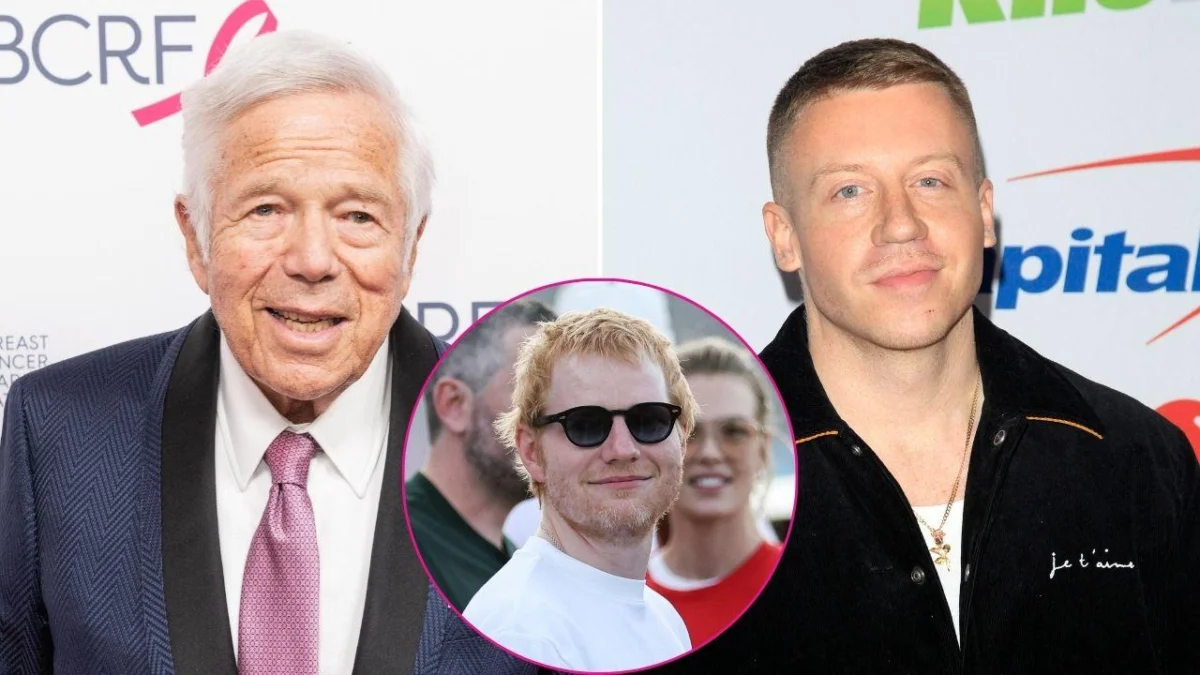
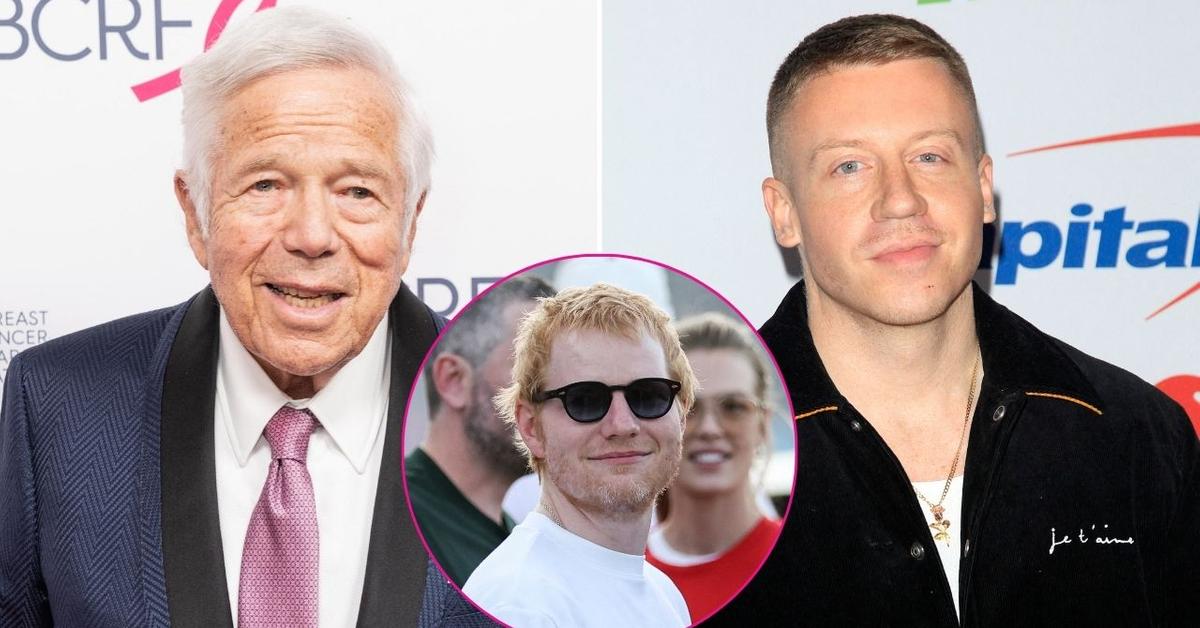
Robert Kraft, the venerable owner of the New England Patriots and Gillette Stadium, has definitively confirmed his decision to bar rapper Macklemore from performing as an opening act during Ed Sheeran’s highly anticipated Loop tour dates at the Foxborough venue. The unprecedented move came in direct response to Macklemore’s outspoken pro-Palestinian remarks and performances at earlier stops on the tour, igniting a fervent debate over artistic expression, venue control, and the deeply sensitive Israeli-Palestinian conflict.
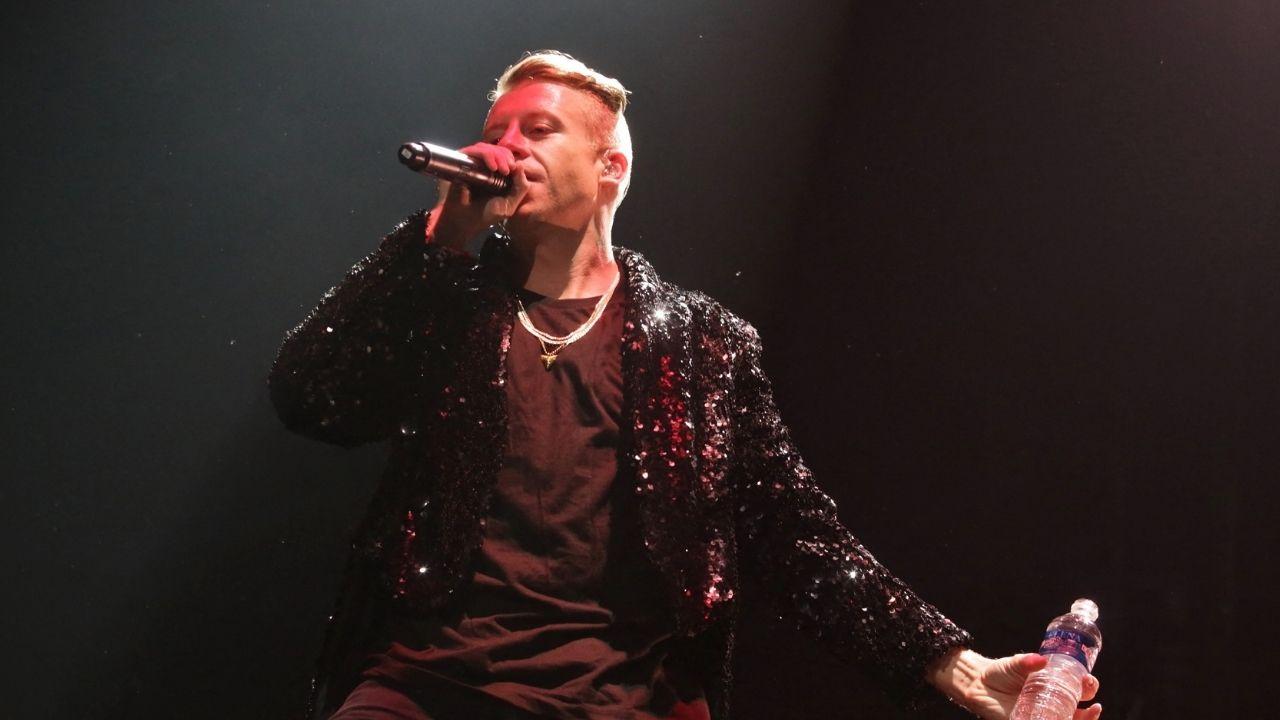
The controversy began to simmer during Ed Sheeran’s Loop tour’s previous engagements at MetLife Stadium in New Jersey. During his opening sets, Macklemore, whose real name is Benjamin Haggerty, used his platform to voice strong support for Palestinians. Onstage, he notably shouted "Free Palestine," expressed profound solidarity with the people in Gaza and the occupied West Bank, and displayed vivid images depicting the wartime devastation in the region. A pivotal moment included his performance of "Hind’s Hall," a track he released in solidarity with pro-Palestinian student demonstrators at Columbia University and other campuses across the United States. These acts of political expression garnered both fervent applause and significant criticism, setting the stage for the dramatic intervention by Robert Kraft. Following the incident, Macklemore was subsequently dropped from the remainder of Ed Sheeran’s tour, a decision that reverberated throughout the music and entertainment industries.
Robert Kraft’s Stance: Philanthropy, Principle, and Property
Robert Kraft is not merely a sports mogul; he is a prominent figure known for his extensive philanthropic endeavors and deep connections to the Jewish community. As the founder of the Foundation to Combat Antisemitism, his stance on issues related to Israel and antisemitism is well-documented and deeply personal. His decision regarding Macklemore at Gillette Stadium is therefore seen through the lens of these long-standing commitments. Gillette Stadium, a privately owned and operated venue, falls under Kraft’s direct purview, granting him the authority to dictate the nature of performances held within its confines.
Kraft’s action has highlighted the complex interplay between a private venue owner’s right to manage their property and an artist’s desire for free expression. While the First Amendment protects free speech from government infringement, it does not compel private entities like Gillette Stadium to host any and all forms of expression. This distinction forms the bedrock of Kraft’s argument and the legal precedent for his decision. The incident underscores the unique challenges that arise when deeply held political beliefs intersect with the commercial realities of large-scale entertainment.
The Nexus of Free Speech and Venue Authority
The dispute quickly evolved into a national discussion about the boundaries of free speech, especially when exercised on a private stage. Critics of Kraft’s decision argued that it amounted to censorship, stifling an artist’s right to express political views. Conversely, supporters of Kraft emphasized the rights of property owners to control the messaging conveyed within their venues, particularly when it touches upon contentious and sensitive geopolitical issues.
Stacy Stuart, co-founder of the organization JewBelong, articulated this perspective, stating, "Macklemore has every right to say ‘Free Palestine,’ and Robert Kraft has every right to say, ‘Not in my stadium.’ That’s not censorship. That’s accountability." Stuart further elaborated on the principle that artists "are not entitled to someone else’s stage, audience, or reputation." This view posits that when a performer’s message is perceived to cross a line from political commentary into what venue owners or sponsors deem as divisive or hateful, there is a legitimate responsibility to assess and act, even if that means removing the performer.
Rabbi Brad Hirschfield, president of Clal, the National Jewish Center for Learning and Leadership, echoed this sentiment, framing the dispute as two parties exercising their respective rights. "Both Macklemore and Robert Kraft are within their rights — the former to speak out as he may choose, and the latter to not host him in his ‘home’," Hirschfield observed. He noted Macklemore’s post-incident tweets, suggesting that while the rapper defended his statements, he might be "playing the victim" and failing to grasp the sentiment expressed by Ed Sheeran – that the situation was about "holding space that doesn’t cause others pain." This perspective adds a layer of ethical consideration to the legal and commercial arguments.
Kraft’s Justification: Avoiding a Platform for Hate Speech
In a formal statement, Robert Kraft elucidated the rationale behind his decision to bar Macklemore from Ed Sheeran’s Gillette Stadium Shows. He underscored Gillette Stadium’s unwavering commitment to fostering a welcoming and inclusive environment for all attendees. Crucially, Kraft asserted that his venue would not "provide a platform for hate speech," and that Macklemore’s participation, given his recent performances, "would cross that line."

Kraft’s statement delved into the specifics of his concern, arguing that Macklemore’s onstage rhetoric involved "only sharing selective information and ignoring the actions of Hamas," which he contended "only advances more divisiveness and hate." He made a point to clarify that his decision was "not about diminishing the suffering of innocent Palestinians or denying anyone the right to advocate on their behalf." This distinction aimed to frame his actions not as anti-Palestinian, but as a rejection of what he perceived as a biased and inflammatory narrative. Notably, Kraft’s statement did not address Macklemore’s subsequent allegation that he had pressured other venue owners to follow suit, leading to the rapper’s complete removal from the tour.
Macklemore’s Rebuttal: Distinguishing Criticism from Antisemitism
Following Kraft’s public confirmation and the broader fallout, Macklemore took to social media to issue a lengthy statement, rejecting the characterization of his advocacy as antisemitic. He acknowledged the grim reality of antisemitism, stating, "Antisemitism is real." However, he immediately qualified this by asserting that "the word matters too much to be used as a shield against criticism of the Israeli state."
Macklemore argued that the conflation of criticizing Israel, opposing Zionism, or advocating for "Free Palestine" with hatred of Jewish people is a dangerous oversimplification. He contended that such conflation "doesn’t protect Jewish people. It protects Israel from accountability." This defense positions his activism as a legitimate form of political critique, distinct from bigotry or hate, and pushes back against what he perceives as an attempt to silence dissent through accusations of antisemitism. His remarks amplified the ongoing, often heated, debate surrounding what constitutes legitimate criticism of Israeli policy versus antisemitic rhetoric.
Broader Ramifications for the Music Industry and Public Discourse
The incident involving Robert Kraft and Macklemore carries significant implications for the music industry, setting a precedent for how artists, venues, and promoters navigate politically charged content. It highlights the increasing pressure on public figures to take stances on complex global conflicts, and the potential consequences when those stances clash with the values or interests of those who own the platforms. This scenario forces event organizers to re-evaluate their policies regarding artistic expression, particularly in an era where social media amplifies every statement and action.
The controversy at Gillette Stadium serves as a microcosm of larger societal tensions, reflecting deep divisions within public discourse. It underscores the ongoing challenge for entertainment venues to maintain neutrality or manage ideological clashes among performers and audiences. While Kraft offered to meet with Macklemore, citing a shared goal of "peace for all people, an end to suffering, and an end to all hate," the immediate outcome was a stark demonstration of the power held by venue owners in shaping the cultural landscape.
The unresolved questions about the precise boundaries of artistic expression, the responsibilities of platform owners, and the definition of hate speech in a politically polarized world continue to loom. The incident at Gillette Stadium ultimately underscores the enduring complexity of these issues, particularly when deeply held beliefs intersect with commercial enterprises and public performance. It stands as a potent example of the ongoing tension between artistic freedom and the prerogative of private property owners to shape the message conveyed within their domain.