Ukraine launched a massive aerial offensive against Moscow and several other Russian regions on Sunday, marking the first acknowledged use of domestically produced ballistic missiles in a conflict that has now spanned four and a half years. The coordinated strike, which involved hundreds of long-range drones and high-velocity projectiles, targeted critical energy infrastructure and residential areas on the final day of Russia’s parliamentary elections.
The assault resulted in at least two confirmed fatalities and significant damage to a major oil refinery in the Russian capital. Ukrainian President Volodymyr Zelenskyy confirmed the operation, stating that the strikes successfully hit "key oil industry facilities" essential to the Kremlin’s war economy. This escalation signals a significant shift in Kyiv’s tactical capabilities as it increasingly relies on its own defense industry to strike deep into Russian territory.
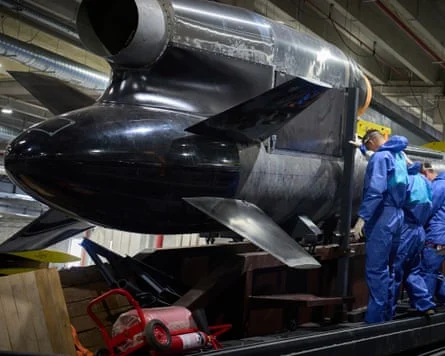
Among the various weapon systems deployed, the most notable was the Pelican, a short-range ballistic missile developed within Ukraine. With an estimated range of approximately 350 kilometers (217 miles), the Pelican represents a new tier of threat for Russian air defenses. While the missile’s range is insufficient to reach Moscow from the current front lines, military analysts suggest it was used to suppress regional defenses or strike staging areas as part of a broader, multi-layered attack strategy.
Ukraine Deploys New Ballistic Capability
The introduction of the Pelican missile, also known by its industrial designation FP-7, marks a milestone for the Ukrainian defense firm Fire Point. Ballistic missiles are notoriously difficult to intercept because they travel at several times the speed of sound during their terminal phase. Unlike slower-moving cruise missiles or loitering munitions, which can be tracked and engaged by conventional anti-aircraft systems, ballistic projectiles provide very little reaction time for defenders.
Zelenskyy’s announcement highlighted a suite of ten different weapon types used in the Sunday morning raid, most of which were designed and manufactured in Ukraine. This push for domestic production comes as Kyiv seeks to reduce its dependence on Western-supplied munitions, which often come with geographic restrictions on their use against Russian soil.
In addition to the Pelican, Ukrainian forces utilized the Flamingo cruise missile, an FP-5 model that has previously demonstrated the range necessary to reach Moscow. Open-source intelligence analysts, including Ruslan Leviev of the Conflict Intelligence Team, identified debris found in the Moscow region as belonging to a Flamingo missile. This long-range weapon has become a staple of Ukraine’s strategy to bring the costs of the war home to the Russian capital.
Impact on Moscow and Russian Energy Infrastructure
The strike on the Moscow oil refinery sent plumes of thick black smoke over the city’s skyline, with emergency crews struggling to contain the resulting fires. Moscow Mayor Sergey Sobyanin confirmed the facility was hit but claimed that the damage did not result in immediate casualties at the site. This refinery has been a frequent target for Ukrainian drones over the past year, as Kyiv seeks to cripple Russia’s ability to process and export fuel.

Beyond the industrial damage, the attack took a toll on the civilian population. In the Moscow region, Governor Andrey Vorobyov reported that a 44-year-old woman and an elderly man were killed in separate locations. A drone crash also ignited a fire in a 21-story residential building, forcing the emergency evacuation of more than 400 residents.
Russian authorities provided staggering figures regarding the scale of the interception effort. Mayor Sobyanin claimed that Russian air defenses shot down more than 1,600 drones across the country, with 450 allegedly aimed specifically at Moscow. While independent analysts suggest these numbers may be inflated for domestic propaganda purposes, the sheer volume of sirens and explosions reported across the region indicates an unprecedented level of aerial activity.
A Strategic Challenge to the Kremlin’s Narrative
The timing of the attack was clearly intended to coincide with the final day of Russia’s three-day parliamentary elections. The vote, which is widely expected to further solidify President Vladimir Putin’s decades-long hold on power, has been characterized by the exclusion of any genuine opposition parties. Only candidates who openly support the "special military operation" were permitted to run.
Mayor Sobyanin denounced the strikes as a calculated attempt to interfere with the democratic process and intimidate voters. "The unprecedented attack was clearly planned with the aim of disrupting the elections," Sobyanin said in a statement on Telegram. "The enemy did not succeed."
Despite these claims, the strikes have created a visible crack in the Kremlin’s narrative that the war is a distant conflict that does not affect the daily lives of ordinary Russians. By striking the capital during a sensitive political window, Kyiv is demonstrating that Russia’s air defense umbrella is not impenetrable.
Domestic Arms Production and the Fire Point Initiative
The success of the Sunday raids has put a spotlight on Fire Point, the Ukrainian company responsible for the Pelican and Flamingo systems. As Ukraine’s most prominent developer of long-range strike technology, Fire Point is reportedly working on an even more advanced system: the FP-9.
The FP-9 is expected to have a range exceeding 500 miles, which would allow it to target Moscow and other major Russian industrial hubs with greater frequency and payload capacity. Sources within the Ukrainian defense ministry indicate that a test flight for the FP-9 is scheduled for later this autumn.
The development of these domestic systems provides Kyiv with greater strategic autonomy. While the United States and other NATO allies have provided sophisticated long-range systems like ATACMS and Storm Shadow, they have often restricted their use to occupied Ukrainian territories to avoid a direct escalation with Moscow. Ukraine’s domestic ballistic and cruise missiles carry no such caveats, allowing the military to target the heart of the Russian logistics and energy networks.

The Collapse of the Energy Non-Aggression Understanding
The latest strike comes just days after a controversial claim by U.S. President Donald Trump, who suggested on Monday that both Moscow and Kyiv had reached a tentative agreement to stop targeting each other’s energy infrastructure. The Sunday morning attack on the Moscow refinery appears to have rendered any such understanding moot.
For months, Ukraine has conducted a systematic campaign against Russian refineries, oil depots, and power plants. These strikes have knocked out a significant portion of Russia’s refining capacity, leading to localized fuel shortages, price hikes, and long lines at gas stations across the country’s 11 time zones.
Kyiv views these facilities not as civilian targets, but as the "cash cow" that funds the Russian military. By hitting the Moscow refinery, Ukraine is targeting the very center of that economic engine. Russia has responded with its own massive missile and drone barrages against the Ukrainian power grid, leaving millions of Ukrainians without reliable electricity and heating as they head into the fifth winter of the war.
Long-Term Implications for Regional Security
As the war enters its 55th month, the introduction of Ukrainian-made ballistic missiles represents a new and more dangerous phase of the conflict. The ability of Kyiv to manufacture and deploy high-speed projectiles means that the geographical buffer Russia once enjoyed is rapidly disappearing.
The psychological impact on the Russian public cannot be overstated. For the first few years of the invasion, Moscow remained largely insulated from the horrors of the front lines. Now, with 21-story buildings catching fire and oil refineries burning within sight of the Kremlin, the reality of the war is becoming unavoidable for the Russian elite and middle class.
International observers are closely watching the Kremlin’s response. Historically, major strikes on Moscow have been followed by retaliatory "punishment" raids against Ukrainian cities. However, with Ukraine now possessing its own ballistic capabilities, the dynamic of deterrence has shifted. Kyiv is no longer just defending its borders; it is actively contesting the airspace over the Russian capital, signaling that the "full-scale war" is no longer a one-way street.
The Sunday offensive serves as a reminder that despite the static nature of the ground war in the Donbas, the technological and aerial components of the conflict are evolving at a breakneck pace. As Ukraine continues to refine its domestic missile programs, the reach and frequency of such attacks are likely to increase, further complicating the Kremlin’s efforts to maintain a sense of normalcy during a prolonged and costly war.