Australian Federal Opposition Leader Angus Taylor announced a sweeping hardline policy platform on Saturday, vowing to implement the most significant reductions to national migration levels in the country’s history. Addressing the New South Wales Liberal Party state council in Sydney, Taylor framed the proposed cuts as a necessary correction to what he characterized as a period of unchecked growth under the current Labor administration. The announcement comes as the Coalition seeks to consolidate its base and reclaim voters ahead of a critical New South Wales state election scheduled for March.
Taylor’s rhetoric signaled a sharp pivot toward traditional conservative values and cultural issues, a move political analysts suggest is designed to stanch the flow of voters to the right-wing One Nation party. During his wide-ranging speech, Taylor accused the Labor government of being “socialist in all but name,” alleging that the administration of Prime Minister Anthony Albanese has failed to address the core concerns of the Australian public. He contended that the current trajectory of the nation is unsustainable and requires a radical shift in both economic and social policy.
The pledge to deliver one of the biggest immigration cuts in Australian history serves as the centerpiece of this new platform. While Taylor did not provide specific numerical targets during the initial announcement, the commitment suggests a substantial departure from the post-pandemic migration surge that has dominated recent headlines. The opposition leader argued that the previous Coalition government had its own shortcomings but maintained that Labor is “utterly failing the nation” on the international and domestic stage.

Taylor Pledges ‘One of the Biggest Immigration Cuts in Australian History’ to Address Housing and Infrastructure
The focus on immigration arrives at a time of heightened national debate regarding the impact of population growth on the Australian housing market and public infrastructure. Taylor’s proposal seeks to capitalize on public anxiety over rising rents and the limited availability of residential property. By framing the issue as a matter of national history, Taylor is positioning the Coalition as a protective force against rapid demographic and social change.
This policy announcement follows recent moves by the Labor government to tighten certain aspects of the immigration system. The Albanese administration recently unveiled a plan that includes converting a former quarantine facility into a detention center and placing new restrictions on international students, specifically preventing them from bringing family members to Australia. Taylor, however, dismissed these measures as insufficient, offering to go significantly further to restrict the flow of arrivals.
Beyond migration, Taylor used the state council meeting to lean into several "culture war" issues that have become flashpoints in Australian politics. He criticized Labor politicians for what he described as “divisive” displays at press conferences, specifically referencing the practice of displaying the Aboriginal and Torres Strait Islander flags alongside the national flag. Taylor asserted that leaders should “stand in front of our one national flag,” a statement that drew strong support from the party faithful in attendance.
Protecting National Identity and Economic Relief
The opposition leader further promised that a future Coalition government would take legislative action to protect Australia Day and the national flag from being altered or diminished by “ideologues and activists.” He also signaled an intent to change laws regarding gender, though he did not elaborate on the specific legislative mechanisms he would employ. “We will not allow the ideologues and activists to deny the truth,” Taylor said. “Under a Coalition government I lead, we will end this lunacy.”

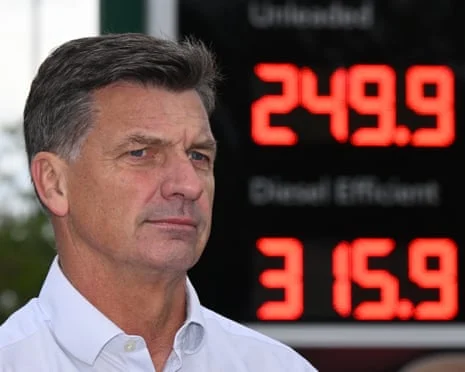
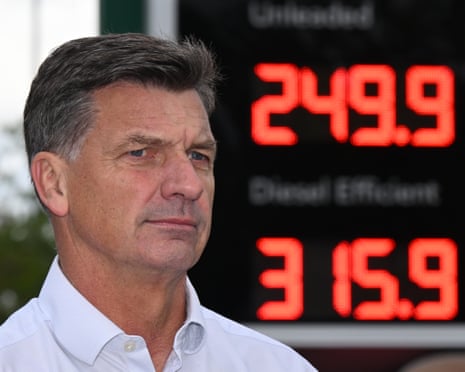
Economic relief also featured prominently in the Coalition’s new policy rollout. Taylor introduced a “fuel price shield” designed to protect Australian motorists from global oil price volatility. Under this plan, the federal fuel excise would be automatically halved whenever the two-week average price of Brent crude oil exceeds $100 per barrel. The opposition estimates that this would save drivers approximately 27 cents per liter at the pump, or roughly $15 for a typical tank of fuel.
The fuel price shield is projected to cost the federal government approximately $950 million per month when triggered. Taylor defended the expense as a necessary “automatic safeguard” for families struggling with the cost of living. The policy would also involve the removal of a 32-cent-per-liter heavy vehicle road user charge, providing further relief to the transport and logistics industry. According to Coalition analysis, this trigger would have been activated twice in the past five years, including during the global energy shocks of early 2022 and March of this year.
Tributes Flow for Victorian Greens MP Tim Read
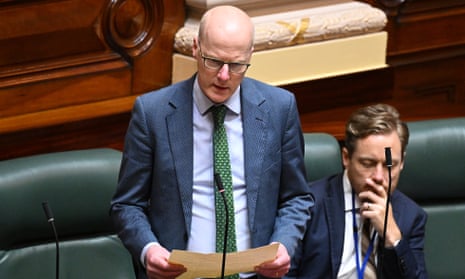
While the Coalition outlined its future agenda, the Australian political community paused to honor the life of Victorian Greens MP Tim Read, who died on Saturday at the age of 64. Read, the Member for Brunswick, had been a prominent figure in Victorian politics, known for his dual career as a doctor and a scientist before entering the legislative assembly. He was diagnosed with melanoma in November and had recently announced his intention to retire at the next state election due to his failing health.
Victorian Greens leader Ellen Sandell confirmed Read’s passing, stating that he died surrounded by his family. Sandell described Read as a “brilliant local MP” and a man of “fundamental decency.” She highlighted his advocacy on several progressive issues, including pill testing, tobacco licensing, and a statutory ban on solitary confinement in prisons. Read was also remembered for his vocal support of the Palestinian people and his consistent warnings regarding the environmental impact of coal burning in Victoria.
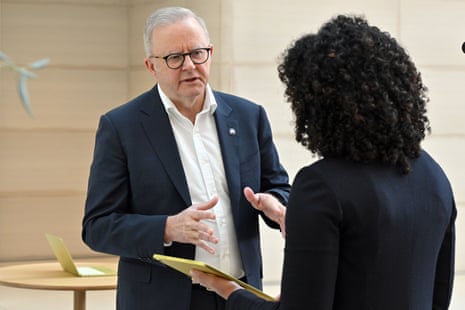
Tributes for Read came from across the political spectrum, reflecting the high regard in which he was held by both allies and opponents. Victorian Premier Ben Carroll described Read as a man of principle and compassion who lived his values every day. Carroll noted that he had spoken with Read as recently as last week, discussing the need for continued reform and integrity in public life. Victorian Opposition Leader Jess Wilson also offered condolences, calling Read a “thoroughly decent person” who brought sincerity and a strong sense of duty to the parliament.
Albanese Navigates AI Standards and Social Media Regulation in the US
As domestic debates unfolded, Prime Minister Anthony Albanese continued a high-profile visit to the United States, where he engaged with tech industry leaders and addressed global challenges. On Sunday, Albanese appeared on the ABC program Insiders to discuss his meetings with Apple Executive Chair Tim Cook and the Australian government’s ongoing efforts to regulate artificial intelligence and social media.
Albanese reported that Cook had praised Australia’s world-leading efforts to implement a social media ban for children under the age of 16. The Prime Minister defended the progress of the ban, acknowledging that while it “was never going to be perfect,” the government has already empowered the eSafety Commissioner to compel social media companies to provide information regarding their compliance. He declined to name the specific companies involved, citing commercial confidentiality.
The conversation in the US also touched on the existential threats posed by artificial intelligence. Albanese outlined a three-pronged approach to AI safety, focusing on corporate safeguards, national standards, and international protocols. He announced that Australia intends to introduce its own AI standards by the end of the year to ensure the technology remains within human control. “Artificial intelligence is moving so fast,” Albanese said, emphasizing the need for nation-states to be proactive in their engagement with the industry.
Global Tech Tensions and Copyright Concerns
The Prime Minister was also pressed on the issue of copyright law in the age of AI scraping. Major AI developers, including OpenAI and Anthropic, have reportedly lobbied for a watering down of copyright protections to facilitate the training of large language models. Albanese maintained that his government’s position remains firm: companies should not be able to use Australian creative works, including books, music, and news, without the control and monetization of the original artists.
When asked if he would explicitly rule out changes to copyright laws, Albanese stated that the core principles he has outlined would remain unchanged. He noted that the government would continue to engage constructively with the tech industry but emphasized that the national interest lies in protecting the intellectual property of Australian creators. This stance sets the stage for potential friction with Silicon Valley giants as global regulatory frameworks begin to take shape.
Albanese also responded to comments made by U.S. President Donald Trump, who has previously characterized AI safety fears as a “hoax.” Trump has since pivoted to announcing an “AI force” and a dedicated AI tsar to maintain American dominance in the field. Albanese suggested that there is no contradiction between acting in the national interest and acting in the interest of humanity. He expressed hope that upcoming meetings between Trump and Chinese President Xi Jinping would lead to positive engagement on international protocols for the technology.
Regional Priorities and the EU Free Trade Agreement
On the diplomatic front, Albanese addressed questions regarding Australia’s relationship with the European Union. Following reports that Canada is considering becoming an associate member of the EU, Albanese was asked if Australia would pursue a similar path. The Prime Minister noted the geographical distance, jokingly remarking that “we’re a long way from Europe,” but quickly pivoted to emphasize Australia’s regional priorities.
He highlighted the centrality of the Association of Southeast Asian Nations (ASEAN) and the Pacific Island Forum to Australia’s foreign policy. Albanese stated that the primary focus regarding Europe remains the finalization of the Australia-EU Free Trade Agreement. He expressed a commitment to getting the deal in place to benefit both Australian and European markets, rather than pursuing associate membership.
As the political landscape in Australia shifts toward the next round of elections, the starkly different visions offered by the Labor government and the Coalition have come into sharp focus. Taylor’s pledge for historic immigration cuts and a return to cultural traditionalism sets a confrontational tone for the months ahead. Meanwhile, the Albanese government continues to balance its domestic legislative agenda with the complexities of international tech regulation and global trade, ensuring that the debate over Australia’s future remains both polarized and multifaceted.