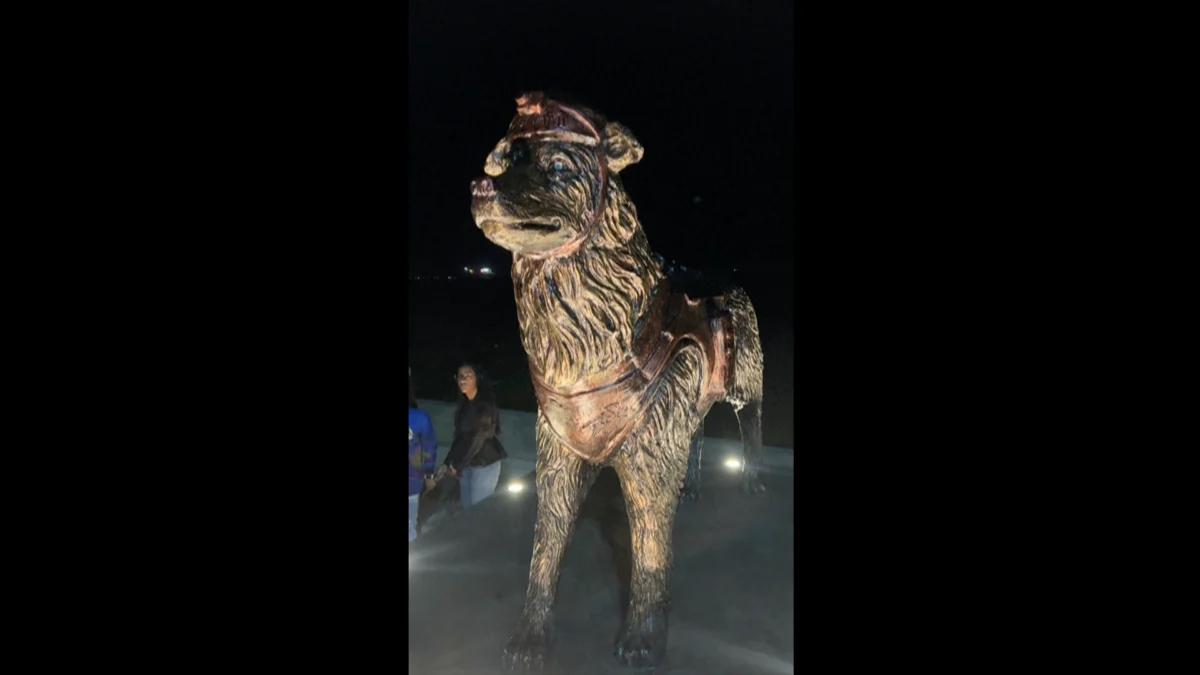
A bronze statue now stands in Maracaibo, Venezuela, to commemorate the extraordinary bravery and lifesaving efforts of a Border Collie named Tsunami, a heroic rescue dog who became a symbol of hope in the devastating aftermath of deadly earthquakes that struck the nation in June. Tsunami, renowned for his unparalleled scent-detection abilities, is credited with locating at least 26 survivors trapped beneath the rubble following the seismic events, which tragically claimed the lives of over 6,500 people and left thousands more injured and displaced.
Tsunami: A Canine Crusader in the Wake of Catastrophe
The devastating earthquakes that ripped through Venezuela in June 2026 unleashed widespread destruction, leaving a landscape of shattered buildings and desperate pleas for help. In this grim scenario, an unlikely hero emerged: Tsunami, a highly trained Border Collie whose innate abilities and dedicated partnership with his handlers made him an indispensable asset in the arduous search-and-rescue operations. His tireless efforts, often in perilous conditions, brought glimmers of hope to a nation grappling with unimaginable loss.
The magnitude of the seismic event sent shockwaves not only through the earth but also through the fabric of Venezuelan society. The official death toll, a stark testament to the disaster’s ferocity, underscored the urgent need for specialized rescue teams. Amidst the chaos and despair, Tsunami’s presence on the ground became a beacon of resilience, embodying the indomitable spirit of both man and animal working in unison against overwhelming odds.
The Ground Zero Heroics of Tsunami
Tsunami’s role in the earthquake response was pivotal. Working tirelessly alongside human rescue workers, the intelligent canine navigated treacherous debris fields, his keen senses distinguishing the faintest scent of a survivor from the overwhelming odors of dust, concrete, and decay. Each successful detection was not merely a task completed but a life potentially saved, a moment of profound relief for families anxiously awaiting news of their loved ones.
The bond between Tsunami and his handlers was evident in every coordinated movement. Their communication, a silent symphony of commands and cues, allowed them to cover vast areas efficiently, maximizing their chances of locating those still alive. Tsunami’s unwavering focus and determination, even in the face of exhaustion and the inherent dangers of unstable structures, cemented his status as a true hero.
The Impact of Tsunami’s Discoveries
The discovery of 26 survivors by Tsunami and his team was a remarkable achievement, offering tangible proof of the critical role specialized canine units play in disaster response. These successes provided a much-needed morale boost to a population reeling from the disaster, reminding them that even in the darkest hours, human and animal collaboration could yield extraordinary results. The stories of those rescued, often after days of being trapped, became powerful testaments to Tsunami’s life-saving capabilities.
Beyond the immediate rescues, Tsunami’s actions brought national and international attention to the vital work of search-and-rescue dogs. His story resonated deeply, highlighting the dedication of the handlers and the incredible potential of animals trained for such demanding missions. The statue erected in his honor serves as a permanent reminder of his singular contribution.
The Genesis of a Rescue Legend: Tsunami’s Training and Background
Tsunami’s journey to becoming a celebrated rescue dog began long before the earthquakes. Like many Border Collies, he possessed an inherent intelligence, agility, and an exceptionally keen sense of smell. These natural attributes were meticulously honed through rigorous and specialized training programs designed to prepare him for the most challenging search-and-rescue scenarios.
The training of a search-and-rescue dog is an intensive and multi-faceted process. It involves developing their natural scent-detection abilities to identify human odors even when masked by other environmental stimuli. This includes extensive fieldwork in various terrains and simulated disaster environments, teaching the dogs to remain focused and persistent under extreme pressure.
Early Indicators of Tsunami’s Potential
From a young age, Tsunami demonstrated exceptional aptitude for scent work. His handlers recognized his drive and eagerness to please, traits crucial for success in this demanding field. Early successes in training exercises, where he consistently outperformed his peers in locating hidden “victims,” signaled his potential to become a top-tier rescue operative.
The development of a strong working relationship between Tsunami and his handlers was paramount. Trust, clear communication, and mutual understanding are the cornerstones of any successful search-and-rescue team. Tsunami’s handlers invested countless hours in building this bond, ensuring they could rely on each other implicitly during critical operations.
The Specialized Skills of a Search-and-Rescue Dog
Beyond basic obedience, search-and-rescue dogs undergo specialized training for various disaster types, including earthquakes, collapsed structures, and wilderness searches. For earthquake scenarios, this involves training to navigate unstable debris, differentiate between live human scents and decomposition, and signal the presence of survivors effectively to their handlers. Tsunami’s proficiency in these areas was instrumental in his success.
His ability to work in confined spaces, ascend unstable piles of rubble, and remain calm amidst the cacophony of rescue efforts showcased his advanced training and inherent resilience. These are not innate behaviors but the result of dedicated conditioning and a deep understanding of his role within the team.
The June 2026 Venezuelan Earthquakes: A Nation in Crisis
The earthquakes that struck Venezuela in June 2026 were a catastrophic event, leaving an indelible mark on the nation’s history. The seismic activity, originating from a fault line that runs through a densely populated region, triggered widespread devastation, particularly in the western states. The immediate aftermath was characterized by collapsed buildings, severed infrastructure, and a desperate race against time to find survivors.
The geological nature of the region makes it susceptible to seismic events. However, the intensity and widespread impact of the June quakes were particularly severe, catching many communities unprepared. The scale of the disaster quickly overwhelmed local emergency response capabilities, necessitating national and international aid.
Immediate Response and Challenges
The initial hours and days following the earthquakes were a blur of frantic activity. Rescue teams, including specialized canine units like Tsunami’s, were deployed to the hardest-hit areas. However, the sheer magnitude of the destruction presented immense challenges. Roads were impassable, communication networks were down, and many buildings were too unstable to enter safely.
The humanitarian crisis that unfolded was immense. Thousands were rendered homeless, and access to basic necessities like food, water, and medical care became a critical concern. The psychological toll on survivors and rescuers alike was profound, underscoring the need for sustained support and recovery efforts.
The Role of Tsunami and His Team in the Response
Tsunami’s deployment to the most severely affected zones was a critical decision by disaster management authorities. His specialized skills were precisely what was needed to penetrate areas where human rescuers faced insurmountable obstacles. His ability to cover ground quickly and pinpoint the locations of trapped individuals significantly accelerated the rescue process.
The coordination between Tsunami’s team and other rescue organizations was a testament to the collaborative spirit that often emerges in the face of such widespread tragedy. Information sharing and integrated operational strategies were crucial for maximizing the effectiveness of the limited resources available.
Maracaibo’s Tribute: Honoring a Four-Legged Hero
The decision by the city of Maracaibo to erect a bronze statue in Tsunami’s honor is a powerful testament to the profound impact he had on the nation’s psyche. The statue, a permanent fixture, serves as a tangible symbol of gratitude and remembrance for his extraordinary service during a time of immense national suffering.
This recognition transcends the typical acknowledgment of animal assistance. It elevates Tsunami to the status of a civic hero, a figure of inspiration whose story will be passed down through generations. The choice of a bronze statue signifies an enduring legacy, a lasting tribute to his valor and dedication.
The Significance of the Bronze Statue
Bronze, a durable and noble metal, is often chosen for monuments that commemorate significant individuals or events. In this context, the bronze statue of Tsunami symbolizes the enduring strength and resilience that he embodied. It stands as a permanent reminder of the critical role he played in saving lives and offering hope during Venezuela’s darkest hour.
The location of the statue in Maracaibo, a major city in the affected region, ensures that it will be seen by many and serve as a constant reminder of the sacrifices made and the heroes who emerged from the disaster. It is a public declaration of appreciation for the unique contributions of a canine rescuer.
Public Reaction and Symbolism
The public reaction to the statue has been overwhelmingly positive, reflecting a deep emotional connection to Tsunami’s story. For many Venezuelans, he represents the unwavering spirit of hope and the extraordinary capabilities of animals trained for service. His likeness in bronze has become an icon of courage and a symbol of the bond between humans and animals in times of crisis.
The statue’s presence offers a focal point for remembrance and reflection. It allows individuals to connect with the narrative of the earthquakes and the remarkable efforts undertaken to overcome the disaster. Tsunami’s story, now immortalized in metal, continues to inspire and uplift.
Broader Implications: Canine Search-and-Rescue in Disaster Response
Tsunami’s story and the subsequent honor bestowed upon him have far-reaching implications for the broader field of canine search-and-rescue operations. His celebrated achievements underscore the indispensable value of these highly trained animals in modern disaster management strategies, prompting renewed consideration of their role and investment in their development.
The effectiveness of dogs in detecting survivors in complex and dangerous environments is often superior to that of purely technological solutions. Their ability to navigate challenging terrain, differentiate subtle scents, and work in conditions that would be prohibitive for human rescuers makes them invaluable assets.
Enhancing Disaster Preparedness and Response
The success of Tsunami and his counterparts highlights the need for continued investment in specialized canine units within national and international disaster response frameworks. This includes not only the acquisition and training of dogs but also the comprehensive support and ongoing education of their handlers.
The integration of canine search-and-rescue teams into disaster preparedness plans can significantly enhance a nation’s ability to respond effectively to seismic events and other catastrophic emergencies. Their deployment can shorten the critical window for survivor extraction, thereby increasing the chances of survival.
The Future of Canine Search-and-Rescue
As technology advances, the synergy between human intelligence, canine capabilities, and technological aids will likely define the future of search-and-rescue operations. Tsunami’s legacy reinforces the idea that while technology can assist, the unique sensory abilities and unwavering dedication of trained dogs remain irreplaceable.
The ongoing development of advanced training methodologies and the recognition of canine heroes like Tsunami are crucial for ensuring that these vital services are maintained and strengthened for future generations facing unforeseen crises. His statue in Maracaibo stands not just as a tribute to one dog, but as a powerful symbol of the enduring potential of canine rescue efforts worldwide.