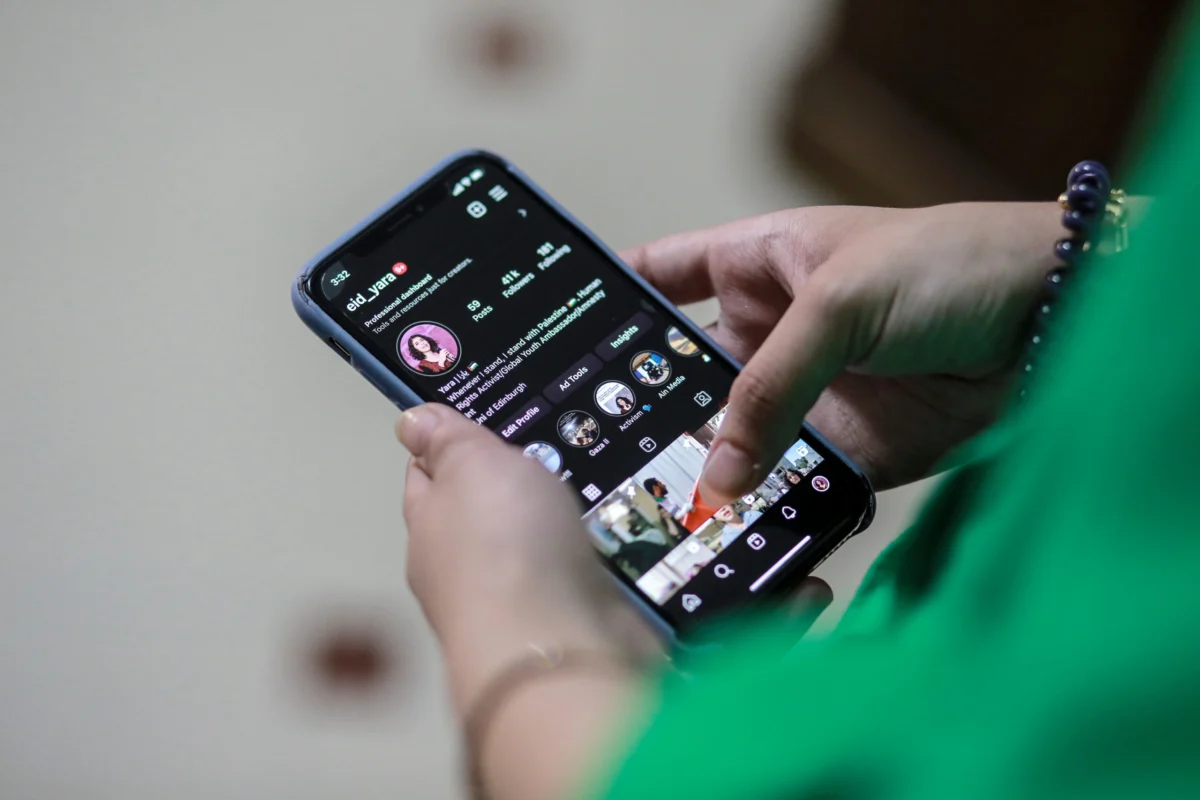
As devastating Israeli airstrikes intensified in Gaza during October 2023, Palestinian journalists and citizens leveraged social media platforms to broadcast the unfolding humanitarian crisis to the world. The Israeli siege on Gaza, which at one point included a ban on food and water, coincided with a likely intention to create a media blackout during what many are describing as a genocidal conflict. Despite the immediate documentation of alleged war crimes by Palestinian media workers and citizen journalists, significant challenges emerged in transmitting this evidence to an international audience.
The Digital Siege: Echoicide and Content Moderation
A phenomenon dubbed "Echoicide" describes the subtle yet profound weakening of a message’s reach, even if the content itself isn’t outright erased. This occurs when the platforms through which information travels are manipulated, diminishing the voice’s ability to resonate. While social media companies can delete posts or suspend accounts, equally damaging is the algorithmic reduction of content recommendations, making it harder for users to find information about Gaza or discouraging them from posting due to fear of penalties. Ultimately, a message may remain accessible, but its audience shrinks, eroding its presence in the public record and collective memory.
Human Rights Watch (HRW) has documented instances where platforms, including Meta’s Instagram, removed images and videos depicting Palestinian civilians killed or injured in Israeli attacks. These removals were often justified by claims that the content violated Meta’s "violence and incitement" rules. This pattern suggests a deliberate or systemic effort to control the narrative surrounding the conflict, raising critical questions about digital censorship and its impact on historical documentation.
Voices Silenced, Reach Diminished
Palestinian journalist Ahmed Shihab-Eldin, who commands a substantial following of over 1.1 million on Instagram, has served as a crucial conduit for firsthand accounts from Gaza. His content has included videos purportedly showing Israeli soldiers committing alleged war crimes, footage of U.S. senators appearing unmoved by the conflict, and visceral portrayals of Palestinian life under bombardment. However, Shihab-Eldin has repeatedly experienced his posts "disappearing" or facing severely limited reach without clear explanations.

"Some of my posts, particularly the ones in which Israeli soldiers were incriminating themselves, have been used by South Africa in its genocide case against Israel at the International Court of Justice (ICJ)," Shihab-Eldin stated in an interview. He described surges in followers, with "tens of thousands" flocking to his profile. "And because of that, Meta made my page disappear several times and then started severely shadow-banning accounts like mine that were central to the documentation process." This alleged suppression directly impacts the flow of information vital for international legal proceedings and public understanding.
The Broader Implications of Algorithmic Control
The advent of smartphones, live-streaming capabilities, satellite imagery, and social media platforms has democratized the witnessing of wars, allowing for real-time global observation. Yet, paradoxically, this increased accessibility raises questions about why some conflicts gain widespread visibility while others remain obscured. The concept of Echoicide underscores the crucial issue of what happens when a digital "echo" fades.
Leila Warah, a journalist based in the occupied West Bank, has also faced repeated suspensions and reactivations of her Instagram account throughout the conflict. She contends that the challenges extend beyond algorithmic manipulation and shadow-banning, encompassing self-censorship and inherent human impulses. "The bigger issue goes beyond algorithms and shadow-banning. A viewer can watch footage from Gaza, feel affected by it and then close the app and go back to their life," Warah observed. "Palestinians living through what appears on those screens do not have that option. Even when the content reaches people, the more important question is: What happens after you press share?"
Jillian York, a writer, activist, and teacher with the Electronic Frontier Foundation, points out that digital censorship can be insidious because content doesn’t necessarily vanish. Unlike overt suppression, algorithmic censorship can leave material online while progressively diminishing its reach and discoverability, making it difficult to identify and challenge. "Algorithmic censorship doesn’t need to erase testimony. It can leave it online while gradually stripping it of reach, discoverability and an audience," York explained. This issue predates the current conflict in Gaza and has long been a concern for Palestinians.
Meta’s Defense and the "Banality of Evil"
In response to inquiries from Al Jazeera, Meta reiterated a 2023 statement rejecting allegations of systemic censorship, while acknowledging that errors have occurred and corrective measures have been implemented. "But the implication that we deliberately and systemically suppress a particular voice is false," a Meta spokesperson asserted. "Claiming that 1,000 examples, out of the enormous amount of content posted about the conflict, are proof of ‘systemic censorship’ may make for a good headline, but that doesn’t make the claim any less misleading."

Meta maintained that its content moderation is based on policy violations, not users’ political views, and that its policies aim to ensure everyone has a voice while keeping platforms safe. The company did not directly address questions regarding the alleged downranking or restricted reach of Warah’s and Shihab-Eldin’s accounts.
The dynamics of online censorship echo aspects of Hannah Arendt’s concept of the "banality of evil," which described how ordinary actions within systems can lead to morally reprehensible outcomes. In the digital realm, this can manifest not through explicit malice, but through the cumulative effect of seemingly neutral decisions. Computer engineers optimizing ranking algorithms, policy specialists revising moderation rules, or reviewers applying guidelines may not intend to silence anyone. However, their collective actions can shape systems that dictate which narratives gain traction and which remain unheard.
Structural Flaws and Systemic Harm
Marwa Fatafta, MENA policy and advocacy director at digital rights organization Access Now, argues that the silencing of Palestinian voices is not a series of isolated moderation glitches but appears "systematic, structural, and widespread." "Proving systemic harm doesn’t require finding a Meta executive who deliberately pressed a button to remove Palestinian content," Fatafta stated. "In fact, Meta’s own human rights review after the Sheikh Jarrah protests confirmed arbitrary censorship, attributing it to structural policy flaws rather than explicit intent. But negligence is a choice, and so is how policies are designed, timed, and enforced."
Scholars like Edward Said, Michel Foucault, and Judith Butler have explored how power structures influence representation and credibility, determining whose suffering gains political significance. Social media platforms now wield this power on an immense scale, shaping visibility, trust, and collective memory.
Rebecca L Stein, a cultural anthropologist specializing in visual politics and digital media in Israel-Palestine, notes how the reframing of victimhood can invert perceptions of vulnerability. This has, in some instances, shifted global attention away from Palestinian suffering towards the perceived harm inflicted upon Israel by images and videos documenting the conflict. Claims of anti-Semitism against directors of documentaries detailing the systematic killing of Palestinians in Gaza serve as a recent example. "The violence of the Israeli state was replaced by the ostensible violence of the Palestinian image. In the process, Israel was refigured as the war’s foremost victim," Stein observed.

The Tyranny of Precarity and Subordinated Narratives
Beyond mere visibility, the differing political reactions to suffering in various contexts can be explained by what is termed the "Tyranny of Precarity." This concept describes how powerful actors can monopolize the discourse of vulnerability, while the chronic insecurity of less powerful communities struggles to elicit comparable concern.
Saree Makdisi, co-author of the forthcoming book Anti-Palestinianism, argues that the issue is not simply that Palestinian suffering is unseen, but that it is consistently subordinated through a "complex of narratives, distortions, carefully cultivated blind spots and forms of denial." Powerful entities can leverage fear, insecurity, and historical trauma to legitimize their actions against disenfranchised groups. Conversely, the persistent suffering of less powerful communities can become so normalized that it is relegated to background noise rather than recognized as an ongoing crisis.
While Echoicide addresses whose testimony retains an "echo," the Tyranny of Precarity concerns whose vulnerability retains political meaning. Together, these forces can significantly weaken a community’s ability to be meaningfully heard and understood on the global stage.
The Fight for Narrative Control
The ongoing conflict in Gaza has brought these critical issues to the forefront. Journalists, researchers, and human rights organizations have raised significant concerns about the online dissemination of Palestinian content. Compounded by restrictions on access to Gaza, Palestinian journalists and civilians have become even more vital in documenting and sharing their own experiences.
Alana Hadid, an activist and creative director based in Los Angeles, has observed a stark decline in views on her posts about Palestine. Her Instagram Insights reveal that her content on evergreen topics and fashion consistently garners substantially higher engagement than her posts related to Palestine. "We are not fighting simply to be heard. We are fighting for the right to tell our own story," Hadid stated. "We are not asking for permission to exist. We are insisting that we will not be erased." This sentiment underscores the profound struggle for narrative autonomy in the face of digital and structural barriers.