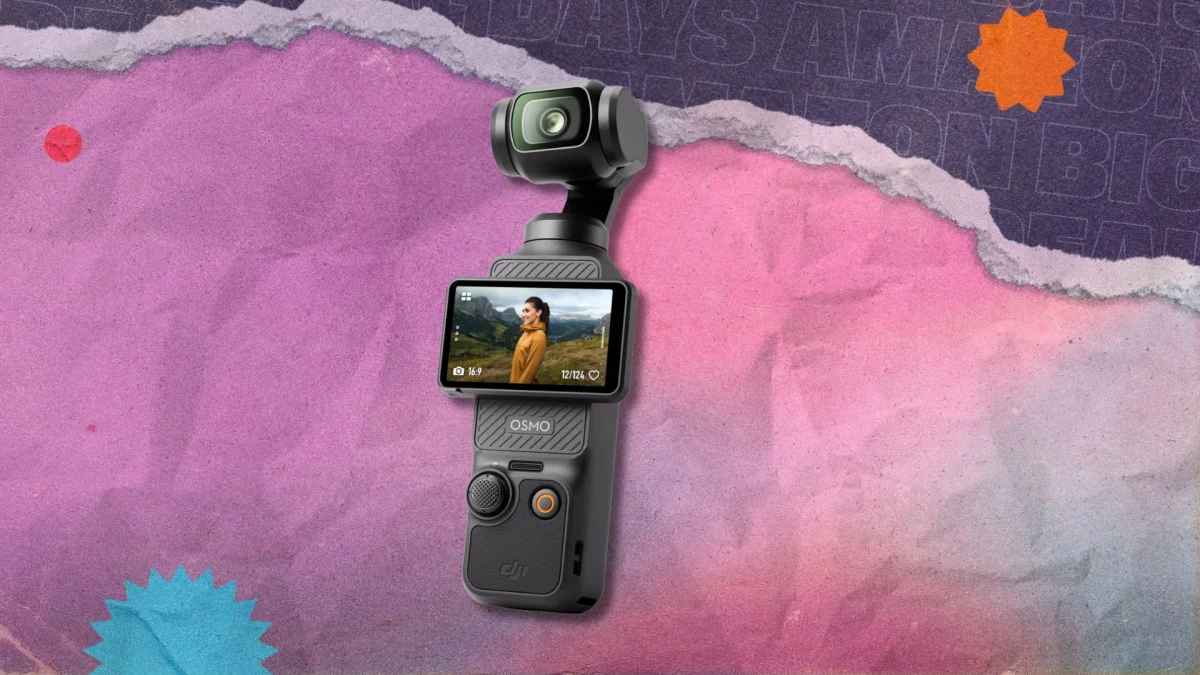
Amazon has officially reduced the price of the DJI Osmo Pocket 3 to $439, marking a significant $60 markdown from its standard retail price of $499. This 12% discount arrives as a strategic precursor to the upcoming "Prime Big Deal Days" event scheduled for early October. The price drop represents one of the most substantial direct discounts on the flagship handheld gimbal camera since its launch, positioning it as a primary target for tech enthusiasts and professional content creators looking to upgrade their portable production kits.
This early pricing move signals an aggressive push by Amazon to capture consumer interest ahead of the formal holiday shopping season. While the retailer’s October Prime Day event is slated to begin on Oct. 6, the decision to offer the DJI Osmo Pocket 3 at its lowest price point weeks in advance suggests a competitive retail environment for high-end electronics. Industry analysts suggest that such pre-event discounts are designed to lock in sales before competitors like Best Buy and B&H Photo Video launch their own seasonal promotional campaigns.
The DJI Osmo Pocket 3 has maintained a dominant position in the market due to its unique form factor, which combines a high-performance camera with a three-axis mechanical stabilizer. Unlike traditional action cameras that rely on electronic stabilization, the Pocket 3 uses physical motors to counteract movement, providing a level of cinematic smoothness that is difficult to replicate with software alone. This hardware-first approach to stabilization has made it a staple for travel vloggers, documentary filmmakers, and social media influencers who require professional-grade footage in a device that fits in a jacket pocket.
Early Access to the Best DJI Deal: Save $60 on DJI Osmo Pocket 3
The timing of this discount is particularly noteworthy given the current landscape of the creator economy. As platforms like TikTok, Instagram Reels, and YouTube Shorts continue to prioritize high-definition vertical video, hardware that facilitates seamless transitions between formats has seen a surge in demand. The DJI Osmo Pocket 3 addresses this market need through its innovative 2-inch rotatable OLED touchscreen. Users can toggle between horizontal and vertical filming modes with a simple flick of the screen, automatically adjusting the sensor’s orientation to match the intended platform.
Beyond its physical versatility, the internal components of the device represent a major leap forward from its predecessor, the Osmo Pocket 2. The integration of a 1-inch CMOS sensor is perhaps the most significant upgrade in the device’s history. In the world of digital imaging, sensor size is a primary determinant of image quality, especially in challenging lighting conditions. A 1-inch sensor allows for significantly more light intake and a higher dynamic range than the smaller sensors typically found in smartphones or standard action cameras.
This hardware capability allows the Pocket 3 to record 4K video at up to 120 frames per second (fps). The high frame rate is essential for creators who utilize slow-motion sequences to add a cinematic feel to their productions. Furthermore, the device supports 10-bit D-Log M and 10-bit HLG color modes, providing professional editors with the necessary latitude to perform advanced color grading in post-production. By offering these features at a discounted $439 price point, DJI and Amazon are lowering the barrier to entry for professional-quality cinematography.
Technical Specifications and the 1-Inch Sensor Revolution
The shift to a 1-inch sensor has fundamentally changed the value proposition of the Osmo Pocket series. Previously, pocket-sized cameras were often viewed as secondary tools—devices used only when a primary mirrorless camera was too bulky. However, the Pocket 3’s ability to capture rich detail and natural skin tones has allowed it to serve as a primary camera for many professional workflows. The sensor’s performance in low-light environments is particularly praised, as it minimizes the digital noise that often plagues small-format cameras during evening or indoor shoots.
Focusing technology has also seen a massive overhaul in this generation. The Pocket 3 utilizes full-pixel fast focusing, which ensures that subjects remain sharp even during rapid movement. This is complemented by ActiveTrack 6.0, an AI-driven software suite that includes Face Auto-Detect and Dynamic Framing. These features allow the camera to automatically follow a subject without the need for a dedicated camera operator. For solo creators, this functionality is equivalent to having a professional cinematographer on hand, as the gimbal smoothly tracks their movements across a scene.
Furthermore, the mechanical 3-axis gimbal provides a distinct advantage over the Electronic Image Stabilization (EIS) found in modern smartphones. While EIS crops the image and can sometimes result in "jello" artifacts or blurred motion in low light, mechanical stabilization keeps the entire sensor active and stable. This results in a more natural look and feel, preserving the original resolution of the 4K sensor without the software-induced distortions common in purely digital solutions.
The Strategic Timing of Amazon’s Early Prime Day Discounts
The decision to offer the best DJI deal: save $60 on DJI Osmo Pocket 3 at this specific juncture reflects broader trends in the e-commerce sector. Retailers are increasingly moving away from single-day sales events in favor of "deal seasons." By introducing a $60 discount on a high-demand item like the Pocket 3 in late September, Amazon is effectively extending the lifecycle of its October Prime Day event. This strategy helps manage logistics and shipping volumes by spreading out orders over a longer period while simultaneously capturing the "early bird" market.
Market competition in the handheld camera space has also intensified. With GoPro recently releasing its latest Hero iterations and Insta360 expanding its line of stabilized cameras, DJI is under pressure to maintain its market share. Price adjustments are a standard lever in this competition. By lowering the price to $439, DJI makes the Pocket 3 more competitive against high-end action cameras, even though it occupies a slightly different niche.
Consumer behavior data suggests that high-ticket electronics are often the first items shoppers look for during major sales events. By discounting the Pocket 3 now, Amazon is positioning itself as the go-to destination for creators. The $60 savings can be redirected by consumers toward essential accessories, such as the DJI Mic 2 or high-capacity microSD cards, further fueling the ecosystem of DJI products.
Audio Capabilities and External Hardware Integration
A common criticism of compact cameras is their lackluster internal audio quality. DJI has addressed this by ensuring the Osmo Pocket 3 is built for comprehensive audio integration. The device features a built-in three-mic array designed to reduce wind noise and capture omnidirectional stereo sound. This internal system is sophisticated enough for casual vlogging, but the device’s true strength lies in its connectivity.
The Pocket 3 features a built-in Wi-Fi and Bluetooth module that allows it to connect directly to two DJI Mic 2 transmitters. This setup is a game-changer for interviewers and vloggers who require crisp, professional-grade audio without the need for bulky external receivers. The integration is seamless, with the camera automatically syncing the audio tracks, thereby reducing the time required for synchronization during the editing process.
For those on a tighter budget, the device is also compatible with the DJI Mic Mini, providing a versatile range of audio options. This focus on the "total package"—high-quality video paired with professional audio—is what distinguishes the Pocket 3 from its competitors. The current discount makes this professional-level ecosystem more accessible to a wider audience, from students studying film to small business owners looking to improve their digital marketing content.
Comparing the Osmo Pocket 3 to Professional Cinema Gear
While it is a pocket-sized device, the Osmo Pocket 3 is increasingly being used on professional film sets as a "B-cam" or "crash cam." Its small profile allows it to be placed in locations where a full-sized cinema camera would not fit—such as inside vehicles, on narrow shelves, or attached to unconventional mounting points. The 4K/120fps capability ensures that footage from the Pocket 3 can be intercut with footage from more expensive rigs without a jarring drop in quality.
The inclusion of specialized shooting modes like Glamour Effects 2.0 and various timelapse/motionlapse options further enhances its utility. These software features are designed to save time in post-production, allowing creators to deliver polished content almost immediately after filming. The ability to livestream directly from the device in high definition also appeals to the growing segment of "IRL" (In Real Life) streamers who require a stable, high-quality mobile broadcasting setup.
The durability of the device, despite its motorized parts, has also been a point of focus for DJI. The gimbal automatically locks into a protected position when the device is powered down, and the build quality feels substantial in the hand. For travelers, the compact nature of the device means it can be carried through airport security and into remote locations without the logistical headache of a full camera bag.
Market Impact and the Future of Handheld Stabilization
The success of the DJI Osmo Pocket 3 and the subsequent interest in deals like the $60 discount at Amazon highlight a shift in consumer electronics. We are seeing a move away from "all-in-one" devices back toward specialized hardware. While smartphone cameras have become incredibly capable, they are often limited by heat dissipation issues and the ergonomic constraints of a flat glass rectangle. A dedicated device like the Pocket 3 offers better thermals, superior ergonomics for long filming sessions, and the undeniable advantage of mechanical stabilization.
As we look toward the future, the integration of AI in handheld cameras is expected to deepen. Future iterations will likely feature even more advanced subject tracking and perhaps automated editing features. For now, the Pocket 3 remains the gold standard in its category. The current price of $439 represents a significant value proposition for anyone serious about digital storytelling.
The broader impact on the industry is clear: competitors must either innovate on sensor size or stabilization technology to keep pace with DJI’s rapid development cycle. For the consumer, this competition results in better technology at lower price points. This $60 discount is a reflection of a mature product entering its peak adoption phase, offering a rare window for buyers to secure top-tier technology before the holiday rush begins.
Final Market Outlook for DJI and Amazon
As the October Prime Day approach continues, the availability of the DJI Osmo Pocket 3 at a discounted rate is expected to fluctuate. High-demand electronics often see inventory shortages when prices drop below the $450 threshold. Shoppers who have been waiting for the "best DJI deal" may find that the current $439 price point is the optimal balance between cost and availability.
The broader retail landscape will likely respond to this move. It is common to see price matching across major platforms once a significant discount is established at a major retailer like Amazon. However, the convenience of Prime shipping and the integration of the Amazon ecosystem often give the e-commerce giant an edge in these price wars.
In summary, the DJI Osmo Pocket 3 is more than just a camera; it is a specialized tool that has redefined what is possible in mobile videography. The current $60 discount at Amazon is a notable event for the tech industry, signaling both the strength of the product and the intensity of the upcoming holiday shopping season. Whether for professional use or personal travel, the Pocket 3 at $439 offers a compelling reason for consumers to invest in dedicated imaging hardware.