Writer and director James Gray returns to the gritty landscape of 1980s New York City with ‘Paper Tiger,’ a somber mafia drama that recently served as the opening night selection for the New York Film Festival. The film marks a high-profile reunion for Adam Driver and Scarlett Johansson, who previously garnered acclaim for their roles in the divorce drama Marriage Story, though Gray steers their latest collaboration into significantly darker, more institutional territory. Moving away from the explosive emotional outbursts of their previous work together, this production offers a restrained exploration of familial loyalty, criminal overreach, and the devastating consequences of silence.
Set in 1986, ‘Paper Tiger’ focuses on the Pearl family, a Jewish household in Elmhurst, Queens, that finds itself inadvertently entangled with the Russian mob. The narrative centers on Irwin Pearl, played by Miles Teller, an educated engineer who struggles with feelings of inadequacy compared to his more successful older brother. Irwin lives a modest life with his wife, Linda, portrayed by Johansson, and their two young sons, Benjamin and Scott. Despite his professional credentials, Irwin remains the "beloved fool" of the family, a man whose lack of street smarts becomes the catalyst for the story’s central conflict.
Adam Driver delivers what critics are calling the film’s anchor performance as Gary Pearl, Irwin’s older brother. Gary is a former officer with the New York Police Department who has transitioned into a lucrative career as a security consultant with high-level connections at City Hall. He represents the flashy, aspirational side of the American dream that Irwin desperately craves. Gary drives luxury vehicles, wears bespoke suits, and provides for the extended family in ways Irwin cannot, such as bringing home expensive takeout from Peter Luger Steak House for casual family dinners.

The inciting incident of ‘Paper Tiger’ occurs when Gary offers Irwin a business opportunity designed to bridge the financial gap between the two brothers. The plan involves forming a consulting firm to advise Russian immigrants who own property along the Gowanus Canal. The objective is to help these owners navigate the city’s complex building codes, a task that Gary insists is a legitimate business venture. However, Irwin’s overeagerness to prove his worth leads to a catastrophic misstep, drawing the unwanted attention of the Russian mafia and placing the entire Pearl family in a precarious position.
James Gray’s ‘Paper Tiger’ utilizes this criminal backdrop to examine a "love triangle" that is emotional rather than romantic. The triangle exists between Gary, Linda, and the oblivious Irwin. As the threat from the Russian mob intensifies, Gary and Linda become the primary defenders of the household, effectively sidelining Irwin, who remains incapable of navigating the underworld he has stumbled into. The two must coordinate their efforts to protect the man they love, even as they harbor deep-seated secrets that they cannot share with him.
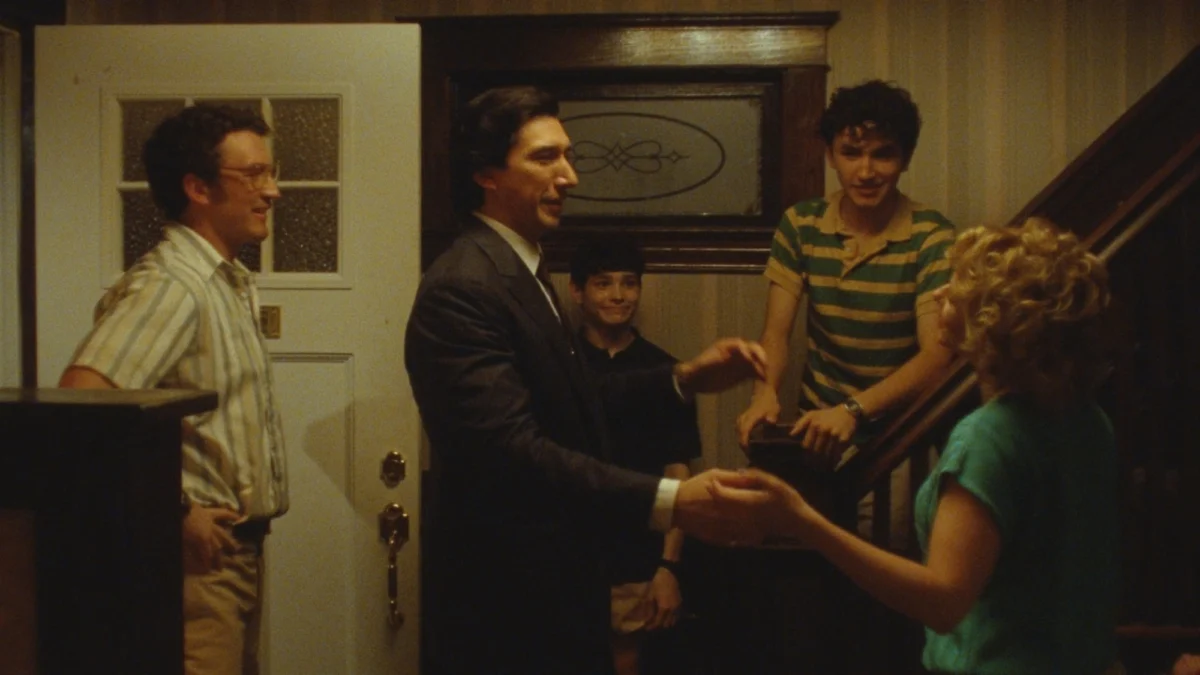
The film meticulously builds tension through the everyday domesticity of the Pearl home. In one of the movie’s most chilling sequences, members of the Russian mob break into the house not to commit violence, but to take Polaroid photographs of the family while they sleep. This act of psychological warfare serves as a reminder of their vulnerability. When Irwin eventually discovers these photographs, the reality of his situation begins to set in, forcing a confrontation with Linda that reveals the fractures within their marriage.
Scarlett Johansson’s portrayal of Linda Pearl introduces a secondary layer of tragedy to the ‘Paper Tiger’ narrative. While dealing with the external threat of the mafia, Linda is also navigating a private crisis: a fatal medical diagnosis. Her character is defined by a "grit-teeth determination" to ensure the future of her children and husband, even as her own time is running out. This subplot heightens the stakes of the film, as both she and Gary are racing against different clocks to stabilize the family’s situation before it is too late.

Director James Gray, known for his work on Ad Astra and Armageddon Time, maintains a stylistic consistency in ‘Paper Tiger’ that favors atmosphere and character depth over traditional action. The film’s aesthetic is heavily influenced by 1970s and 80s cinema, with Driver’s performance drawing frequent comparisons to the archetypal masculinity found in The Godfather. Critics have noted that Gary Pearl’s swagger and occasional cracks of vulnerability evoke the spirits of James Caan’s Sonny Corleone and Al Pacino’s Michael Corleone, blending debonair allure with a simmering capacity for violence.
Miles Teller’s performance as Irwin marks a significant departure from the cocky, high-energy roles that defined his early career in films like Whiplash. At 39, Teller leans into a "doofy dad" persona, utilizing oversized eyeglasses and a patronizing "father knows best" attitude to ground the character in the 1986 setting. This transformation allows the audience to feel the frustration of the other characters; Irwin’s smug self-righteousness and blissful ignorance serve as the primary source of the film’s tension, as he remains unable to recognize the sacrifices his brother and wife are making on his behalf.
The production design of ‘Paper Tiger’ further immerses the audience in the mid-80s Queens experience. The use of period-accurate costuming, from Linda’s housecoats and bouncy curls to the specific luxury items Gary uses to signal his status, creates a lived-in environment that feels both nostalgic and claustrophobic. The Gowanus Canal, now a site of significant gentrification, is depicted as a desolate, industrial wasteland, reflecting the moral gray areas the characters inhabit.
As ‘Paper Tiger’ progresses, the script by Gray shifts its focus from Irwin’s perspective to the shared burden of Gary and Linda. The film argues that some truths are too terrible to utter, and that protection often requires a form of betrayal. Gary’s attempts to negotiate with the mob and Linda’s efforts to hide her illness create a labyrinth of unspoken words. This thematic focus on "what is talked around" rather than "what is talked about" has led some reviewers to compare the film’s narrative structure to the recently released Conclave.

The critical response to ‘Paper Tiger’ has been largely positive, though some have noted a tonal clash in the performances. While Driver and Teller are praised for their grounded, era-specific acting, Johansson’s performance has been described by some as leaning toward 1950s melodrama. Critics have argued that her natural glamour occasionally sits at odds with the blue-collar, "mumsy" aesthetic the film attempts to cultivate. Despite these minor critiques, the ensemble is recognized for its collective strength in bringing Gray’s vision of a fractured family to life.
Following its debut at the New York Film Festival, ‘Paper Tiger’ is scheduled for a wide theatrical release on November 13. The film is being distributed by Neon, a studio that has become synonymous with prestige cinema and award-season contenders. Given the pedigree of the cast and director, industry analysts expect the movie to be a significant player in upcoming film festivals and year-end critics’ lists.
The broader implications of ‘Paper Tiger’ lie in its subversion of the typical gangster genre. Rather than focusing on the rise and fall of a kingpin, Gray explores the collateral damage of criminal association on an ordinary family. The film serves as a cautionary tale about the ego and the dangers of seeking shortcuts to the American dream. It also highlights the isolation of those who take on the role of "protector," showing the heavy emotional toll of keeping secrets to maintain a facade of normalcy.
In its final moments, ‘Paper Tiger’ offers a tender but haunting conclusion. The film leaves the audience with a "trembling awareness" of the lies that underpin many family dynamics. By challenging viewers to look at their own lives and the things they leave unsaid, James Gray has created a drama that is as intellectually stimulating as it is emotionally taxing. As the lights go up, the image of the Pearl family—fragile and held together by secrets—remains a powerful testament to the complexities of love and loyalty in a world of "paper tigers."