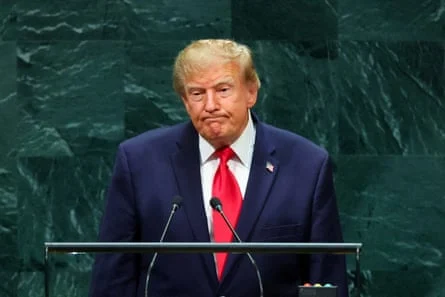
President Donald Trump has reportedly dismissed a high-stakes diplomatic overture from Tehran aimed at ending the seven-month-old conflict in the Middle East and restoring global oil transit through the critical Strait of Hormuz. The proposal, which was transmitted through Qatari intermediaries during the United Nations General Assembly in New York, offered a structured seven-day timeline to de-escalate hostilities and reopen the strategic waterway in exchange for the lifting of the U.S. naval blockade and the easing of crippling economic sanctions. Despite the urgency of the global energy crisis, White House officials indicate that the president remains skeptical of the deal’s sincerity and is instead preparing for a potential escalation in military operations following the upcoming U.S. midterm elections.
The rejection of the Iran peace deal to reopen the Strait of Hormuz comes at a volatile moment for the global economy, as the closure of the maritime corridor has sent oil prices to historic highs and disrupted nearly a fifth of the world’s daily petroleum consumption. While some State Department officials had previously characterized the back-channel discussions as "positive and constructive," the latest reports suggest a significant rift between the administration’s diplomatic aspirations and its military strategy. Sources familiar with the matter told the Wall Street Journal that the president has expressed a preference for maintaining maximum pressure on the Islamic Republic, viewing the Iranian initiative as a tactical maneuver to gain relief before the American electorate heads to the polls.
The Mechanics of the Seven-Day Iranian Proposal
The diplomatic initiative was publicly detailed by Iranian Foreign Minister Abbas Araghchi during a press briefing outside the UN Security Council on Friday. According to the Iranian plan, the de-escalation would occur in phases over a single week, contingent upon the United States formally accepting the terms and providing immediate relief from its maritime enforcement. Araghchi explained that the first four to five days would be dedicated to logistical preparations and the withdrawal of naval assets from contested positions.
By the sixth day of the agreement, Iran pledged to fully reopen the Strait of Hormuz to international shipping, ending the blockade that has paralyzed regional trade since the conflict began in late February. The seventh day was reserved for the resumption of direct negotiations regarding Iran’s nuclear program, a subject that has remained a flashpoint in international relations for decades. Araghchi emphasized that the "seven-day timeline" was ready for immediate implementation, provided the U.S. side demonstrated "seriousness" in its commitment to a final deal.
Strategic Importance of the Strait of Hormuz and Global Energy Security
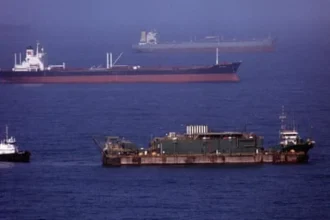
The Strait of Hormuz is widely considered the world’s most important oil transit chokepoint, a narrow passage between the Persian Gulf and the Gulf of Oman through which millions of barrels of crude pass daily. The current closure has not only spiked the price of Brent crude but has also led to a significant increase in shipping insurance rates and a general slowdown in global manufacturing. For the Trump administration, the decision to reject the Iran peace deal to reopen the Strait of Hormuz carries immense economic weight, as high energy costs continue to fuel domestic inflation and weigh on consumer sentiment.
The Iranian proposal was not merely a bilateral offer to Washington but also included outreach to regional rivals, most notably Saudi Arabia. By engaging the Saudis, Tehran signaled a desire to stabilize the broader region, which has seen its infrastructure repeatedly targeted by drone and missile strikes. However, the U.S. naval blockade of Iranian ports remains a non-negotiable sticking point; the Trump administration views the blockade as its most effective tool for preventing the export of Iranian oil and the import of military hardware, while Tehran views it as an act of war that must be rescinded before any lasting peace can be established.
Internal Political Pressures and the Midterm Election Factor
Domestic politics in the United States are playing a central role in the administration’s response to the Iranian overture. With the midterm elections approaching, the White House is navigating a delicate balance between the desire to lower energy prices and the need to project strength against a foreign adversary. Reports suggest that the president has told his staff that a renewed bombing campaign is a more likely outcome than a diplomatic breakthrough in the short term. This stance reflects a broader belief within the administration that Iran’s conventional forces have been sufficiently degraded and that further military pressure could lead to a more favorable settlement or a collapse of the current regime’s resolve.

Conversely, the Iranian leadership is facing its own internal divisions. President Masoud Pezeshkian, often categorized as a moderate within the Iranian political spectrum, has championed the seven-day proposal as a way to salvage the nation’s ailing economy. In an interview with CBS’s Face the Nation, Pezeshkian stated that while Tehran is ready for nuclear talks, it would not submit to "bullying or coercion." The question remains whether the hardline elements within Iran’s security forces and the Islamic Revolutionary Guard Corps (IRGC) would truly honor a ceasefire or if they would continue to support proxy operations in Lebanon, Iraq, and Yemen.
Escalation of Regional Proxy Warfare
The failure to reach an agreement has coincided with a sharp uptick in regional violence. Early Saturday, the Saudi-led coalition in Yemen reported the interception of two drones launched by Iran-backed Houthi rebels. The drones were reportedly targeting the Saudi capital, Riyadh, highlighting the continued vulnerability of regional infrastructure. This follows a pattern of attacks by Iranian-aligned militias in Iraq, who were recently blamed for a strike on a major oil pipeline that temporarily removed additional Saudi crude from the global market.
In Lebanon, the situation remains equally precarious. Iranian-backed Hezbollah has been consistently engaged with Israeli forces, creating a second front that complicates any potential ceasefire. The Iranian proposal specifically called for a ceasefire that would include Lebanon, suggesting that Tehran maintains significant leverage over its regional partners. However, the U.S. and its allies are wary of any deal that does not explicitly address the disarmament of these proxy groups or the cessation of their cross-border attacks.
The Human and Economic Toll of the Seven-Month War
The conflict, which erupted on February 28 following a series of strikes by U.S. and Israeli forces, has taken a devastating toll on both sides. Thousands of combatants and civilians have been killed, and Iran’s conventional military capabilities have been significantly diminished. The Iranian economy, already struggling under the weight of previous sanctions, has entered a period of hyperinflation and scarcity. The naval blockade has effectively cut off the country’s primary source of revenue, leading to widespread social unrest and a desperate search for a diplomatic exit.
For the international community, the stakes extend far beyond the borders of the Middle East. The disruption of the Strait of Hormuz has forced shipping companies to reroute vessels around the Cape of Good Hope, adding weeks to transit times and increasing the carbon footprint of global trade. European and Asian nations, which are heavily dependent on Middle Eastern oil, have been vocal in their support for a diplomatic solution, yet they find themselves caught between the uncompromising positions of Washington and Tehran.
Future Outlook for the Iran Peace Deal to Reopen the Strait of Hormuz
As the United Nations General Assembly draws to a close, the prospects for a near-term resolution appear dim. The reported rejection by the Trump administration suggests that the U.S. is prepared to endure continued economic volatility in exchange for a more comprehensive strategic victory. Analysts suggest that the administration may be waiting for the post-election period to launch a "final" military push, or perhaps to negotiate from a position of even greater perceived strength.
In the meantime, the global energy market remains on edge. Any further escalation in the Persian Gulf could lead to a total cessation of traffic through the Strait, a scenario that many economists warn could trigger a global recession. While the Iranian foreign minister insists that "everything is now prepared" for a deal, the path forward is blocked by a profound lack of trust and a fundamental disagreement over the regional security architecture. The coming weeks will be critical in determining whether the seven-day proposal was a missed opportunity for peace or a calculated distraction in an ever-expanding war.