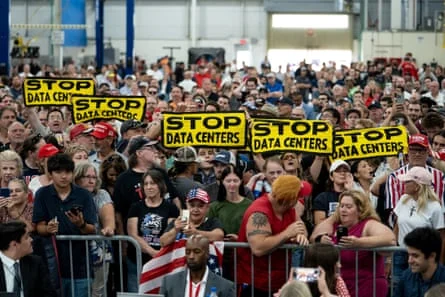
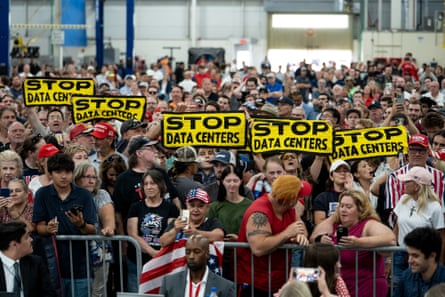
Australian government officials and prominent industry leaders are warning that a growing wave of community opposition to artificial intelligence infrastructure is not a homegrown movement, but rather a "faux import" of American political discourse. As the construction of massive AI-focused server farms accelerates across the continent, pro-development advocates argue that the public’s anxiety is being fueled by social media narratives originating in the United States, where the scale of development and the regulatory environment differ significantly from the Australian landscape.
The friction comes as Australia faces a pivotal moment in its digital evolution, attempting to balance the immense energy and water requirements of high-performance computing with its own climate goals and resource constraints. While the United States has long been the global epicenter for cloud storage and processing, the rapid expansion of generative AI has forced a geographical diversification that now places Australia in the crosshairs of global tech giants like Microsoft, Amazon, and Google.
The Viral Spread of the Australian Backlash to Datacentres
The phenomenon of the Australian backlash to datacentres reached a boiling point in early 2026, transitioning from localized zoning disputes to a high-stakes national conversation. What began as quiet concerns over land use in suburban Victoria and New South Wales has transformed into a coordinated movement involving community protests, calls for a national moratorium on new construction, and no fewer than three separate government inquiries.
Steve Dimopoulos, Victoria’s former minister for economic growth, has been a vocal critic of the current public sentiment, suggesting that the "energy vampire" and "water hog" labels frequently used by protesters are direct transplants from American activist circles. Dimopoulos noted that the hyper-connected nature of social media means that a protest in Northern Virginia or a legislative ban in a U.S. state can appear on an Australian’s phone and create the illusion of an identical crisis at home.
"Because when it’s on your phone, you think it’s right here, or you think it might just come here," Dimopoulos said, addressing the psychological impact of globalized digital activism. He emphasized that Australia’s planning, energy, and water systems are subject to more stringent monitoring and management than those in many U.S. jurisdictions, arguing that the Australian backlash to datacentres is largely reacting to a set of circumstances that do not exist locally.
Disparities in Scale and Regulatory Frameworks
A central pillar of the industry’s defense is the sheer difference in the magnitude of operations between the two nations. Belinda Dennett, head of the sector lobby group Data Centres Australia, has argued that the domestic debate is being fought using "America’s facts," which she claims are misleading when applied to the Australian market.

According to industry data, the United States hosts approximately 5,400 datacentres with a staggering 53.7 gigawatts of total capacity. In contrast, Australia’s footprint consists of roughly 252 facilities with 1.4 gigawatts of capacity. Despite this disparity in raw numbers, critics point out that on a per-capita basis, the gap is much narrower. Australia, with a population of 28 million, maintains nearly one datacentre per 100,000 people, compared to 1.5 per 100,000 in the U.S.
The industry maintains that the Australian market bears "almost no resemblance" to the American one due to different market rules and utility management strategies. However, the pace of proposed developments in Australia is reaching unprecedented levels. Plans are currently underway for several "mega-centers" with capacities exceeding 1 gigawatt—a scale previously unseen in the Southern Hemisphere.
Environmental Friction: Power Grids and Water Scarcity
The environmental impact of these facilities remains the primary driver of the Australian backlash to datacentres. Two specific projects have become lightning rods for public anger: a 2.4-gigawatt facility planned for the outskirts of Melbourne and a 2-gigawatt gas-powered project in the Northern Territory. The Melbourne project, if completed, would be nearly six times the size of the Chadstone shopping center, one of the largest retail spaces in the country.
Rob Nicholls, a professor and digital policy expert at the University of Sydney, notes that the electricity consumption of these proposed sites is gargantuan. A 2.4-gigawatt facility can consume as much energy as 2 million average households. In the Northern Territory, where the population is only 265,000, the introduction of a 2-gigawatt center raises significant questions about the strain on local infrastructure and the morality of prioritizing "compute power" over residential needs.
The Australian government has signaled its intent to intervene by overriding state authorities to prevent the use of gas to power these facilities. Federal Energy Minister Chris Bowen has proposed new rules that would require datacentre operators to introduce new renewable energy into the grid equivalent to their consumption. This "additionality" requirement is intended to ensure that the AI boom does not derail Australia’s transition to a net-zero economy.
The Question of Economic and Digital Sovereignty
Beyond environmental concerns, the Australian backlash to datacentres is rooted in a sense of economic cynicism. Andrew Charlton, the federal assistant minister for technology, recently highlighted the fact that most of the companies building these facilities are American-owned. While Australia provides the land, the water, and the electricity, the high-value intellectual property and the majority of the profits often flow back to Silicon Valley.
"Simply building datacentres in Australia does not necessarily mean that Australia captures the economics of AI," Charlton stated in a recent policy address. He warned that Australia risks becoming "dependent on imported intelligence," essentially acting as a landlord for foreign tech giants without developing its own sovereign AI capabilities.
To combat this, the government is exploring frameworks that would require datacentre operators to provide "compute" access to Australian startups, researchers, and non-profit organizations on favorable terms. The goal is to ensure that if the Australian public is asked to bear the environmental and infrastructural costs of these facilities, they receive a tangible return in the form of local innovation and technological independence.
Legislative Outlook and the Call for a Moratorium
The political pressure surrounding the issue has led to calls for Australia to follow the lead of jurisdictions like New York, which implemented a moratorium on certain types of energy-intensive computing developments. Proponents of a pause argue that the current "gold rush" mentality is outpacing the ability of regulators to protect the public interest.
Currently, the sector is under the microscope of two state-level inquiries and one federal Senate inquiry. These investigations are tasked with examining the regulatory frameworks governing energy use, water consumption, and the long-term sustainability of the industry. Legislation to formalize a national framework is expected to be introduced in late 2026 or early 2027, but the delay has left local councils and community groups feeling vulnerable.
In the interim, state governments remain caught between two competing interests. On one hand, they are desperate for the capital investment and job creation that high-tech infrastructure promises. On the other, they are facing an increasingly organized and vocal electorate that views these facilities as a threat to their quality of life.
Conclusion: Navigating a New Digital Frontier
The Australian backlash to datacentres represents more than just a localized dispute over zoning or power lines; it is a fundamental debate about the kind of future the nation wants to build. While officials may dismiss the movement as a "faux import" from the United States, the underlying anxieties regarding resource management and economic fairness are deeply rooted in the Australian reality.
As the federal government moves to set new rules for how these facilities consume energy and water, the industry must decide whether it will adapt to the unique requirements of the Australian market or continue to push for a model of rapid expansion that has already triggered significant resistance. The coming months of inquiries and legislative drafting will likely determine whether Australia becomes a global leader in sustainable AI infrastructure or remains a contested battleground for the physical footprint of the digital age.