The Toronto International Film Festival has served as the launchpad for what critics are calling a transformative moment in contemporary queer cinema with the premiere of director Andrew Haigh’s latest feature. Adapted from the short story by acclaimed Irish novelist Colm Tóibín, the film explores the psychological and physical isolation of a young man navigating the frozen landscapes of 1950s Colorado. This production marks a significant stylistic continuation for Haigh, whose previous work on "All of Us Strangers" established him as a premier voice in exploring the intersections of memory, family trauma, and LGBTQ+ identity.
In this latest effort, Fred Hechinger takes on the central role of Mike, a character whose internal awakening is catalyzed by a family tragedy and the harsh realities of rural survival. The film has garnered immediate attention for its restrained emotional delivery and its refusal to rely on the high-intensity tropes often found in period dramas. Instead, it offers a meditative look at how the realization of a parent’s fallibility can reshape a child’s understanding of their own future.
The Narrative Foundation of A Long Winter
Set against the backdrop of the early 1950s, the story follows a family struggling to maintain a farm in the brutal, high-altitude terrain of the Colorado mountains. Mike, portrayed by Hechinger, initially lives in a state of relative domestic stability, finding comfort in the presence of his younger brother, played by "Heartstopper" star Kit Connor. However, this stability is fractured when the brother departs for a job in a distant town, leaving Mike alone with his increasingly volatile parents.

Caitríona Balfe delivers a harrowing performance as Louise, Mike’s mother, whose dissatisfaction with her life and her marriage to Lester, played by Ebon Moss-Bachrach, manifests in a descent into alcoholism. The tension within the household reaches a breaking point just as a massive blizzard descends upon the region. When Louise disappears into the whiteout with the family dog, the film shifts from a domestic drama into a haunting exploration of grief and persistence.
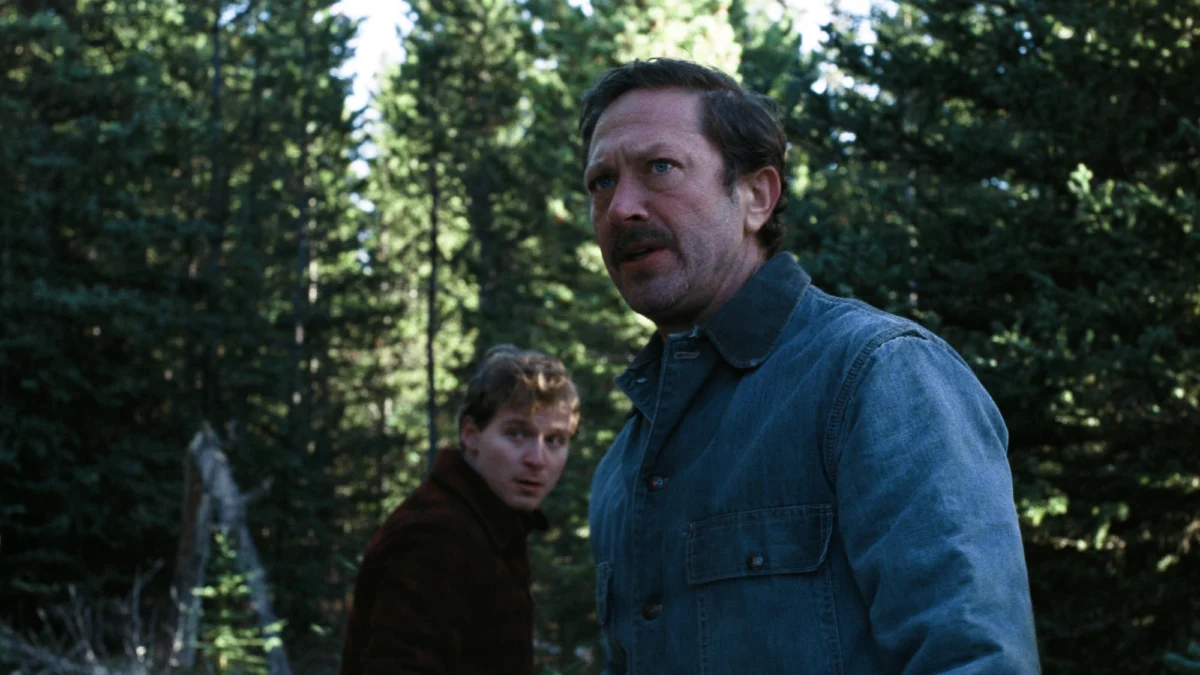
The subsequent months see Mike embarking on a repetitive, often desperate search for his mother across abandoned mines and treacherous slopes. This search serves as the narrative engine for Mike’s personal growth, as he is forced to interact with a world outside his father’s rigid influence. During his journey, he encounters Jimmy, an abandoned teenager played by D’Pharaoh Woon-A-Tai, whose presence on the farm challenges the traditional gender roles and expectations established by Mike’s father.
Fred Hechinger and the Evolution of a Leading Man
The ‘A Long Winter’ review highlights what many consider to be a career-defining performance by Fred Hechinger. Previously known for his versatile supporting roles in projects like "The White Lotus" and the "Fear Street" trilogy, Hechinger has often been utilized for his comedic timing or "chaotic" energy. In this film, however, he adopts a much more subdued and grounded persona, demonstrating a range that suggests he is ready for major leading roles in the industry.
Hechinger’s portrayal of Mike is defined by subtle shifts in tone and physicality. In the film’s early stages, Mike is seen as a product of his environment—his speech is folksy, and his outlook is limited by the boundaries of his father’s farm. As the winter progresses and the search for his mother continues, Hechinger allows the character to evolve. His diction becomes more sophisticated, and his emotional openness begins to clash with the "mountain masculinity" embodied by his father.

Critics have noted that this performance is a departure from Hechinger’s recent work in "Gladiator II" and "Kraven the Hunter." While those films required a certain level of theatricality, "A Long Winter" demands an internal focus. The camera often lingers on Hechinger’s face as he contemplates the vast, empty landscape, tasking the actor with conveying complex shifts in identity without the benefit of extensive dialogue.
Andrew Haigh’s Directorial Vision and Themes
Director Andrew Haigh has built a reputation for crafting intimate, character-driven stories that resonate deeply within the queer community. From his breakout film "Weekend" to the haunting "All of Us Strangers," Haigh has consistently explored how queer individuals navigate spaces that were not built for them. "A Long Winter" continues this trend by placing a quietly queer protagonist in a historical setting where such identities were often invisible or suppressed.
The film serves as a thematic companion to Haigh’s previous works, particularly in its focus on the relationship between children and their parents. In "All of Us Strangers," the protagonist sought closure through a supernatural encounter with his deceased parents; in "A Long Winter," Mike seeks closure through the literal and metaphorical "unmasking" of his living parents. He begins to see Louise not just as a mother, but as a woman stifled by her circumstances, and Lester not as an infallible patriarch, but as a man whose stubbornness may have contributed to his wife’s disappearance.
Haigh utilizes the Colorado setting to emphasize the isolation of the characters. The cinematography captures the beauty of the mountains while never letting the audience forget their lethality. The silence of the winter landscape becomes a character in itself, reflecting the internal silence Mike has maintained regarding his own desires.

Supporting Cast and Performance Dynamics
The ensemble cast surrounding Hechinger provides a variety of perspectives on the central conflict. Caitríona Balfe’s Louise is the emotional core of the film’s first act, providing a bridge between the blissful past and the grim present. Her performance captures the tragedy of a woman who has lost her sense of self in the service of a family that does not fully understand her.
Ebon Moss-Bachrach’s portrayal of Lester has become a point of discussion among critics. While Moss-Bachrach is known for his high-energy roles in series like "The Bear," his performance here as a stoic, traditional father has been described by some as lacking the necessary intensity to match Hechinger’s screen presence. This perceived "flaccidness" in the character’s bluster may be an intentional choice to highlight the fading power of Lester’s worldview, but it creates a specific tension in the scenes where father and son face off.
Martin Freeman appears in a supporting capacity as Mike’s uncle, providing a glimpse into a different kind of life—one of relative wealth and social standing that nonetheless feels "festering" and disconnected. D’Pharaoh Woon-A-Tai’s Jimmy serves as the catalyst for Mike’s realization that a different kind of life is possible. The relationship between Mike and Jimmy is handled with Haigh’s trademark sensitivity, focusing on shared labor and quiet understanding rather than overt sentimentality.
Broader Implications for Queer Period Cinema
The success of "A Long Winter" at the Toronto International Film Festival suggests a growing appetite for queer stories that move beyond the traditional "coming out" narrative. By setting the story in the 1950s and focusing on the internal landscape of its protagonist, the film avoids many of the clichés associated with historical LGBTQ+ dramas. It does not focus on persecution or tragedy as a primary plot point, but rather on the universal experience of growing up and realizing that one’s parents are flawed human beings.

This film also highlights the enduring relevance of Colm Tóibín’s work in the cinematic world. Following the success of the adaptation of his novel "Brooklyn," Tóibín has become a go-to source for stories that explore the nuances of family, exile, and identity. Haigh’s adaptation of "A Long Winter" honors the source material’s literary roots while expanding the visual language of the story to suit the medium of film.
The production’s focus on the "women’s work" performed by the men on the farm provides a subtle commentary on gender roles. When Jimmy is brought on to handle the chores Louise once managed, it forces Mike and Lester to confront the value of the labor they previously took for granted. This shift in the household dynamic mirrors Mike’s internal shift as he begins to define his own masculinity on his own terms.
Anticipation and Distribution
Following its Canadian premiere, "A Long Winter" is scheduled for a limited theatrical release in New York City on December 4, 2026. This initial run is expected to build momentum for the film’s wider release in select U.S. theaters on January 27, 2027. The timing of the release suggests that the studio is positioning the film for a strong showing during the winter awards season, capitalizing on the critical acclaim garnered at TIFF.
The film’s marketing campaign has focused on its "unmissable" nature, emphasizing the combination of Haigh’s direction and Hechinger’s performance. Early audience reactions indicate that while the film is not a traditional "tearjerker," it leaves a lasting impression through its rapturous and meditative tone. It is a film that asks the audience to sit with the cold and the silence, much like its protagonist, in order to find the warmth of self-discovery.

As the industry looks toward the 2027 release calendar, "A Long Winter" stands out as a significant entry in the genre of serious, adult-oriented drama. It represents a maturation of queer storytelling that prioritizes character depth and atmospheric tension over easy answers. For viewers seeking a film that explores the complexities of family and the resilience of the human spirit, this production offers a beautiful and profound experience.