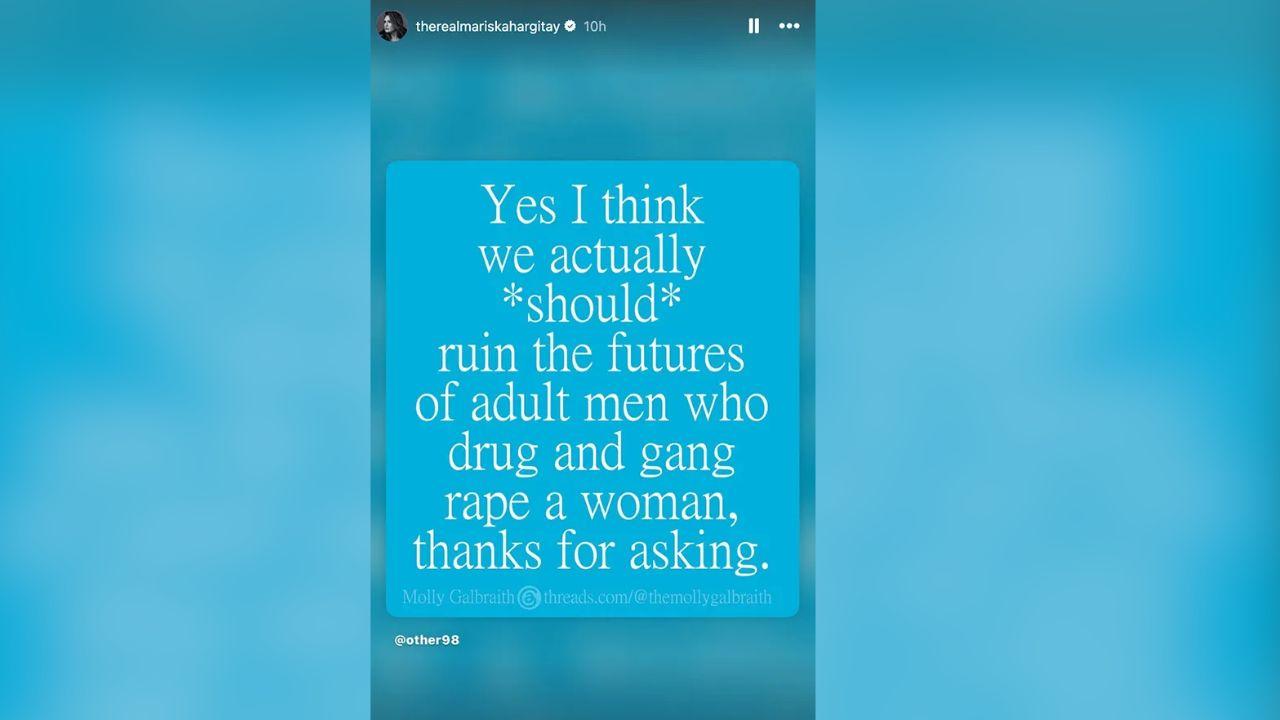
Actress Mariska Hargitay, widely recognized for her role as Olivia Benson on Law & Order: Special Victims Unit, has publicly condemned Cornell University following allegations that seven former fraternity members drugged and sexually assaulted a student. Hargitay, a prominent advocate for sexual assault survivors, reposted a forceful message on social media asserting that the university "failed to protect its students" and demanding accountability for the alleged perpetrators, known collectively as the Cornell 7.
The controversy ignited after a lawsuit was filed against seven former Cornell University fraternity members in September 2026, accusing them of drugging and raping a student identified as Jane Doe in 2024. The lawsuit quickly gained national attention, prompting outrage across social media platforms and calls for a thorough investigation into both the alleged crimes and the university’s handling of the initial complaint. Hargitay’s impassioned intervention underscored the severity of the allegations and highlighted the broader systemic issues surrounding campus sexual assault.

Mariska Hargitay’s Stance on the Alleged Assault
Mariska Hargitay, whose portrayal of a detective specializing in sex crimes has made her a symbol of victim advocacy, used her considerable platform to amplify the victim’s voice and criticize Cornell’s response. Among several posts shared on her social media, one particularly striking message reposted from another user stated, "we actually should ruin the futures of adult men who drug and gang r— a woman — thanks for asking." This direct and uncompromising language resonated with many who felt justice had been delayed or denied.
Beyond simply reposting, Hargitay shared additional content urging men to report assaults they witness to local law enforcement. She also highlighted a disturbing detail from the complaint, noting that 57 individuals were allegedly part of a fraternity group chat where "Free p—–" was advertised, and "NOT one of them stopped it." These posts underscore Hargitay’s long-standing commitment to combating sexual violence, a mission that extends beyond her television role. In 2004, she founded the Joyful Heart Foundation, a non-profit organization dedicated to healing, educating, and empowering survivors of sexual assault, domestic violence, and child abuse.
The Joyful Heart Foundation itself issued a powerful statement, declaring, "We refuse for this victim to be reduced to just another story. Cornell has failed to protect its students." The foundation’s message further criticized the alleged lack of transparency, stating, "A Cornell student says she was never told the outcome of her own Title IX case, and the men she accused are back on campus. The Cornell Daily Sun is demanding answers and accountability, and so are we. Survivors deserve to be believed and kept informed. Silence protects no one. To her: we support you." This collective outcry from Hargitay and her foundation placed immense pressure on both the university and legal authorities to re-examine the case.

The Extensive Lawsuit Against the Cornell 7
The civil lawsuit, filed in a New York state court on September 16, 2026, by a former student identified as Jane Doe, lays out a harrowing account of events from October 2024. Doe claims she was drugged and subjected to repeated sexual assault for over four hours by multiple male students at the Chi Phi fraternity house at Cornell University. The complaint details how Doe was allegedly served alcohol while underage at a local bar before the incident.
The lawsuit names numerous defendants, including the seven men directly accused of assault, the Chi Phi fraternity itself, Cornell University, Doe’s sorority, and the local bar. This broad scope indicates an attempt to hold not only the alleged perpetrators accountable but also the institutions that may have facilitated or failed to prevent the incident. According to CNN, a particularly egregious detail from the complaint is a message allegedly sent to the Chi Phi fraternity’s Snapchat group chat at approximately 1:42 a.m. on the night of the incident, stating there was "free p—–" upstairs. Doe’s attorney, Thomas Giuffra, described this as unprecedented, remarking, "Multiple frat members knew about it. I’ve never seen anything like it."
While the defense for one of the accused men has stated there is no evidence his client committed sexual assault, the allegations themselves have painted a grim picture of fraternity culture and institutional oversight. The inclusion of the university and Doe’s sorority as defendants highlights a growing legal trend of scrutinizing the responsibility of institutions to provide a safe environment for their students and to adequately respond to allegations of sexual misconduct.
Institutional Failures and Calls for Accountability
Cornell University’s initial response to the allegations came under intense scrutiny. Critics, including Hargitay and the Joyful Heart Foundation, pointed to the claim that Jane Doe was never informed of the outcome of her own Title IX case and that the accused men were reportedly allowed back on campus. This alleged lack of transparency and perceived inaction fueled public outrage and raised serious questions about the effectiveness of the university’s internal processes for handling sexual assault cases.
The student government president at Cornell publicly called for a comprehensive review of how both the university and the local district attorney’s office addressed the initial complaint. This internal pressure, combined with external advocacy, forced a re-evaluation of the case. Universities across the United States have faced increasing pressure to improve their handling of sexual assault allegations, particularly in light of federal Title IX regulations, which require institutions to respond promptly and equitably to reports of sexual harassment and violence. The alleged failures at Cornell resonated with broader concerns about campus safety and institutional accountability.
Reopening the Criminal Case and Governmental Scrutiny
The public outcry and the details revealed in Jane Doe’s civil lawsuit prompted a significant development in the criminal aspect of the case. Tompkins County District Attorney Matthew Van Houten announced on Monday, September 28, 2026, that he would refer the case to a grand jury. This decision marked a crucial shift, as no criminal charges had been brought in 2024 following Doe’s initial statement to police.
Van Houten explained that the initial lack of criminal charges stemmed from Doe’s original statement to law enforcement, which "described her participation in drug use and sexual conduct as voluntary, conscious, and consensual." This initial account reportedly differed from the claims made in Doe’s subsequent lawsuit, which detailed drugging and non-consensual acts. In an interview with CNN’s Jake Tapper, Van Houten clarified that his staff did not initially possess the text messages later presented in Doe’s civil complaint. While he described these texts as "completely vulgar and disgusting," he initially maintained they "had nothing to do with her consent." However, the decision to refer the case to a grand jury indicates that new evidence or a re-evaluation of existing evidence has led prosecutors to believe there is sufficient cause to present the case for potential indictment.
A grand jury’s role is to determine whether there is probable cause to believe that a crime has been committed and that a particular person or persons committed it, thereby warranting a criminal trial. This step provides Jane Doe with another opportunity to present her version of events to a panel of citizens. Cornell University publicly supported Van Houten’s decision to allow Doe to provide her testimony before a grand jury, signaling a willingness to cooperate with the ongoing criminal investigation. Further demonstrating the gravity of the situation, the New York Attorney General’s office is also reviewing Cornell University’s response to the allegations, and Governor Kathy Hochul has personally requested a review of the university’s overall handling of this high-profile case.
Broader Implications for Campus Safety and Accountability
The Cornell 7 case has ignited a critical conversation about the pervasive issue of sexual assault on college campuses and the responsibility of institutions of higher education to safeguard their students. The alleged actions of the former fraternity members and the initial perceived shortcomings of Cornell’s response have become a flashpoint for advocates and student bodies nationwide. The incident highlights the complex interplay of campus culture, fraternity life, Title IX compliance, and the legal system in addressing sexual violence.

The widespread public reaction, including impassioned comments from figures like Heated Rivalry actor Hudson Williams who bluntly stated, "arrest them. f— them and f— cornell too," illustrates the deep-seated frustration with alleged perpetrators and institutions that appear to protect them. This case serves as a stark reminder of the challenges survivors face in seeking justice and the vital role that public pressure and celebrity advocacy can play in pushing for accountability.
As the legal proceedings continue, the Cornell 7 case remains a potent symbol of the ongoing struggle to ensure campus safety, enforce institutional responsibility, and secure justice for survivors of sexual assault. The outcomes of both the civil lawsuit and the grand jury’s deliberations will undoubtedly have lasting implications for Cornell University and potentially for how similar allegations are addressed across collegiate institutions. The ongoing reviews by state authorities underscore the increasing demand for transparency and effective action in protecting students from harm.