Lt. Gen. Vladimir Alekseyev, a powerful figure within Russia’s military intelligence agency, is fighting for his life in a Moscow hospital after being targeted in a brazen assassination attempt on Friday. The high-ranking official, who serves as a deputy director of the GRU, was reportedly ambushed by an unidentified gunman on the stairwell of his apartment building in the city’s northwest district. State media outlets and figures close to the Kremlin have confirmed that the general sustained multiple gunshot wounds and remains in a coma following emergency surgery.
The shooting of such a high-profile military intelligence officer in the heart of the Russian capital has sent shockwaves through the country’s security establishment. Alekseyev is not merely a bureaucratic figure; he is a veteran of clandestine operations and a central architect of Russia’s ongoing military strategies in Ukraine. His current medical status, described as critical, leaves a significant void in the leadership of the GRU at a time when the agency is under intense pressure to deliver results on both domestic and foreign fronts.
The Ambush of a High-Ranking Intelligence Official
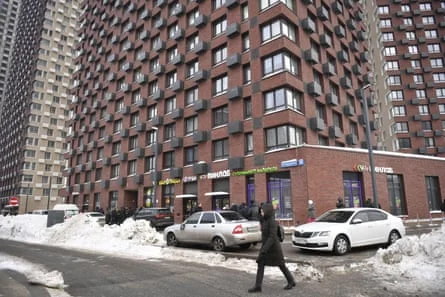
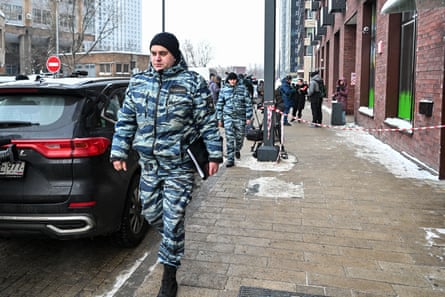
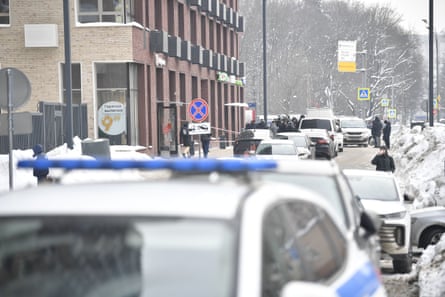
Details emerging from the scene of the crime suggest a professional and well-timed hit. According to local reports, the assailant was waiting for Alekseyev in the stairwell of his residential complex, a location that should have been secure given the general’s rank and the sensitive nature of his work. The gunman fired several rounds at close range before fleeing the scene, leaving the general severely wounded.
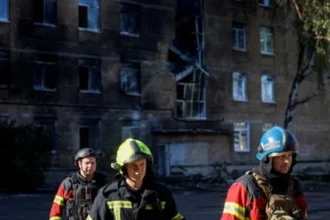
Oleg Tsaryov, a prominent pro-Kremlin figure and former Ukrainian lawmaker who maintained close ties with Alekseyev, provided the first major update on the general’s condition. Tsaryov confirmed that the general had undergone extensive surgical procedures to stabilize his condition but emphasized that he had not yet regained consciousness. The area surrounding the apartment building was cordoned off for several hours as forensic teams and Federal Security Service (FSB) agents combed the site for evidence.
The brazenness of an attack on a general in Moscow—especially one from the GRU—highlights a significant breach in personal security protocols. Russian military bloggers and independent security analysts have been quick to point out that an official of Alekseyev’s stature should have been under constant protection. The fact that an assassin could track his movements and gain access to his private residence suggests a high level of planning and potentially internal intelligence regarding his daily routine.
Medical Emergency: Russian General Vladimir Alekseyev in Critical Condition After Moscow Shooting
As the Russian General Vladimir Alekseyev in critical condition after Moscow shooting remains the focus of intense speculation, the medical team at the undisclosed Moscow facility is working to manage the trauma caused by the gunfire. Sources within the Russian medical community indicate that the injuries involve vital organs, complicating the recovery process. The lack of official updates from the Ministry of Defense has only fueled rumors regarding the severity of his neurological state following the period of prolonged shock and blood loss.

The incident marks the most significant attack on a member of the Russian military elite within the capital since the start of the full-scale invasion of Ukraine in February 2022. While several officials have been targeted in occupied territories or border regions, a direct hit on a GRU deputy director in Moscow represents a major escalation in the shadow war being fought behind the front lines.
The Shadowy Career of a GRU Power Broker
To understand the gravity of this assassination attempt, one must look at Vladimir Alekseyev’s career, which is synonymous with the most aggressive elements of Russian foreign policy. Born in Ukraine, Alekseyev rose through the ranks of the GRU—officially known as the Main Directorate of the General Staff of the Armed Forces of the Russian Federation. This agency is the primary vehicle for Russia’s covert operations, ranging from traditional espionage to sabotage and "wetwork," or assassinations.
Alekseyev was instrumental in the planning and execution of the 2022 invasion of Ukraine. He was part of a small circle of intelligence officials who provided President Vladimir Putin with the foundational assessments used to justify the "special military operation." His expertise in special forces and clandestine networks made him a natural lead for the agency’s efforts to destabilize the Ukrainian government in the early days of the conflict.
Beyond the current war, Alekseyev’s fingerprints are found on numerous international incidents that have drawn the ire of Western governments. He is currently under sanctions by the United States for his alleged role in the 2020 presidential election interference campaigns. Furthermore, the United Kingdom has sanctioned him for his reported involvement in the 2018 Novichok nerve agent attack in Salisbury, which targeted former double agent Sergei Skripal. These designations paint a picture of a man who operated at the highest levels of global intrigue.
Negotiator During the Wagner Mutiny
Alekseyev’s influence extended into the world of private military companies (PMCs), most notably the Wagner Group. In June 2023, during Yevgeny Prigozhin’s brief and chaotic armed mutiny, Alekseyev was one of the few senior officials seen on video negotiating directly with the rebel leader at the military headquarters in Rostov-on-Don.
In the famous footage of that encounter, Alekseyev appeared to be attempting to talk Prigozhin down, even as the mercenary leader demanded the heads of the defense minister and the chief of the general staff. Following the collapse of the mutiny and Prigozhin’s subsequent death in a plane crash, Alekseyev’s position was rumored to be precarious. There were reports that he had been briefly detained or questioned regarding his proximity to the Wagner leadership. However, he managed to survive the post-mutiny purges and retained his powerful post within the GRU, a testament to his perceived necessity within the Kremlin’s power structure.
Security Lapses and Internal Criticism Following the Shooting
The shooting has sparked a wave of internal criticism within Russia’s "Z-blogger" community—pro-war influencers who often provide a window into the frustrations of the military establishment. Many have questioned how a senior general could be left vulnerable in a city that is supposedly under high-security alert.
Andrei Soldatov, a renowned expert on the Russian security services, characterized the attack as an example of "incredible sloppiness" on the part of the state’s protective apparatus. Soldatov noted that after several successful Ukrainian operations against lower-level targets, the protection for the top military brass should have been significantly bolstered. The failure to prevent this hit suggests either a breakdown in the FSB’s domestic surveillance or a sophisticated infiltration by a foreign intelligence service.
Geopolitical Consequences: Impact on Peace Negotiations
The timing of the assassination attempt is particularly sensitive. The shooting occurred just one day after high-level delegations from Russia and Ukraine met in Abu Dhabi to discuss potential pathways toward ending the conflict. Alekseyev’s direct superior, GRU Chief Igor Kostyukov, was reportedly part of the Russian delegation.
The Abu Dhabi talks were described by some observers as the most promising diplomatic engagement in months, with both sides hinting at marginal progress. However, the attack on Alekseyev has immediately cast a shadow over these efforts. Russian Foreign Minister Sergei Lavrov was quick to blame the "Zelenskyy regime," accusing Kyiv of using "terrorist tactics" to derail the negotiation process.
Kyiv has not officially claimed responsibility for the shooting, maintaining its standard policy of ambiguity regarding operations inside Russian territory. However, the rhetoric from Ukrainian military leaders has been pointed. Denys Prokopenko, the commander of the Azov Regiment, posted a stern warning on social media, stating that any official involved in war crimes against Ukraine would "never sleep peacefully again."
A History of Targeted Assassinations in the Heart of Russia
While the shooting of a general is rare, it follows a pattern of targeted attacks against individuals linked to the Russian war effort. Over the past year, several high-profile figures have been killed or wounded in bombings and shootings. This includes the car bombing that killed Darya Dugina, the daughter of an ultra-nationalist philosopher, and the explosion in a St. Petersburg cafe that killed military blogger Vladlen Tatarsky.
Ukraine’s intelligence services, the SBU and GUR, have been increasingly bold in taking the fight to Moscow. They have frequently utilized drones to strike the Kremlin and the city’s financial district, but the use of a gunman for a high-level military assassination indicates a different level of operational capability. It suggests that covert cells may be operating within the capital, capable of conducting surveillance and executing lethal strikes against guarded targets.
Implications for the GRU and the War Effort
The potential loss or long-term incapacitation of Vladimir Alekseyev is a tactical blow to the GRU. As a deputy director, he oversaw the coordination of elite special forces (Spetsnaz) and the management of paramilitary groups that are essential to Russia’s attrition strategy in eastern Ukraine. His deep knowledge of Ukrainian terrain and politics, combined with his experience in hybrid warfare, makes him difficult to replace.
If Alekseyev survives, the recovery process will likely be long, and his ability to return to high-pressure intelligence work is in doubt. If he does not, his death would likely trigger a new round of internal investigations and potentially a reorganization of the GRU’s leadership. The Kremlin will also face pressure to retaliate, which could lead to an intensification of missile strikes against Ukrainian decision-making centers in Kyiv.
Future Outlook and Escalation Risks
As investigators continue to search for the gunman, the atmosphere in Moscow remains tense. The Russian General Vladimir Alekseyev in critical condition after Moscow shooting serves as a stark reminder that the war is no longer confined to distant battlefields. It has reached the doorsteps of those who helped launch it.
The international community is watching closely to see how the Kremlin responds. A definitive link to Ukrainian state intelligence could provide Moscow with a pretext to abandon the burgeoning peace talks in Abu Dhabi and double down on its military objectives. Conversely, if the investigation reveals internal Russian motives—such as lingering resentment from the Wagner mutiny—it would signal a level of instability within the Russian elite that could have even more profound consequences for the stability of the Putin administration.
For now, the focus remains on the hospital bed where one of Russia’s most feared intelligence officers lies in a coma. The outcome of his medical battle and the subsequent hunt for his attacker will likely dictate the next phase of the conflict’s clandestine front. In the shadow war between Moscow and Kyiv, the rules of engagement continue to dissolve, bringing the violence of the front lines into the heart of the Russian state.