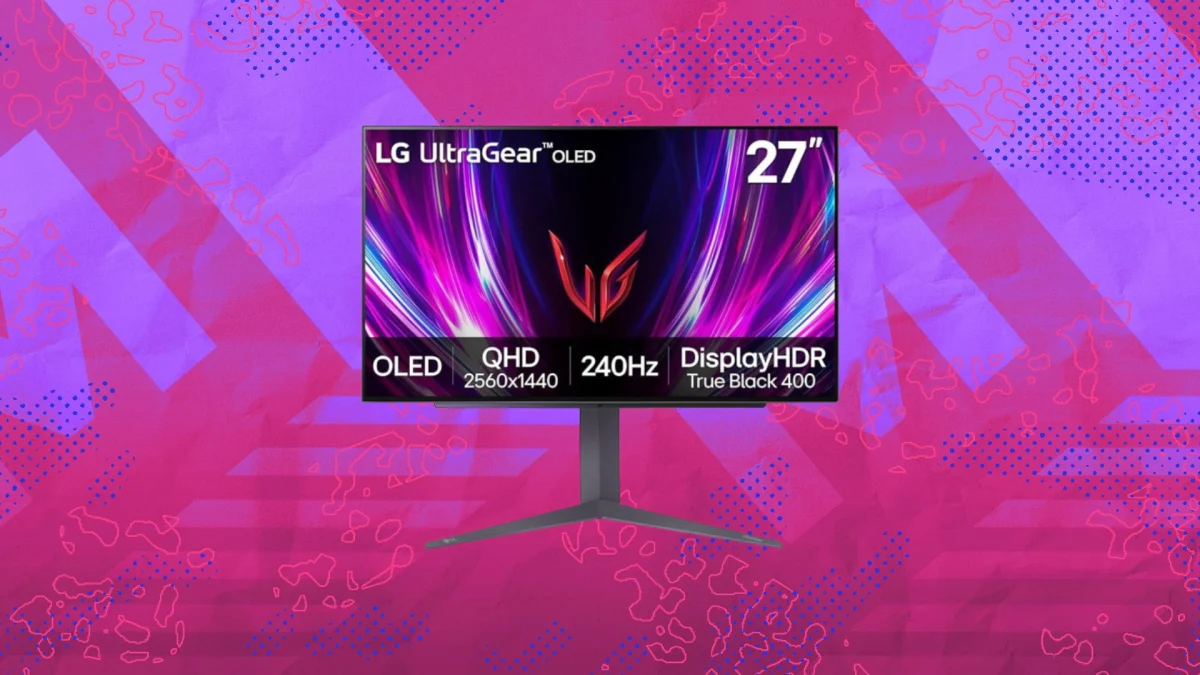
Amazon has officially reduced the price of the 27-inch LG UltraGear OLED QHD gaming monitor to a record-breaking $499.99, marking a significant 44% discount from its original $899.99 manufacturer’s suggested retail price. This $400 price cut represents the lowest valuation ever recorded for the 27GS93QE model, signaling a major shift in the accessibility of high-end organic light-emitting diode (OLED) technology for the broader consumer market.
Industry analysts view this price adjustment as a pivotal moment for the hardware industry, as OLED displays have traditionally been positioned as premium luxury items with price tags often exceeding the $1,000 threshold. By positioning a 240Hz OLED panel at the $500 mark, LG is directly challenging the dominance of high-end In-Plane Switching (IPS) and Vertical Alignment (VA) monitors that have historically occupied this mid-range price bracket.
The timing of this discount coincides with a broader trend in the display market where manufacturers are clearing inventories ahead of next-generation hardware cycles. However, for the average consumer, the move provides an opportunity to acquire professional-grade specifications that were previously reserved for competitive eSports athletes and high-budget enthusiasts.
Technical Specifications and the Value of the Best Gaming Monitor Deal
The LG UltraGear 27GS93QE is built around a Quad High Definition (QHD) 1440p resolution, which many PC gaming enthusiasts consider the "sweet spot" for 27-inch displays. This resolution provides a higher pixel density than standard 1080p without requiring the immense graphical processing power demanded by 4K resolution. The result is a balance of visual clarity and high-frame-rate performance that remains achievable for mid-to-high-range gaming PCs.
Central to the appeal of this hardware is its 240Hz refresh rate. In the context of competitive gaming, refresh rate refers to how many times per second the screen updates the image. A 240Hz panel provides a significantly smoother experience than the standard 60Hz or even 144Hz monitors found in most home offices. This high frequency is critical for fast-paced genres such as first-person shooters, racing simulators, and fighting games, where every millisecond of visual information can influence the outcome of a match.
Complementing the refresh rate is a near-instantaneous 0.03ms Gray-to-Gray (GtG) response time. While traditional LCD monitors often struggle with "ghosting"—a visual artifact where a faint trail follows moving objects—OLED technology eliminates this issue almost entirely. Because OLED pixels are self-lit and can switch on or off individually, the transition between colors is nearly immediate, ensuring that motion remains crisp and blur-free during the most intense gameplay sequences.
Enhanced Visual Fidelity via LG’s 27-inch 240Hz OLED Technology
Beyond pure speed, the move to OLED represents a fundamental shift in how colors and shadows are rendered. Traditional monitors rely on a backlight that shines through a liquid crystal layer, which often leads to "light bleed" or "blooming," where bright objects on a dark background appear to have a hazy glow. The LG UltraGear 27GS93QE utilizes self-emissive pixels, meaning each of the 3.6 million pixels on the screen can turn off completely to achieve true, absolute black.
The monitor is certified with VESA DisplayHDR True Black 400, a standard that guarantees a high level of high-dynamic-range performance. With a contrast ratio of 1.5 million-to-one, the display can show intricate details in the darkest corners of a scene while simultaneously maintaining vibrant highlights. This capability is particularly beneficial for cinematic games and horror titles, where atmospheric lighting is a core component of the experience.
Color accuracy is another pillar of the 27GS93QE’s design. It covers 98.5% of the DCI-P3 color gamut, making it a viable tool not only for gaming but also for creative professionals involved in video editing and digital photography. To ensure these colors remain visible in various lighting conditions, LG has applied an anti-glare, low-reflection coating to the panel. This feature addresses one of the historical complaints regarding OLED screens—their tendency to act as mirrors in bright rooms—allowing users to maintain focus without the distraction of ambient light.
Ergonomics and Connectivity in the Best Gaming Monitor Deal
The physical architecture of the LG UltraGear 27GS93QE is designed to accommodate a variety of desk configurations and user preferences. The monitor features an ultra-thin bezel on four sides, which minimizes the gap between screens in multi-monitor setups. The included ergonomic stand provides a wide range of motion, including height adjustment, tilt, and pivot functionality. The pivot feature allows the screen to be rotated 90 degrees into a vertical orientation, which is often preferred by software developers and streamers who need to monitor long strings of code or live chat feeds.
In terms of connectivity, the device is equipped with both HDMI 2.1 and DisplayPort 1.4 ports. The inclusion of HDMI 2.1 is particularly significant for console gamers. Both the PlayStation 5 and Xbox Series X support 1440p resolution at 120Hz, and this monitor is fully compatible with those specifications. Furthermore, the monitor features integrated support for Nvidia G-Sync and AMD FreeSync Premium Pro. These technologies synchronize the monitor’s refresh rate with the output of the graphics card, effectively eliminating screen tearing and stuttering during fluctuations in frame rate.
Market Impact and the Shift Toward OLED Adoption
The reduction of the LG UltraGear 27GS93QE to $499.99 is expected to have ripple effects across the gaming hardware industry. For several years, the high cost of OLED panels was a primary barrier to entry for the average consumer. As manufacturing yields improve at LG Display’s production facilities, the cost of these panels has begun to decline, allowing the consumer-facing LG Electronics division to pass those savings on to buyers.
This price drop puts significant pressure on competitors such as Samsung, ASUS, and Dell’s Alienware division. Many of these companies offer similar 27-inch OLED monitors that have historically hovered around the $700 to $900 price point. LG’s aggressive pricing strategy may force a market-wide correction, leading to a more competitive landscape where OLED technology becomes the standard for mid-range gaming setups rather than an aspirational outlier.
Furthermore, this deal highlights the evolving lifecycle of gaming peripherals. As 4K 240Hz monitors begin to enter the high-end market at prices exceeding $1,200, the 1440p 240Hz tier is being repositioned as the new "performance standard" for the general public. This transition mirrors the shift from 1080p to 1440p that occurred several years ago, as consumer GPUs became powerful enough to handle higher resolutions with ease.
Consumer Considerations and Future Outlook for LG’s 240Hz OLED
While the $499.99 price point makes the LG UltraGear 27GS93QE an attractive proposition, consumers often weigh the benefits of OLED against concerns regarding "burn-in"—the permanent retention of static images on the screen. To combat this, LG has implemented several software-based safeguards, including pixel cleaning and screen move features, which help prolong the lifespan of the organic materials in the panel.
The broader implications of this all-time low price extend into the upcoming holiday shopping season. Market analysts suggest that seeing such a steep discount in late October indicates a highly competitive Q4 for electronics retailers. It suggests that consumers can expect aggressive pricing on a variety of computer hardware as retailers vie for market share in an economy where buyers are increasingly price-conscious.
As of late October, the availability of this deal remains limited to specific retailers like Amazon. Given the historical popularity of the UltraGear line and the unprecedented nature of a 44% discount on an OLED model, inventory levels are expected to fluctuate. For those looking to upgrade their visual experience, this price point represents a new floor for the industry, potentially redefining what consumers expect to pay for top-tier display technology in the years to come.