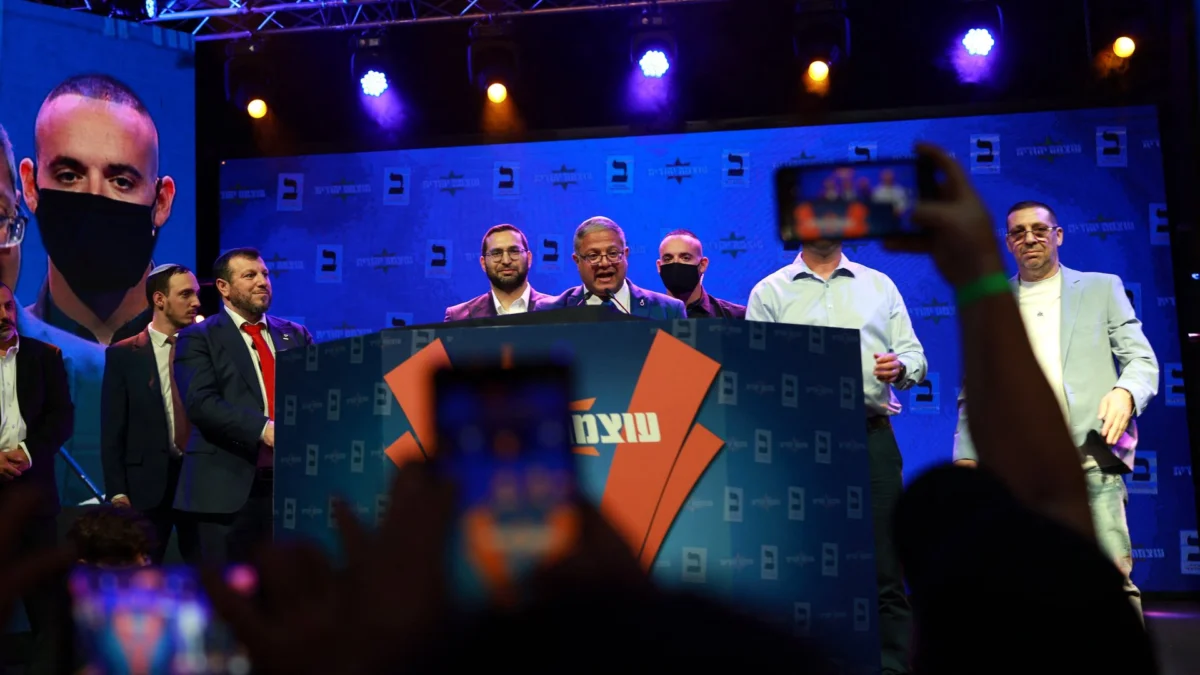
Itamar Ben-Gvir, a prominent figure in Israeli right-wing politics, faced a challenging electoral outcome as preliminary results indicated a significant downturn for his Otzma Yehudit party, prompting a defiant address to his base. The results, which emerged on October 27, 2026, painted a stark picture for the party, suggesting a loss of parliamentary seats and a diminished influence in the upcoming political landscape. Despite the setback, Ben-Gvir projected an image of unwavering resolve, asserting his party’s continued commitment to its core agenda.
Electoral Setback for Otzma Yehudit
The electoral day proved to be a difficult one for Itamar Ben-Gvir and his Otzma Yehudit party. Early projections and vote counts released throughout the day consistently showed a decline in support compared to previous electoral cycles, raising questions about the party’s trajectory and its ability to maintain its political momentum. This electoral performance signals a potential shift in the Israeli political environment, with voters appearing to re-evaluate their allegiances and priorities.
The disappointment within the Otzma Yehudit ranks was palpable as the results trickled in. While final tallies were still being processed, the trend indicated a significant reduction in the number of seats the party was expected to secure in the Knesset, Israel’s parliament. This outcome contrasts with earlier expectations and surveys that had suggested a more robust showing for the far-right faction.
Ben-Gvir’s Defiant Stance Amidst Losses
In the wake of the disappointing electoral news, Itamar Ben-Gvir delivered a speech to his supporters, adopting a defiant and unyielding posture. He sought to rally his base and project an image of strength and continued dedication to his political ideals, even in the face of electoral adversity. His remarks underscored his commitment to the controversial policies that have defined his political career and continue to resonate with a segment of the Israeli electorate.
During his address, Ben-Gvir expressed pride in specific actions and policies enacted during his tenure, particularly those that have drawn significant criticism both domestically and internationally. He highlighted his role in policies related to Palestinian housing and the penal system, framing them as achievements that align with his party’s vision for Israel. This defiant stance suggests that the electoral results, while a setback, will not deter him from pursuing his established political agenda.
Background: The Rise of Otzma Yehudit and Ben-Gvir’s Ideology
Itamar Ben-Gvir’s political ascent is rooted in a hardline nationalist and religious Zionist ideology. Otzma Yehudit, meaning "Jewish Power," is a party that emerged from the legacy of the Kach movement, a far-right organization previously outlawed in Israel for inciting racism. Ben-Gvir, a lawyer by profession, has often used his legal background to represent and advocate for controversial figures and causes, further solidifying his image as a radical voice in Israeli politics.
His political platform typically emphasizes a strong national security stance, the annexation of Palestinian territories, and a desire to strengthen Jewish identity and control within Israel. Ben-Gvir’s rhetoric often focuses on issues of law and order, immigration, and the perceived threats to the state of Israel, resonating with a segment of the population that feels marginalized or concerned about national security. His rise has been characterized by provocative statements and actions, often pushing the boundaries of mainstream political discourse.
Key Policy Positions and Controversies
Central to Ben-Gvir’s political appeal are his strong stances on issues concerning the Israeli-Palestinian conflict and national sovereignty. He has been a vocal proponent of expanding Israeli settlements in the West Bank and has advocated for harsher measures against Palestinians, including the destruction of homes deemed to be used by terrorists and the imposition of stricter conditions in prisons.
These policies have frequently placed him at the center of controversy. Critics, both within Israel and internationally, have accused him of inciting hatred, undermining democratic values, and promoting policies that violate human rights. His supporters, however, view him as a champion of Israeli national interests and a necessary voice for security and Jewish identity in a volatile region. The electoral results may reflect a portion of the electorate’s response to these controversies and the broader political landscape.
Timeline of Events and Electoral Developments
The electoral campaign leading up to October 27, 2026, was marked by intense political maneuvering and public discourse surrounding the various parties, including Otzma Yehudit. Opinion polls throughout the preceding weeks offered fluctuating predictions, with some indicating a potential for significant gains and others suggesting a plateau or even a decline in support for right-wing factions.
On election day itself, voter turnout was closely monitored as a key indicator of public sentiment. As the polls closed and initial exit polls were released, a clearer picture began to emerge. These early indicators suggested that Otzma Yehudit, along with other right-wing parties, might not achieve the electoral dominance some had anticipated.
Post-Election Analysis and Projections
The subsequent vote counting process, which continued into the early hours and days following the election, solidified the trend of a challenging electoral day for Ben-Gvir’s party. While official results are subject to final confirmation, the preliminary figures pointed towards a reduction in the party’s parliamentary representation. This outcome necessitates a re-evaluation of the political forces at play within the Knesset.
The implications of these results extend beyond the immediate electoral performance of Otzma Yehudit. They could influence the composition of the next government coalition, the policy priorities of the ruling parties, and the overall direction of Israeli politics. The decline in support for certain far-right elements might signal a shift in voter preferences or a reaction to the prevailing political climate and the performance of the incumbent government.
Analysis: Shifting Political Tides and Voter Sentiment
The electoral results for Itamar Ben-Gvir’s Otzma Yehudit party can be analyzed as a reflection of evolving voter sentiment in Israel. While the party has cultivated a dedicated base of support, the apparent decline suggests that this base may not have expanded as anticipated, or that a segment of its former supporters may have shifted their allegiance. Several factors could contribute to this shift, including the overall political climate, the performance of the current government, and the effectiveness of opposition messaging.
The Israeli electorate is known for its dynamism, with political loyalties often subject to change in response to security concerns, economic conditions, and social issues. The outcome for Otzma Yehudit may indicate that voters are seeking different leadership or policy approaches, or that the party’s hardline positions are facing increased scrutiny.
The Impact of Coalition Dynamics
The electoral performance of Otzma Yehudit is intrinsically linked to the complex dynamics of Israeli coalition politics. Historically, smaller parties have often found their influence amplified by their ability to be kingmakers in coalition negotiations. However, a reduced number of seats can diminish a party’s leverage, making it more challenging to secure key ministerial positions or to exert significant influence over government policy.
Ben-Gvir’s party has been a vocal participant in the current political landscape, often advocating for its core agenda with considerable force. A diminished electoral presence could mean that its ability to shape policy on issues such as judicial reform, settlement expansion, and security measures will be curtailed. This could lead to a more moderate or centrist approach being adopted by any future governing coalition.
Public Impact and Broader Implications
The electoral results have a tangible impact on the public discourse and the direction of Israeli policy. A diminished presence for parties advocating for more extreme positions could lead to a moderation of certain policies and a reduced emphasis on highly divisive issues. Conversely, if the overall political landscape remains fragmented, the influence of fringe parties could still be significant in coalition formation.
The international community closely watches Israeli elections, as they often signal shifts in regional policy and the approach to the Israeli-Palestinian conflict. A potential weakening of the far-right could be interpreted in various ways, with some hoping for a more conciliatory approach and others concerned about the stability of the political system.
Ben-Gvir’s Political Future and Legacy
Despite the electoral setback, Itamar Ben-Gvir remains a significant figure in Israeli right-wing politics. His ability to mobilize a dedicated following and to articulate a clear ideological vision has cemented his position. The current results, however, present a challenge to his leadership and the future growth of Otzma Yehudit.
His legacy is likely to be debated for years to come. He is viewed by supporters as a defender of Israeli sovereignty and Jewish identity, while critics see him as a divisive figure who has exacerbated tensions and undermined democratic norms. The long-term impact of his political career will depend on how his party adapts to electoral challenges and how the broader Israeli political landscape evolves.
Reactions and Future Trajectory
Following the electoral results, a period of reflection and strategic reassessment is expected within Otzma Yehudit. The party will need to analyze the reasons behind its performance and determine the most effective path forward. This could involve adjusting its messaging, broadening its appeal, or doubling down on its core principles.
The broader political implications are also significant. The formation of the next government will depend on the ability of various parties to forge coalitions. The performance of parties like Otzma Yehudit will play a crucial role in these negotiations, potentially influencing the balance of power and the policy direction of the nation. The coming weeks and months will be critical in determining the short-term and long-term consequences of this electoral outcome for Israeli politics and society.