The highly anticipated Opening Ceremony of the Milano Cortina 2026 Winter Olympics unfolded Friday night, captivating a global audience with a dazzling spectacle designed to embody Italian spirit, artistic prowess, and a powerful message of harmony. The multi-venue event, with its heart at Milan’s iconic San Siro Stadium, marked a significant moment for Italy, continuing its trajectory of international engagement that began with Expo 2015 and underscoring the nation’s strategic importance in a shifting geopolitical landscape.
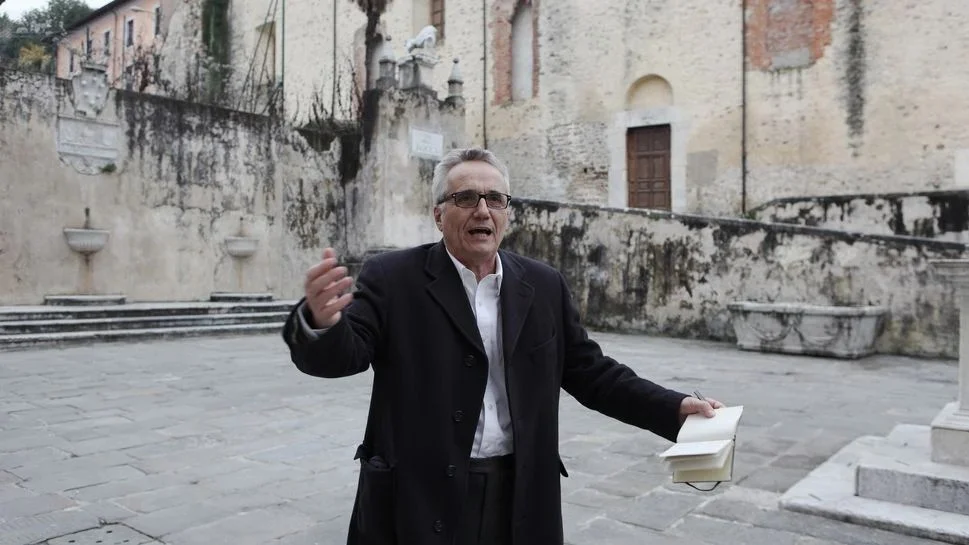
The three-and-a-half-hour extravaganza, meticulously crafted by the renowned Balich Wonder Studio, aimed to transcend mere technological display, focusing instead on storytelling through human emotion and artistic expression. Marco Balich, the creative director, emphasized this philosophy prior to the event, stating, "The Opening Ceremony is not just an exercise in technology or spectacle. It is, above all, a story told through people and emotions. In a complex world, we want to convey a message of harmony, beauty, and peace that can speak to everyone." This artistic vision guided every element of the night, from the elaborate choreography to the star-studded musical performances.
The ceremony’s thematic core, "harmony and Italianness," was woven throughout the performances, celebrating the rich cultural tapestry of Italy while extending a universal message of peace and unity. This theme resonated particularly strongly in the current global climate, where sporting events often serve as potent symbols of international cooperation and understanding. The successful management and execution of such a grand event by the host country are viewed as crucial indicators of its capacity to navigate complex international relations.
A Prelude of Glamour and Athletic Prowess
The festivities commenced earlier in the day at the historic Teatro Alla Scala, which served as the elegant backdrop for the official Red Carpet. Esteemed figures from the world of sports, cinema, and fashion graced the event, highlighting the broad appeal and significance of the Olympic Games. Among the notable attendees were legendary athletes such as three-time gold medal-winning American snowboarder Shaun White and Dutch figure skating champion Irene Schouten, whose presence evoked the spirit of past Olympic triumphs. They were joined by cultural icons including actors Jeff Goldblum and Stanley Tucci, designer Donatella Versace, and actress Marisa Tomei, underscoring the intersection of sport, art, and culture.
A particularly captivating moment on the Red Carpet involved Sunghoon, a member of the K-pop group ENHYPEN, who had previously distinguished himself as an Olympic torchbearer. Dressed impeccably in a black suit and white shirt, Sunghoon shared his unique perspective on participating in the Games. Having a background in competitive figure skating for a decade, he drew parallels between the dedication of athletes and the aspirations of K-pop artists. "Both athletes and K-Pop artists have the goal to make the fans happy and enjoy the event," Sunghoon remarked. "When I was an athlete, my dream was to participate in the Olympics. Being here as an artist feels different, but I’m also very honored."
The acclaimed artist Usher also made an appearance, offering his insights on the symbiotic relationship between music and sports. He articulated how music provides a vital soundtrack for athletes, enhancing their performance and emotional drive. "Music and sports go hand in hand," Usher stated. "Music, for example, is very important in figure skating. But for the most part, it ultimately gives the athletes a soundtrack that helps to compel and push through." His perspective underscored the profound emotional and motivational power of music within the athletic arena.
The Grand Spectacle Unfolds at San Siro
As evening descended, San Siro Stadium transformed into a vibrant stage for the main ceremony, commencing precisely at 8 p.m. with an evocative choreographic performance. Seventy dancers from the Academy of Teatro Alla Scala brought to life the ancient myth of Cupid and Psyche, their costumes shifting from stark whites and chiaroscuro, reminiscent of neoclassical sculptor Antonio Canova’s work, to a dazzling explosion of color. This visual transition was masterfully synchronized with the stirring music of renowned Italian classical composers Giuseppe Verdi, Giacomo Puccini, and Gioachino Rossini, immediately immersing the audience in a celebration of Italian artistic heritage.
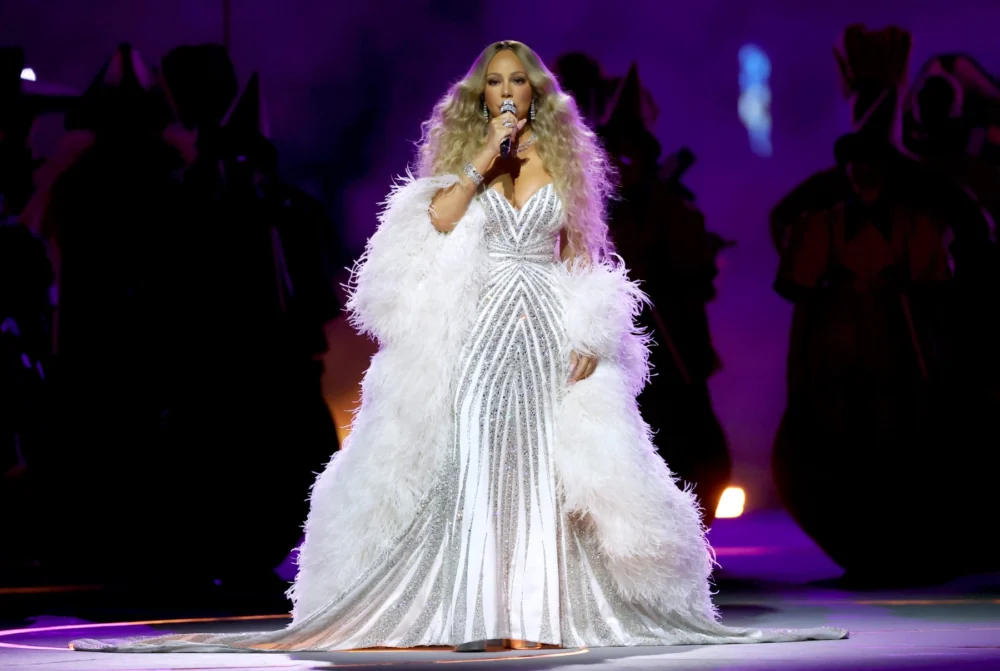
The ceremony then paid homage to Italian creativity before welcoming one of the night’s most anticipated musical guests, global superstar Mariah Carey. Taking center stage amidst a cadre of dancers, Carey delivered a moving rendition of Domenico Modugno’s iconic Italian classic, "Nel Blu, Dipinto di Blu" (widely known as "Volare"). Her performance featured a unique, rearranged version enriched with her signature high notes, followed by her empowering hit song, "Nothing Is Impossible." The rendition resonated deeply, connecting contemporary pop artistry with enduring Italian musical tradition.

The presence of distinguished dignitaries, including the President of the Italian Republic, Sergio Mattarella, and the President of the International Olympic Committee, Kirsty Coventry, added significant gravitas to the proceedings. A particularly poignant segment of the ceremony was dedicated to the celebrated Italian fashion icon, Giorgio Armani, who passed away the previous September. Models walked the stadium floor adorned in his creations, presented in the colors of the Italian flag – green, white, and red – a heartfelt tribute to his enduring legacy and contribution to Italian culture and global fashion.
Voices of Unity and the Olympic Spirit
Following the tribute to Armani, Italian pop sensation Laura Pausini took the stage to perform the national anthem, a moment of profound national pride and unity. The subsequent parade of athletes, a tradition spanning over an hour, commenced with Greece, the birthplace of the Olympic Games, and concluded with the host nation, Italy. The crowd’s reactions were palpable, with a notable boo directed at the Israeli flag’s passage, contrasted by a vigorous and sustained applause for the Ukrainian team, underscoring the geopolitical sensitivities present even within the celebratory atmosphere of the Games.
The ceremony then transitioned to its official speeches, beginning with Giovanni Malagò, President of the Milano Cortina Foundation. His address was a fervent expression of national pride and dedication to the spirit of sport. "I love my country, I love sports. I’ve never been as proud to be Italian as I am tonight," Malagò declared. He directly addressed the athletes, acknowledging their years of dedication and courage, stating, "This is your time. Your years of dedication, the courage to dream, the determination to push the boundaries… These Games belong to you." He further emphasized the Games’ role in fostering unity, remarking, "During a time in which the world is so divided by conflicts, your very presence demonstrates that another world is possible. Unity, respect, harmony."
Kirsty Coventry, President of the International Olympic Committee, followed Malagò with an inspiring message directed at the athletes, highlighting their role as exemplars of human resilience and character. "Through you, we see the very best of ourselves," Coventry stated. "You remind us that we can be brave, that we can be kind. When we see an athlete stumble and find the strength to rise, we’re all reminded that we can do the same. When we see athletes embrace at the finish line, we’re reminded that we can choose respect. No matter where we come from, we all know this spirit."
Adding another layer of international resonance, United Nations Messenger of Peace and actress Charlize Theron delivered a monologue inspired by Nelson Mandela’s vision of peace. Her powerful words defined peace not merely as the absence of conflict but as the active creation of an environment where all individuals can thrive. "Peace is not just the absence of conflict," Theron articulated. "Peace is the creation of an environment where all can flourish, regardless of race, color, creed, religion, gender, class, caste or any other social markers of difference."
The Flame Ignites: Bocelli, Ghali, and the Olympic Oath
The symbolic arrival of the Olympic flame at San Siro Stadium was heralded by the emotionally charged notes of Giacomo Puccini’s iconic aria "Nessun Dorma" from the opera "Turandot," performed by the world-renowned tenor Andrea Bocelli. The flame reached the stage precisely as Bocelli hit the crescendo of the powerful piece, creating a moment of breathtaking drama and anticipation.
The ceremony then featured rapper Ghali, whose participation was noted as potentially controversial due to his pro-Palestine stance. Reports indicated he faced restrictions, allegedly being prevented from singing the national anthem and speaking in Arabic, with the television broadcast reportedly downplaying his presence. Despite these alleged challenges, Ghali’s performance was described as one of the most touching of the evening. Accompanied by dancers in white, he recited Gianni Rodari’s poem "Promemoria" in Italian, French, and English. The poem’s simple yet profound anti-war message, including the line, "There are things you should never do… For example, war," resonated powerfully with the audience, offering a stark reminder of the human cost of conflict amidst the celebration of global unity.
Following Ghali’s impactful performance, the athletes took their official oaths, a solemn promise to uphold the Olympic spirit and compete with integrity. The culmination of the ceremony saw the Olympic Braziers lit simultaneously in Milan and Cortina, officially marking the commencement of the 2026 Winter Olympic Games. This dual lighting symbolized the interconnectedness of the two host cities and the broader reach of the Olympic movement.
The Opening Ceremony of Milano Cortina 2026 successfully set the stage for an unforgettable Olympic experience, blending Italian cultural heritage with a universal call for peace and unity. The event’s thoughtful curation and powerful performances have established a tone of hope and camaraderie for the athletes and spectators alike, promising a Games that will be remembered not only for athletic achievement but also for its enduring message of global harmony.