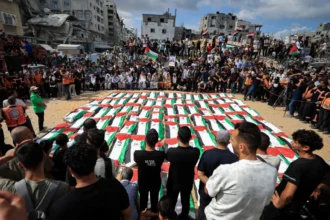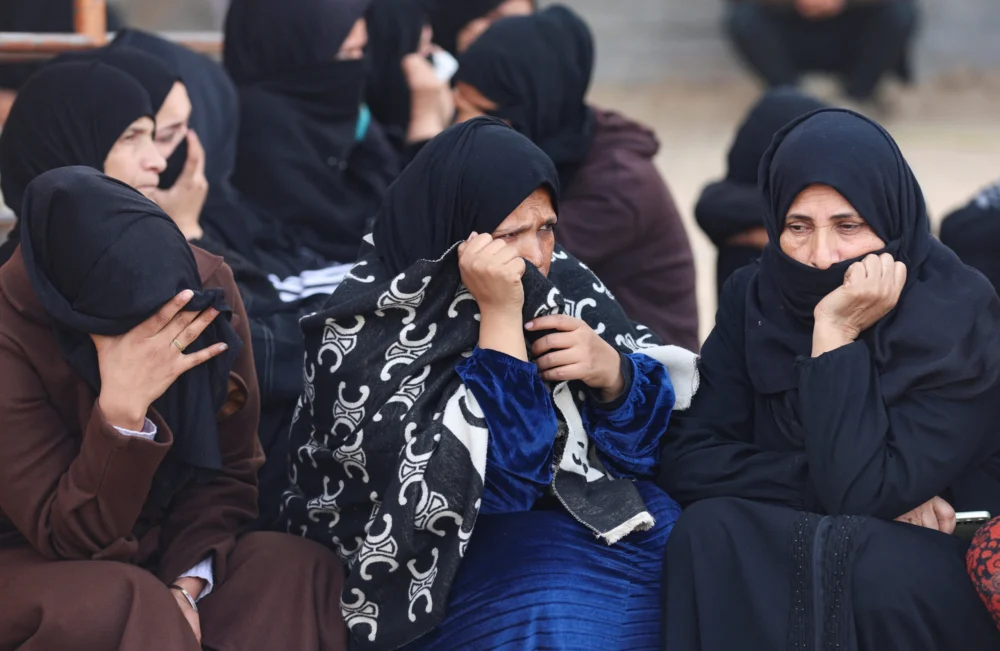
At least 11 Palestinians were killed in a series of Israeli attacks across the Gaza Strip, according to hospital sources, in what officials are describing as a significant escalation that violates a fragile ceasefire. The latest casualties include five individuals killed when Israeli forces targeted tents sheltering civilians in the Jabalia refugee camp in northern Gaza on Sunday. The attacks underscore the volatile security situation and ongoing tensions in the region, even as diplomatic efforts aim to establish lasting peace.
The fatalities in Jabalia were confirmed by hospital sources who spoke to Al Jazeera, detailing the devastating impact of the strikes. In a separate incident, at least five more Palestinians lost their lives during Israeli attacks west of Khan Younis, a densely populated city in the southern Gaza Strip. These events highlight a pattern of continued military operations despite agreements intended to halt hostilities.
Adding to the casualties, Sami al-Dahdouh, identified as a commander within the armed wing of Palestinian Islamic Jihad (PIJ), was killed in an Israeli strike in the Tal al-Hawa neighborhood, east of Gaza City. The targeting of individuals associated with militant groups often leads to retaliatory actions and further intensifies the conflict cycle.
Hamas spokesperson Hazem Qassem vehemently condemned the Israeli actions, labeling them a "new massacre" and a "criminal escalation." He asserted that these attacks represent a deliberate attempt to dictate a violent reality on the ground and send a clear message that efforts to achieve calm in Gaza are futile. Qassem accused Israel of persisting with its aggression despite widespread calls for adherence to the ceasefire agreement.
The current violence occurs within the framework of a ceasefire that was brokered by the United States and Qatar. However, according to the Government Media Office in Gaza, Israel has violated this agreement at least 1,620 times since it came into effect on October 10, 2025. These violations have resulted in the deaths of over 600 Palestinians and wounded more than 1,600 others. Israel, in turn, has accused Hamas of violating the agreement, reporting the deaths of four Israeli soldiers.
The timing of these deadly attacks coincides with a significant diplomatic announcement from U.S. President Donald Trump regarding his newly established "Board of Peace." Trump revealed that the inaugural meeting of this board is scheduled for Thursday in Washington, D.C. The board is envisioned as a cornerstone of his administration’s broader strategy to foster global stability and resolve international conflicts.
President Trump stated on his Truth Social platform that members of the Board of Peace have collectively pledged over $5 billion towards the reconstruction of Gaza, which has been devastated by years of conflict. Furthermore, commitments have been made to deploy "thousands of personnel to the International Stabilization Force and Local Police to maintain Security and Peace for Gazans." This initiative signals a substantial U.S.-led effort to address the humanitarian and security crises in the region.
The U.S. has reportedly invited countries to contribute $1 billion to join the Board of Peace, with indications that at least five nations may have already committed to this financial contribution. Al Jazeera’s Rosiland Jordan reported that the United Arab Emirates is understood to be the first country to step forward with this significant pledge, and there are reports suggesting Kuwait may also be joining. The identities of the remaining three countries have not yet been publicly disclosed.

It remains unclear how many of the board’s 20 members will be present at the inaugural meeting. The Board of Peace, initially conceived as a mechanism to end the Gaza war, has evolved with President Trump’s ambition to encompass a wider mandate for resolving conflicts worldwide. This suggests a U.S. strategy aimed at potentially bypassing or complementing the established frameworks of the United Nations.
Despite the U.S. push, several key American allies have reportedly declined to join the Board of Peace, indicating potential challenges in building broad international consensus for the initiative. The board’s structure and objectives are still being defined, and its effectiveness in achieving tangible peace in Gaza and beyond will be closely watched.
President Trump also reiterated a demand for Hamas to uphold its commitment to "Full and Immediate Demilitarization." This condition is a critical sticking point in negotiations and a significant obstacle to a lasting resolution between Israeli forces and Palestinian factions. The call for demilitarization underscores the security concerns that Israel consistently raises in its ongoing conflict with Hamas and other militant groups.
In response to the "Board of Peace" initiative, Hamas spokesperson Hazem Qassem urged the board to exert pressure on Israel to cease its ceasefire violations. He called for the board to "compel it to implement what was agreed upon without delay or manipulation," emphasizing Hamas’s desire for adherence to the terms of the ceasefire and a cessation of Israeli military actions. The Palestinian group views the current Israeli operations as a direct affront to the established agreements and a deliberate undermining of peace efforts.
Background: The Gaza Strip Under Siege
The Gaza Strip, a densely populated Palestinian territory on the Mediterranean coast, has been under an Israeli-Egyptian blockade since 2007, following Hamas’s takeover of the territory. This blockade has severely restricted the movement of people and goods, leading to a dire humanitarian situation marked by high unemployment, poverty, and limited access to essential services like clean water, electricity, and healthcare. The region has been the focal point of multiple Israeli military operations and Palestinian rocket attacks over the past two decades, creating a cycle of violence and displacement.
Escalating Tensions and Ceasefire Fragility
The recent Israeli attacks highlight the precarious nature of the ceasefire agreements that have been repeatedly brokered between Israel and Palestinian militant groups. These agreements often struggle to hold due to fundamental disagreements over security arrangements, territorial disputes, and the underlying political grievances. The targeting of civilian areas, such as refugee camps, is particularly controversial and draws widespread international condemnation, raising concerns about potential violations of international humanitarian law.
The "Board of Peace" Initiative: A New Diplomatic Avenue?
U.S. President Donald Trump’s "Board of Peace" represents a novel approach to international conflict resolution. By seeking substantial financial and personnel commitments from member nations, the initiative aims to create a robust framework for addressing humanitarian crises and stabilizing conflict zones. The emphasis on security forces and reconstruction funding suggests a comprehensive strategy to tackle the multifaceted challenges in regions like Gaza. However, the success of such an initiative will likely depend on its ability to gain broad international legitimacy and address the root causes of conflict, rather than merely managing its symptoms.
International Reactions and Future Implications
The latest casualties in Gaza and the announcement of the "Board of Peace" are likely to elicit a range of international reactions. Human rights organizations and many UN member states will undoubtedly scrutinize the Israeli attacks for compliance with international law. Meanwhile, the "Board of Peace" initiative will face questions regarding its inclusivity, its alignment with existing international diplomatic norms, and its potential to achieve lasting peace without addressing the core political issues at play in the Israeli-Palestinian conflict. The commitment of significant resources could offer a lifeline to war-torn Gaza, but its effectiveness will hinge on equitable distribution and sustainable long-term solutions.
The Human Cost of Conflict
Beyond the political and diplomatic maneuvers, the immediate consequence of these attacks is the tragic loss of Palestinian lives and the increased suffering of an already vulnerable population. Families are torn apart, homes are destroyed, and the cycle of trauma and despair deepens. The humanitarian imperative remains paramount, and any efforts toward peace must prioritize the protection of civilians and the provision of essential aid. The ongoing conflict in Gaza serves as a stark reminder of the human cost of unresolved political disputes and the urgent need for a just and lasting resolution.