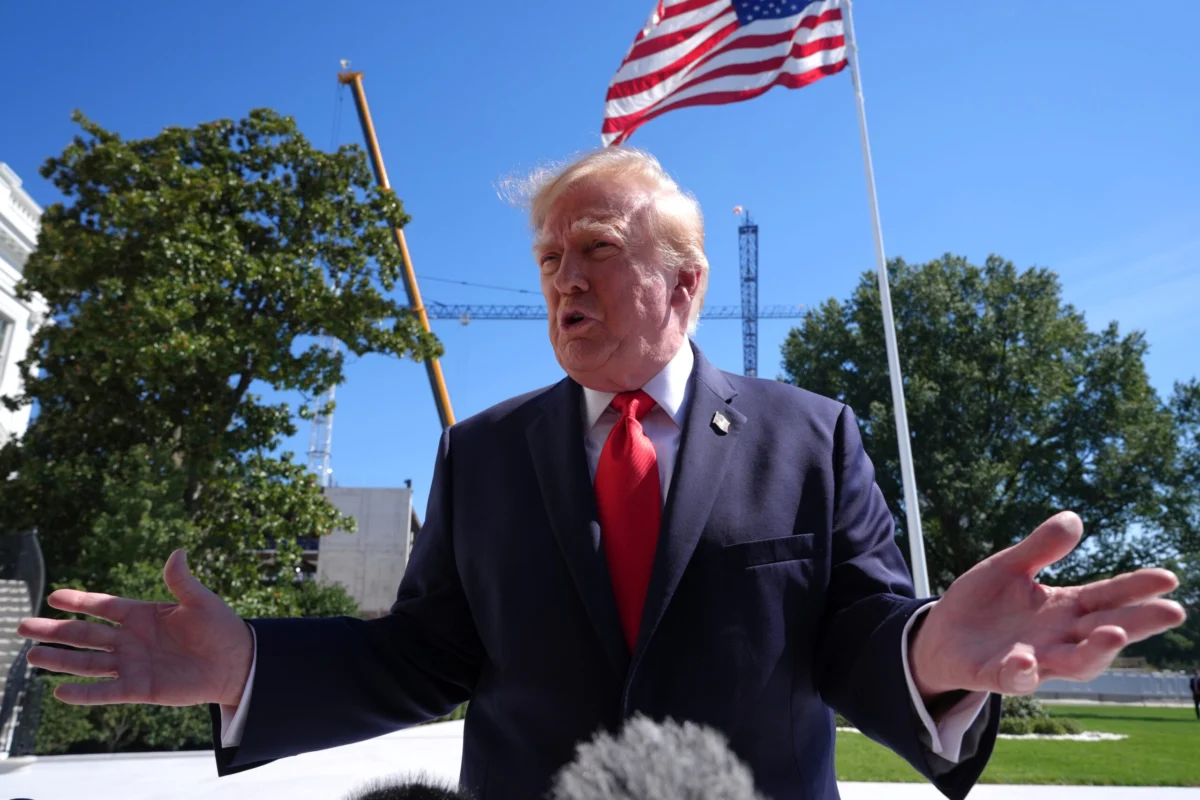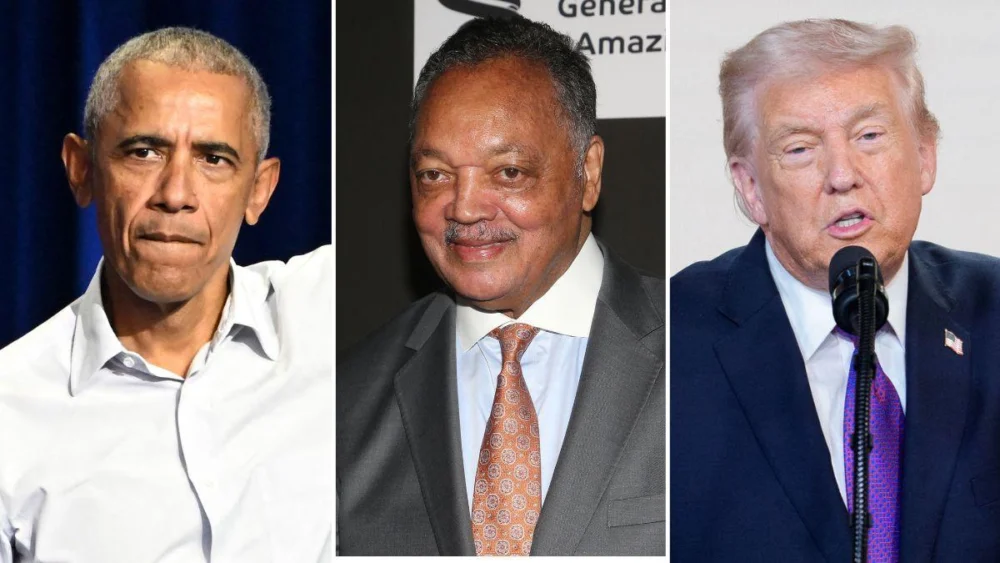
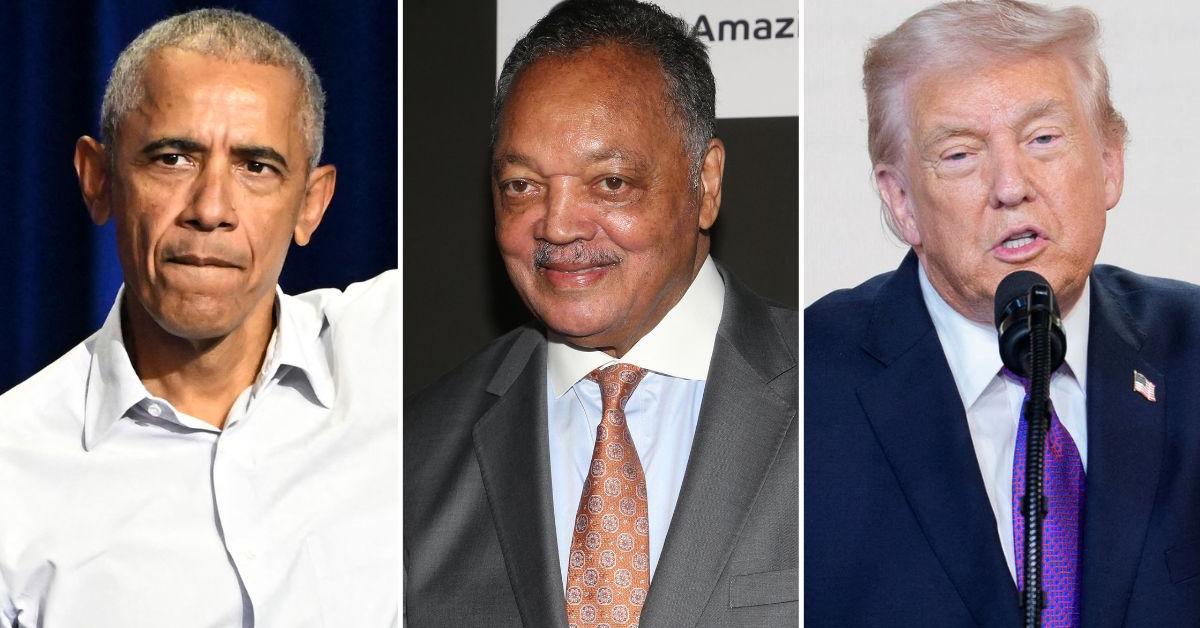
Former President Donald Trump, in a lengthy statement posted on Truth Social following the passing of civil rights icon Reverend Jesse Jackson, included a striking and politically charged assertion regarding Jackson’s relationship with former President Barack Obama. The remarks, made on February 17, departed from a conventional eulogy to suggest a profound animosity between Jackson and Obama, adding a layer of political controversy to a moment of public mourning. Trump’s tribute simultaneously praised Jackson’s character and career while leveraging the occasion to criticize a political rival, highlighting his distinctive approach to public commentary.
A Civil Rights Titan’s Passing
Reverend Jesse Jackson, a towering figure in American civil rights and a two-time presidential candidate, passed away at the age of 84. His death marks the end of an era for a generation of activists who rose to prominence during the Civil Rights Movement, carrying forward the torch of racial justice and equality. Jackson’s family confirmed his passing, remembering him as a "servant leader" whose unwavering commitment to justice, equality, and love inspired millions globally. They urged the public to honor his memory by continuing the fight for the values he championed throughout his remarkable life. Jackson had faced significant health challenges in recent years, including diagnoses of progressive supranuclear palsy and Parkinson’s disease, which had increasingly limited his public activities.
Donald Trump’s Unconventional Homage
In his February 17 Truth Social post, Donald Trump offered what began as a personal reflection on Jackson’s life and legacy. Trump described Jackson as a man he "knew him well, long before becoming President," characterizing him as a "good man, with lots of personality, grit, and ‘street smarts.’" He lauded Jackson as "very gregarious — Someone who truly loved people!" However, the tribute quickly veered into a defense of Trump’s own record on race and a pointed commentary on the dynamics within the Democratic Party and the African American political establishment.
Trump used the platform to counter what he termed false accusations of racism, stating, "Despite the fact that I am falsely and consistently called a Racist by the Scoundrels and Lunatics on the Radical Left, Democrats ALL, it was always my pleasure to help Jesse along the way." He cited instances where he claimed to have supported Jackson, including providing office space for Jackson’s Rainbow Coalition in a building he owned and backing criminal justice reform efforts that Jackson advocated. Furthermore, Trump mentioned his administration’s funding for Historically Black Colleges and Universities (HBCUs) and support for Opportunity Zones as initiatives he believed Jackson appreciated, implicitly positioning himself as an ally to Jackson’s causes.
The Controversial Claim: Jesse Jackson and Barack Obama
The most striking element of Trump’s message was his assertion regarding the relationship between Jesse Jackson and Barack Obama. After praising Jackson as a "force of nature like few others before him," Trump added, "He had much to do with the Election, without acknowledgment or credit, of Barack Hussein Obama, a man who Jesse could not stand." This claim immediately drew attention, transforming a memorial into a political talking point.

The relationship between Jesse Jackson and Barack Obama was, at times, complex and publicly scrutinized, particularly during Obama’s historic 2008 presidential campaign. While Jackson was a pioneer who paved the way for Black presidential candidates, his own aspirations had never reached the White House. When Obama, a younger Black politician, emerged as a leading contender, some observers noted an undercurrent of generational tension. A notable incident occurred in 2008 when Jackson, caught on a live microphone, expressed frustration with Obama, saying he wanted to "cut his nuts off" in response to what Jackson perceived as Obama "talking down" to Black voters. Jackson later apologized for the remark, acknowledging it was "crude and hurtful." Despite this public stumble, Jackson generally supported Obama’s candidacy, though the relationship was not always devoid of friction. Trump’s statement, however, escalated this historical nuance into an outright claim of deep-seated animosity, presenting it as an established fact without offering specific evidence within his post.
Analyzing Trump’s Political Calculation
Donald Trump’s decision to interject this specific claim into a eulogy for Jesse Jackson is consistent with his long-standing political strategy of leveraging public moments for rhetorical advantage and to undermine perceived rivals. By asserting that Jackson "could not stand" Obama, Trump aimed to achieve several objectives. Firstly, it attempts to sow discord within the Democratic Party and the broader African American political community, implying a lack of unity or genuine respect among its historical and contemporary leaders. Secondly, it serves to diminish Obama’s legacy by suggesting that a respected civil rights elder harbored disdain for him, thereby subtly elevating Trump’s own perceived standing among certain segments of the Black community. Lastly, it reinforces Trump’s narrative that he, despite being labeled a "racist" by his opponents, enjoyed a genuine and productive relationship with a prominent Black leader like Jackson, unlike Obama.
This maneuver highlights Trump’s characteristic use of social media platforms like Truth Social to deliver unfiltered, often provocative, political commentary. His statements frequently blend personal anecdotes with pointed criticisms, ensuring maximum media attention and engagement from his base. The timing of such a claim, amidst a period of national mourning, underscores a willingness to prioritize political messaging over traditional decorum.

Broader Implications for Political Discourse and Legacy
Trump’s "odd tribute" raises significant questions about the nature of political discourse, especially in the digital age. It demonstrates how public figures, even in moments of solemn remembrance, can use their platforms to reshape narratives and reignite political rivalries. The statement forces a re-examination of the historical relationship between Jackson and Obama, prompting both historical recollection and contemporary interpretation.
For Jesse Jackson’s legacy, Trump’s remarks add a new, albeit tangential, dimension to the public’s perception. Jackson’s career was defined by pioneering efforts in civil rights, his presidential campaigns that broke racial barriers, and his persistent advocacy for marginalized communities. His "Rainbow Coalition" was a groundbreaking effort to unite diverse groups under a common banner of social and economic justice. To frame his passing with a contentious claim about his relationship with Obama risks overshadowing the depth and breadth of his independent contributions, momentarily shifting focus from his achievements to an alleged personal animosity.
The incident also speaks to the ongoing political battle over the narrative of racial progress and leadership in America. Both Jackson and Obama represent different phases and approaches within the struggle for civil rights and Black political empowerment. Jackson was a direct heir to Martin Luther King Jr.’s movement, a charismatic orator and negotiator who campaigned for fundamental rights and economic justice. Obama, on the other hand, symbolized the realization of a dream, becoming the first Black President of the United States. Trump’s comment attempts to insert a wedge into this historical continuum, suggesting internal divisions that undermine a unified narrative of progress.
Reactions and Potential Consequences
As of the immediate aftermath of Trump’s post, widespread official reactions from Obama’s camp or Jackson’s family (beyond their initial general statement) have not been extensively reported. However, the statement is likely to generate significant discussion among political analysts, civil rights leaders, and the broader public. Critics of Trump will likely view the comment as disrespectful and politically opportunistic, using a moment of grief to score political points. Supporters, conversely, might interpret it as Trump’s characteristic honesty and a candid revelation about the true feelings within the political elite.
The incident is expected to fuel further debate on social media and in traditional news outlets, with many commentators likely to fact-check or contextualize Trump’s claim about Jackson and Obama’s relationship. It may also prompt other political figures to issue their own tributes to Jackson, potentially subtly or directly countering Trump’s narrative by emphasizing unity or different aspects of Jackson’s legacy. Ultimately, Trump’s calculated remarks ensure that Jesse Jackson’s passing, while a moment of reflection on a significant life, will also be intertwined with the ongoing, often acrimonious, dynamics of contemporary American politics.
A Complex Legacy Amidst Political Currents
Jesse Jackson’s life was a testament to resilience, activism, and a relentless pursuit of a more just society. His passing invites a national reckoning with the journey of civil rights and the evolution of Black leadership. Donald Trump’s decision to include a divisive political jab at Barack Obama within his tribute underscores the pervasive politicization of public mourning in the current climate. It serves as a stark reminder that even in death, the legacies of prominent figures can become battlegrounds for competing political narratives, perpetually shaped by the ongoing rivalries and ambitions of those still in the public arena. The enduring impact of Jackson’s work will continue to be debated and celebrated, often through the lens of the complex political landscape he helped to shape.