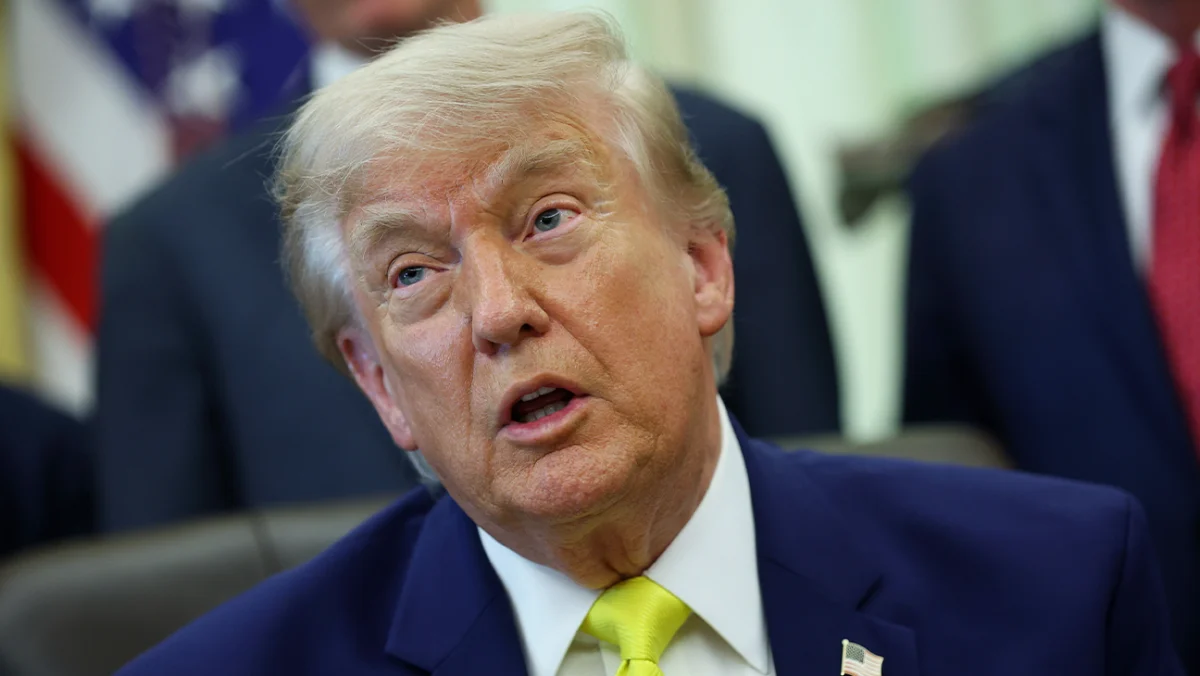
Major broadcast networks NBC and ABC have announced they will not carry former President Donald Trump’s highly anticipated primetime election speech live on their primary television channels, instead opting to stream the address on their digital platforms. The decision means viewers seeking to watch the former president’s remarks on election integrity will need to utilize streaming services or other news outlets, marking a notable editorial choice by the networks.
NBC confirmed it would provide a special report once the Trump Primetime Election Speech concluded, offering analysis and context rather than a live, unfiltered broadcast. ABC News, in a statement, outlined its plan: "ABC News will run former President Trump’s speech on ABC News Live and ABC News Radio with comprehensive, anchored coverage. We will also cover the speech in our regular network newscasts and, as always, our Special Report team is fully prepared to break into network programming to deliver live updates and reporting should significant developments occur." This approach emphasizes curated news coverage over a direct live feed on the main broadcast channel.
Network Discretion and Editorial Precedent
The choice by NBC and ABC to forgo live network coverage of the Trump Primetime Election Speech is not unprecedented in the landscape of broadcast journalism. News organizations frequently weigh various factors when deciding whether to pre-empt regular programming for political addresses, particularly those from figures not currently holding the nation’s highest office. These considerations typically include the newsworthiness of the content, the potential for factual inaccuracies, the balance of political advocacy versus public service, and the impact on scheduled entertainment or informational programming.
Historically, networks have exercised similar editorial discretion with speeches from various political figures, including former Presidents Joe Biden, Barack Obama, and George W. Bush. Major national addresses, such as the State of the Union, declarations of war, or responses to significant national emergencies, almost universally receive live, primetime network coverage. However, speeches from former presidents or those primarily focused on partisan political messaging are often evaluated on a case-by-case basis, taking into account their immediate public interest and verifiable factual basis.
The media environment has also evolved significantly with the advent of dedicated cable news channels and robust streaming platforms. These alternative avenues allow for continuous, specialized coverage that traditional broadcast networks, with their broader audience and programming commitments, may not be equipped or inclined to offer for every political statement. This shift provides networks with more flexibility in how they disseminate information while ensuring that significant events are still accessible to the public, albeit through different channels.
The Anticipated Content of the Election Speech
The precise subject matter of former President Trump’s speech remained somewhat ambiguous leading up to the event, though he had indicated it would focus on "election integrity." This phrasing immediately raised expectations among political observers that the address could revisit familiar themes surrounding the 2020 presidential election. Mr. Trump has repeatedly made unsubstantiated claims about widespread voter fraud in that election, which he lost, and has continued to advocate for reforms based on these allegations.
Such a focus carries significant weight, especially in the run-up to the upcoming midterm elections. Concerns have been voiced by various non-partisan election experts and government officials about rhetoric that could undermine public confidence in the electoral process. Earlier in the week, rumors circulated that the former president might use the platform to declare that Georgia’s Democratic Senators were not legitimately elected, a claim that would undoubtedly draw immediate and widespread scrutiny.
The backdrop to this Trump Primetime Election Speech includes the January 6, 2021, attack on the U.S. Capitol, an event that followed a rally where Mr. Trump spoke about election integrity. The persistent questioning of election results by the former president and his allies has been a focal point of national political debate and has contributed to a polarized political climate. Therefore, any address touching on these topics is inherently viewed through a lens of heightened sensitivity and a need for factual verification.
Distinction from Past Presidential Addresses
It is crucial to distinguish this upcoming address from previous instances when Donald Trump, as sitting president, delivered speeches that were carried live by major networks. For example, when President Trump addressed the nation earlier in his term regarding the Iran conflict, major networks uniformly carried that address live. Such instances fall squarely within the traditional role of broadcast networks to provide direct access to the sitting president during moments of national or international significance.
However, a speech from a former president, especially one focused on a politically charged topic like "election integrity" and potentially reiterating disputed claims, is viewed differently. Networks often weigh whether such an address constitutes a genuine news event requiring live, unfiltered broadcast to millions, or if it primarily serves as a political rally or advocacy platform. The decision to stream rather than broadcast live reflects an editorial judgment that the content, while newsworthy, may require immediate journalistic context and fact-checking, which can be more effectively integrated into a streaming format with anchored commentary.
Broader Implications for Media and Public Trust
The decision by NBC and ABC highlights the ongoing challenge for news organizations in navigating a complex information environment, particularly when dealing with high-profile political figures. In an era where misinformation can spread rapidly, broadcasters face the dual responsibility of informing the public and avoiding the unwitting amplification of potentially unsubstantiated claims. By offering the Trump Primetime Election Speech on streaming platforms with accompanying analysis, the networks aim to provide access while also fulfilling their journalistic obligation to contextualize and verify information.
This approach also underscores the evolving role of traditional broadcast networks. While they remain powerful platforms, the rise of digital and social media means that political messages can reach audiences through myriad channels. Networks are increasingly adapting their strategies, using their linear television channels for curated, high-impact news, and leveraging digital platforms for more comprehensive, often live, but contextually richer coverage of specific events.
The impact on public access to the former president’s speech will be noticeable. Viewers accustomed to simply turning on their television to a major network may now need to actively seek out the content on streaming apps or websites. This could potentially segment the audience, with some viewers engaging with the raw speech and others consuming it through the filtered lens of network news reports. It also raises questions about media gatekeeping and the responsibility of news organizations to manage the flow of information from political figures, particularly those who have been associated with controversial claims.
Potential Reactions and Next Steps
The decision by NBC and ABC is likely to elicit varied reactions from across the political spectrum. Supporters of former President Trump may view the move as an attempt to censor or diminish his message, arguing that the public deserves to hear directly from him without network filters. Conversely, critics might applaud the networks for exercising editorial caution, particularly given the sensitive nature of "election integrity" claims and the potential for the speech to contain disputed information.
Other major news outlets, such as CBS News, CNN, and Fox News, had not publicly announced their specific plans for the Trump Primetime Election Speech at the time of initial reports. Their eventual decisions will further illustrate the diverse approaches within the media industry. Fox News, for instance, which often caters to a conservative audience, might choose to carry the speech live on its main cable channel, reflecting a different editorial calculus regarding its audience and content.
Following the speech, regardless of where it is broadcast, the focus will quickly shift to its content. News organizations will undoubtedly engage in extensive fact-checking and analysis of Mr. Trump’s remarks. Political commentators, elected officials, and election experts will scrutinize any new claims or reiterations of old ones. The public discourse will then center on the accuracy, implications, and broader political impact of the former president’s address, particularly as the midterm elections draw nearer and the 2024 presidential cycle begins to take shape.
The choice by NBC and ABC represents a calculated editorial decision in a politically charged environment. It highlights the dynamic interplay between major news networks, high-profile political figures, and the evolving methods of information dissemination. As the media landscape continues to fragment, how news organizations choose to present and contextualize significant political addresses will remain a critical aspect of their role in informing the American public.