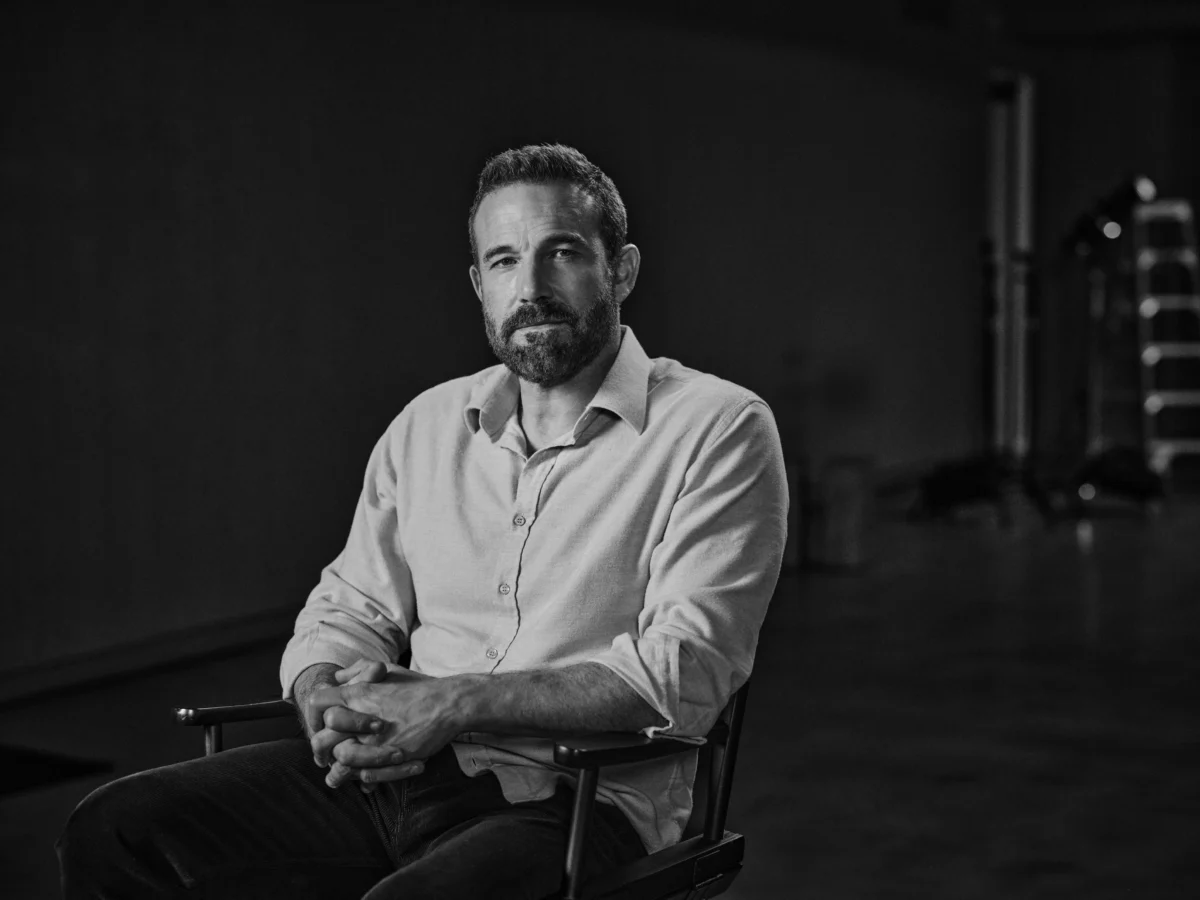
Netflix finalized its acquisition of InterPositive, the mysterious artificial intelligence company co-founded by actor and filmmaker Ben Affleck, for a substantial $587 million in cash, a figure disclosed in a recent securities filing. The move, which saw Affleck commit to a senior advisory role within the streaming giant, has sent ripples through the entertainment industry, prompting widespread speculation about the company’s proprietary technology and its potential impact on filmmaking.
The acquisition price, detailed in Netflix’s Form 10-Q filing on Friday, confirms the considerable investment made by the streaming service into the burgeoning field of generative artificial intelligence. While the filing did not explicitly name InterPositive, it referenced a "business combination" completed in March 2026 for approximately $587 million in cash consideration, aligning precisely with the timing of Netflix’s public announcement of the InterPositive deal on March 5. This financial transparency sheds light on the valuation Netflix placed on InterPositive’s innovative approach to visual effects and production efficiency.
The Rise of InterPositive and Affleck’s Vision
InterPositive emerged onto the tech and entertainment scene in 2022, founded by Ben Affleck as he began exploring the transformative potential of artificial intelligence. His stated aim was to revolutionize visual effects processes without compromising the fundamental creative integrity of filmmaking, encompassing everything from screenwriting and directing to acting and production design. Affleck articulated a clear ethical framework for the company, emphasizing the protection of human creativity and the skilled professionals behind it.
"I knew I had a responsibility to my peers and our industry, to protect the power of human creativity and the people behind it. In creating InterPositive, I sought to do just that," Affleck wrote in a public statement following the acquisition announcement. He drew parallels between AI’s evolution and historical technological shifts in cinema, such as the advent of motion pictures, the transition to digital, motion capture, and virtual production. For Affleck, joining forces with Netflix represented a natural progression, leveraging the streaming giant’s extensive experience in applying and scaling technology responsibly.
InterPositive’s core innovation stemmed from a proprietary dataset, meticulously captured on a closed soundstage. This unique data allowed the company to develop its initial AI model, designed to comprehend complex visual logic and ensure editorial consistency across various production scenarios. Affleck described the model’s capabilities as preserving "cinematic rules under real-world production challenges such as missing shots, background replacements or incorrect lighting." This technological advancement promises solutions to common, time-consuming, and costly issues in film and television production.
Netflix’s Strategic Investment in Artificial Intelligence
The hefty price tag for InterPositive underscores Netflix’s aggressive strategy to integrate artificial intelligence into its content creation pipeline. In an increasingly competitive streaming landscape, marked by escalating production costs and a constant demand for fresh, high-quality content, AI offers a compelling avenue for efficiency, speed, and innovation. The acquisition positions Netflix at the forefront of leveraging AI to streamline workflows and enhance creative output.
Ted Sarandos, Netflix co-CEO, provided further insight into the company’s embrace of AI during a recent earnings call. He revealed that approximately 300 Netflix productions currently incorporate AI tools, predominantly within post-production phases. Sarandos highlighted the rapid scaling of generative AI across the entire creative spectrum, from initial concept development and pre-visualization through to post-production and final delivery.
"Gen AI is scaling quickly across the entire creative process, from concept to pre-vis through post and delivery," Sarandos stated. He emphasized that these AI-powered workflows enable the production of higher-quality output more rapidly and efficiently than traditional methods. While post-production currently represents the largest concentration of AI usage, Sarandos noted that generative AI is increasingly being deployed for "really complicated shots and sequences."
Real-World Applications and Efficiency Gains
Sarandos cited the Tom Hanks-backed documentary The American Experiment as a prime example of AI’s transformative potential. The documentary featured 17 minutes of what Sarandos termed "AI-enhanced" footage. This integration of artificial intelligence allowed the filmmakers to expand the scope of the series in ways that would have been previously unfeasible. Critically, these 17 minutes were produced twice as fast and at half the cost compared to conventional options, demonstrating tangible benefits in both time and financial resources.
Such efficiencies are not merely incremental; they represent a significant shift in production economics, potentially freeing up budgets for more ambitious storytelling or enabling a higher volume of content. For a company like Netflix, which relies on a constant flow of diverse programming to attract and retain subscribers globally, these gains are strategically vital. The ability to expedite complex visual tasks without compromising quality offers a distinct competitive advantage.
Broader Implications for the Entertainment Industry
The acquisition of Ben Affleck’s AI company by Netflix reverberates beyond the immediate financial transaction, signaling a pivotal moment for Hollywood. It intensifies the ongoing debate about the role of artificial intelligence in creative industries, a conversation that gained significant traction during recent labor disputes. The Writers Guild of America (WGA) and the Screen Actors Guild – American Federation of Television and Radio Artists (SAG-AFTRA) strikes saw AI emerge as a central point of contention, with unions advocating for robust protections against job displacement and the unauthorized use of artists’ likenesses and intellectual property.
Affleck’s personal commitment to safeguarding human creativity, as expressed in his initial statements, may offer some reassurance to an industry grappling with anxieties about AI. His involvement as a senior advisor suggests a nuanced approach to integrating technology, aiming to augment human capabilities rather than entirely replace them. However, the sheer scale of Netflix’s investment in AI, coupled with Sarandos’s comments on efficiency, inevitably raises questions about the future workforce landscape in Hollywood.
Other major studios and production houses are undoubtedly observing Netflix’s bold move. The precedent set by this acquisition could catalyze a broader race to integrate advanced AI solutions, potentially reshaping the competitive dynamics of content production. Companies that fail to adapt to these technological shifts risk being outpaced in terms of efficiency, cost-effectiveness, and creative innovation.
The Intersection of Celebrity, Technology, and Content
The deal also highlights the growing intersection of celebrity endorsement, technological entrepreneurship, and content delivery in the digital age. Ben Affleck, a globally recognized figure with deep roots in filmmaking, brings not only his vision for AI but also significant industry credibility to Netflix’s technological endeavors. His ability to articulate the benefits of AI from an artist’s perspective could be crucial in fostering acceptance and collaboration within the creative community.
As Netflix continues to expand its AI capabilities, the industry will closely watch how InterPositive’s technology is deployed across its vast slate of productions. The expectation is that InterPositive will provide tools that allow filmmakers to tackle increasingly complex visual challenges with greater agility, potentially leading to more visually ambitious and diverse storytelling. The ethical framework surrounding AI’s implementation, particularly concerning intellectual property and fair compensation for creators, will remain a critical area of focus for the industry as these technologies mature.
The acquisition of InterPositive by Netflix for nearly $600 million is a clear declaration of intent: artificial intelligence is not merely a supplementary tool but a core strategic pillar for the future of entertainment production. As AI continues to evolve, its influence on how stories are conceived, created, and consumed will only grow, driven by significant investments from industry leaders like Netflix.