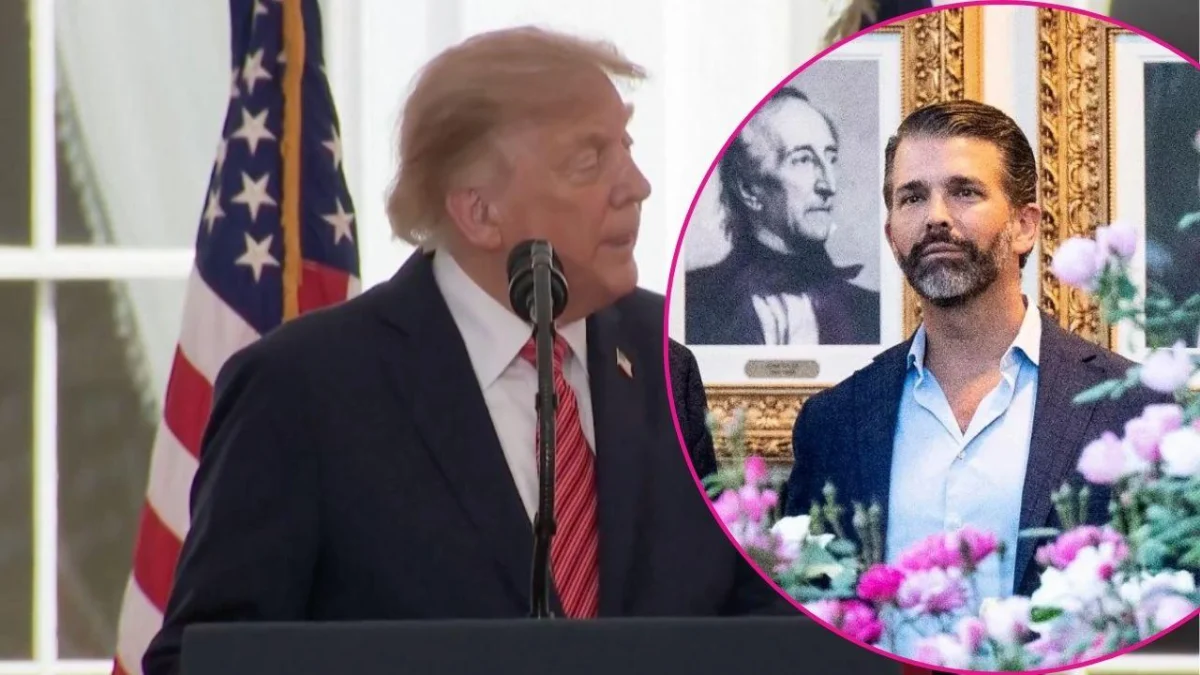
The Department of Homeland Security and the White House faced intense scrutiny Friday after President Donald Trump and Homeland Security Secretary Markwayne Mullin alleged that more than a quarter of a million noncitizens are illegally registered to vote in four key states. The claims, which center on voter rolls in California, Pennsylvania, New Jersey, and Nevada, have been dismissed by independent election monitors and state officials as being based on flawed methodology and a misunderstanding of federal immigration data.
The controversy erupted following a 25-minute primetime address delivered by the president on Thursday, during which he asserted that his administration had uncovered massive vulnerabilities in the American electoral system. Secretary Mullin later reinforced these claims, releasing a one-page memorandum and sending formal letters to election officials in the four targeted states. According to the DHS figures, the agency identified 190,832 potential noncitizens in California, 35,152 in New Jersey, 15,903 in Nevada, and 14,576 in Pennsylvania.

Methodology Under Fire from Election Monitors
David Becker, the executive director of the Center for Election Innovation & Research, criticized the administration’s findings during a briefing on Friday, labeling the 250,000 figure "irresponsible." Becker noted that the DHS appears to have reached these numbers by comparing public voter files against the Systematic Alien Verification for Entitlements (SAVE) database. Experts argue that the SAVE database is an inappropriate tool for this purpose, as it was designed to verify eligibility for federal benefits rather than to provide a real-time census of citizenship status.
A primary issue cited by election experts is the time lag in federal records regarding naturalized citizens. Millions of Americans who were born abroad and later obtained citizenship may still be listed as noncitizens in older DHS records. According to U.S. Census data, nearly 26 million U.S. citizens are naturalized, and the decade leading up to 2025 saw nearly 8 million people take the oath of citizenship. In the four states mentioned by Mullin, the number of naturalized citizens vastly exceeds the numbers flagged by the DHS. California alone is home to over 1.2 million citizens who naturalized in the last decade.
The Brennan Center for Justice also weighed in on the allegations, with Vice President Wendy Weiser stating that the administration’s estimates are "almost certainly false or wildly overstated." Weiser highlighted the administration’s history of making unverified claims regarding election improprieties, suggesting that the current push is a continuation of efforts to delegitimize the upcoming 2026 midterm elections.

Historical Precedents and Legal Challenges
The use of federal immigration data to purge voter rolls has a history of legal failures. In 2024, the state of Alabama was successfully sued by the Campaign Legal Center after it attempted to remove naturalized citizens from its rolls. The state had relied on "A-numbers" issued by the DHS, failing to account for the fact that those individuals had since become U.S. citizens. Similarly, a high-profile case in Texas involved a naturalized citizen from South Africa whose registration was canceled while he was waiting for a passport renewal, simply because he was flagged by a DHS verification system using outdated information.
State officials from the jurisdictions named in Mullin’s letters have pushed back against the federal narrative. Pennsylvania Secretary of State Al Schmidt, a Republican, emphasized that his state requires rigorous identity verification for all voters. Schmidt noted that all available evidence shows noncitizen voting is "extremely rare" both in Pennsylvania and across the country. California Governor Gavin Newsom’s office issued a similar rebuttal, clarifying that state law is explicit regarding citizenship requirements and that voter fraud is almost exclusively committed by U.S. citizens.
Broadening the Narrative of Election Interference
The president’s address also delved into claims of foreign interference, specifically targeting China. Trump alleged that Chinese actors had illicitly acquired 220 million voter records between 2020 and 2023. While intelligence experts acknowledge that foreign adversaries frequently attempt to gather American data, they noted that voter rolls are public records in most states and can be purchased legally. Becker pointed out that possessing voter data does not equate to the ability to cast fraudulent ballots, as doing so would require private, personally identifiable information like Social Security or driver’s license numbers, which are not included in public voter files.

The Kremlin and the Chinese Foreign Ministry both issued denials on Friday regarding the president’s claims. Beijing characterized the accusations as a "malicious smear campaign" and urged the United States to stop making unfounded allegations. A 2021 U.S. intelligence assessment previously concluded that while Russia had conducted influence operations, no foreign actor—including China—had successfully altered the technical aspects of the 2020 voting process.
Political and Legislative Consequences
In Washington, Democratic leaders have characterized the president’s rhetoric as an attempt to "rig the midterms" before a single vote is cast. Senate Minority Leader Chuck Schumer described the address as a "pathetic attempt" to revisit the 2020 election and noted that the "Save America Act," which would require proof of citizenship to register to vote, lacks the support necessary to pass Congress. Massachusetts Congressman Jim McGovern and other lawmakers have accused the White House of weaponizing the federal government against the states.
The administration has also faced criticism for threatening to withhold Federal Emergency Management Agency (FEMA) grant funding from states that refuse to comply with federal demands for voter data. Secretary Mullin defended the move, stating that securing elections "isn’t a partisan issue" and that states refusing to cooperate should "raise serious questions." However, previous attempts by the federal government to seize state voter rolls have resulted in numerous legal defeats for the administration.
Domestic Policy and International Friction
Beyond the election debate, the White House is navigating several other high-stakes issues. On Friday, the president escalated tensions with Canada, accusing the neighboring nation of "willful negligence" regarding persistent wildfires. The smoke from these fires has blanketed the Midwest and Northeast, affecting an estimated 109 million Americans. Trump suggested that the cost of the pollution should be added to the tariffs Canada currently pays, a move that Canadian Prime Minister Mark Carney countered by stating that climate change is a shared responsibility.
In the Middle East, the U.S. expanded its aerial campaign against Iran on Friday, striking bridges, energy facilities, and the key port of Bandar Abbas. The strikes, which reportedly killed at least 38 people, were described by the U.S. military as a response to IRGC attacks on vessels in the Strait of Hormuz. Human rights experts have warned that targeting civilian infrastructure not being used for military purposes could constitute a war crime.
Truth Social and Ethics Concerns
Simultaneously, the president’s media company announced a new service called "Truth PSI," which plans to charge institutional investors for high-speed access to Truth Social posts. Because the president is the platform’s most prominent user and its largest shareholder, ethics experts have denounced the plan as "brazen corruption." Kathleen Clark, a government conflict of interest expert, argued that the service essentially sells expedited access to presidential information for personal profit.
South Carolina Senate Vacancy
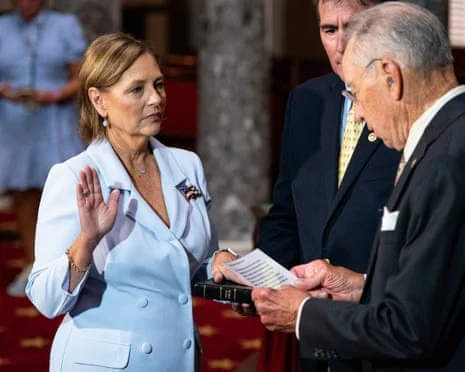
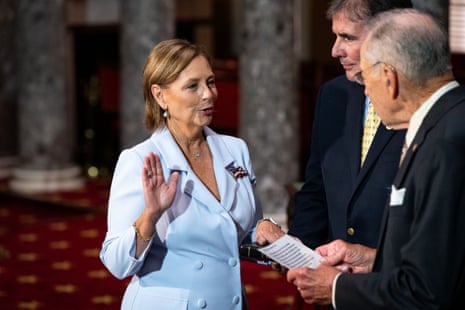
The political landscape is further complicated by the sudden death of Senator Lindsey Graham. This week, the president urged Graham’s sister, Darline Graham Nordone, to enter the special Republican primary on August 11, 2026, to serve a full term. Nordone, a career civil servant who was recently appointed to fill the seat through January, has not yet officially announced her candidacy. Her potential run is viewed by some as a tactical move to stabilize the GOP’s narrow margin in the Senate.
As the administration continues to push its narrative of election vulnerability, the clash between federal claims and expert analysis is expected to intensify. With the 2026 midterms approaching, the focus remains on whether the DHS will provide more transparent methodology or if the current allegations will remain a point of contention between the White House and state election authorities.