The lunar cycle will reach a pivotal point on Saturday, July 18, 2026, as the Moon enters a waxing crescent phase with approximately 19% of its surface illuminated by the sun. This specific stage of the 29.5-day lunar month marks a transition from the near-total darkness of the new moon toward the first quarter, providing a unique window for both casual observers and amateur astronomers to document specific topographical features. According to data provided by NASA’s lunar tracking systems, the thin sliver of light will be visible in the evening sky shortly after sunset, hanging low in the western horizon for those in the Northern Hemisphere.
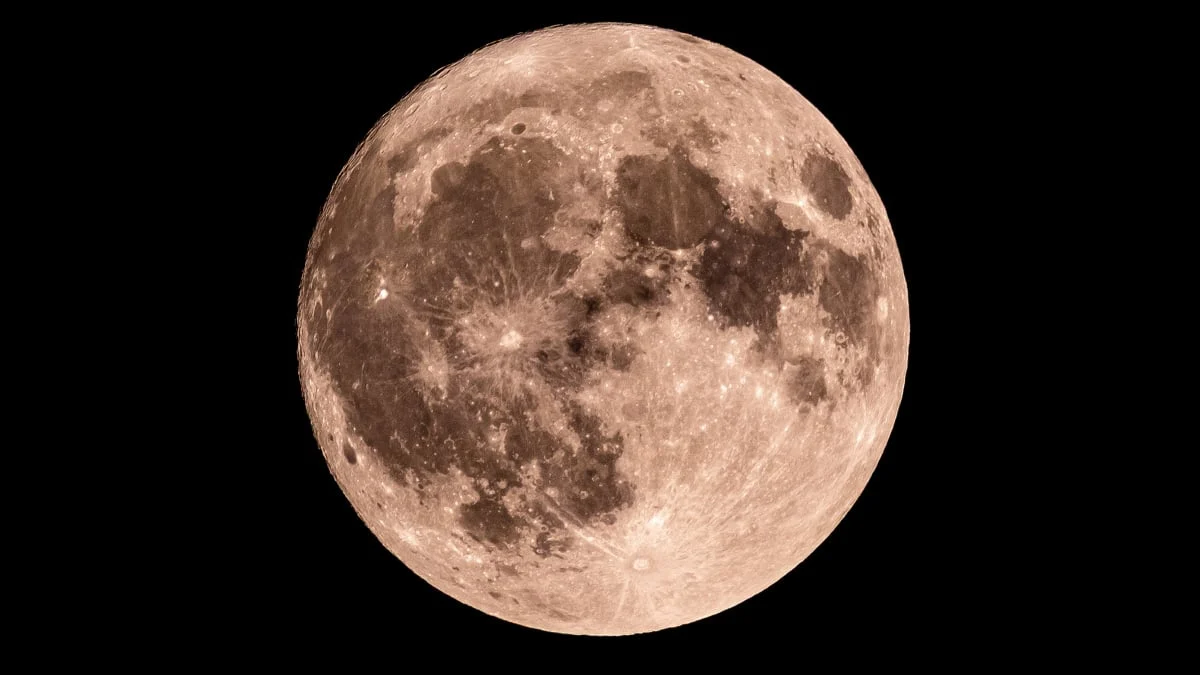
This 19% illumination level is significant because it represents the moment when the Moon’s "terminator"—the line dividing the light and dark sides—begins to cross over some of the most recognizable basins on the lunar surface. For individuals viewing the sky without the aid of optical equipment, the most prominent features visible tonight will be the Mare Crisium and the Mare Fecunditatis. These dark, basaltic plains, formed by ancient volcanic eruptions, stand out against the lighter, rugged highlands even when the moon is less than one-fifth lit.
Understanding the Moon phase today and its visibility
The waxing crescent phase occurring on July 18, 2026, is characterized by a growing "horn" of light that appears on the right side of the lunar disk for observers in the Northern Hemisphere. During this phase, the Moon is positioned in its orbit such that it is moving away from the sun from our perspective on Earth. As the angle between the Sun, Earth, and Moon increases, the amount of reflected sunlight visible from the ground grows daily. This process of "waxing" will continue until the Moon reaches its full phase later in the month.
For those utilizing binoculars or a small backyard telescope, the level of detail available during the Moon phase today increases substantially. Beyond the larger "seas" or maria, the Endymion Crater will become a primary target for observation. Located near the northeastern limb of the Moon, Endymion is an ancient impact crater with a floor that has been flooded by dark lava, making it appear as a dark circle near the edge of the illuminated crescent. The shadows cast along the terminator line during a 19% illumination phase are particularly long, which accentuates the height of crater rims and the depth of lunar valleys, providing a three-dimensional quality that is often lost during a full moon.
The scientific mechanics of the July 2026 lunar cycle
The progression of the lunar cycle is a result of the Moon’s synchronous rotation and its elliptical orbit around the Earth. While the same side of the Moon always faces our planet—a phenomenon known as tidal locking—the changing geometry of the Sun-Earth-Moon system dictates how much of that near side is bathed in sunlight. On July 18, 2026, the Moon is approximately four to five days past its "new" phase, where it was positioned directly between the Earth and the Sun.
The synodic month, which lasts roughly 29.53 days, governs the timing of these transitions. This cycle is slightly longer than the sidereal month—the time it takes the Moon to complete one 360-degree orbit relative to the stars—because the Earth is also moving in its orbit around the Sun. To return to the same phase, the Moon must travel a bit further to reach the same relative alignment. This celestial mechanics ensure that the Moon phase today on July 18, 2026, aligns perfectly with the predicted mathematical models used by aerospace agencies and maritime navigators.
Identifying key lunar landmarks on July 18
As the Moon reaches 19% illumination, the "Sea of Crises" (Mare Crisium) becomes the most dominant feature on the rightward edge. Unlike many other lunar maria, Mare Crisium is a localized, circular basin that is not connected to the larger lunar mare complex. Its isolation makes it an excellent landmark for beginners to identify. To its south lies the "Sea of Fertility" (Mare Fecunditatis), which spans nearly 520 miles in diameter. This region is historically significant as it was the landing site for the Soviet Luna 16 probe, the first robotic mission to return a lunar soil sample to Earth.
Observation of the Endymion Crater on this date requires a steady hand or a tripod. Because it sits so close to the lunar limb, its appearance can be affected by "libration," a slight wobbling of the Moon that allows Earth-bound observers to see slightly more than 50% of the lunar surface over time. Depending on the specific libration state on July 18, 2026, Endymion may appear more or less elongated.
The roadmap to the next Full Moon
Following the waxing crescent phase observed today, the Moon will continue its eastward journey across the sky, gaining roughly 12 to 13 degrees of illumination each night. This trajectory leads directly to the next Full Moon, which is scheduled to occur on July 29, 2026. The eleven-day gap between the current crescent and the full illumination represents the period of the most rapid change in the Moon’s appearance.
During the transition from July 18 to July 29, the Moon will pass through the First Quarter phase and the Waxing Gibbous phase. The First Quarter, occurring roughly a week after the New Moon, will see exactly 50% of the lunar face illuminated. This is often considered the best time for lunar photography because the shadows are at their most dramatic. The Waxing Gibbous phase follows, where the Moon appears "swollen" but not yet a perfect circle, leading up to the peak illumination on the 29th.
The eight distinct phases of the lunar month
To fully grasp the context of the Moon phase today, it is essential to understand where it sits within the broader eight-phase cycle identified by astronomers. This cycle is a continuous loop that has dictated human timekeeping for millennia.
- New Moon: The Moon is between Earth and the Sun, rendering the side facing us completely dark.
- Waxing Crescent: A thin sliver of light appears on the right side. This is the current phase for July 18, 2026.
- First Quarter: The Moon has completed one-quarter of its orbit, showing a half-lit face.
- Waxing Gibbous: The illuminated portion grows larger than a semi-circle but remains less than full.
- Full Moon: The Earth is between the Sun and the Moon, allowing the entire near side to reflect sunlight.
- Waning Gibbous: The illumination begins to recede from the right side, moving toward the left.
- Third Quarter: Another half-moon appearance, but with the left side illuminated.
- Waning Crescent: The final sliver of light remains on the left before the cycle resets to the New Moon.
Atmospheric and environmental impacts of the waxing crescent
The 19% illumination of the Moon phase today on July 18, 2026, has practical implications beyond simple observation. For astronomers interested in deep-sky objects like nebulae and distant galaxies, the waxing crescent is an ideal time for photography. Unlike a full moon, which washes out the sky with "natural light pollution," a 19% crescent provides enough darkness to allow for long-exposure shots of the Milky Way while still providing a beautiful celestial subject in the early evening.
Furthermore, the lunar phase influences terrestrial tides. While the most extreme "spring tides" occur during the New and Full Moon phases—when the gravitational pull of the Sun and Moon are aligned—the waxing crescent on July 18 will coincide with moderate tidal activity. Coastal communities and maritime industries monitor these phases closely to predict water levels for navigation and flood risks.
Cultural and scientific significance of lunar tracking
The ability to accurately predict the Moon phase today is a cornerstone of modern planetary science. For NASA and other international space agencies, understanding the exact illumination and position of the Moon is vital for the planning of lunar missions. As the Artemis program and other international efforts seek to establish a permanent human presence on the lunar surface, the timing of the lunar day—which lasts about 14 Earth days of sunlight followed by 14 days of darkness—becomes a matter of survival for solar-powered equipment and habitats.
On a cultural level, the July 18 waxing crescent serves as a reminder of the Moon’s role in human history. From the earliest calendars to modern religious observances, the lunar cycle remains a universal clock. The "Sea of Fertility" and "Sea of Crises," visible tonight, were named by 17th-century astronomers who imagined the dark plains were actual bodies of water. While we now know they are dry volcanic plains, the names persist as a testament to our long-standing fascination with the lunar landscape.
As the sun sets on July 18, 2026, the 19% waxing crescent will offer a brief but brilliant display of celestial mechanics. Whether viewed through a high-powered telescope or simply glimpsed through a window, the Moon continues to provide a predictable and awe-inspiring connection to the wider solar system. The progression toward the Full Moon on July 29 will continue the cycle of growth and recession that has defined the night sky for billions of years.