The 2026 FIFA World Cup Final halftime show transformed the sport’s most anticipated match into an 11-and-a-half-minute global pop spectacle, a move that thrilled entertainment fans but may have concerned traditional soccer purists. Staged on Sunday, July 19, at the New York New Jersey Stadium in East Rutherford, New Jersey, during the climactic Spain-Argentina final, this inaugural halftime performance in the championship game was a high-octane, rapid-fire production that packed an astonishing array of global talent into a fleeting moment.
The unprecedented entertainment segment was designed to maximize global reach and cultural impact, mirroring the expansive nature of the modern World Cup itself. FIFA, in its effort to broaden the tournament’s appeal beyond traditional sports enthusiasts, orchestrated a lineup that spanned multiple generations and genres, aiming to create a shared cultural experience for billions watching worldwide. This ambitious endeavor blended the raw emotion of the World Cup final with the electrifying energy of a global music festival.
A Spectacle of Global Superstars

The show kicked off with an undeniably grand entrance from pop icon Madonna, who was accompanied by DJ Stuart Price. Adding a touch of football royalty to the proceedings, Brazilian legends Ronaldo and Ronaldinho made a memorable appearance in a custom jeep, complete with a license plate humorously reading "Maestro." This opening immediately set the tone for a show that prioritized spectacle and star power.
Following Madonna’s energetic opening, the performance shifted gears dramatically. Maestro Gustavo Dudamel, the acclaimed conductor, took center stage, leading an impressive ensemble comprising musicians from the New York Philharmonic and the Simón Bolívar Symphony Orchestra of Venezuela. Their powerful rendition of The White Stripes’ iconic anthem "Seven Nation Army" was amplified by a vibrant display of flags, soaring strings, and a whimsical inclusion of the beloved Muppets, creating a unique fusion of classical gravitas and pop culture flair.
The K-Pop sensation BTS then delivered a high-energy performance of their global hit "Dynamite." Dressed in matching red, motorcycle-inspired outfits, the group brought their signature synchronized choreography and infectious charisma to the stadium, captivating their massive fanbase and undoubtedly drawing in new viewers with their dynamic stage presence. Their inclusion underscored the tournament’s commitment to showcasing diverse global music scenes.
Bridging Genres and Generations

In a moment that highlighted the show’s eclectic nature, actor Jason Sudeikis, reprising his beloved character Ted Lasso, introduced a more introspective segment. He presented a notably subdued Justin Bieber, who performed an acoustic rendition of his song "Everything Hallelujah." This performance offered a brief, emotional counterpoint to the high-octane numbers that preceded and followed it, showcasing Bieber’s versatility as an artist.
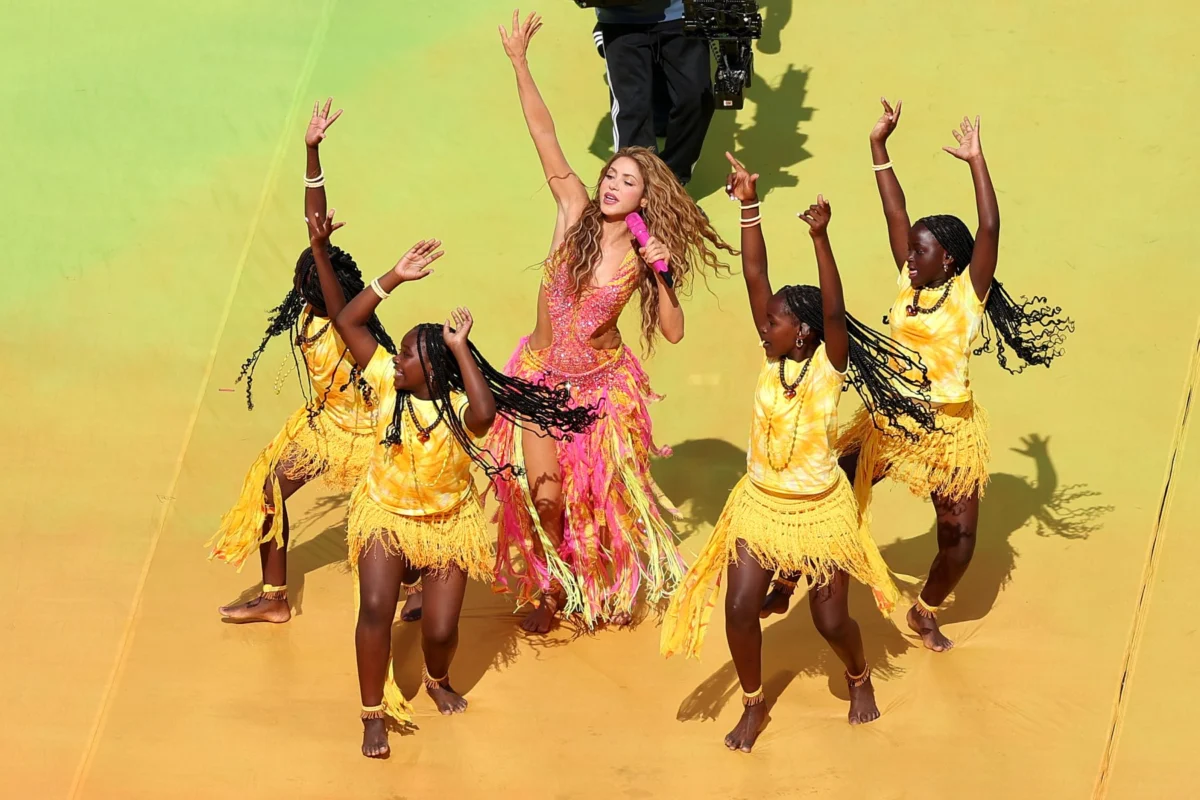
The halftime show reached a significant zenith with the electrifying collaboration between Colombian superstar Shakira and Nigerian Afrobeats sensation Burna Boy. They delivered a powerhouse performance of their Billboard Global 200 chart-topping hit "Dai Dai," with the energetic Ghetto Kids providing dynamic backup choreography. This pairing celebrated the global reach of contemporary music and brought together two of the world’s most compelling performers.
The grand finale saw a collective effort from a star-studded cast. The PS22 Chorus, a popular children’s choir known for their uplifting performances, joined forces with Coldplay’s Chris Martin, alongside Muppets characters Kermit the Frog and Miss Piggy. Together, they culminated the performance with a massive "LOVE" tableau, illuminated by a spectacular fireworks display that painted the night sky. The entire production, though undeniably overstuffed and bordering on chaotic at times, was a testament to its ambition and delivered an unforgettable, if slightly unhinged, viewing experience.
The Genesis of the World Cup Halftime Show

The introduction of a dedicated halftime show for the FIFA World Cup Final marks a significant evolution in the tournament’s entertainment strategy. Historically, the halftime interval in major soccer matches has been a period for tactical adjustments on the field and a brief respite for fans. However, in an era where live events increasingly compete for global attention, FIFA’s decision to emulate the success of Super Bowl halftime shows reflects a strategic move to amplify the World Cup’s cultural footprint.
The 2026 FIFA World Cup, co-hosted by the United States, Canada, and Mexico, was already poised to be the most expansive in history, featuring an increased number of participating teams and matches. This expansion provided a natural platform for a scaled-up entertainment offering, aiming to engage a broader demographic and solidify the World Cup’s status as a premier global cultural event, not just a sporting one.
Impact and Implications
The decision to integrate such a high-profile entertainment segment into the World Cup Final has sparked considerable debate. Supporters argue that it elevates the tournament, making it more accessible and appealing to a wider audience, particularly younger generations who consume media across various platforms. They point to the potential for increased viewership, merchandise sales, and overall global engagement with the sport. The diverse lineup, featuring artists from North America, South America, Europe, and Asia, directly reflects the international spirit of the World Cup.

Conversely, some traditionalists express concern that such elaborate entertainment could detract from the sanctity of the final match itself. They worry that the focus might shift from the athletic achievement on display to the celebrity performances, potentially diluting the pure sporting essence of the event. However, the immense popularity of artists like BTS and Shakira suggests that the entertainment segment could, in fact, draw new audiences into the world of soccer.
The successful execution of this ambitious halftime show could set a precedent for future FIFA World Cups and other major sporting events. It signals a growing trend in sports entertainment, where the integration of music, celebrity appearances, and elaborate visual spectacles is becoming increasingly crucial for maximizing audience engagement and commercial opportunities. The financial implications are also significant, with potential boosts to tourism, broadcast rights, and sponsorship deals related to both the sporting and entertainment aspects of the tournament.
Audience Reception and Future Outlook
Initial reactions on social media and in entertainment circles were largely enthusiastic, with many praising the sheer scale and ambition of the production. Fans lauded the inclusion of diverse global artists and the seamless transitions between different musical styles and performers. The blend of musical genres, from K-Pop to Afrobeats to pop anthems, resonated with a global audience accustomed to a rich tapestry of musical influences.

The inclusion of figures like Maestro Dudamel and the symphony orchestras also injected an element of artistic sophistication, appealing to those who appreciate musical excellence beyond popular music. The presence of the Muppets, beloved characters with cross-generational appeal, added a touch of nostalgic fun and universal charm.
Looking ahead, the success of the 2026 FIFA World Cup Final halftime show is likely to influence how major sporting bodies approach entertainment during their flagship events. The model of a star-studded, multi-genre performance designed to create a global cultural moment appears to be a winning formula. For FIFA, this inaugural foray into a dedicated halftime show for its ultimate match has proven to be a monumental success, solidifying the World Cup’s position not just as the pinnacle of international football, but as a significant global entertainment phenomenon. The future of sports entertainment has undoubtedly been shaped by this spectacular display.