The United States military initiated its ninth consecutive night of aerial bombardments against Iranian military infrastructure Sunday, marking a significant escalation in a regional conflict that has claimed the lives of 17 American service members and effectively nullified a fragile interim peace agreement. U.S. Central Command confirmed that the latest wave of strikes targeted Iranian military capabilities specifically used to threaten commercial shipping and civilian mariners in the Strait of Hormuz. The ongoing offensive follows a series of lethal attacks on U.S. personnel stationed in Jordan and Iraq, signaling a departure from previous containment strategies as Washington moves to "swiftly punish" the Islamic Revolutionary Guard Corps.
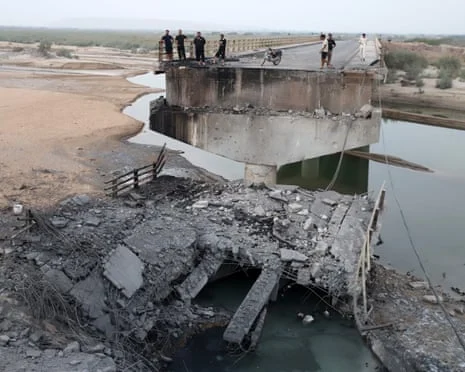
The intensification of the U.S. targets Iran in ninth night of strikes in wake of US troop deaths comes as diplomatic efforts to secure a lasting ceasefire appear to have collapsed. According to military officials, the strikes are designed to degrade the sophisticated drone and missile arrays that Tehran has deployed throughout the region. Over the past ten days, Iranian authorities reported that American forces have struck 95 distinct locations across 12 cities, causing extensive damage to infrastructure, including bridges and transport links in the Hormozgan province.
Escalation in the Strait of Hormuz and Regional Waterways
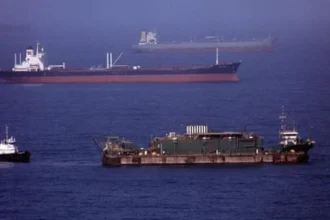
The strategic focus of the ninth night of strikes remains the Strait of Hormuz, a critical maritime chokepoint through which approximately one-fifth of the world’s oil supply transits. U.S. Central Command (CENTCOM) issued a statement on Sunday via social media, emphasizing that the mission is a direct response to repeated provocations against international commerce. "The strikes will continue degrading Iranian military capabilities used to attack commercial vessels and civilian mariners transiting the Strait of Hormuz," the command stated, underscoring the U.S. commitment to maintaining freedom of navigation in the Persian Gulf.
The volatility of the maritime situation was further highlighted Sunday when the United Kingdom Maritime Trade Operations (UKMTO) agency reported a vessel on fire roughly 8 nautical miles northwest of Kumzar, Oman. While the cause of the fire has not been officially verified, the proximity of the incident to the Iranian coastline and the ongoing U.S. strikes has heightened fears of a broader maritime war. Verified sources indicated that the vessel was significantly damaged, though no immediate casualties were reported among the crew.
The Human Toll of the Middle East Crisis
The catalyst for the current U.S. targets Iran in ninth night of strikes in wake of US troop deaths was a series of fatal encounters over the preceding weekend. On Friday, two American service members were killed in Jordan while defending a base against an Iranian-produced ballistic missile and drone swarm. A third service member was reported missing in action following that engagement. The following day, a U.S. service member in northern Iraq died during a "controlled detonation" of unexploded ordnance recovered from a downed Iranian drone.
These latest fatalities have brought the total number of American military deaths to 17 since the current hostilities began. The rising body count has placed immense political pressure on the Pentagon to deliver a more robust response. Conversely, the Iranian health ministry reported on Saturday that U.S. strikes have killed at least 50 people and injured more than 500 within Iran over the last three weeks. The discrepancy in casualty reporting remains a point of contention, with Tehran accusing Washington of targeting civilian infrastructure under the guise of military necessity.
Iranian Retaliation and Proxy Operations
In response to the U.S. targets Iran in ninth night of strikes in wake of US troop deaths, the Islamic Revolutionary Guard Corps (IRGC) has launched its own series of retaliatory measures. On Monday, Iranian state media agency IRNA reported a "surprise attack" on an enemy command center located in Syria. The IRGC characterized the operation as "revenge for the blood of martyred soldiers" from the city of Iranshahr, located in southeast Iran.
Tehran also confirmed that it targeted two U.S. military installations in Kuwait. Iranian officials claimed these strikes were a direct reaction to the intensifying American campaign, which they allege has hit essential transport hubs and an under-construction nuclear power plant. The widening scope of Iranian targets suggests that the conflict is no longer confined to the immediate border regions of Iraq and Syria but is instead spilling over into the territories of key U.S. allies in the Gulf.

Impact on Bahrain and Jordan
The peripheral states of the Persian Gulf have found themselves increasingly caught in the crossfire. In Bahrain, which hosts the U.S. Navy’s Fifth Fleet, air raid sirens were heard across the capital overnight into Monday. The Bahraini interior ministry issued an urgent advisory on X, formerly Twitter, urging "citizens and residents to remain calm and head to the nearest safe place." Bahrain has become a frequent target for Iranian-aligned strikes in recent days, complicating the security posture of the island nation.
Jordanian forces have also been on high alert, reporting the successful interception of several missiles over the weekend. The kingdom has become a central theater for the conflict following the deaths of U.S. troops on its soil. As the U.S. targets Iran in ninth night of strikes in wake of US troop deaths, the Jordanian government has faced the difficult task of balancing its security partnership with Washington against the risk of further Iranian-led incursions.
The Collapse of Diplomacy and the Path Forward
The current military escalation marks the definitive end of a recent memorandum of understanding between Washington and Tehran. The interim deal, which was intended to freeze hostilities and allow for a gradual de-escalation, appears to have been discarded by both sides. Iranian Supreme Leader Ayatollah Mojtaba Khamenei warned on Sunday that the United States would "pay a heavy price" for what he described as an attempt to escalate the conflict beyond manageable limits.
Military analysts suggest that the U.S. is now engaged in a campaign of "attrition by air," attempting to hollow out the IRGC’s logistical networks without committing to a full-scale ground invasion. However, the effectiveness of this strategy remains in question as Iranian-backed militias continue to launch drones and missiles from mobile platforms that are difficult to track and destroy from the air.
Infrastructure Damage and Economic Consequences
The physical toll on Iranian infrastructure has been substantial. Satellite imagery and ground-level photographs show significant damage to the bridge linking Bandar Abbas and Kehuristan in the Hormozgan province. This bridge serves as a vital artery for the transport of goods from Iran’s largest port. By targeting such locations, the U.S. military aims to disrupt the internal supply lines used to move military hardware to the coast.
The economic ripple effects of the conflict are being felt globally. Insurance premiums for commercial vessels transiting the Middle East have skyrocketed, and several major shipping lines have begun rerouting vessels around the Cape of Good Hope to avoid the Strait of Hormuz. These delays are expected to increase the cost of consumer goods and energy, adding a layer of international economic pressure to an already volatile geopolitical situation.
Conclusion of Current Operations
As the U.S. targets Iran in ninth night of strikes in wake of US troop deaths, there is little indication that either side is prepared to back down. The Pentagon has signaled that it has a list of further targets should the IRGC continue its proxy attacks. Meanwhile, Tehran’s rhetoric remains defiant, with the IRGC asserting its right to defend its sovereign territory and its regional interests.
The international community continues to watch the escalating crisis with growing alarm. With 17 Americans dead and hundreds of Iranian casualties, the window for a diplomatic off-ramp is closing rapidly. The coming days will likely determine whether the conflict remains a series of contained, albeit lethal, exchanges or if it will evolve into a comprehensive regional war that could draw in multiple world powers. For now, the sirens in Bahrain and the fires in the Gulf of Oman serve as a grim testament to the current state of the Middle East.