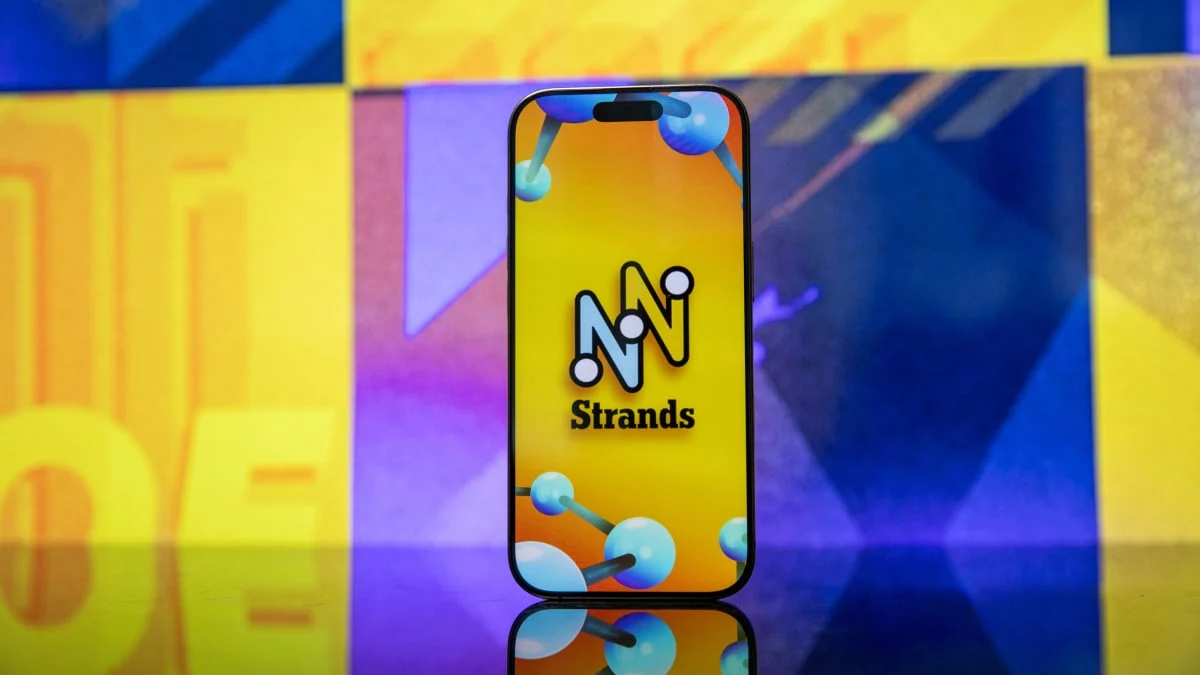
The July 21, 2026, edition of the New York Times Strands puzzle challenges players with a theme centered on the tools of written communication and physical correspondence. As a central component of the Times’ digital gaming ecosystem, today’s puzzle, titled "Write there," requires participants to identify a series of related words within a custom letter grid. The daily game has maintained its popularity by offering a more complex alternative to the publication’s other viral successes, such as Wordle and Connections, by utilizing a non-linear word-search format.
In today’s specific challenge, the puzzle leans heavily into the analog world of office supplies and creative writing utensils. The theme "Write there" serves as a phonetic pun, guiding users toward words that describe physical objects used for marking paper. For many players, the difficulty of Strands lies in its "spangram"—a unique word or phrase that touches two opposite sides of the grid and encapsulates the entire theme. For July 21, the spangram is confirmed to be "STATIONERY," positioned horizontally across the board.
Understanding the Mechanics of NYT Strands
NYT Strands represents a significant evolution in the word-search genre. Unlike traditional word searches where words are found in straight lines—horizontal, vertical, or diagonal—Strands allows for "winding" words. Letters can be linked in any direction, including changes in orientation mid-word, as long as the letters are adjacent to one another. This design creates quirky shapes and patterns, often requiring players to visualize the grid in a three-dimensional or fluid manner.
One of the defining rules of Strands is that every single letter in the grid must be utilized exactly once. There are no "filler" letters, a departure from classic word search puzzles. This ensures that as a player finds more words, the remaining options become clearer, though the final few letters can often be the most difficult to piece together. The inclusion of the spangram provides a structural anchor, often bisecting the grid and helping players narrow down the remaining possibilities in the top and bottom or left and right sections.
NYT Strands hints, answers for July 21, 2026: Theme and Word List
The theme for the July 21 puzzle, "Write there," initially appears opaque but quickly reveals itself once the first few words are identified. The vocabulary for today’s grid focuses on the tactile experience of writing and the various instruments used in professional and academic settings.
The word list for the July 21 puzzle includes:
- PENCIL
- ERASER
- MARKER
- NOTEBOOK
- STAPLER
- FOLDER
- HIGHLIGHTER
- STATIONERY (Spangram)
By providing these NYT Strands hints, answers for July 21, 2026, the game highlights a specific niche of vocabulary that is both common and distinct. The spangram "STATIONERY" is particularly notable today because it spans the width of the grid, acting as a divider that helps players organize their search.
The Rise of the New York Times Games Portfolio
The success of Strands is part of a broader strategic shift by The New York Times Company to diversify its revenue streams and increase user engagement through its "Games" application. Since the acquisition of Wordle in early 2022, the Times has aggressively expanded its puzzle offerings. This strategy is designed to create "daily habits" among subscribers, encouraging them to open the app every morning.
Strands, which was introduced to the public in a beta phase before becoming a permanent fixture, occupies a specific psychological space for users. While Wordle is a game of deduction and Connections is a game of categorization, Strands is a game of spatial awareness and vocabulary retrieval. Market research suggests that the average Strands session lasts between seven and twelve minutes, significantly longer than the two to three minutes typically spent on Wordle. This increased "time on site" is a key metric for digital media companies looking to bolster their advertising and subscription value.
Analyzing the "Write there" Theme
The July 21 theme "Write there" is indicative of the clever, often pun-heavy titling that NYT editors use to provide a cryptic starting point. In the context of NYT Strands hints, answers for July 21, 2026, the pun serves as a double-edged sword. It points the player toward the act of writing, yet the phonetic similarity to "Right there" can lead some to search for directional or locational words before realizing the physical object connection.
This level of wordplay is a hallmark of the Times’ editorial style, which seeks to challenge the player’s lateral thinking. By the time the spangram "STATIONERY" is discovered, the puzzle usually "breaks open," allowing the player to find the remaining words like "NOTEBOOK" or "HIGHLIGHTER" with greater ease. The difficulty curve of today’s puzzle is rated as moderate, primarily due to the length of some of the words, which requires tracing complex paths through the letter grid.
The Impact of Daily Puzzles on Digital Culture
The phenomenon of daily digital puzzles has transformed the way many Americans consume news and entertainment. The "spoiler culture" surrounding these games has led to a unique social media etiquette, where players share their results via color-coded grids without revealing the actual answers. NYT Strands has joined this trend, with its own unique sharing format that shows the path of the spangram and the found words.
Psychologists suggest that the appeal of games like Strands lies in the "flow state"—a mental state where a person is fully immersed in an activity. The combination of a fixed goal (finding all words) and a manageable challenge level provides a dopamine release upon completion. In an era of infinite scrolling and short-form video content, these puzzles offer a structured, finite task that provides a sense of accomplishment in a short timeframe.
Strategic Importance for the New York Times
From a business perspective, the NYT Strands hints, answers for July 21, 2026, represent more than just a game; they are a data point in the company’s "All Access" subscription model. By bundling news, cooking, product reviews (Wirecutter), and games, the Times has created a high-retention product. As of 2026, the Games division has become a significant contributor to the company’s bottom line, often outperforming the news section in terms of daily active users during holiday periods or weekends.
The development of Strands also reflects an investment in proprietary gaming software. Unlike the crossword, which has a century-old history in print, Strands was built specifically for the touchscreen interface. The "drag and connect" mechanic is intuitive for mobile users, making it accessible to a wide demographic, from students to retirees.
How to Improve Your Strands Strategy
For players struggling with the July 21 puzzle or future editions, experts suggest several strategies. First, focus on finding "hint words." In Strands, if you find any valid word that is not part of the theme, it fills up a hint meter. Once the meter is full, the game will highlight the letters of one of the theme words for you.
Second, look for the spangram early. Because the spangram must touch two opposite sides, it usually consists of a longer word. Finding it early provides a massive clue to the overall theme and physically divides the board, making the remaining letters easier to manage. In today’s puzzle, identifying the "S-T-A" sequence for "STATIONERY" can quickly lead to the discovery of the entire horizontal span.
Conclusion of the July 21 Challenge
The NYT Strands hints, answers for July 21, 2026, provide a clear look into the world of stationery and writing tools. As the puzzle resets daily at midnight, players continue to flock to the platform to test their linguistic and spatial skills. Whether it is the satisfaction of finding a long word like "HIGHLIGHTER" or the "aha!" moment of decoding a punny theme, Strands remains a vital part of the modern digital puzzle landscape.
As the New York Times continues to iterate on its gaming platform, the community surrounding these puzzles grows more robust. The July 21 puzzle stands as a testament to the enduring appeal of analog themes—like paper, pens, and erasers—even when presented in a highly sophisticated digital format. This intersection of the old world and the new continues to define the Times’ successful approach to digital media in 2026.