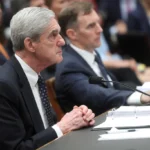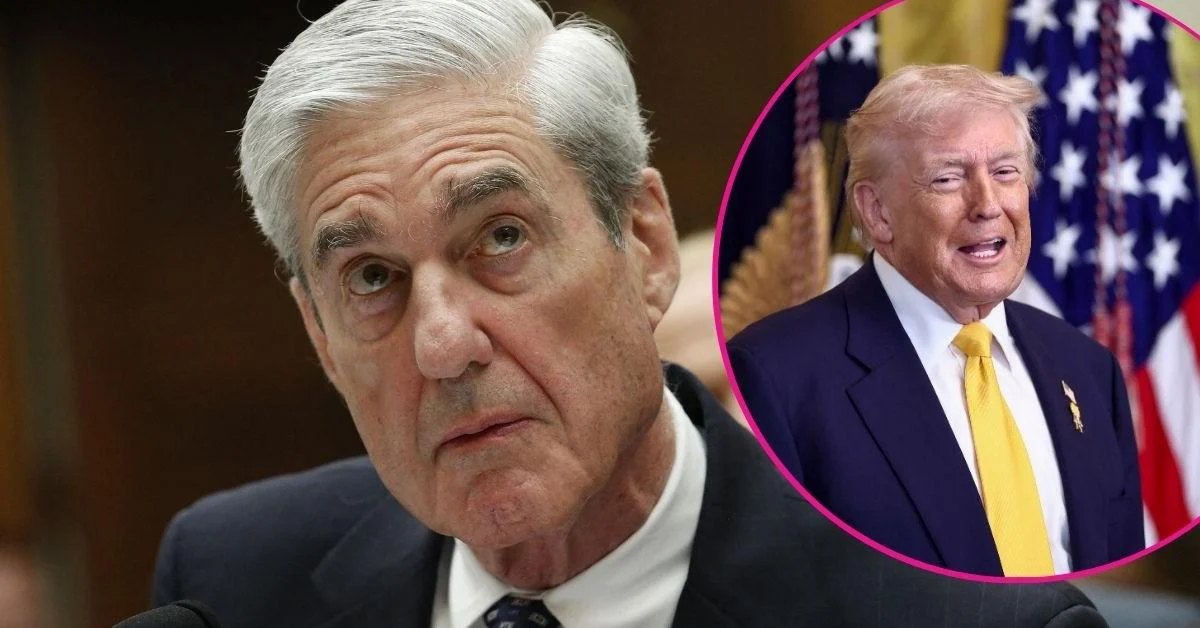
Robert S. Mueller III, the former FBI Director whose distinguished career spanned decades of public service from combat in Vietnam to leading the nation’s premier law enforcement agency and later investigating Russian interference in the 2016 presidential election, passed away on Friday, March 21, 2026, at the age of 81. His family confirmed his passing in a statement, requesting privacy during this difficult time. The news of Robert Mueller’s death was met with a starkly contrasting reaction from former President Donald Trump, who took to his Truth Social platform to express satisfaction, stating, "Good, I’m glad he’s dead. He can no longer hurt innocent people!"
A Legacy of Service and Integrity
Robert Swan Mueller III was born in New York City in 1944 and raised in Philadelphia. His early life was marked by a commitment to duty and education. He graduated from St. Paul’s School and went on to Princeton University, where he earned his bachelor’s degree. Following his undergraduate studies, Mueller pursued a master’s degree in international relations from New York University before enlisting in the United States Marine Corps in 1968.
Mueller served with distinction during the Vietnam War as a Marine officer, leading a rifle platoon. His valor earned him numerous commendations, including the Bronze Star with Combat "V," two Navy Commendation Medals with Combat "V," the Purple Heart, and the Vietnamese Cross of Gallantry. This period profoundly shaped his disciplined approach to leadership and his unwavering sense of patriotism. After returning from Vietnam, he attended the University of Virginia School of Law, graduating in 1973.
From Prosecutor to FBI Director
Mueller’s legal career began in private practice, but his calling to public service soon led him to the Department of Justice. He served as an Assistant U.S. Attorney in San Francisco before moving to Boston, where he prosecuted major fraud and narcotics cases. His rapid ascent within the Justice Department saw him appointed Assistant Attorney General for the Criminal Division in 1990, overseeing high-profile cases and significant policy initiatives. He later returned to the U.S. Attorney’s Office in San Francisco and then Washington D.C., where he tackled complex criminal investigations.
In 2001, just days before the devastating September 11 terrorist attacks, President George W. Bush nominated Robert Mueller to lead the Federal Bureau of Investigation. His confirmation hearings were delayed due to his treatment for prostate cancer, diagnosed in 2000, but he ultimately took office, inheriting an agency on the brink of unprecedented challenges. The 9/11 attacks immediately redefined his tenure, shifting the FBI’s primary focus from traditional law enforcement to counter-terrorism and intelligence gathering.
Transforming the FBI Post-9/11
As FBI Director, Mueller spearheaded a radical transformation of the Bureau, recalibrating its mission, structure, and technological capabilities to confront the new global threat of terrorism. He articulated this shift in 2012, recalling his initial expectations versus the stark reality: “I had expected to focus on areas familiar to me as a prosecutor: drug cases, white-collar criminal cases and violent crime. We had to focus on long-term, strategic change. We had to enhance our intelligence capabilities and upgrade our technology. We had to build upon strong partnerships and forge new friendships, both here at home and abroad.”
His leadership during this critical period was widely praised across the political spectrum. Mueller was known for his calm demeanor, meticulous approach, and commitment to institutional integrity. He became the second-longest-serving FBI Director in history, after J. Edgar Hoover, a testament to his indispensable role during a turbulent era. His term was extended by President Barack Obama, a rare bipartisan move, underscoring the trust placed in his leadership. He eventually retired from the FBI in 2013, leaving behind an agency significantly restructured and better equipped to handle modern threats.
The Special Counsel Investigation and Political Storm
Mueller’s return to public life in May 2017 as Special Counsel for the Department of Justice marked another pivotal chapter, placing him at the center of one of the most politically charged investigations in modern American history. Appointed by Deputy Attorney General Rod Rosenstein, he was tasked with investigating Russian interference in the 2016 presidential election and any potential links or coordination between the Trump campaign and the Russian government. The investigation also examined potential obstruction of justice by President Trump.
Over nearly two years, Mueller’s team brought criminal charges against 34 individuals and three companies, including multiple Russian intelligence officers and high-ranking Trump campaign officials. Six of Donald Trump’s allies faced criminal charges as a result of the probe. The Special Counsel’s report, released in April 2019, concluded that Russia had interfered in the election "in a sweeping and systematic fashion," but it did not establish that members of the Trump campaign conspired or coordinated with the Russian government. On the question of obstruction of justice, the report detailed multiple instances of potential obstruction by Trump but ultimately declined to make a prosecutorial judgment, citing Justice Department policy against indicting a sitting president.
Donald Trump’s Unprecedented Reaction
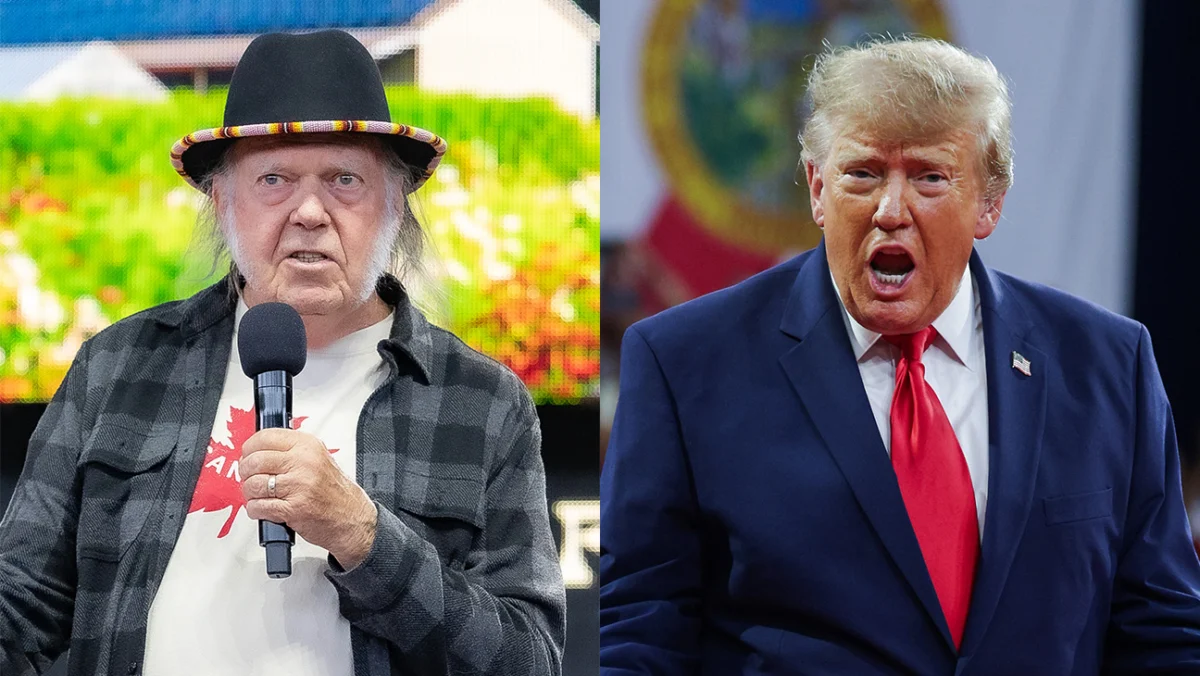
Throughout the Special Counsel investigation, Donald Trump consistently denounced Robert Mueller and his team, labeling the probe a "witch hunt" and an illegitimate attempt to undermine his presidency. His animosity toward Mueller was a recurring theme in his public statements and social media posts. The former president’s immediate reaction to Mueller’s death on Truth Social, declaring "I’m glad he’s dead. He can no longer hurt innocent people!" underscores the depth of his long-standing animosity.

This statement sparked immediate condemnation from across the political spectrum, with many decrying it as an unprecedented and disrespectful comment on the passing of a decorated public servant. Critics argued that such remarks further erode civility in political discourse and demonstrate a profound lack of respect for institutions and individuals, regardless of political disagreements. Supporters of the former president, however, might view the comment as a reflection of Trump’s deeply held belief that Mueller’s investigation was politically motivated and unfairly targeted him.
Health Battles and Personal Life
Beyond his public roles, Robert Mueller also faced significant personal health challenges. He was diagnosed with prostate cancer in 2000 and underwent successful treatment, delaying his FBI confirmation hearings but not deterring his commitment to service. In August 2025, his family publicly disclosed that he had been diagnosed with Parkinson’s disease four years prior, in 2021. The specific cause of his death on Friday evening remains undisclosed, but his long-term battles with serious illnesses provided context for his eventual passing.
Mueller was known for his private nature and his devotion to his family. He married Ann Cabell Standish in 1966, and they had two daughters. Throughout his life, he maintained a reputation as a man of quiet determination, integrity, and non-partisanship, qualities that earned him respect even from those who disagreed with his work.
Broader Implications and Lasting Legacy
The passing of Robert Mueller ignites renewed discussions about his profound impact on American law enforcement and political history. His leadership in transforming the FBI after 9/11 laid the groundwork for modern counter-terrorism strategies, while his role as Special Counsel left an indelible mark on the political landscape, sparking debates about presidential power, foreign interference in elections, and the independence of justice.
His death, coupled with the former President’s highly controversial reaction, serves as a poignant reminder of the deep divisions within American society and the contentious nature of political discourse. For many, Mueller will be remembered as a paragon of integrity and a steadfast defender of the rule of law. For others, particularly those aligned with Donald Trump, he remained a symbol of what they perceived as an unfair political targeting. His legacy is complex, reflecting the tumultuous times in which he served, but his dedication to public service remains undeniable. The legal and political communities, along with the American public, are left to grapple with the multifaceted legacy of a man who dedicated his life to the nation, often under intense scrutiny.