Emergency response teams in the eastern province of Nuristan are currently navigating thick mud and debris as they search for survivors following a series of catastrophic flash floods. The Afghanistan National Disaster Management Authority reported on Tuesday that the death toll has reached at least 23 people, while 80 others have been treated for various injuries. The situation remains critical as officials estimate that more than 100 people are still missing, buried under the remains of structures that collapsed when the water surged through mountain valleys.
The flooding, which began late Monday, struck several districts with little warning, catching families inside their residences during the overnight hours. The provincial capital of Parun was among the hardest-hit areas, where the force of the water caused an undetermined number of buildings to disintegrate. Local authorities described scenes of chaos as residents attempted to flee rising currents that carried boulders, trees, and heavy sediment into populated centers.
Crisis in Nuristan: A Race Against Time
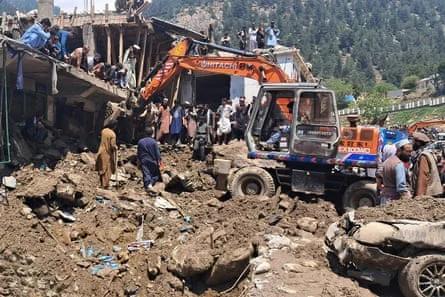
The search for survivors has been hampered by the remote geography of Nuristan, a province known for its steep peaks and narrow passes. Rescuers in Afghanistan search for missing and dead after flash floods destroy homes using a combination of heavy machinery and manual labor. In areas where excavators cannot reach due to washed-out roads, villagers and emergency workers have been forced to use shovels and their bare hands to move the heavy silt and timber that now cover former residential plots.
The Afghanistan National Disaster Management Authority has deployed specialized teams to the region, but the scale of the destruction is overwhelming local resources. With more than 100 individuals unaccounted for, the window for finding survivors is rapidly closing. The provincial government has called for additional support from central authorities in Kabul, citing a desperate need for medical supplies, temporary shelter, and clean drinking water for the displaced.
Communications in the region have been intermittent, as the floods damaged several cell towers and power lines. This has made it difficult for families in other parts of the country to confirm the safety of their relatives in Nuristan. Preliminary reports from the ground suggest that entire blocks of homes were swept away, leaving nothing but the foundations behind.
A Pattern of Devastation in 2024
The current tragedy in Nuristan is part of a broader and increasingly lethal pattern of extreme weather hitting the country this year. Rescuers in Afghanistan search for missing and dead after flash floods destroy homes just months after a series of even more catastrophic events. In the spring of 2024, massive flash floods in northern and western provinces resulted in the deaths of more than 300 people, marking one of the deadliest weather events in the nation’s recent history.
Earlier in the year, another wave of flooding and landslides claimed the lives of at least 110 people across several regions. The cumulative impact of these disasters has left the country’s infrastructure in a state of near-total collapse. The recurring nature of these floods means that communities rarely have time to rebuild before the next disaster strikes, leading to a cycle of displacement and poverty that the current administration is struggling to address.
Meteorologists note that the intensity of the rainfall in 2024 has been significantly higher than historical averages. The sudden transition from periods of intense drought to torrential downpours has created a "flash-flood" effect where the parched ground is unable to absorb moisture, leading to immediate and violent runoff.
Structural Vulnerabilities and the Mud House Crisis
One of the primary reasons for the high death toll in these events is the prevailing style of architecture in rural Afghanistan. Most homes in Nuristan and surrounding provinces are constructed from sun-dried mud and timber. While these materials are traditional and cost-effective, they offer almost no structural integrity against the force of moving water. Once the base of a mud house is saturated, the entire structure can collapse in seconds, often trapping residents inside.
Decades of conflict have also prevented the development of modern building codes or the construction of protective infrastructure like levees and drainage systems. In many remote villages, homes are built directly on or near dry riverbeds to maintain proximity to water sources for agriculture. When extreme rainfall occurs, these riverbeds—or wadis—become high-speed channels for floodwaters, putting these communities directly in the path of destruction.
Deforestation has further exacerbated the risk. In the eastern provinces, including Nuristan, years of unregulated logging have stripped the mountainsides of the vegetation that typically slows down rainwater and holds soil in place. Without this natural barrier, rainfall quickly turns into mudslides that gain speed and mass as they descend toward the valleys below.

Meteorological Warnings and the Risk to Remaining Provinces
The threat to the Afghan populace is far from over. The Ministry of Transport and Civil Aviation’s meteorology department issued an urgent bulletin on Monday evening, warning that more extreme weather is imminent. Forecasters have predicted heavy rain, thunderstorms, and strong winds accompanied by dust and sandstorms for 10 of the country’s 34 provinces.
The ministry has specifically identified areas at high risk for further flash flooding, urging residents to stay away from riverbanks and low-lying plains. The warning covers a significant portion of the country’s eastern and central highlands, where the terrain is most susceptible to rapid runoff. Given the current state of the ground in Nuristan, even moderate rainfall could trigger secondary floods or landslides, further endangering the rescuers in Afghanistan search for missing and dead after flash floods destroy homes.
The dust and sandstorm warnings also present a unique challenge for relief operations. High-velocity winds and low visibility can ground helicopters and make mountain roads impassable for aid convoys. This creates a logistical bottleneck where supplies may be available in regional hubs but cannot reach the victims in the most isolated districts.
The Intersection of Climate Change and Regional Conflict
International climate experts have long categorized Afghanistan as one of the most vulnerable nations to the effects of climate change. Despite contributing a negligible amount to global carbon emissions, the country faces a disproportionate share of the consequences. The shift in weather patterns has led to a "permanent state of crisis" where the agricultural cycle—the backbone of the Afghan economy—is constantly disrupted.
The political situation in the country further complicates the humanitarian response. Since the change in government three years ago, international aid has been significantly curtailed. Many global disaster relief agencies have limited their operations due to diplomatic tensions and funding restrictions. This has left the domestic disaster management authority to handle massive catastrophes with a fraction of the budget and technical expertise that was available in previous decades.
The lack of sophisticated early warning systems is another critical factor. While the meteorology department can issue general province-wide warnings, there is no localized system to alert specific villages that a flash flood is minutes away. In many cases, the first sign of danger is the roar of the approaching water, leaving residents with almost no time to reach higher ground.
Economic Toll and Long-Term Consequences
Beyond the immediate loss of life, the economic impact of the floods is staggering. In Nuristan, as in much of rural Afghanistan, wealth is held in the form of livestock and stored grain. Reports indicate that hundreds of head of cattle have been lost in the latest deluge, and many families have seen their entire winter food reserves destroyed.
The destruction of agricultural land is equally concerning. Flash floods often strip away fertile topsoil, leaving behind a layer of sand and rocks that can take years to remediate. For a population already facing high levels of food insecurity, the loss of a single season’s harvest can be a death sentence.
As rescuers in Afghanistan search for missing and dead after flash floods destroy homes, the government and humanitarian organizations are also looking toward the future. The cost of rebuilding Parun and the surrounding districts will run into the millions of dollars—funds that the current administration currently lacks. There is a growing concern that without significant international intervention, these flood-ravaged areas will see a mass exodus of climate refugees, further straining the resources of urban centers like Kabul.
Humanitarian Response and Next Steps
The immediate priority for the teams on the ground remains the location of the missing. As the 48-hour mark approaches, the search-and-rescue phase will likely transition into a recovery operation. The Afghanistan National Disaster Management Authority has stated that it is working to establish temporary camps for those who have lost their homes, providing tents and basic food rations.
International NGOs still operating in the country have begun to mobilize, though their reach is limited by the security situation and the damaged infrastructure. There are calls for the international community to decouple humanitarian disaster aid from political considerations, as the frequency and severity of these floods continue to rise.
For the survivors in Nuristan, the coming days will be a struggle for survival against both the elements and the trauma of the disaster. The government has promised to provide financial assistance to the families of the deceased, but in a nation where the economy has been hollowed out by years of sanctions and isolation, such promises are difficult to fulfill. The focus now remains on the mud and rubble of Parun, where the search continues for those still lost in the wake of the storm.